

Despite Qatar’s moderate image, its textbooks are filled with antisemitism, study finds
Schools in country continue to teach Jew-hatred, portray Christians as infidels and idolators, and legitimize violent jihad, IMPACT-se says
 Add ToI as a Preferred Source on Google
Zev Stub is the Times of Israel's reporter on diaspora affairs and Israeli real estate.
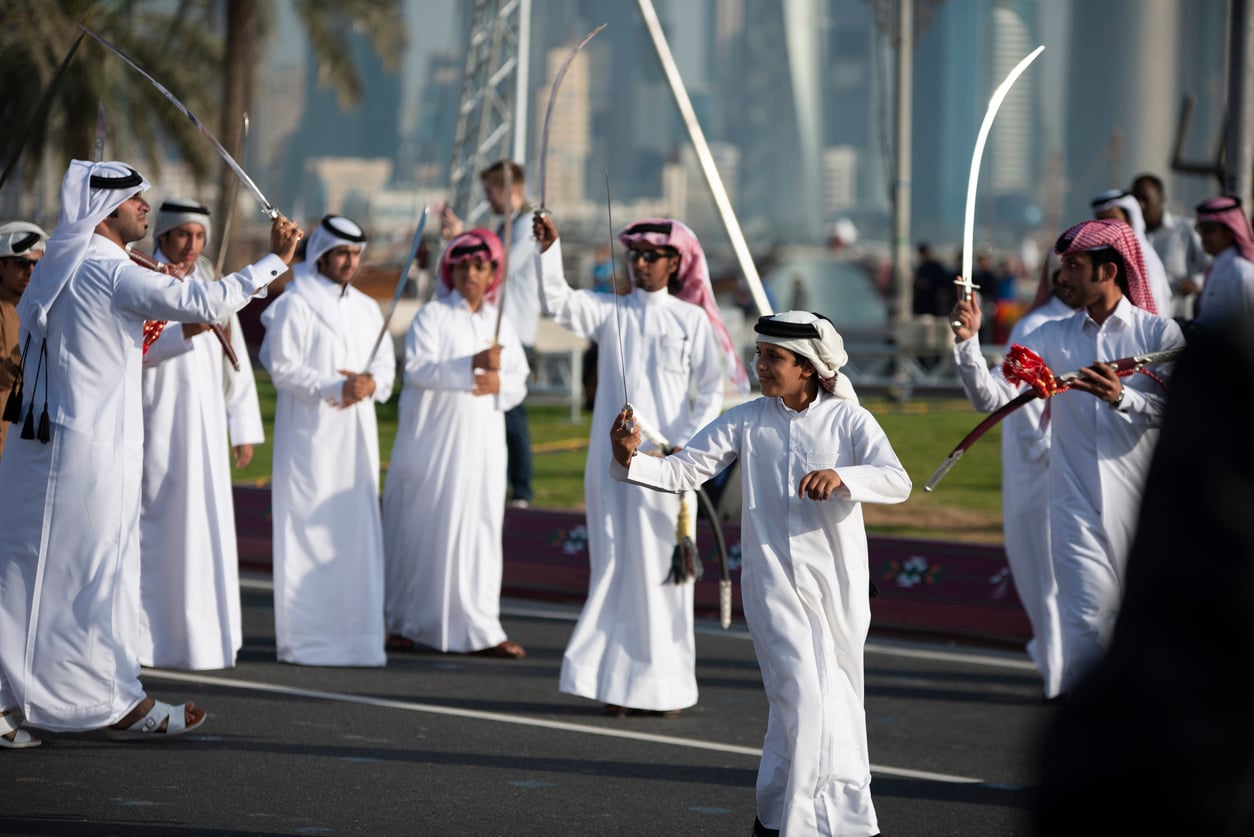
School textbooks in Qatar teach antisemitic content, portray Christians and other non-Muslims as infidels and idolators, and legitimize the call for violent jihad, according to a report released last week by the Institute for Monitoring Peace and Cultural Tolerance in School Education (IMPACT-se).
The study, part of IMPACT-se’s research program, examined primary and secondary school textbooks across multiple subjects, measuring them against UNESCO-based standards for peace and tolerance in education.
Despite Qatar’s efforts to present itself as a modern state working for peace in the Middle East, problematic content remained unchanged for the fourth straight year, showing that reforms have effectively “plateaued,” IMPACT-se said. This is despite public condemnation of the curriculum by the US State Department in 2024, it added.
Researchers examined 52 textbooks across subjects including Islamic education, social studies, history, and Arabic literature, and found that they continue to reproduce narratives that contradict Qatar’s international image as a moderate diplomatic hub.
Textbooks portray Jews as “materialistic, arrogant, deceitful, and hostile to Islam.” Jews are associated with traits such as lying, scheming, and breaching agreements.
In history education, the portrayal of the 20th century remains highly problematic. A 12th grade history textbook covering World War II fails to mention the Holocaust, Nazi policies against Jews in Germany and elsewhere, or the antisemitic components of Hitler’s ideology. Instead, the text vaguely alludes to Hitler’s “racist ideas” without identifying the victims of his policies.
The curriculum also often denies Jewish historical ties to the region. The 1917 Balfour Declaration is presented not as a recognition of Jewish national claims, but as a cynical British move to curry favor with “Jewish influence” in the United States and Russia.
Violent interpretations of jihad and the glorification of martyrdom are “prominent features” of the curriculum. Islamic education lessons praise the upbringing of children “to love jihad” and teach that God rewards those who die fighting for Islam with entry into paradise.
Non-Muslims, including Christians, are frequently treated with disrespect, referred to as “infidels” (kufr) and “polytheists.” The curriculum characterizes these faiths as being in a state of “ignorance” and “polytheism” from which the Prophet Muhammad came to rescue humanity.
Textbooks warn students that non-belief in Islam results in eternal punishment in “hellfire.” Objective information about other faiths is rare, and non-Islamic nations, particularly Western countries, are occasionally treated with suspicion.
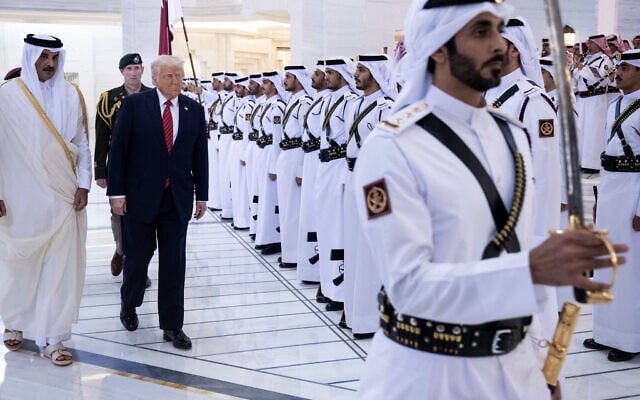
The curriculum also maintains a consistently anti-Israel stance that often legitimizes violence. Israel is framed exclusively as an “occupation,” and its existence is erased from maps, which label the entire territory as Palestine.
Attacks by Hamas and other terror groups are euphemistically described as “military operations.” Students are encouraged through poetry and prose to “draw swords” and sacrifice their lives in the fight against “the Zionist enemy.”
The curriculum rejects the UN Partition Plan and the two-state solution, asserting that Muslims must not concede “any part” of Palestine.
All of this is at stark odds with the “educational vision grounded in moderation, dialogue, and rejection of hatred” put forward by Qatari officials, the report said.
“Education policy offers a revealing window into how a state understands itself, its values, and its relationship to other nations,” the report said. “Following the Hamas terror organization’s attack on Israel on October 7, 2023, developments within Qatar’s education ecosystem have underscored the persistent gap between official rhetoric and institutional practice.”
Previous investigations by IMPACT-se have found worrying trends in school curricula in European countries like Ireland and Poland. Recent reports on schools in Gaza and Syria have shown continued promotion of antisemitism, violence, and martyrdom within their educational systems.





The Times of Israel Community.