

Draft law allows Israelis send their own bills straight to Knesset
‘Citizen bills’ backed by 50,000 signatures would be exempt from preliminary vote, according to new proposal
 Add ToI as a Preferred Source on Google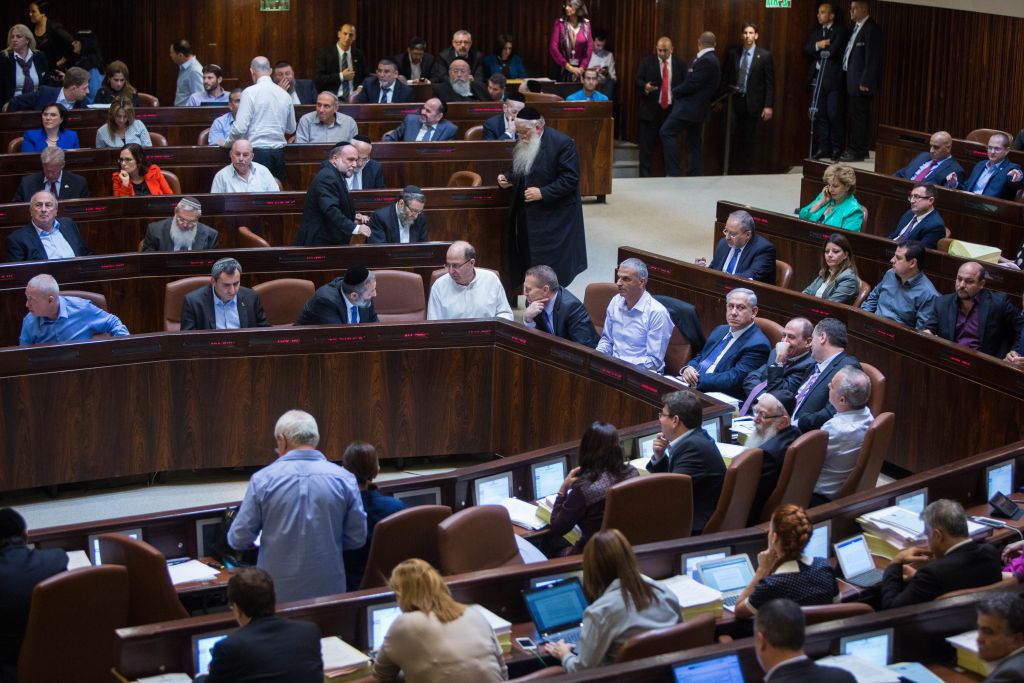
A new bill by coalition and opposition MKs would permit Israelis to present new bills directly to the Knesset, bypassing a preliminary vote.
According to the bill by Zionist Union MK Hilik Bar and Likud MK Yoav Kisch, the Knesset will be obligated to discuss any proposal submitted with at least 50,000 signatures by citizens eligible to vote, as it would a bill presented by an MK or a party.
The citizen bills, like bills presented by the government, will not require a preliminary vote and will be sent directly to a Knesset committee to prepare the proposal for a vote in the plenum. The bill by Kisch and Bar does contains several limitations, including restrictions on submitting citizen bills on matters of security, Basic Laws, and the state budget.
According to a report in Israeli business paper The Marker, the criteria for collecting signatures will be stringent, to prevent any forgery. Any citizen who seeks to add his or her signature in support of a private bill will need to include their ID number as well as a written or approved digital signature.
Kish and Bar worked on the bill in secret over the past two months, and later also involved Knesset speaker Yuli Edelstein, who is supportive of the move. They formally submitted the bill on Monday evening.

The bill is unusual in that it allows citizens to submit bills without needing to convince legislators of the necessity for the legislation. The only Western country where the citizenry is so intimately involved in the country’s legislature is Switzerland, which is considered a semi-direct democracy. Some Latin American countries also hold popular referendums on specific issues.
Edelstein said the bill was of “great importance,” which would “bring the public closer to the parliament, and allow it to influence the democratic process, not only by choosing its elected representatives once every few years.”
Bar explained that he and Kish wanted to draft “not a populist proposal, but a serious reform which will make democracy accessible to the public without harming the honor and authority of the Knesset. We decided, at the advice of political science and legal experts, to exempt from the bill any proposals pertaining to issues of foreign affairs and security, basic laws, pardons for felons, taxing policies and the state’s budget.”

On these issues, the Zionist Union MK told The Marker, only MKs will be allowed to submit bills, but “on any other subject – social matters, regulation and the markets, law enforcement, education, transportation, environment and more – the public can say its piece directly.”
Kisch said the bill “combines the right and the left, coalition and opposition and its goal is one – to make the Knesset more accessible to the Israeli public.”
Bar added that “the time has come for Israel’s governance system to include ingredients of direct democracy. So long as this is done responsibly – this is nothing less than a revolution.”
Kisch said that technology has brought citizens to a “high level of social involvement and the knowledge they have is tremendous.” There is no reason, he said, that citizens will not be able to sound their opinions on the issues close to their hearts. “Until now the [citizen’s] voice was heard – we are here to also make it count,” Kisch said.










The Times of Israel Community.