

Emergency room doctor at Israeli hospital diagnosed with coronavirus
Sheba Medical Center says doctor returned from France before Israel ordered all travelers from there to quarantine; patients at risk of infection to be informed
 Add ToI as a Preferred Source on Google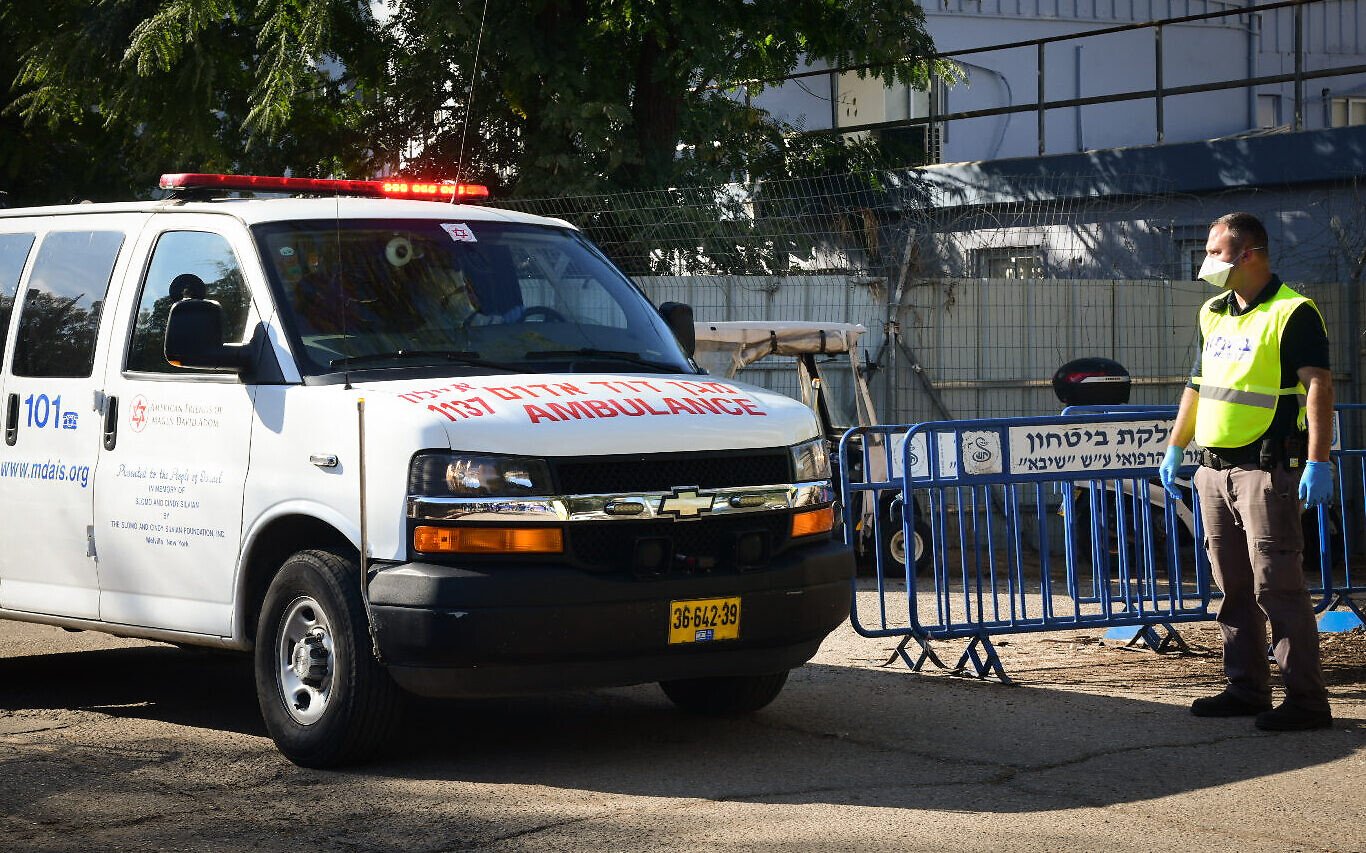
The Sheba Medical Center in Tel Hashomer on Thursday said one its doctors has been diagnosed with the coronavirus.
The doctor, a member of the hospital’s emergency medicine unit, returned from a trip to France on March 2, before Israel ordered all travelers coming from there to self-quarantine for 14 days.
He worked a shift that day in the emergency room before going into home quarantine.
“He is in good condition and has been transferred to the quarantined and isolated area at Sheba,” the hospital said in a statement.
Anyone who was in close contact with him will be sent immediately to isolation, the hospital added. It said patients treated by the infected doctor would be updated.
The announcement came as the Health Ministry said Thursday the number of confirmed cases of COVID-19 in Israel has climbed to 100.
Among the newly diagnosed are two children, a 10-year-old boy and 11-year-old girl, from central Israel. The boy had recently traveled with his father to Spain.
The recent cases also included a pair of women in their 60s from central Israel who returned to the country from New York via Moscow on March 9, the ministry said.
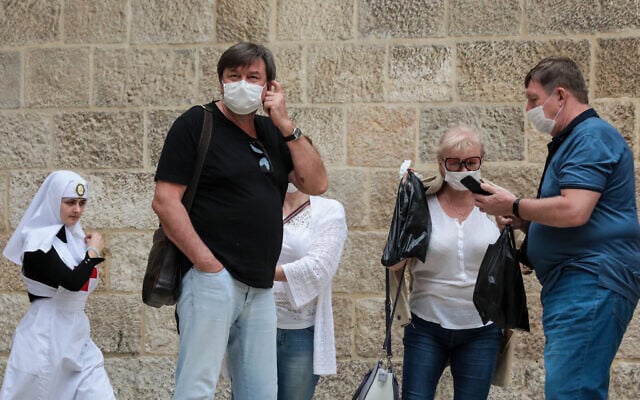
The outbreak of the virus continued to disrupt schools, universities, prisons, and some public transportation on Thursday, as thousands more were sent into home quarantine.

Jerusalem’s Hebrew University announced Thursday it would be delaying the start of the semester by a week and would switch to online learning.
Also Thursday, nearly one thousand students and teachers were sent home from the Nazareth Baptist School after it was discovered that a person later found to have the infection had visited the institution.
In addition, a school for ultra-Orthodox girls in the West Bank settlement of Modiin Illit sent 60 students into quarantine after they were found to have visited the same location in Jerusalem’s Old City as some German tourists who were later found to be infected.
The new government restrictions on public gatherings, announced Wednesday, also saw shows and cultural events shelved.
Habima national theater on Thursday announced it was bringing down the curtain on performances and shutting its doors until April 30 following an announcement that public gatherings must be limited to 100 people. All performances at the venue in Tel Aviv and around the country have been postponed until after that time.
Of the 100 Israelis who contracted COVID-19, two patients are in serious condition and three are defined as moderate, according to the ministry.
On Wednesday, Ichilov Hospital in Tel Aviv said one patient, a 60-year-old worker at Ben Gurion Airport, was in serious condition, under sedation and hooked up to a respirator, after his condition worsened.
The airport worker had not been abroad or in knowing contact with anyone carrying the virus, and so health authorities initially declined to test him for coronavirus. He was admitted to Ichilov Hospital on Sunday with flu-like symptoms, but was released the next day without testing for the virus, even though he pleaded to be tested, his family said.
The man was only finally tested for the coronavirus on Tuesday when he was readmitted with pneumonia. He had not been in isolation before then, including at the hospital.
He was the second person in Israel with COVID-19 to be listed in serious condition. The other is a bus driver hospitalized in northern Israel who transported a group of Greek tourists who tested positive for the virus after returning home. His condition is now said to be stable.

Prime Minister Benjamin Netanyahu announced Wednesday evening that Israel was limiting public events in enclosed areas to 100 people.
The ban includes synagogue prayer and weddings, the Health Ministry director-general Moshe Bar Siman-Tov elaborated, adding that higher education institutes could hold classes online, with students studying from home, but this was not yet a formal requirement.
To curb the spread of the virus in the country, all Israelis returning from overseas are required to quarantine at home for 14 days. Non-Israeli nationals will be allowed into the country until Thursday at 8 p.m., but after that they will be barred entry unless they can demonstrate an ability to self-quarantine for two weeks.
The quarantine measures are among the most dramatic to be introduced by any nation in the intensifying battle against the coronavirus. On February 26, Israel had become the first country in the world to advise its citizens against all non-essential overseas travel.








The Times of Israel Community.