

Ex-Hamas chief Haniyeh was killed by missile that tracked his cellphone, Iran says
Revolutionary Guard Corps spokesman denies claim that internal acts of sabotage contributed to terrorist leader’s assassination in Tehran
 Add ToI as a Preferred Source on Google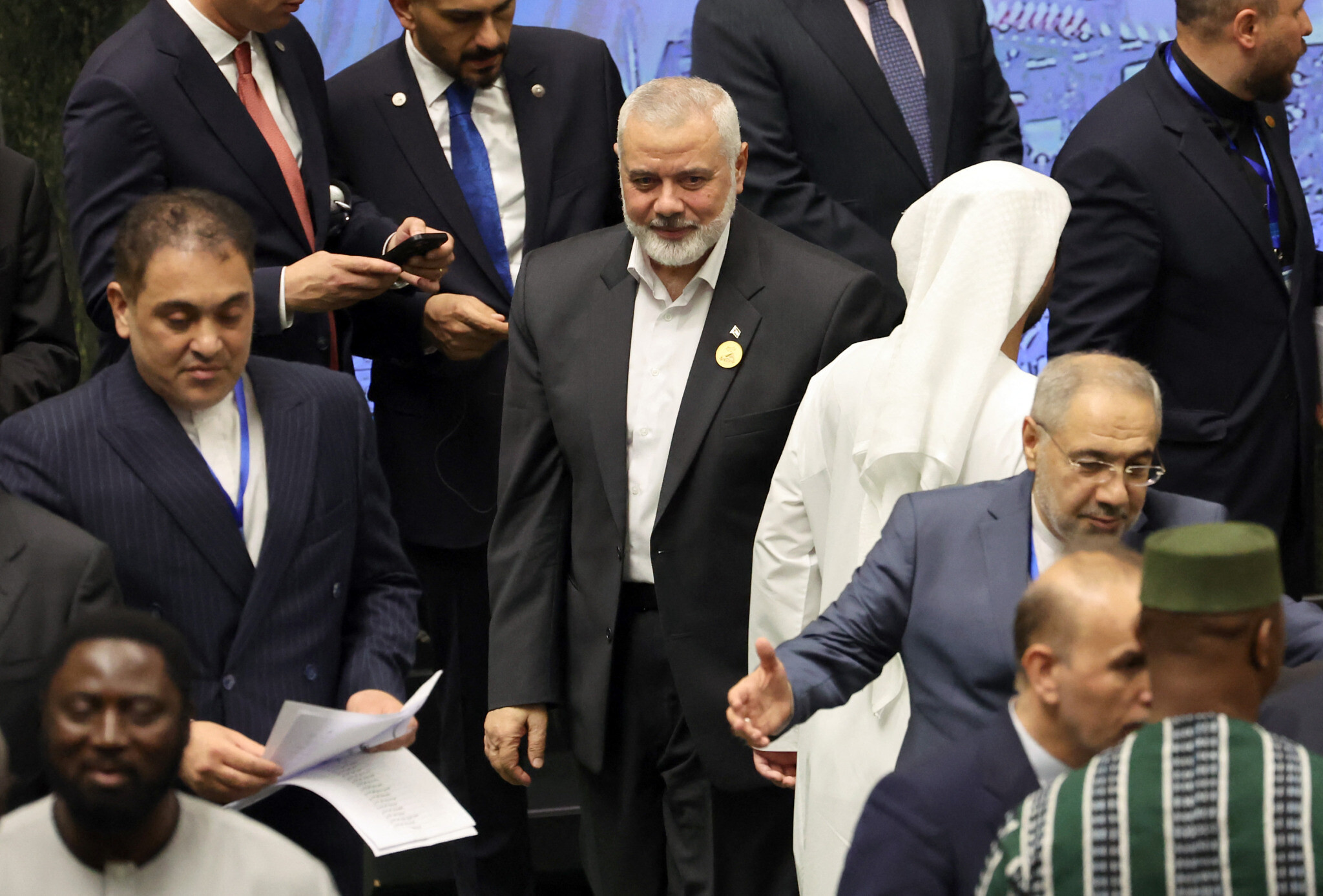
The assassination of former Hamas leader Ismail Haniyeh in Tehran last year was carried out using a precision missile that tracked him via his cellphone, the spokesperson for Iran’s Islamic Revolutionary Guard Corps (IRGC) said on Sunday, sharing what he said were new details about the Israeli operation that took out the top terror official.
Haniyeh was killed on July 31, 2024, in a blast in the Iranian capital, hours after he attended the inauguration of Iranian president Masoud Pezeshkian.
Defense Minister Israel Katz confirmed in December that Israel was behind the assassination.
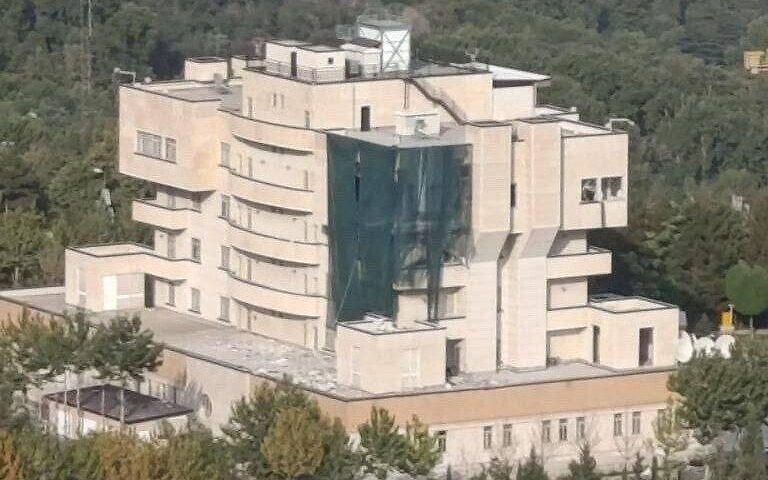
Initial reports had suggested that he was killed by a missile, but a report in the New York Times last year alleged that a sophisticated, remote-controlled bomb had been smuggled into the Tehran guesthouse he was staying in months before the assassination, and finally detonated when Haniyeh was present.
On Sunday, however, IRGC spokesman Ali Mohammad Naini denied that report, insisting that there had been no internal acts of sabotage within the Iranian paramilitary body, meaning that nobody had smuggled a bomb into the guest house.
Instead, he said in comments to the Iranian press and to pro-Hezbollah outlet Al Mayadeen, the assassination was carried out with a precision missile that tracked Haniyeh’s location via his cellphone.
“The assassination of the martyr Ismail Haniyeh did not involve any act of sabotage,” Naini said. “A missile was fired from a certain distance and struck the window directly, hitting him while he was on a phone call from the same direction the missile came from.”
Iran initially refrained from launching a retaliatory attack against Israel in response to the assassination of Haniyeh on its soil, but two months later, on October 1, 2024, it launched some 80 ballistic missiles at Israel, saying it was in response to the assassination of Haniyeh as well as the assassination of Hezbollah chief Hassan Nasrallah and IRGC general Abbas Nilforoushan in Beirut in September.
Naini explained on Sunday that although Tehran had waited two months to launch its retaliatory response, there had been no question that it would attack, and that it had always been a matter of when, not if.
He said that after Haniyeh was killed, Iran’s national security council “concluded that there must be a definitive response. The timing of the retaliation was left to the military command.”
The delay, he claimed, was caused by difficulties that arose following Iran’s first-ever direct attack on Israel, in April 2024.
It was not clear what difficulties he was referring to.
Naini also acknowledged that there had been some debate as to whether Iran should carry out the October 1 strike against Israel, or whether it should have been left to its allies across the region, which include Hamas in Gaza, Hezbollah in Lebanon, and the Houthis in Yemen.
Ultimately, he said, “a unified decision was made” to launch the attack from Iranian soil.
The attack, which sent almost 10 million people into bomb shelters, killed one Palestinian in the West Bank, and two Israelis were injured by falling shrapnel and debris. Overall, the attack caused an estimated NIS 150-200 million ($46-61 million) in damage to private property, with one of the missiles impacting a school in Gadera, central Israel, causing severe damage.
Israel responded weeks later, on October 26, 2024 by targeting strategic drone and missile manufacturing sites and air defense batteries in Iran in a series of precision strikes.







The Times of Israel Community.