

Facebook founder funds research into genetic disease targeting Ashkenazi Jews
Chan-Zuckerberg Initiative donates $450,000 to help find a therapy for Usher 1F Syndrome, a rare degenerative condition that causes blindness and deafness
 Add ToI as a Preferred Source on Google
Reporter at The Times of Israel
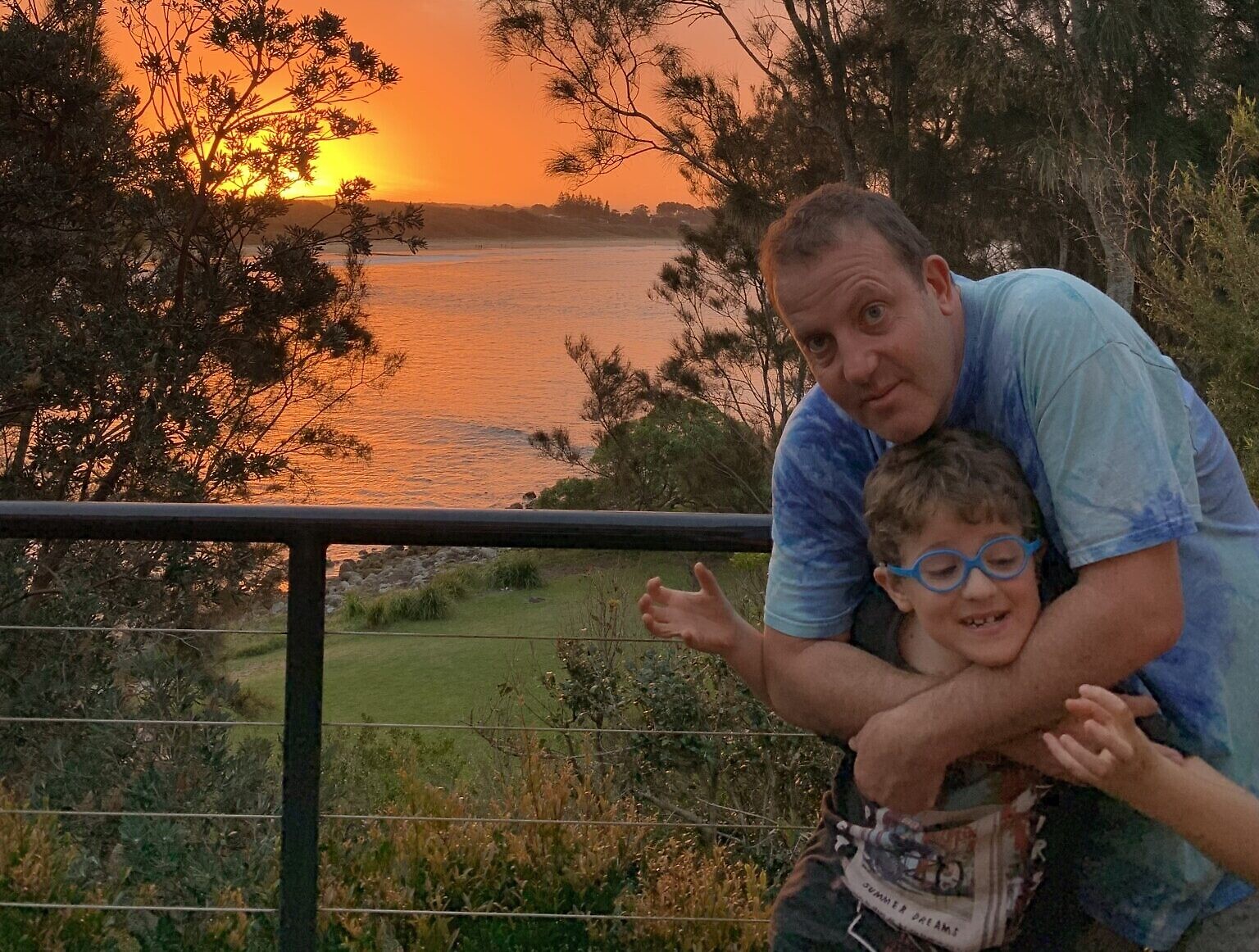

NEW YORK — Harry Feller sees the world through blue-framed glasses, ignoring his ever-worsening eyesight as he runs, sings and plays. But now there’s new hope for the 8-year-old and others who suffer from Usher 1F Syndrome, a rare genetic disease that causes deafness and blindness.
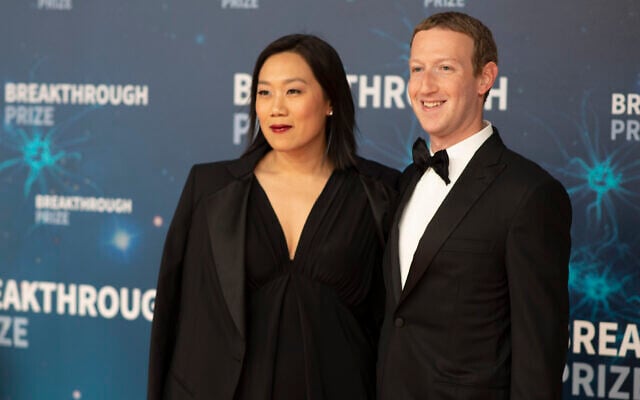
A United States-based non-profit foundation, the Usher 1F Collaborative received a $450,000 grant from the “Rare as One” project launched by the Chan Zuckerberg Initiative (CZI). The CZI was established in 2015 by Facebook CEO Mark Zuckerberg and his wife, Dr. Priscilla Chan.
The grant, announced late last winter, is part of a total $13.5 million in funding CZI is awarding to 30 patient-led organizations.
The cash infusion also represents a rare glimmer of positivity as the world continues to struggle with the COVID-19 epidemic.
“This is such positive news at a time when there isn’t a lot of positive medical news,” said Melissa Chaikof, president of the Usher 1F Collaborative, in a telephone interview with The Times of Israel.
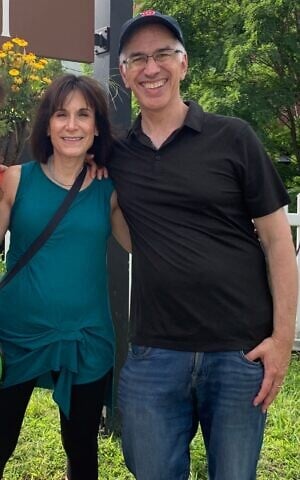
“The Facebook grant is the next point on the road to a therapy,” Chaikof said, speaking from her office in Boston. “It gives us visibility, money to grow our organization, and sustainability to continue to fund our research.”
Predominantly affecting Ashkenazi Jews, the gene mutation affects about 4,000 people worldwide, while other forms of the disease affect up to 400,000 people. According to a 2003 US National Institute of Health study, the mutation originated about 350 years — or 14 generations — ago.
“It’s such a rare corner of the playground that we are playing in,” said Daniel Feller, Harry’s father and co-founder of Genetic Cures Australia, in a phone call from his home in Melbourne, Australia.
Feller launched the non-profit after the birth of his son Harry.
“Harry was born profoundly deaf, has balance problems, and will become progressively blind,” Feller said. “There are no effective treatments, but intensive speech therapy and training allow him to hear and speak perfectly well. Now, at 8 years of age, Harry leads a very normal life with his many friends at primary school here in Melbourne.”
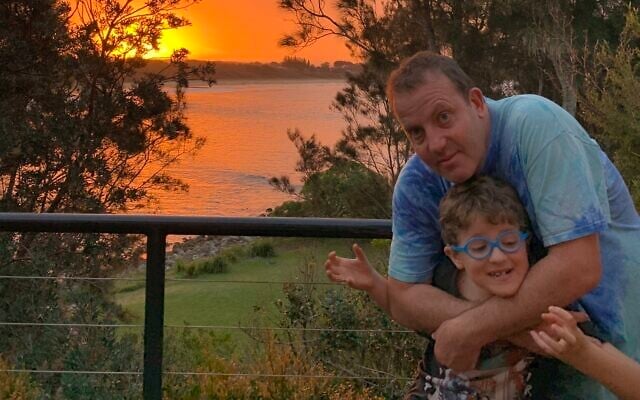
Genetic Cures works closely with the Usher 1F Collaborative in the advocacy and research into genetic treatments and cures for Usher syndrome. About 7,000 rare diseases affect 400 million people globally. Of those, fewer than 5 percent have FDA-approved therapies, according to CZI.
Right now the Usher 1F Collaborative is focused on those labs developing a genetic treatment for the eye, Chaikof said. Like Feller, her work is personal.
Chaikof and her husband Elliot founded the collaborative because they realized that although there was significant research for other types of Usher Syndrome, there was no research for Usher 1F.

Both of Chaikof’s adult daughters, 32-year-old Rachel and 25-year-old Jessica, have Usher 1F. Like Harry, the sisters both have cochlear implants. Rachel got them she was two-and-a-half, and Jessica got them when she was 15 months old. Like Harry, both will eventually lose their sight.
While both Rachel and Jessica have terrible night vision, can’t drive, and must read large print text, they both have forged ahead personally and professionally. Rachel spent time in Cameroon working for the Peace Corps and now works in global health, and Jessica has traveled the world and majored in sociology with a minor in chemistry at Wheaton College.
“People meet my girls and some must wonder what’s the urgency. But we’re at a tipping point with their sight and not saving my girls’ vision is not an option,” Chaikof said.
Not saving my girls’ vision is not an option
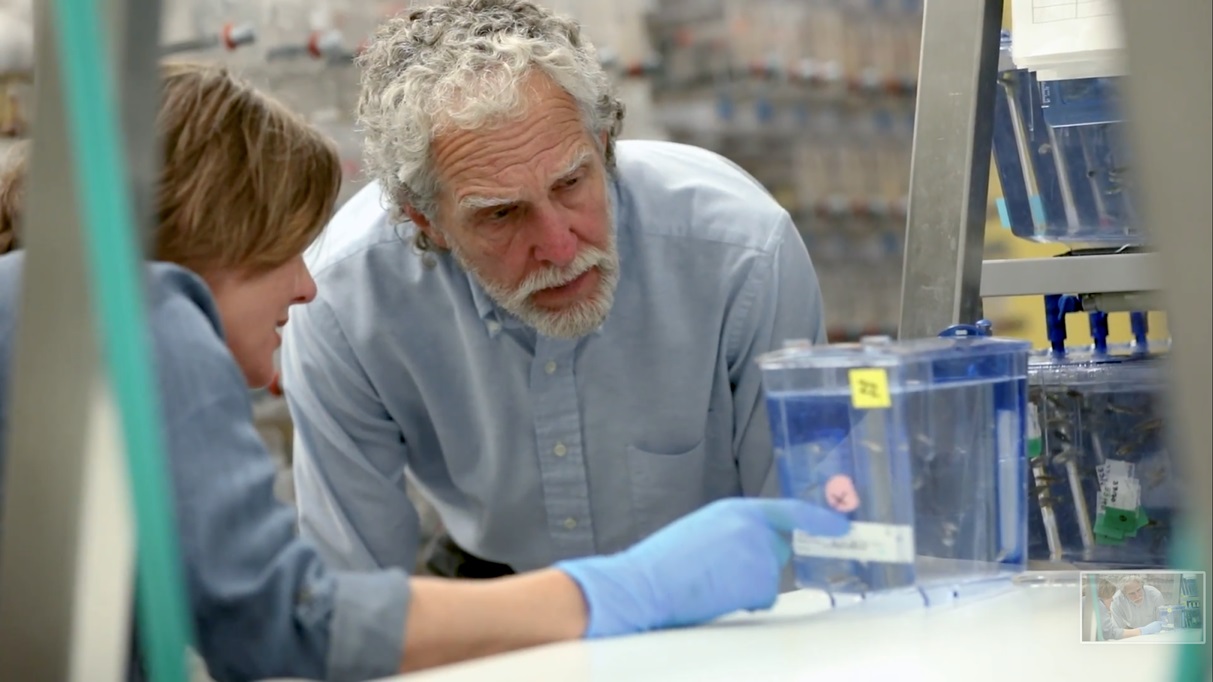
While the therapies currently being pursued won’t restore vision to those with Usher 1F, the goal for now is to stave off further progression of retinal damage. Some of that research is being done in the lab of Dr. Monte Westerfield at the University of Oregon.
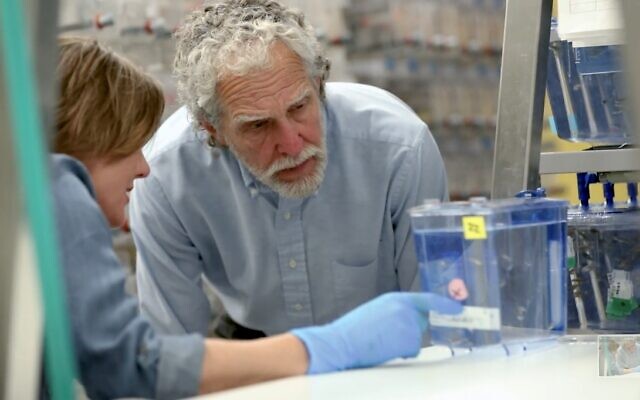
Westerfield’s lab studies the molecular genetic basis of human diseases, particularly Usher syndrome. As such, he and his researchers are working on a natural history study of Usher 1F using zebra fish. The study will help determine the efficacy of a gene therapy when it goes into clinical trials.
Because the pool is so limited, there will be no placebo group — every participant gets the treatment. Therefore, the only way to conduct meaningful clinical trials is to have an animal study to serve as a placebo group, said Westerfield, whose children also have Usher1F.

The CZI grant money will help fund the study.
“It’s really a game changer in a number of ways,” Westerfield said. “It will help us identify a large patient pool and it will help raise consciousness in the broader community about the work being done.”
The grant will also help curb donor apathy, Westerfield said. Most people don’t realize how long it takes to shepherd an idea all the way from experiment to clinical trial to FDA approval.
To that end, the grant essentially says, “We’re still here and we still need support,” Westerfield said.
As Westerfield and his team of researchers continue their work, Feller remains optimistic about the future.
“I’m a glass half-full person,” Feller said. “No one is under the impression that we don’t have miles and miles to go before we have a therapy, but we also know we’ve come miles and miles together.”










The Times of Israel Community.