

Great Isaiah Scroll, oldest near-complete biblical book ever found, on show in entirety for 1st time since 1968
The 2,100-year-old artifact, seven meters long, can be viewed at the Israel Museum in Jerusalem; only 25 people at a time allowed into climate-controlled room

 Add ToI as a Preferred Source on Google
Rossella Tercatin is The Times of Israel's archaeology and religions reporter.
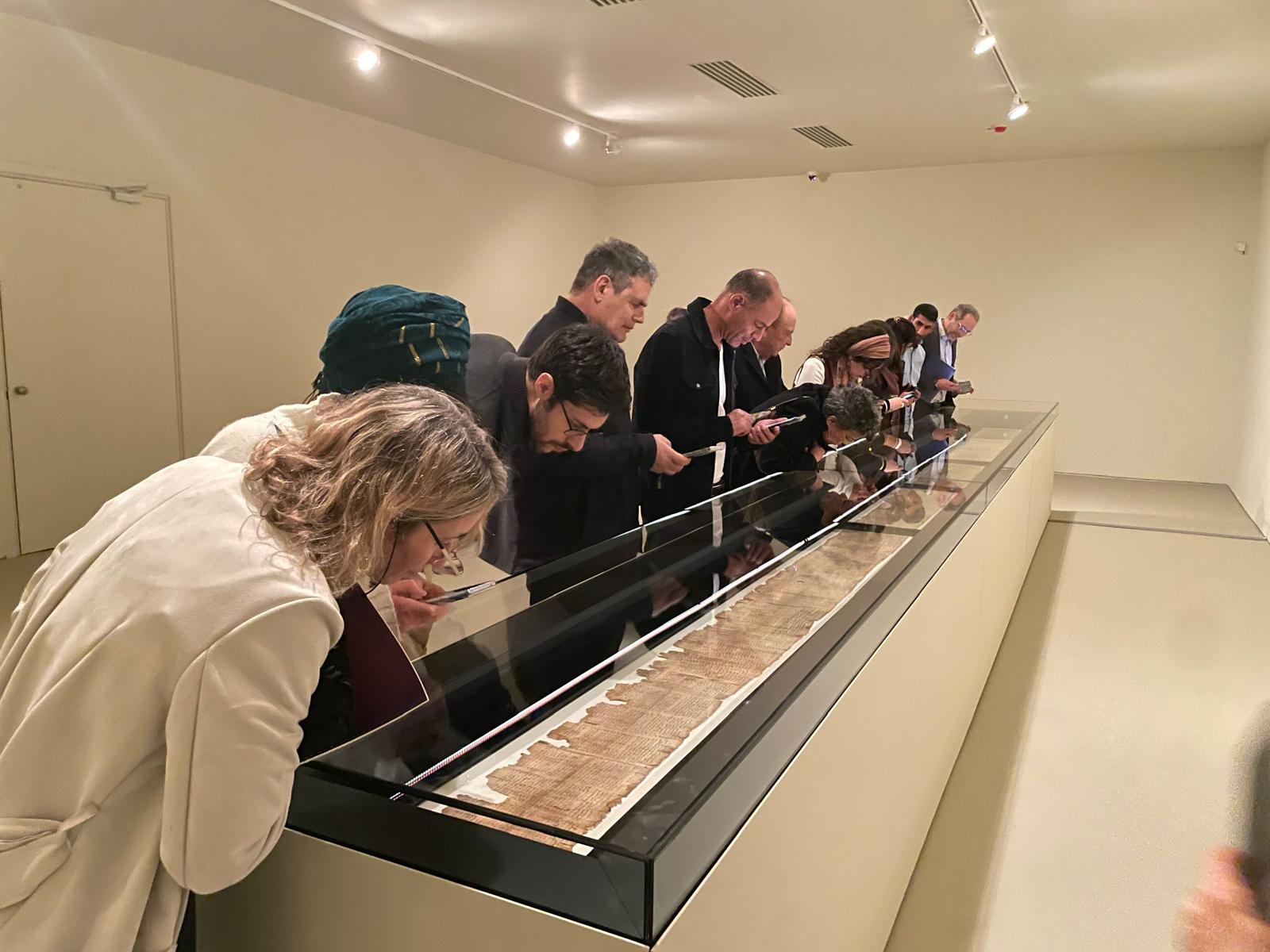
The Great Isaiah Scroll, the oldest nearly complete book from the Hebrew Bible ever found, is on display in its full length for the first time since 1968.
The scroll features over seven meters (23 feet) of ancient text that, for more than 2,000 years, has influenced the spiritual lives of millions of people.
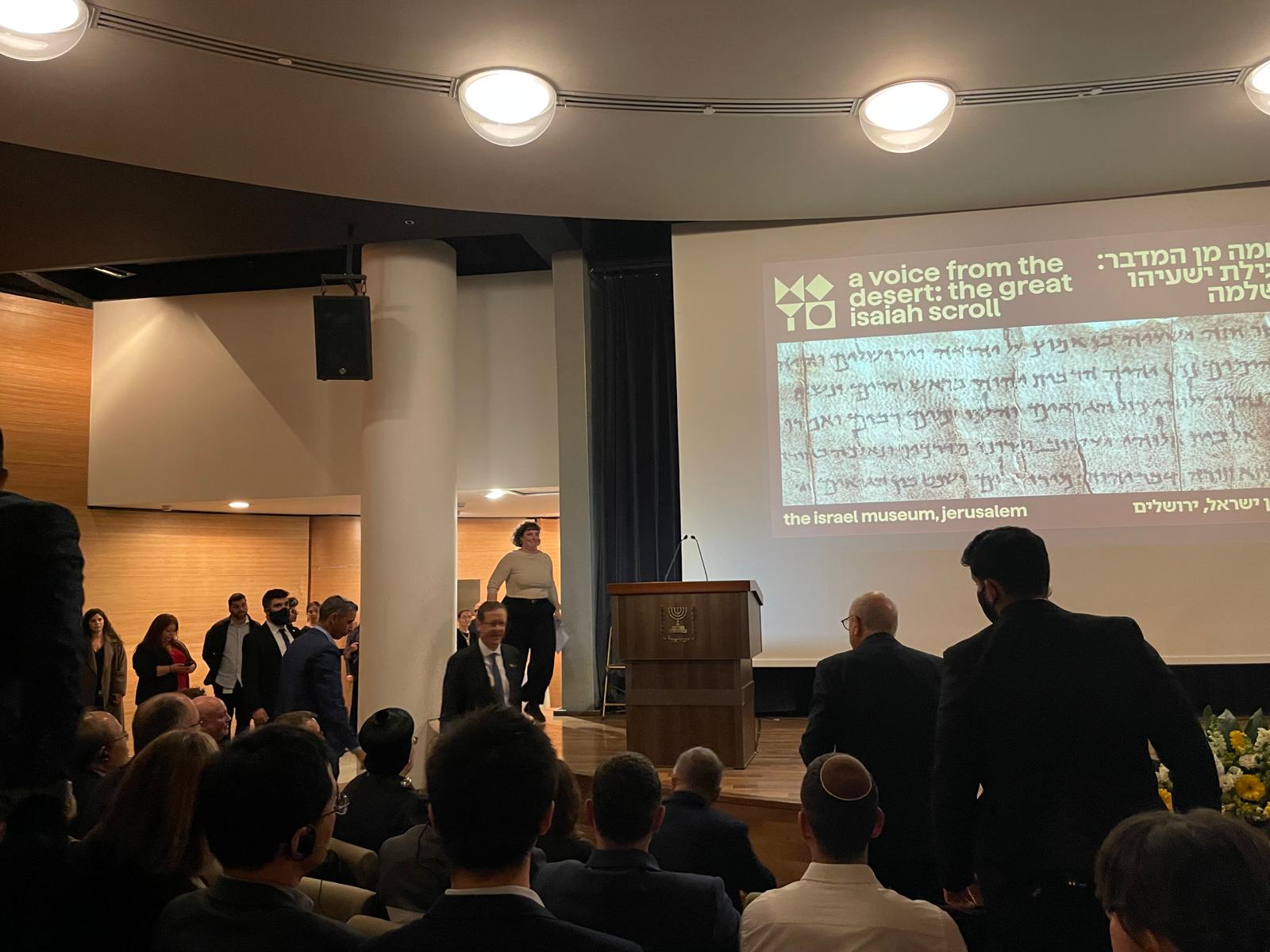
The special exhibition was inaugurated at the Israel Museum in Jerusalem on Monday in the presence of President Isaac Herzog.
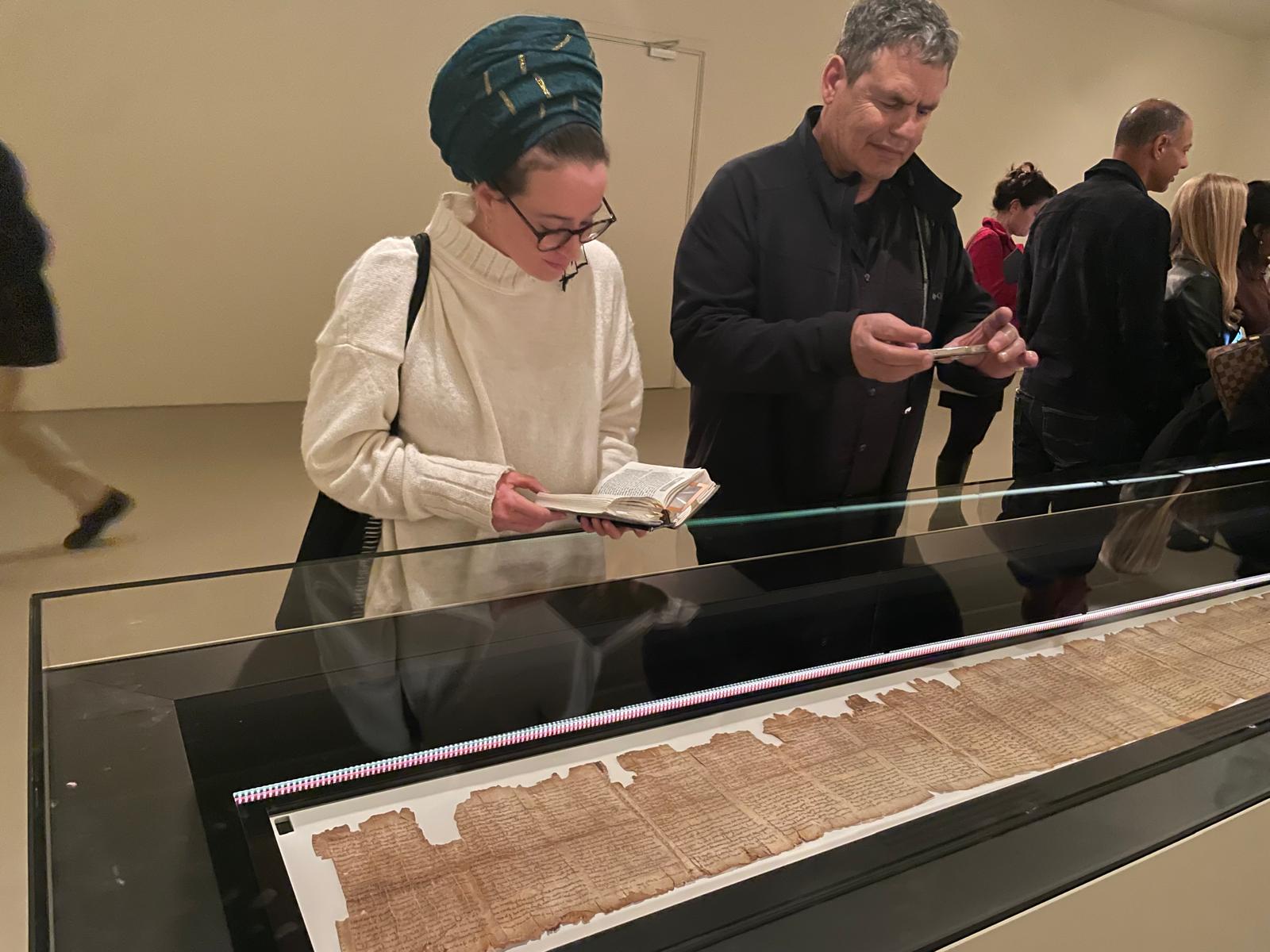
The artifact is being showcased in a special eight-meter-long (26-foot-long) glass case manufactured in Belgium, which allows visitors to admire every inch of the scroll — its vellum sheets with millennia-old stitches and stains, holes and fading letters.
All of those features are signs of how much the object was used and cared for before it was deposited in a cave in the Judean Desert in the 2nd century CE, where it was left until its discovery in modern times.
“There are moments when we stand before an object, small or large, a fragment of parchment bearing ancient handwriting, and suddenly we understand that not everything begins with us,” Herzog said. “There is continuity, there is tradition, there are roots; a long chain of generations, a story written and passed down, generation upon generation, throughout most of our people’s history.”
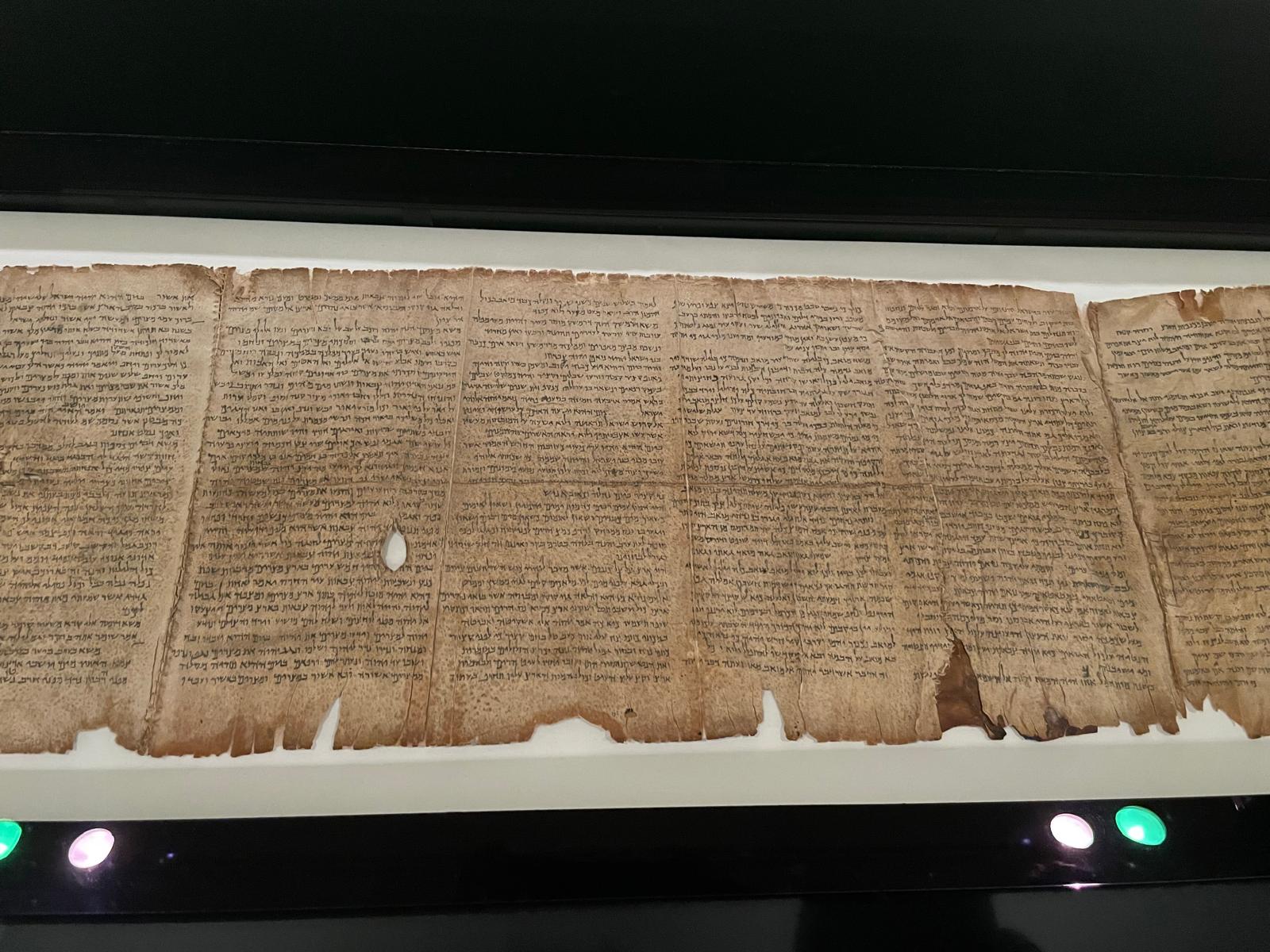
Experts believe that the Isaiah Scroll dates to around 125 BCE. Its text largely mirrors the accepted text of the Book of Isaiah in the Jewish biblical canon, with a few exceptions related to spelling or individual words. The artifact is made of 17 sheets stitched together and is believed to have been originally divided into two parts.
As retold in a short movie screened as part of the exhibition, the scroll was discovered by Bedouin shepherds in a cave near the ancient settlement of Qumran in 1947, alongside the Dead Sea Scrolls. Sold first to an antiquity dealer, and then to the Syrian archbishop of the Syrian Orthodox Church in Jerusalem, Athanasius Yeshue Samuel, the manuscript was finally bought anonymously by Israel in 1954 after the archbishop brought it to New York, hoping to find an American buyer.
The scroll was displayed in its entirety when the Israel Museum was inaugurated in 1965, but the curators soon realized that it needed to be preserved in better conditions. Since then, the Shrine of the Book in the museum has showcased an accurate replica of it.
The current exhibit allows visitors to view the scroll in a climate-controlled room, accessible to no more than 25 people at a time.
“We respect [the scroll] and try as much as possible not to harm the object and, of course, to preserve it for future generations,” said the exhibit’s curator Hagit Maoz, explaining the work to prepare both the scroll and the space for the exhibition.
Maoz also emphasized how the exhibition has been an opportunity to bring together many people connected to the history of the scroll. Those include representatives of some Christian communities and organizations, including the French School of Biblical and Archeological Research in Jerusalem, which conducted the first excavation in the Qumran Caves at the beginning of the 1950s, and the Syrian Church, which offered a 15th-century copy of the New Testament written in Aramaic for the exhibit.
“[The artifact] essentially describes the importance of the Book of Isaiah to the Christian world,” Maoz said. “Isaiah is quoted about 66 times in the New Testament, and he is considered one of the elements that actually herald the coming of the Messiah.”
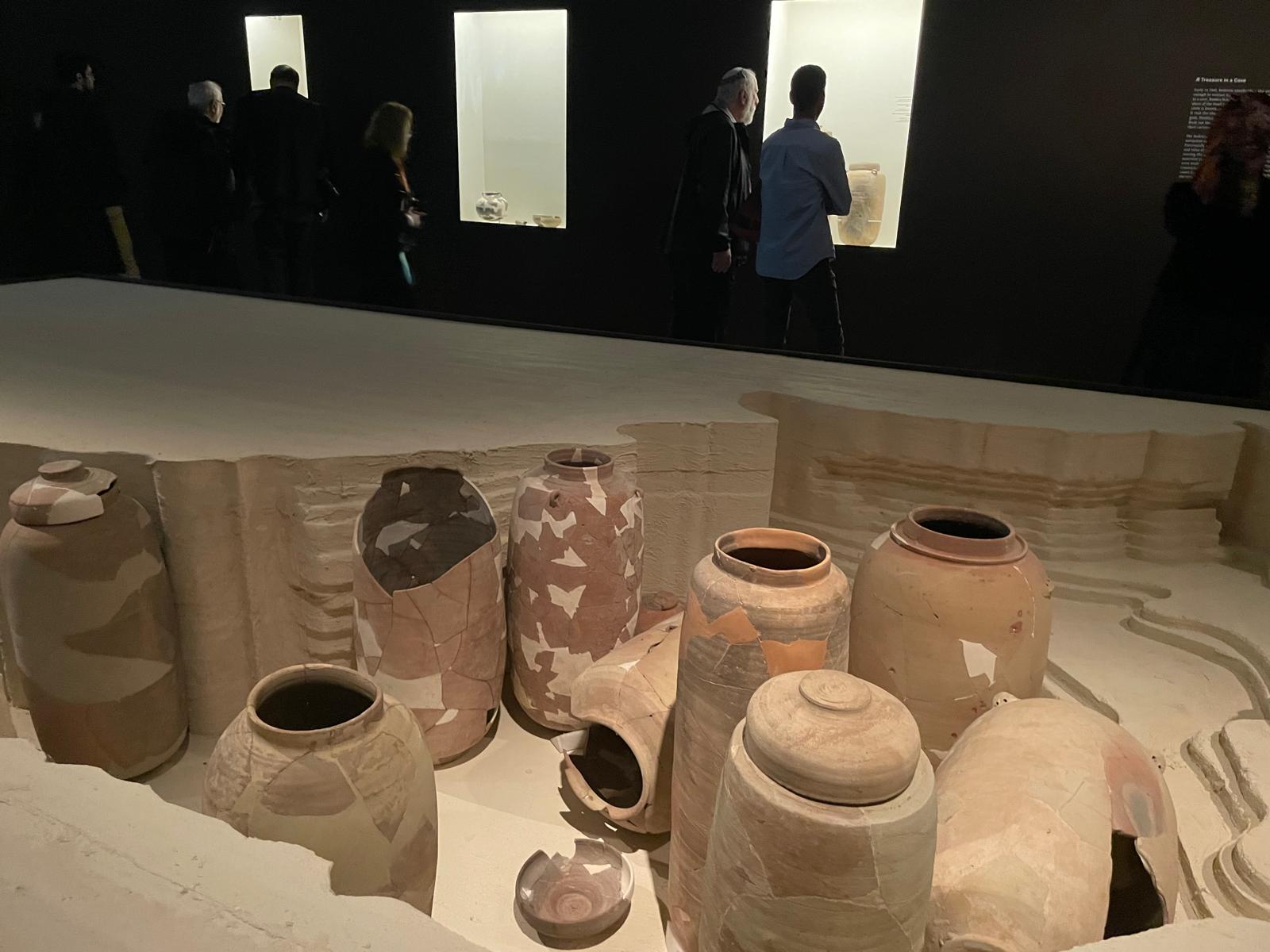
The exhibit also features some pottery and cloths used to wrap the scrolls that were uncovered by the archaeologists of the French School, as well as pictures from the excavations.
Maoz and Herzog also emphasized that many of the verses in Isaiah have become part of the Jewish and Israeli modern ethos, from “Nation shall not lift up sword against nation,” which is engraved in Herzog’s office, to “Comfort, oh comfort my people.”
After visitors leave the room housing the scroll, the last hall of the exhibition includes a reproduction of the artifact, highlighting these and other iconic verses, as well as interesting details of the object, such as the line showing where the two parts were attached, and the location of a leather patch placed in ancient times to repair the scroll.
“A scroll tells two intertwined stories: the story written within it, and the story of its own journey, all that it went through so that we might be able to continue and read it,” Herzog said. “So too with the unique scroll in whose honor we have gathered: the ancient Isaiah Scroll, thousands of years old, whose story holds within it more than words can describe.”
The exhibition, which is part of the celebration of the Israel Museum’s 60th anniversary, will run until June 6. Visitors must reserve a time to access the room showcasing the scroll.









The Times of Israel Community.