

Hamas has replenished its rocket arsenals, Israeli officials say
Gaza’s terrorist rulers have as many rockets as before 2014 war, but they are of lower quality; 40,000 Gazans said involved in ‘military wing’

 Add ToI as a Preferred Source on Google
Avi Issacharoff, The Times of Israel's Middle East analyst, fills the same role for Walla, the leading portal in Israel. He is also a guest commentator on many different radio shows and current affairs programs on television. Until 2012, he was a reporter and commentator on Arab affairs for the Haaretz newspaper. He also lectures on modern Palestinian history at Tel Aviv University, and is currently writing a script for an action-drama series for the Israeli satellite Television "YES." Born in Jerusalem, he graduated cum laude from Ben Gurion University with a B.A. in Middle Eastern studies and then earned his M.A. from Tel Aviv University on the same subject, also cum laude. A fluent Arabic speaker, Avi was the Middle East Affairs correspondent for Israeli Public Radio covering the Israeli-Palestinian conflict, the war in Iraq and the Arab countries between the years 2003-2006. Avi directed and edited short documentary films on Israeli television programs dealing with the Middle East. In 2002 he won the "best reporter" award for the "Israel Radio” for his coverage of the second intifada. In 2004, together with Amos Harel, he wrote "The Seventh War - How we won and why we lost the war with the Palestinians." A year later the book won an award from the Institute for Strategic Studies for containing the best research on security affairs in Israel. In 2008, Issacharoff and Harel published their second book, entitled "34 Days - The Story of the Second Lebanon War," which won the same prize.
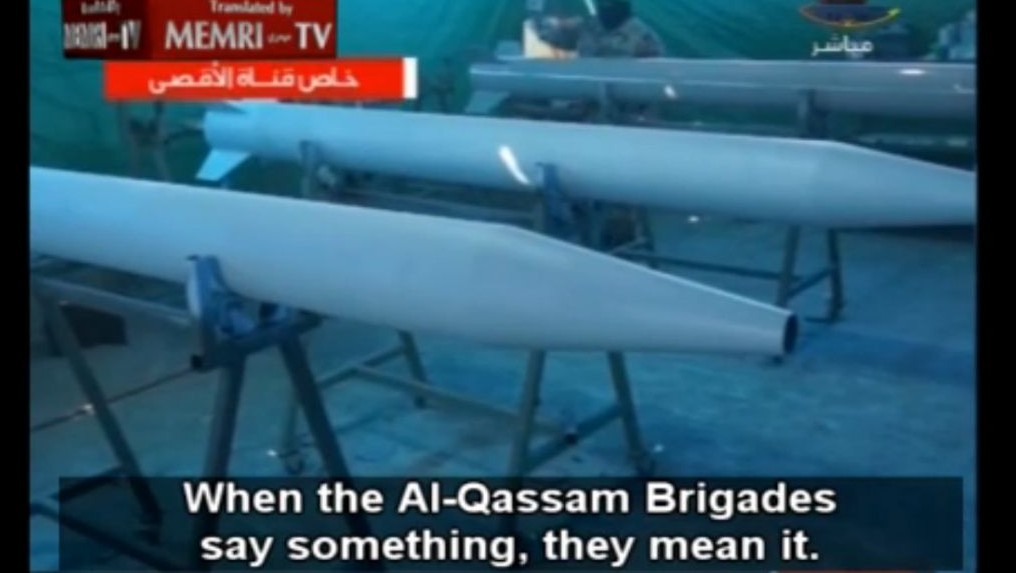
Roughly a year and a half after the end of Operation Protective Edge, Israeli officials believe that Hamas has replenished its rocket supply, reaching the number of rockets that it had before the operation began.
At the start of the summer 2014 conflict, Hamas had approximately 12,000 rockets of various ranges, including long-range rockets. It fired approximately 4,600 rockets during the 50-day war, and roughly 4,000 more were hit from the air in Israeli bombardments. That left the terror group with about one-third of its original arsenal.
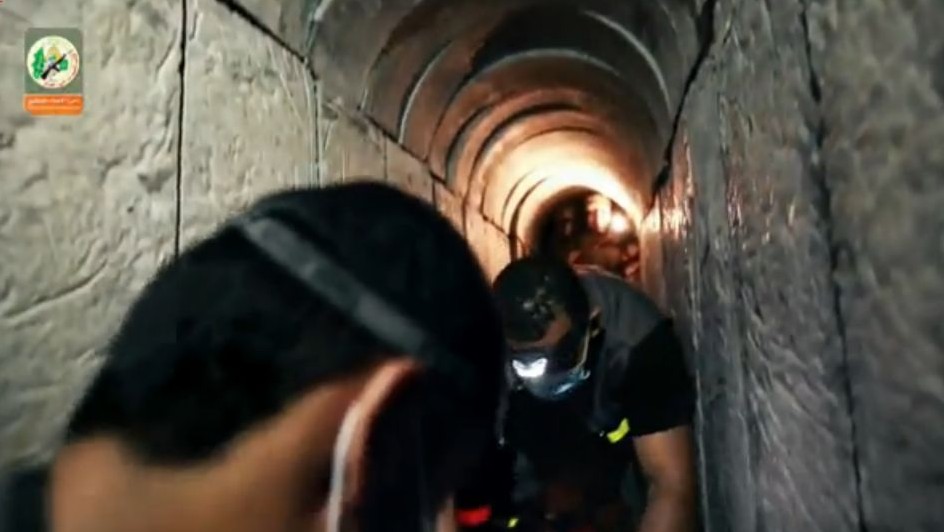
Since late August 2014, Hamas has worked intensively to regain its military capabilities — replenishing the rocket arsenals, and restoring its terror-tunnel network.
Israeli officials now assess that Hamas has roughly the number of rockets that it had in June 2014. A major difference, though, is that most of the rockets are relatively short range and of lower quality, the officials believe.
On the strength of the experience it gained during the war, Hamas has also been stockpiling mortar shells, which inflicted heavy damage to property and life in communities on Gaza’s periphery and on IDF troops stationed around Gaza.
The new rockets are mostly locally produced — due to the closing of the tunnels that ran between Sinai and the Gaza Strip and the difficulty Hamas faces in smuggling standard rockets and weapons into Gaza. The locally made rockets are regarded as inferior, partly because smaller quantities of explosive materials are making it into Gaza due to the tunnel closures.
Overall, therefore, the officials said, Hamas has restored its rocket quantities, but the quality and precision of the new rockets are significantly lower.
The Hamas military wing is still relentlessly seeking to smuggle in various materials to produce improved rockets and other weaponry, the officials said.
Items such as steel cables, which can be used to build tunnels; and polyester, which can be used in rocket production, were intercepted by Israel at the Kerem Shalom border crossing in recent weeks.
Israeli officials believe that roughly 40,000 people belong to Hamas’s military wing and its various offshoots in the Gaza Strip — including a civilian police force. Some 20,000 of these Gazans are in the Izz ad-Din al-Qassam Brigades, and about 1,000 are involved in the tunnels project.

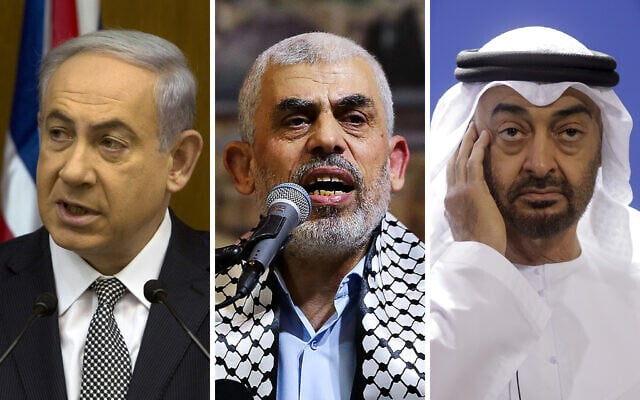
Notorious terror chief Mohammad Deif, who is considered Hamas’s “chief of staff,” continues to run the military wing. Despite the severe wounds he has suffered in various assassination attempts, he continues to play a major role in building up Hamas’s military might in Gaza, the officials added.
The chief of Hamas’s “political bureau,” Yahya Sinwar, works closely with Deif and is considered his “defense minister” of sorts. Sinwar, who spent 22 years in Israeli prison, was released in the 2011 Shalit prisoner-exchange deal.





The Times of Israel Community.