

Here’s to you, Mr. Simon — homage to Jewish pop legend opens in LA
Rock and Roll Hall of Fame exhibit focuses on celebrated songwriter’s cultural and social impact — the ‘Graceland’ chapter, the TV and movies, the trailblazing collaborations
 Add ToI as a Preferred Source on Google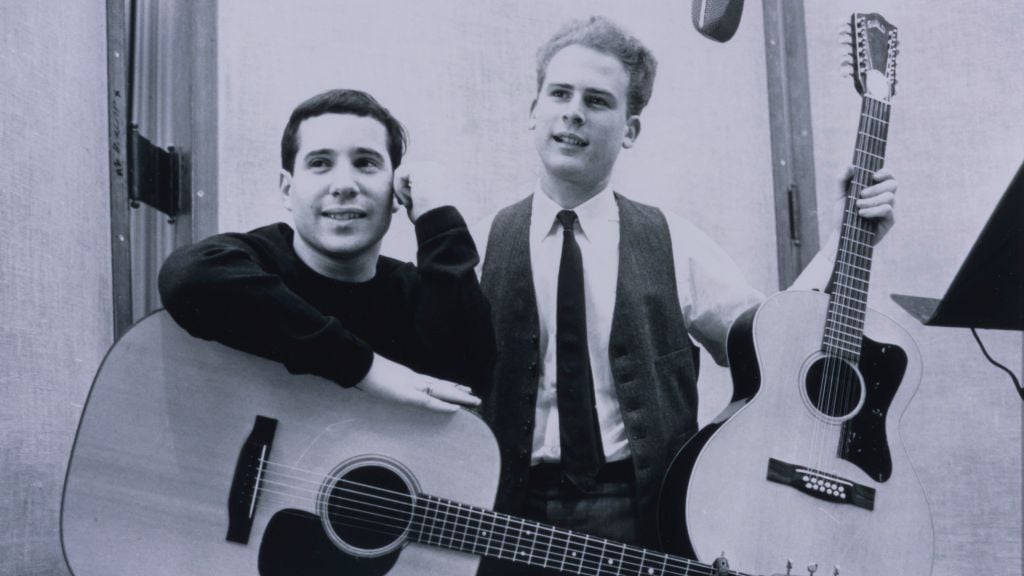
LOS ANGELES — Paul Simon’s first hit sounds nothing like Paul Simon. Recorded with his friend Art Garfunkel in 1957, “Hey Schoolgirl” is more of a twangy sock hop tune than a counterculture folk anthem — one that would eventually lead the duo, then known as Tom & Jerry, to their first television appearance.
“One month Artie and I were watching American Bandstand, and the next month we were on the show,” Simon later told Crawdaddy magazine. “It was an incredible thing to have happen to you in your adolescence.”
This pseudonymous era of Simon’s career — pre-“The Boxer,” pre-“Cecilia,” pre-“Mrs. Robinson” — helps kick off Paul Simon: Words & Music, a wide-ranging collection on the life and times of the legendary songwriter. Launched at the Rock and Roll Hall of Fame in Cleveland in 2014, it makes its West Coast debut this month at the Skirball Cultural Center in Los Angeles.
After the success of Tom & Jerry (“Hey Schoolgirl” hit #52 on the Billboard pop singles charts), Simon and Garfunkel went on to record their debut album, “Wednesday 3AM” under their official surnames — something their first record company had allegedly avoided due to a wariness around promoting the names of Jewish artists.
Almost half the exhibit — which, in addition to the original artifacts, includes more than 75 previously unseen items from Simon’s personal archives — is devoted to this period of his career: photos of Simon and Garfunkel recording in the studio, goofy outtakes from their cover shoot of the album “Bookends,” hand-written lyrics to “The Boxer” on an inflight magazine, and Simon’s original “Bridge Over Troubled Water” sheet music, which the arrangers erroneously typed in as “Like a Pitcher of Water.”
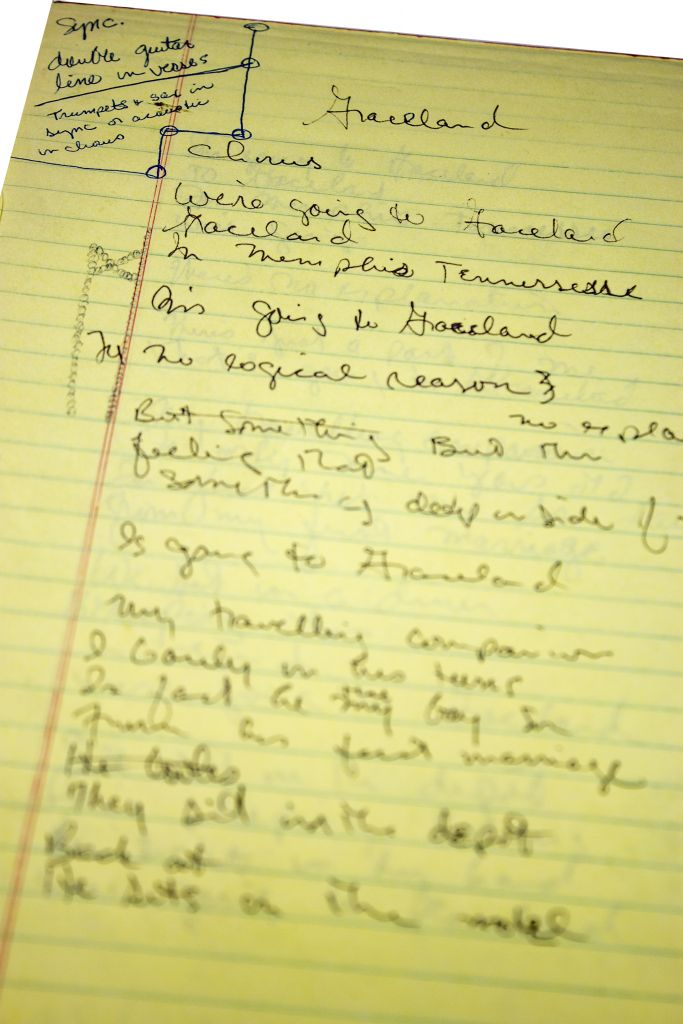
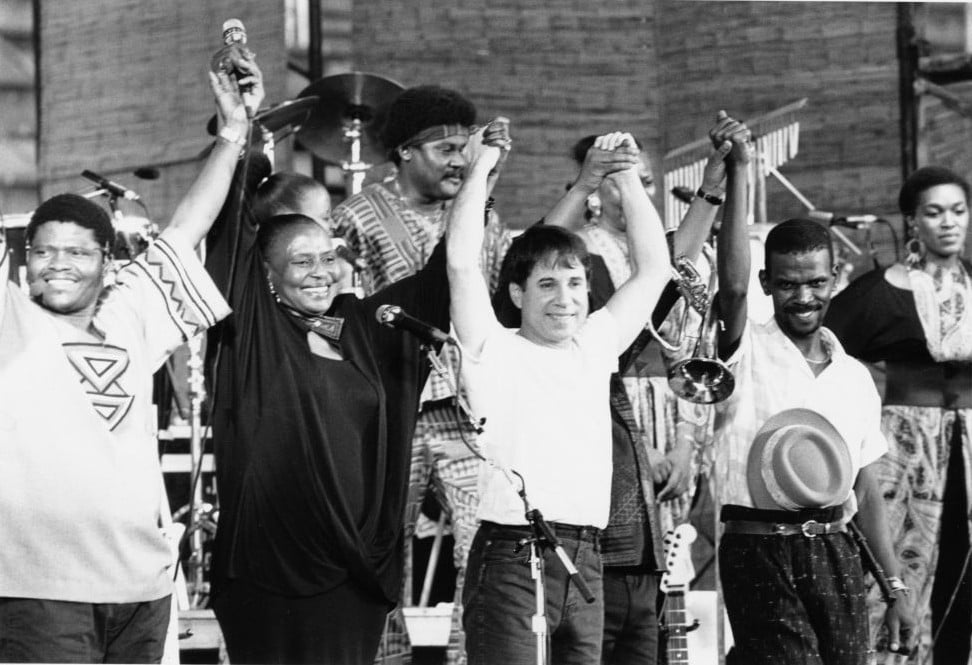
After that, the focus is on Simon’s solo years, from his controversial work traveling to South Africa to record “Graceland” to his most recent album “Stranger to Stranger,” which features a cover portrait of Simon by the artist Chuck Close — the original of which can be seen in the Skirball show.
Simon has always been a reticent public figure, with an interest in avoiding self-reflectivity, at least outside of performing his own material. This makes Words & Music a rare glimpse into the man behind the songs. But Robert Kirschner, the Skirball’s museum director, emphasizes that the focus of this show is a bit different from its Cleveland counterpart.
While the Rock Hall was more interested in how the songs themselves were crafted, the Skirball is absorbed with the cultural and social impact of Simon’s work — including his interest in exploring multiple genres of music and bringing them into his orbit.
“We wanted to include more about the larger context of his career — the ‘Graceland’ chapter, the popular television and movies, the collaborations and trailblazing collaborations, his affinity of drawing from multiple sources,” says Kirschner. “That, I think, speaks more to our purposes — trying to understand the nature of his creativity, the nature of his impact, and his values and the community he creates.”
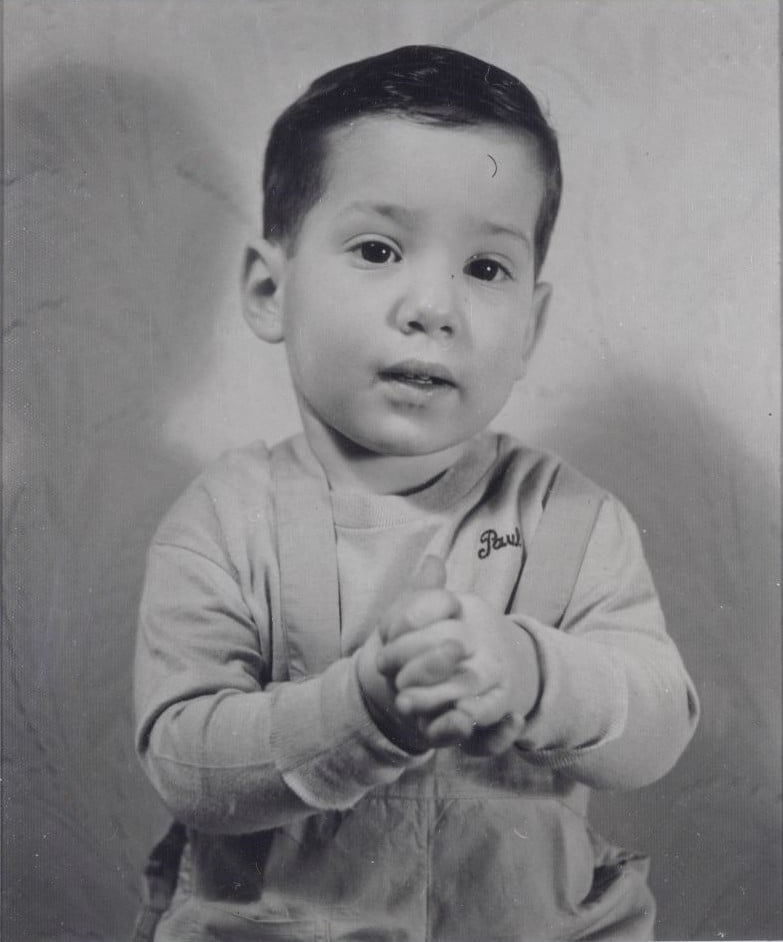
Simon the lyricist, Simon the singer, and even Simon the globalist is well-documented, but less so is Simon the Jew — which, on the surface, makes this exhibit a strange choice for the Skirball, an institution that looks to deepen the appreciation of Jewish civilization and culture. While Simon grew up in a Jewish section of Queens, and married his second wife, late actress Carrie Fisher, in a Jewish ceremony, he has never spoken at length about his approach to religion — at least not publicly.
So how does a seemingly secular, albeit extremely popular, Jew connect to the Skirball’s overall mission? As Kirschner points out, like the monographic show they did for Bob Dylan, who has his own publicly detached history with Judaism, Simon’s exhibit is all about highlighting an artist who is ancestrally Jewish and who represents a specific dynamic in pop culture where Jews have made a broader impact.
Simon himself “may not be particularly observant,” adds Kirschner, “but the Skirball doesn’t necessarily have that as a criteria. We are interested in the Jewish experience and all of its ramifications.”
Part of that experience is about community and fusing together different cultures to create an entirely new point of view, something Simon did time and time again in his work. It’s fitting, then, that Words & Music ends with the Paul Simon Music Lab, where visitors will be able to drum and sing along together to a few of Simon’s creations.
“One of the exciting things about the Music Lab is that you get to pick up on his creative process,” says Cate Thurston, managing curator of the Skirball version of the exhibit.
The Lab will also give visitors a better breakdown on how Simon was able to seamlessly fuse so many disparate influences.
“Jews have lived on so many continents through so many centuries and encountered so many cultures,” says Kirschner. “The ideas he could take in Peruvian music and South African music and blues and gospel, is very characteristic of his contribution, and we see that as a very Jewish phenomenon in America and beyond.”
‘Paul Simon: Words & Music’ runs from April 27 – September 3 at the Skirball Cultural Center.










The Times of Israel Community.