

Iran deploys new warship to gulfs of Aden, Oman amid tensions
Top military official says domestically built Sahand will escort Iranian vessels around Arabian Peninsula as unrest in strategic waterways continues
 Add ToI as a Preferred Source on Google
Iran has dispatched its most advanced warship to protect Iranian vessels around the Arabian Peninsula amid high tensions with the United States, a top military official announced on Monday.
Deputy Coordinator of the Iranian Army, Rear Admiral Habibollah Sayyari, told state media the new Sahand destroyer and several support vessels were deployed to “escort” Iranian vessels in in the Gulf of Aden and the Gulf of Oman.
The Gulf of Oman is located east of the Persian Gulf and the strategic Strait of Hormuz, the passageway for nearly a third of all oil traded by sea. The Gulf of Aden lies south of Yemen, and connects the Arabian Sea to the Red Sea.
Sayyari was quoted in Iran’s English-language Press TV as saying that it was the maiden voyage of the domestically made Sahand, which joined the country’s naval fleet last December.
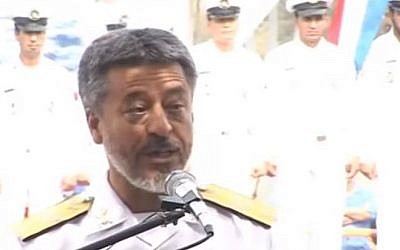
State-run media boasts the Sahand destroyer is equipped with sophisticated weapons and radar-evading technology, but like many new achievements or acquisitions by Iran’s military, the Sahand has never been seen in action and its capabilities cannot be independently verified.
Monday’s flotilla announcement comes amid heightened tensions between the US and Iran over the collapse of Tehran’s nuclear deal with world powers and the re-imposition of US sanctions
Tensions have particularly escalated in the Gulf since May, when the US boosted its military presence in the region in response to what it called indications of a “credible threat” by Iranian regime forces.
Since then, ships traversing the Strait of Hormuz have been attacked, drones downed and oil tankers seized. At the height of the crisis in June, US President Donald Trump called off airstrikes against Iran at the last minute after the Islamic Republic’s forces shot down a US drone.
One issue of particular tension in recent weeks has been freedom of navigation in and around the Persian Gulf after Iran seized three foreign ships there, including the British-flagged Stena Impero, while an Iranian tanker was held by Gibraltar. The British overseas territory eventually allowed the ship — suspected by the US of shipping oil to Syria in breach of EU sanctions — to sail.
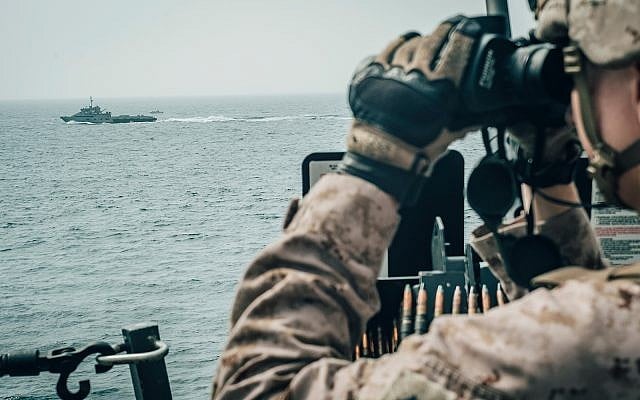
On Friday, Iranian Foreign Minister Mohammad Javad Zarif expressed fury that the US was “harassing” ships in international waters “and preventing freedom of navigation.”
Zarif insisted that Iran did not want war with the United States but warned that a ramped-up Western naval presence in the Gulf increased the risk of accidents which analysts say could spark a wider confrontation.
“We do not seek military confrontation,” Zarif said. “But it is clear bringing naval vessels to the Persian Gulf… will not increase security… but the possibility of accidents and incidents.”









The Times of Israel Community.