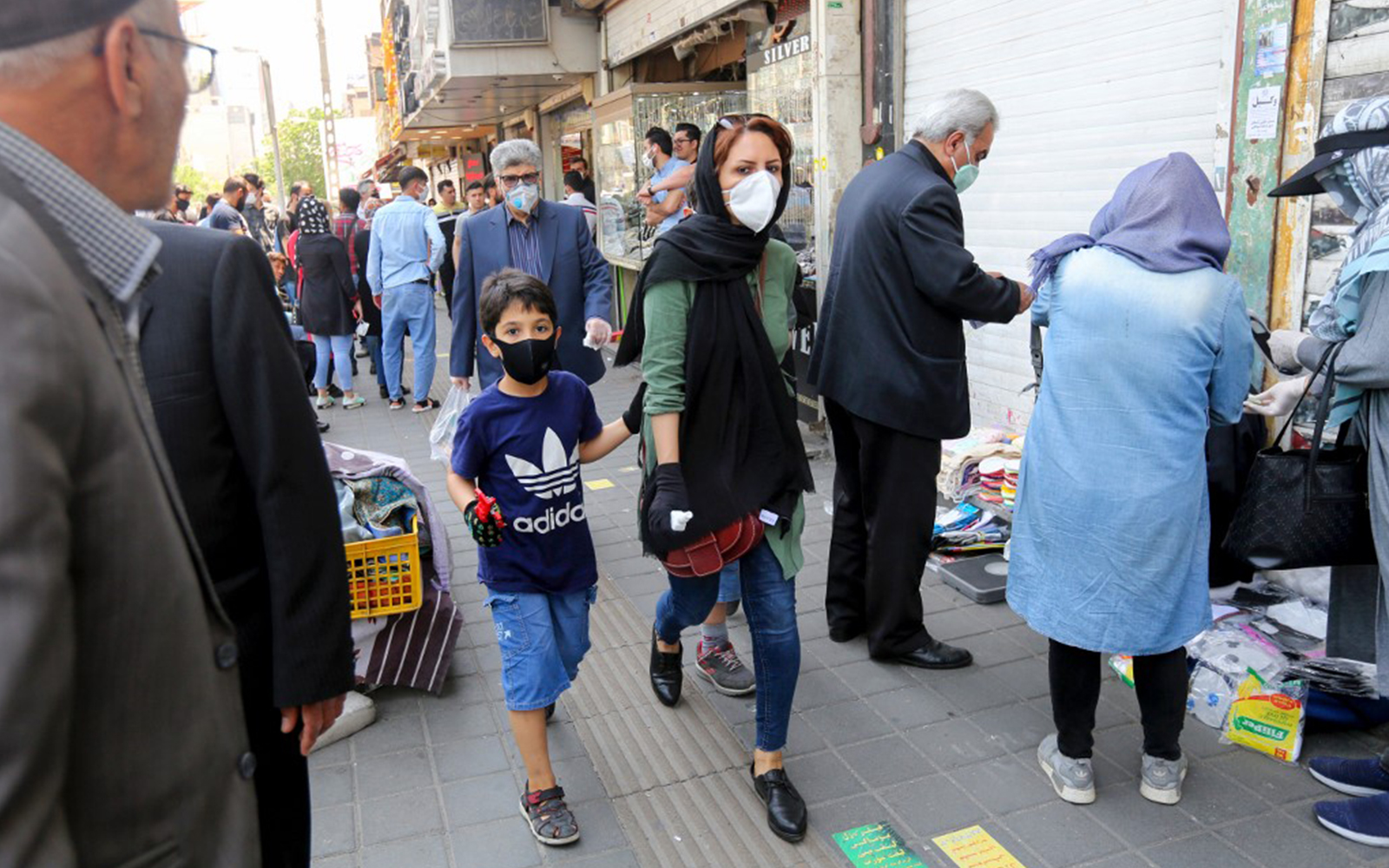
Iran warned Saturday that coronavirus infections were rising in the southwest despite a decline in other regions, as it announced more than 1,500 new confirmed cases.
“All provinces are showing a gradual drop in new infections… except for Khuzestan, where the situation is still concerning,” health ministry spokesman Kianoush Jahanpour said in televised remarks.
The health ministry stopped publishing provincial figures for the coronavirus last month.
It has instead opted for a color-coded system of white for low-risk parts of the country, yellow for medium-risk and red for high-risk areas.
Latest reports have shown Khuzestan red along with a few other provinces, including the capital Tehran and the Shiite clerical centre of Qom, where Iran reported its first cases in February.
Get The Times of Israel's Daily Edition
by email and never miss our top stories
By signing up, you agree to the
terms
Early last week, Iran’s official daily caseload hit its lowest level since March 10, but it has since climbed again steadily.
Jahanpour said 1,529 new cases were confirmed in the past 24 hours, taking the overall total to 106,220.
There were 48 new deaths taking the overall toll to 6,589.
Of all those admitted to hospital, 85,064 people had recovered and been discharged.
Experts both at home and abroad have cast doubt on Iran’s official figures, saying the actual number of cases could be much higher.
Help us report truthfully on social media

As a multimedia journalist, my job is to take the quality, fact-based journalism produced by The Times of Israel newsroom and make it accessible across every platform — from Instagram posts to podcasts to short-form videos.
This is how many, especially young people, consume news these days. But misinformation is rampant on social media. Our team at ToI produces accurate, responsible short-form reporting on Israel and the Jewish world.
If you believe in the importance of factual social media journalism, please consider joining our reader support group, The Times of Israel Community. Your financial support is essential to sustain responsible multimedia reporting.
— Gabriella Jacobs, multimedia journalist
Support our work
Support our work
Already a member? Sign in to stop seeing this
You're a dedicated reader

We’re really pleased that you’ve read X Times of Israel articles in the past month.
That’s why we started the Times of Israel - to provide discerning readers like you with must-read coverage of Israel and the Jewish world.
So now we have a request. Unlike other news outlets, we haven’t put up a paywall. But as the journalism we do is costly, we invite readers for whom The Times of Israel has become important to help support our work by joining The Times of Israel Community.
For as little as $6 a month you can help support our quality journalism while enjoying The Times of Israel AD-FREE, as well as accessing exclusive content available only to Times of Israel Community members.
Thank you,
David Horovitz, Founding Editor of The Times of Israel
Join Our Community
Join Our Community
Already a member? Sign in to stop seeing this


 Add ToI as a Preferred Source on Google