

Israel grants 4G access to Palestinian West Bank cell companies after war delay
Communications Ministry ratifies deals inked by Israeli, Palestinian telecom firms; implementation expected to take 4-6 months; move won’t cover Gaza, where networks stuck on 2G
 Add ToI as a Preferred Source on Google
Jacob Magid is The Times of Israel's US bureau chief
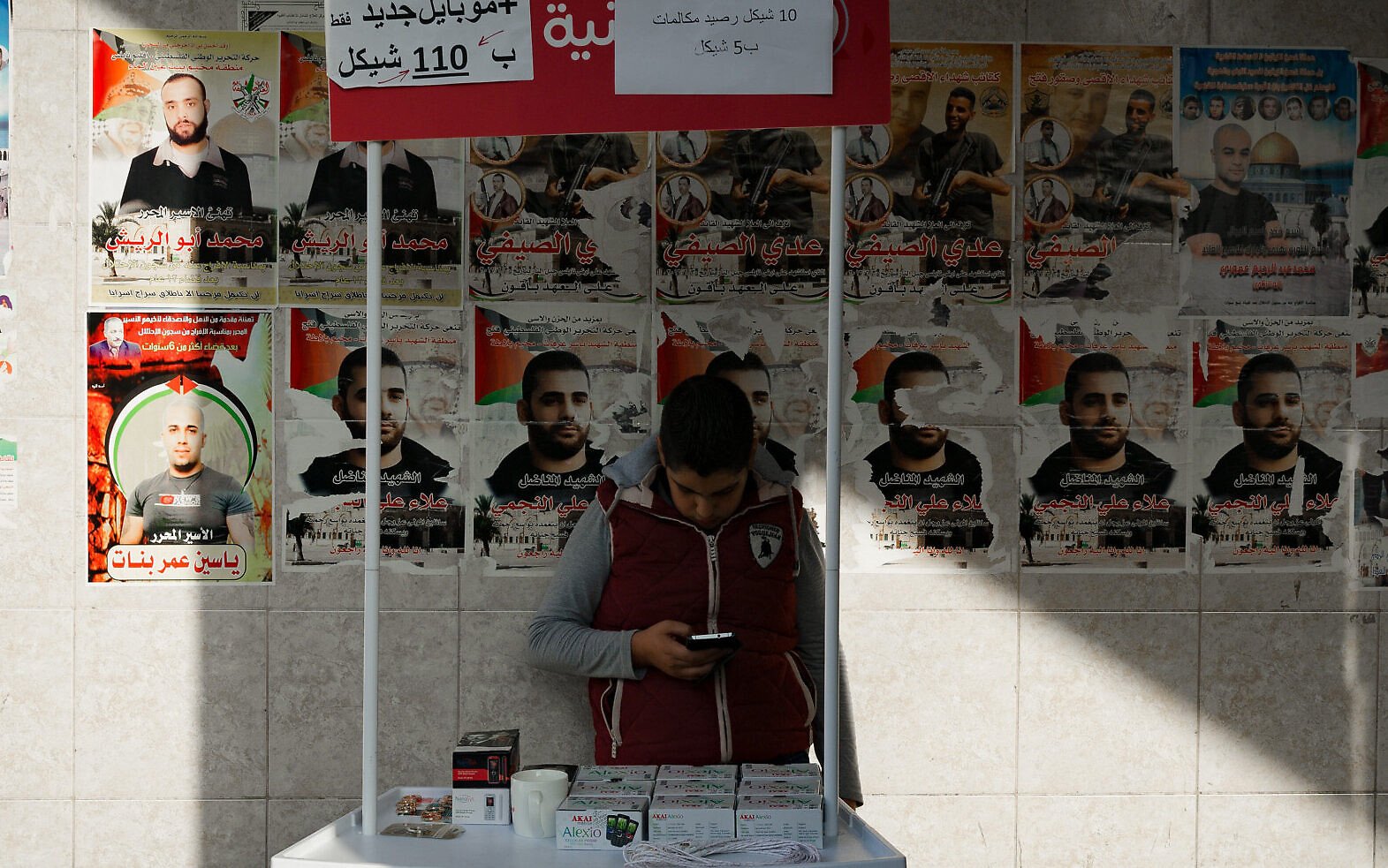
Palestinian telecommunications companies in the West Bank are slated to finally gain access to fourth-generation cellphone service, known as 4G, in the coming months, after years of delays tied to the war in Gaza.
The Israeli Communications Ministry revealed in a statement to The Times of Israel on Monday that, a day earlier, it had ratified agreements recently reached between the main Israeli and Palestinian telecommunications firms, allowing for implementation of the long-pledged upgrade.
The agreements pave the way for the purchase and delivery of 4G equipment needed to transfer Palestinian cellular networks from 3G to 4G, with the process expected to take four to six months before going live, according to an Israeli official and a Palestinian official, who each spoke on condition of anonymity.
The move will not extend to the war-torn Gaza Strip, where Israel only grants cellular providers access to much slower 2G networks. An agreement on principles reached by Israel’s Coordinator for Government Activities in the Territories (COGAT) and the Palestinian Authority in December 2022 stipulated that an upgrade in the coastal enclave will require a separate approval from the political leadership in Jerusalem — one that isn’t expected in the foreseeable future, the Israeli official said.
The US, under former president Joe Biden and his ambassador to Israel Tom Nides, had pushed Jerusalem to allow for the upgrade in both territories as part of a series of modest steps aimed at boosting the Palestinian economy. That led to the aforementioned 2022 deal, signed under the government led by former prime ministers Naftali Bennett and Yair Lapid.
But contacts were marred following the Hamas-led October 7, 2023, onslaught and the ensuing Gaza war, leading to limited progress during much of the last two years.
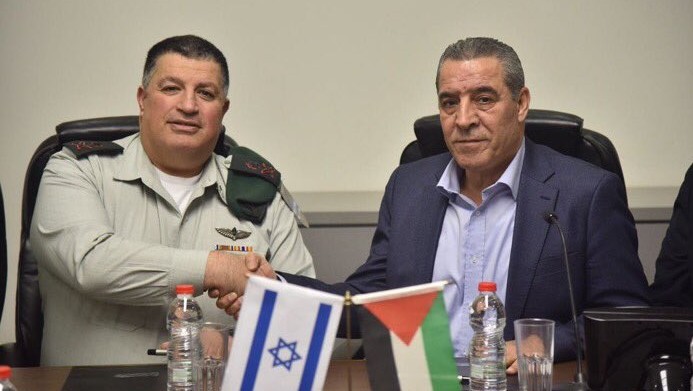
The Israeli official insisted that the delay was not politically motivated and that technical and logistical issues from both sides slowed what is already an arduous process.
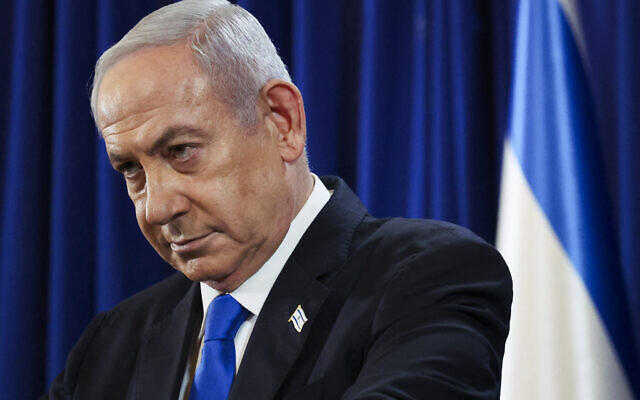
But the Palestinian official argued that the current hardline government headed by Prime Minister Benjamin Netanyahu dragged its feet in advancing the switch to 4G as part of its broader hostility toward the Palestinians, and only agreed to lift its opposition due to Israel’s own desire to shut down its 3G cellular networks.
Israel maintains security control over the West Bank and Gaza, and controls the territories’ telecommunications. Although Israel upgraded to 4G in 2013 and has since begun building super-fast 5G and LTE networks in urban centers, Palestinian companies still use 3G networks, which they received access to in 2018.
Israeli cellphone companies operate widely in the West Bank, and coverage reaches into most Palestinian areas. Many Palestinians use Israeli cell networks, which are both cheaper and provide faster service, rather than sticking with their slower Palestinian counterparts.
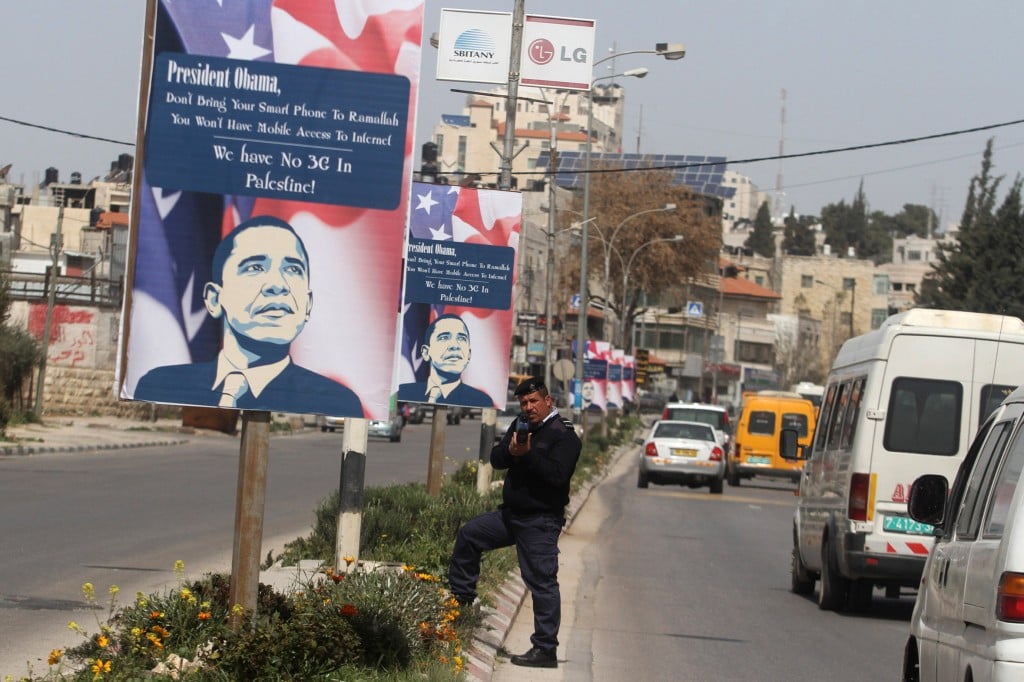
Israeli networks are meant to service West Bank settlements without impinging on Palestinian Authority-run areas, according to agreements between the two sides. But on the ground, Israeli cellular signals often reach deep into Palestinian cities.
According to the World Bank, the Palestinian economy lost between $436 million and $1.5 billion between 2013 and 2015, due to Israeli carriers’ “siphoning off” Palestinian customers, to the tune of around 30 percent of the total Palestinian cellular market.
Explaining the discrepancy in access to cell service, a source familiar with the negotiations between Israel and the PA said, “The monopolistic nature of the Israeli telecommunications market means having a Palestinian competitor would cost them a significant potential subscriber base in an already tiny market.”







The Times of Israel Community.