

For Israelis, this year, Passover marks a celebration of freedom from virus
With over half the population fully vaccinated, holiday largely returns to normal, marking a stark turnaround from last year
 Add ToI as a Preferred Source on Google
Ilan Ben Zion is an AFP reporter and a former news editor at The Times of Israel.
AP — A year ago, Giordana Grego’s parents spent Passover at home in Israel, alone but grateful that they had escaped the worst of the pandemic in Italy. This year, the whole family will get together to mark the Jewish feast of liberation and deliverance from the pandemic.
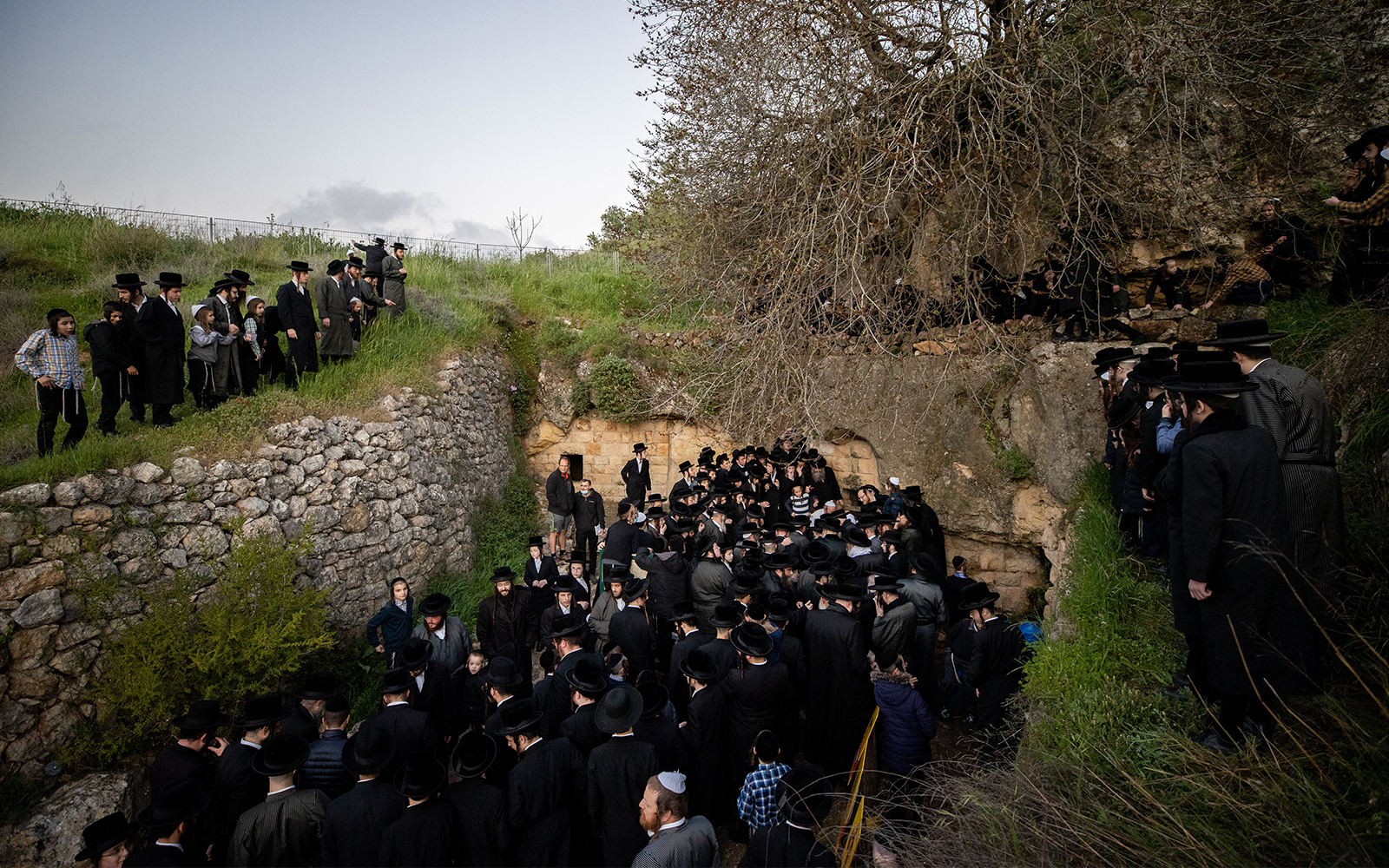
Israel has vaccinated over half its population of 9.3 million, and as coronavirus infections have plummeted, authorities have allowed restaurants, hotels, museums and theaters to re-open. Up to 20 people can now gather indoors and 50 outdoors.
It’s a stark turnaround from last year, when Israel was in the first of three nationwide lockdowns, with businesses shuttered, checkpoints set up on empty roads and people confined to their homes. Many could only see their elderly relatives on video calls.
“For us in Israel, really celebrating the festivity of freedom definitely has a whole different meaning this year after what we experienced,” said Grego, who immigrated to Israel from Italy. “It’s amazing that this year we’re able to celebrate together, also considering that in Italy, everybody is still under lockdown.”
Passover is the Jewish holiday celebrating the biblical Israelites’ liberation from slavery in Egypt after a series of divine plagues. The week-long springtime festival starts Saturday night with the highly ritualized Seder meal, when the Exodus story is retold. It’s a Thanksgiving-like atmosphere with family, friends, feasting and four cups of wine.
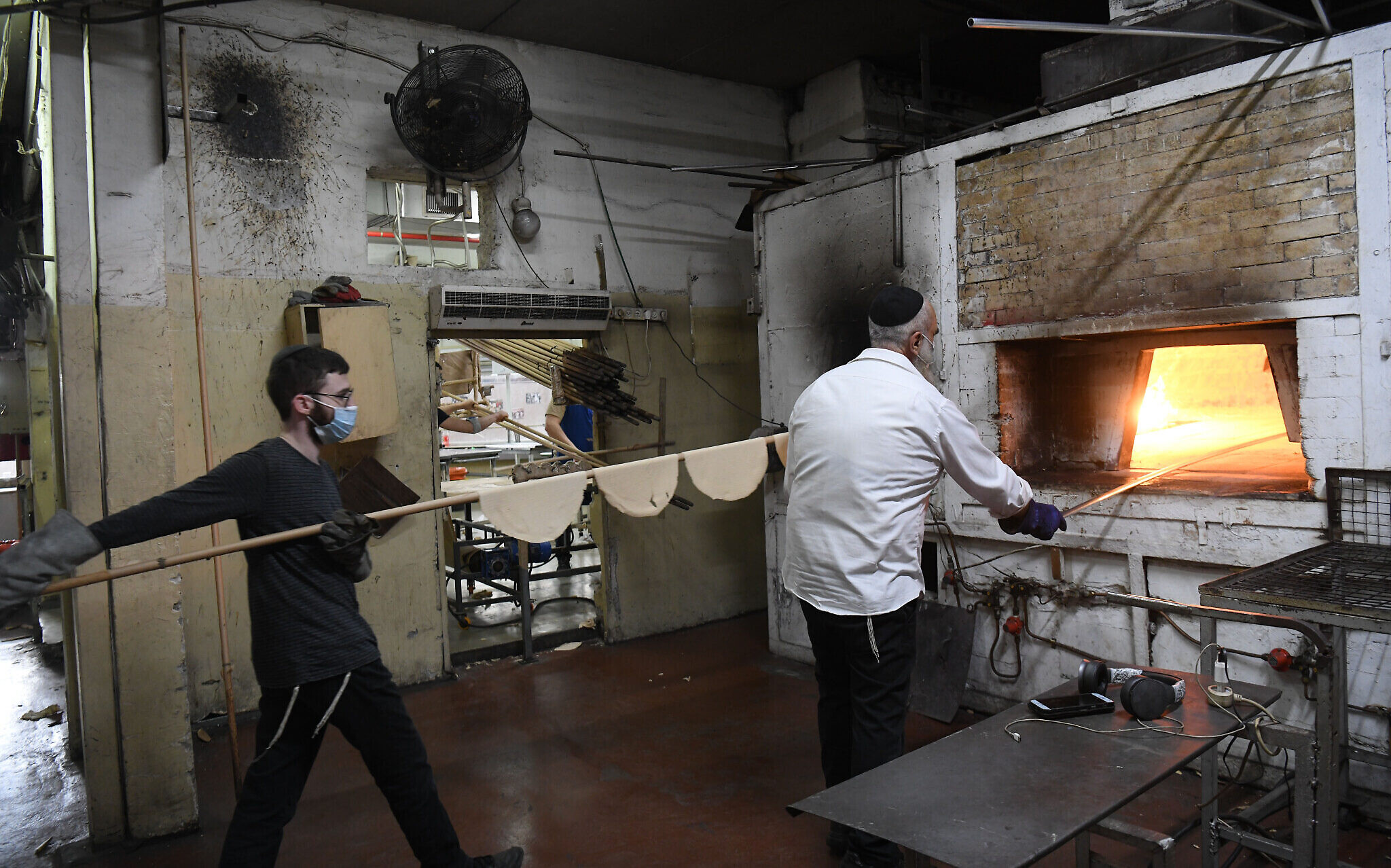
Throughout the week, observant Jews abstain from the consumption of bread and other leavened foods to commemorate the hardships of the flight from Egypt. Instead, they eat unleavened matzah.
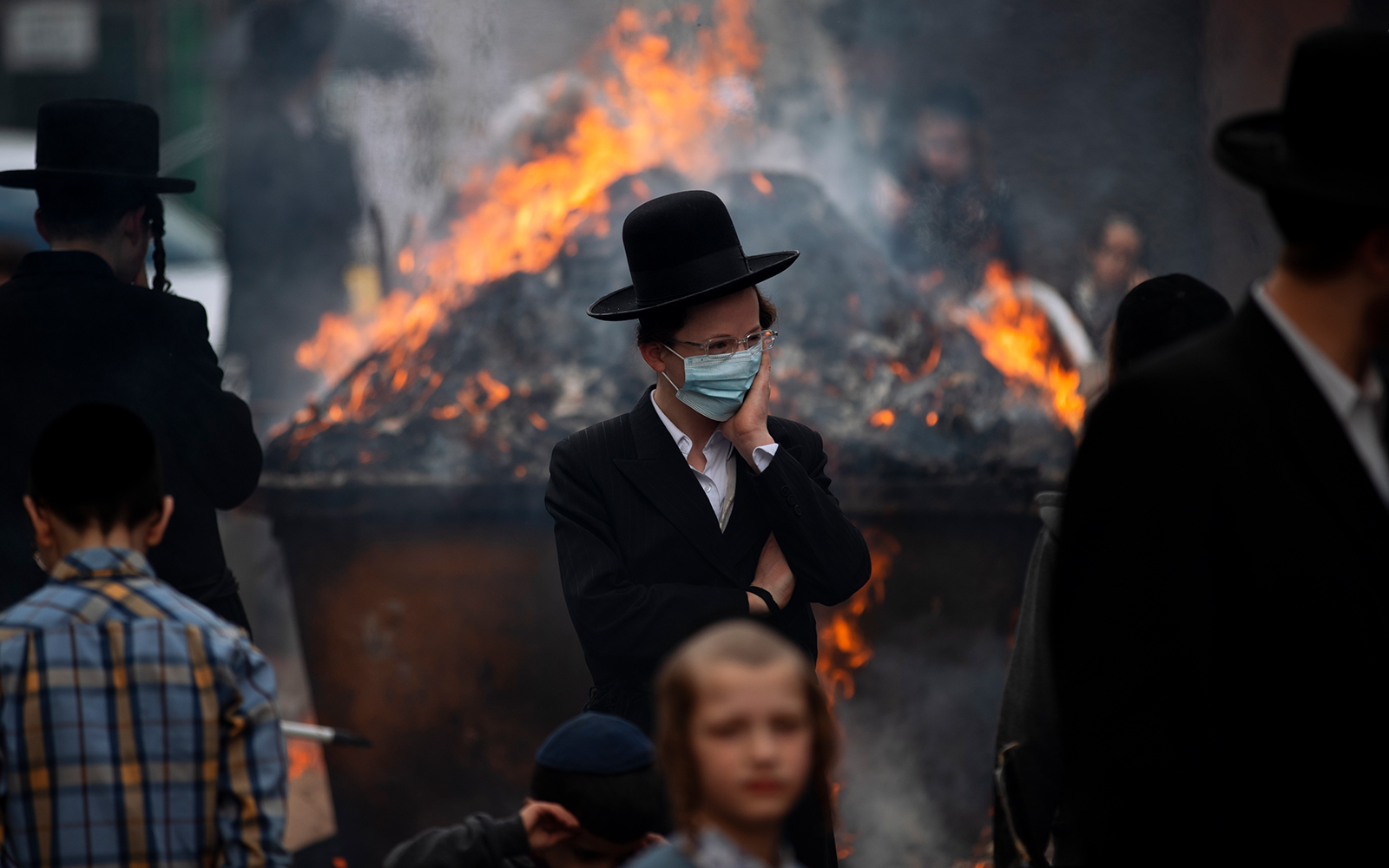
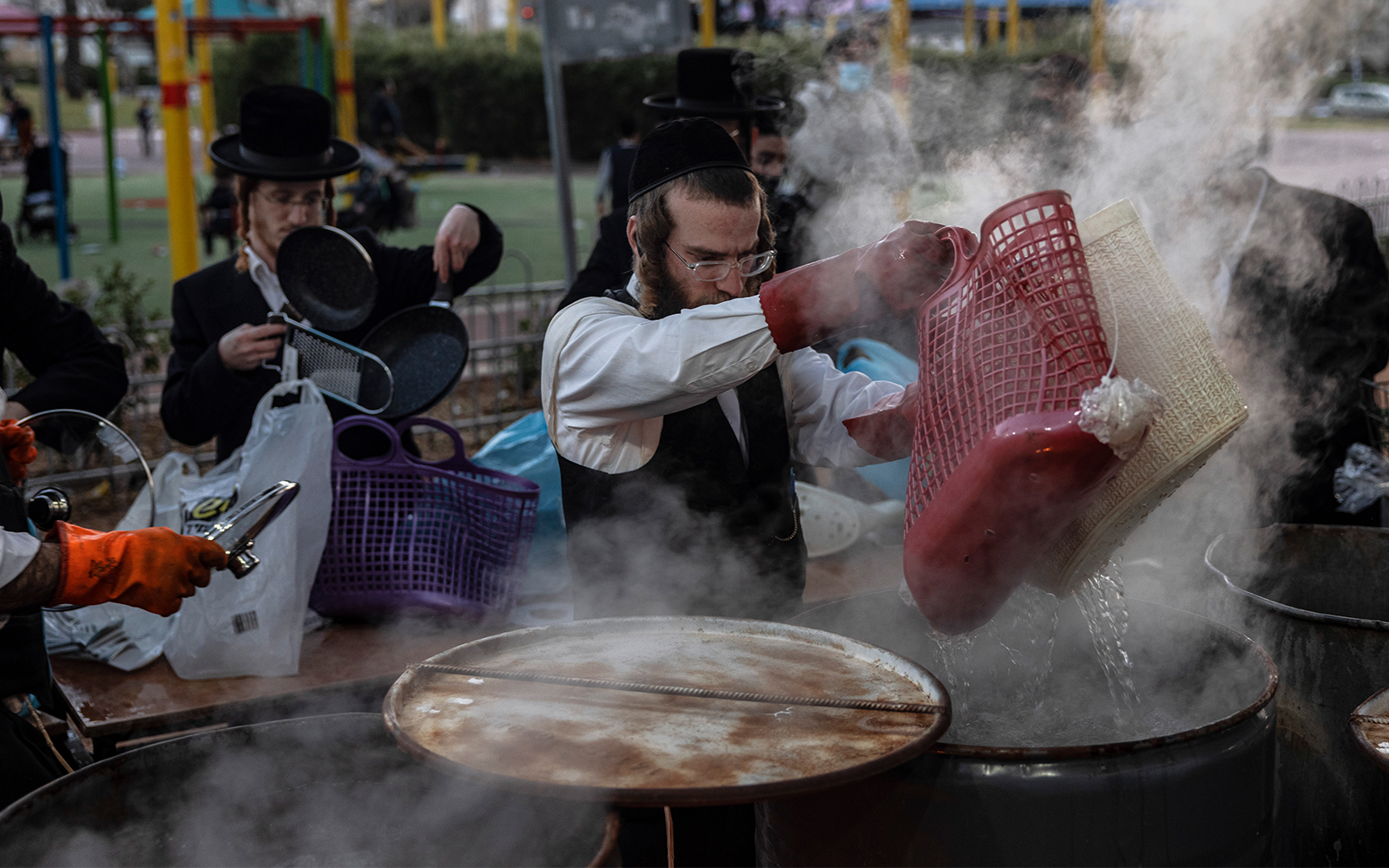
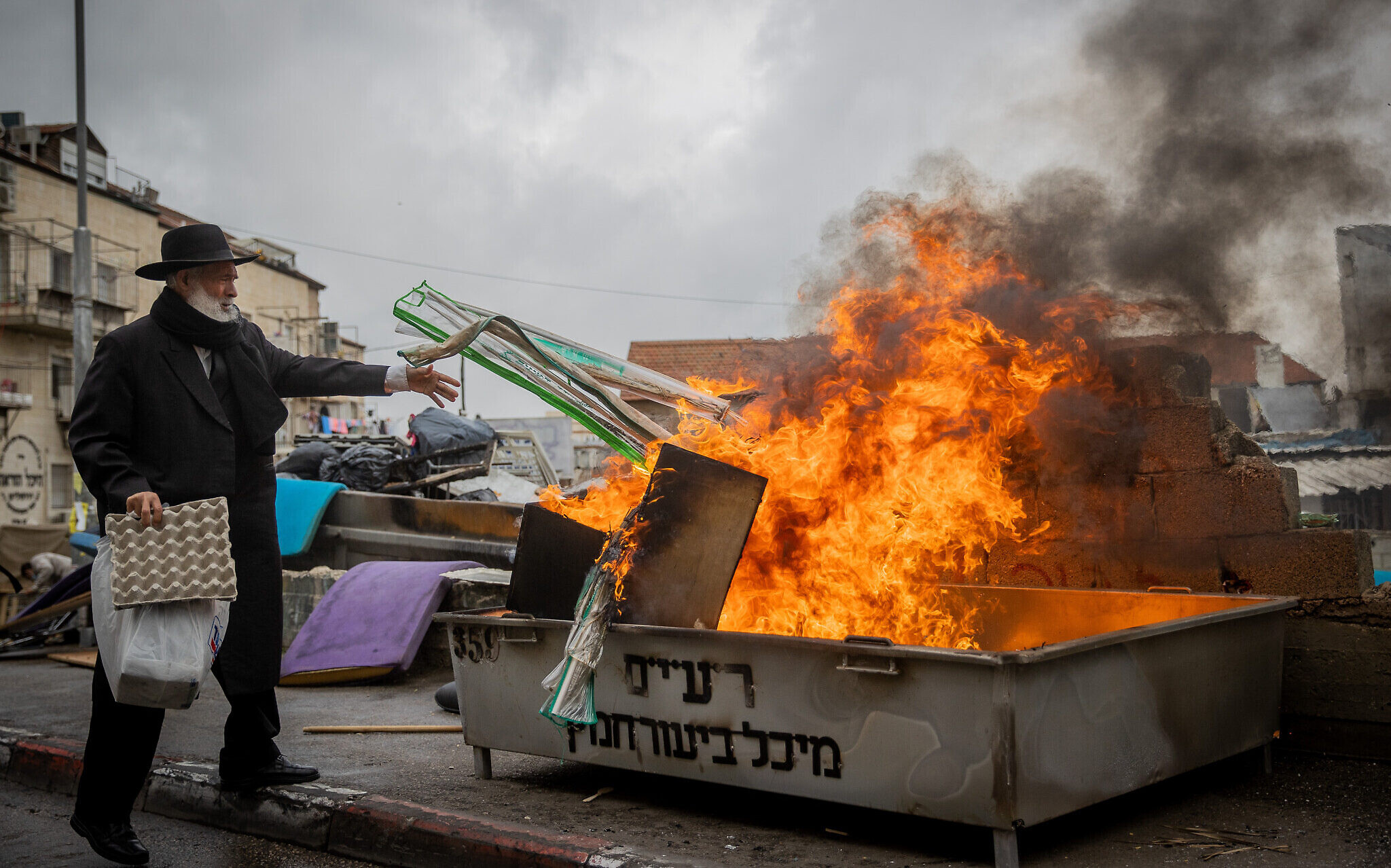
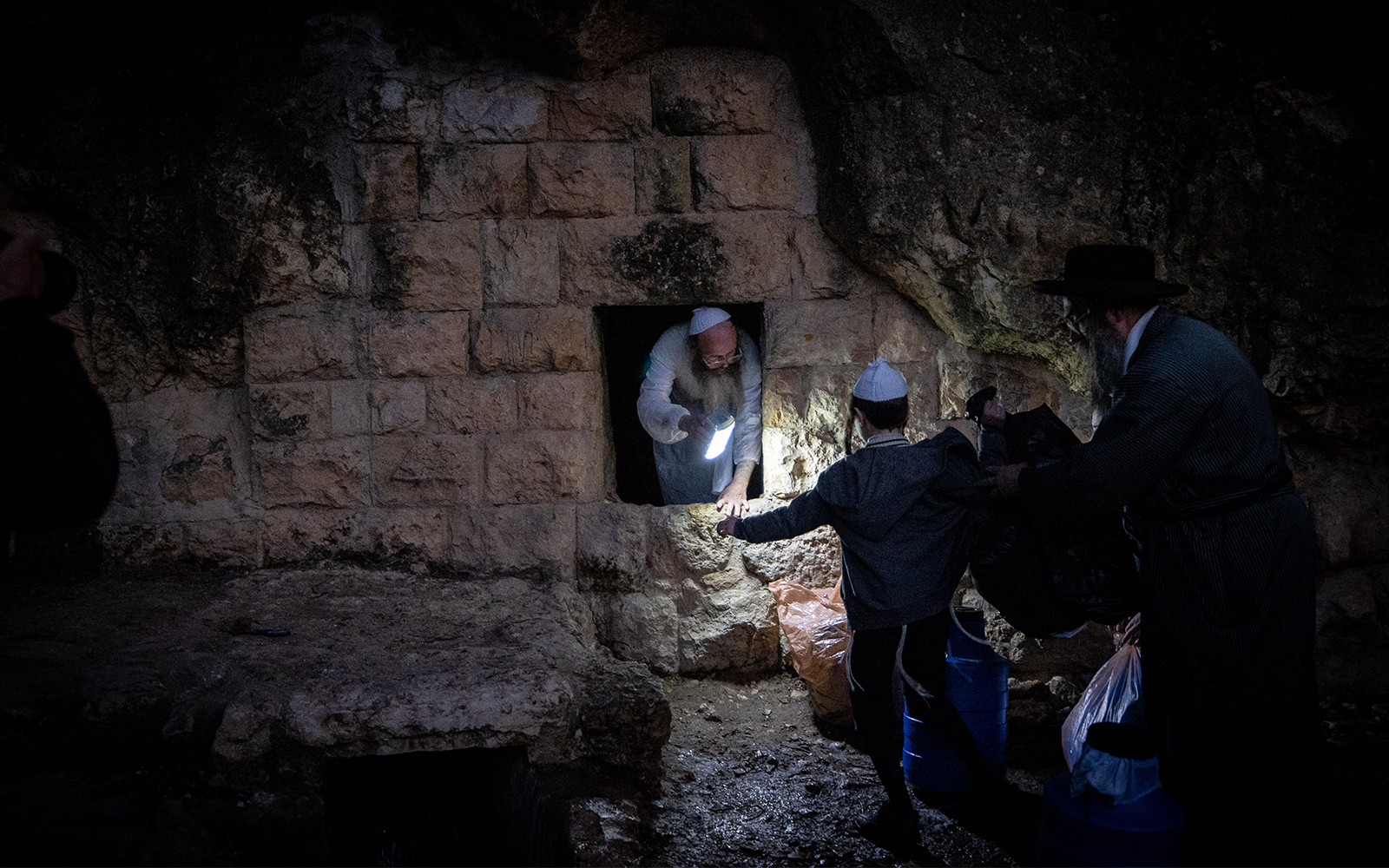
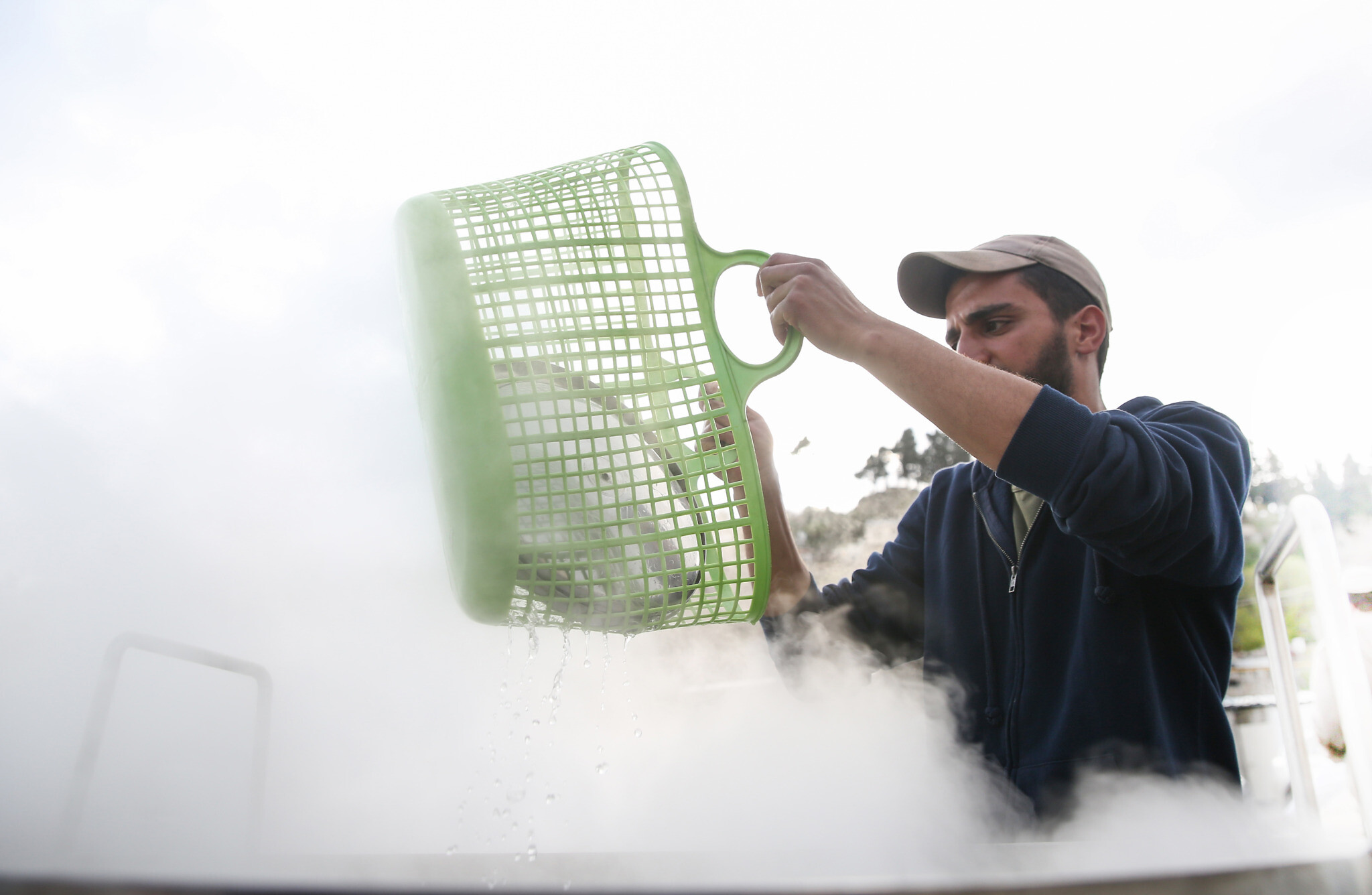
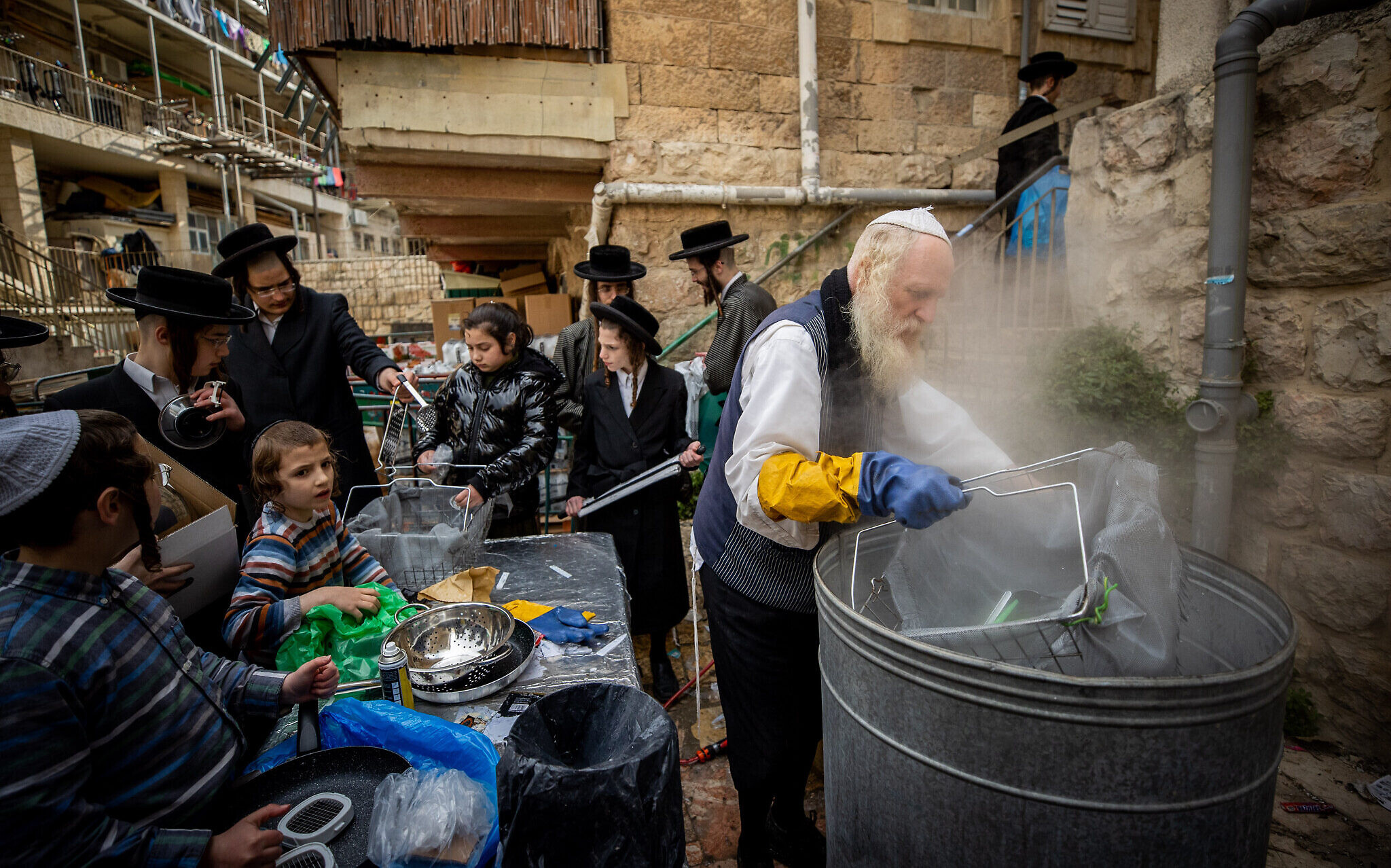
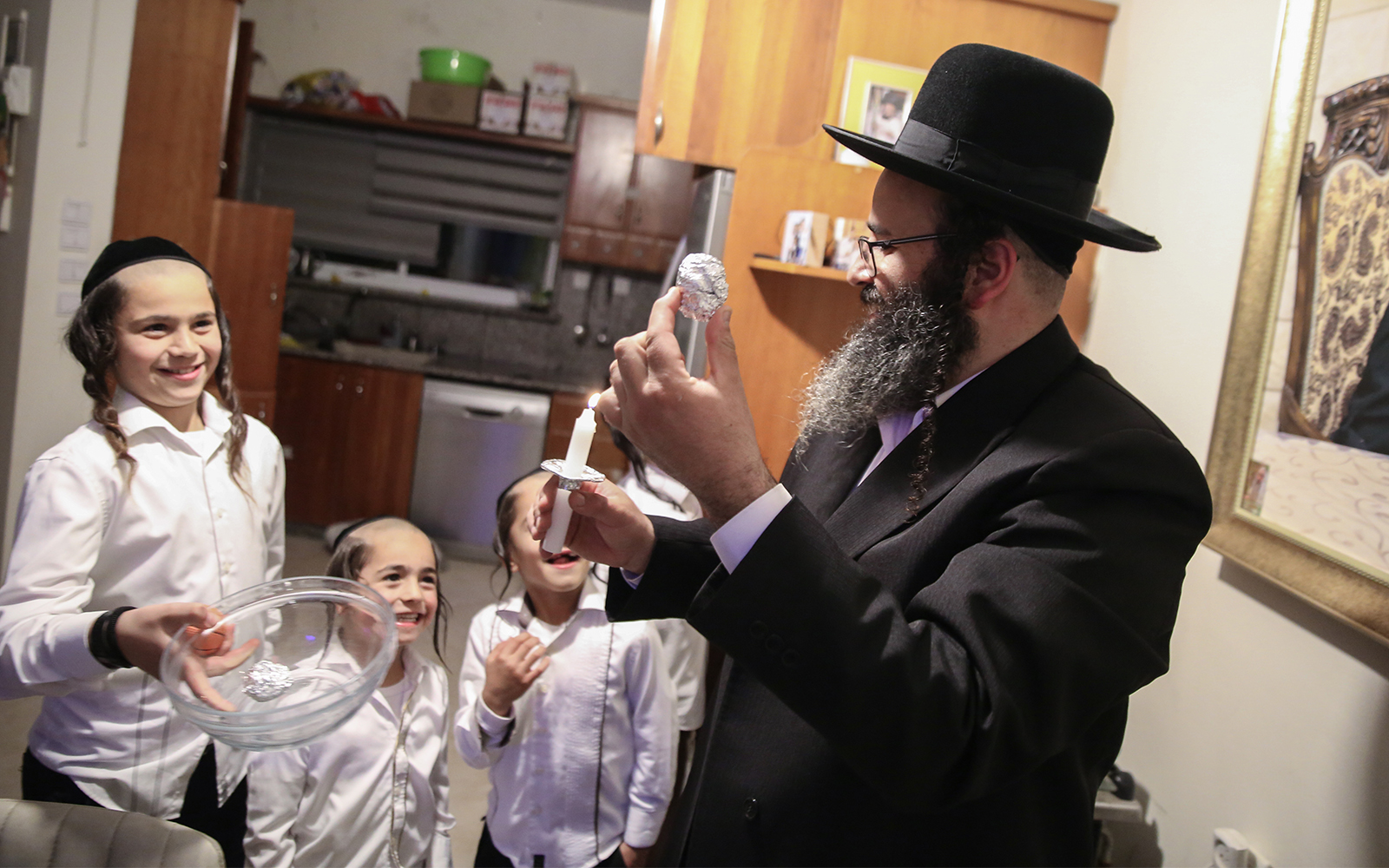
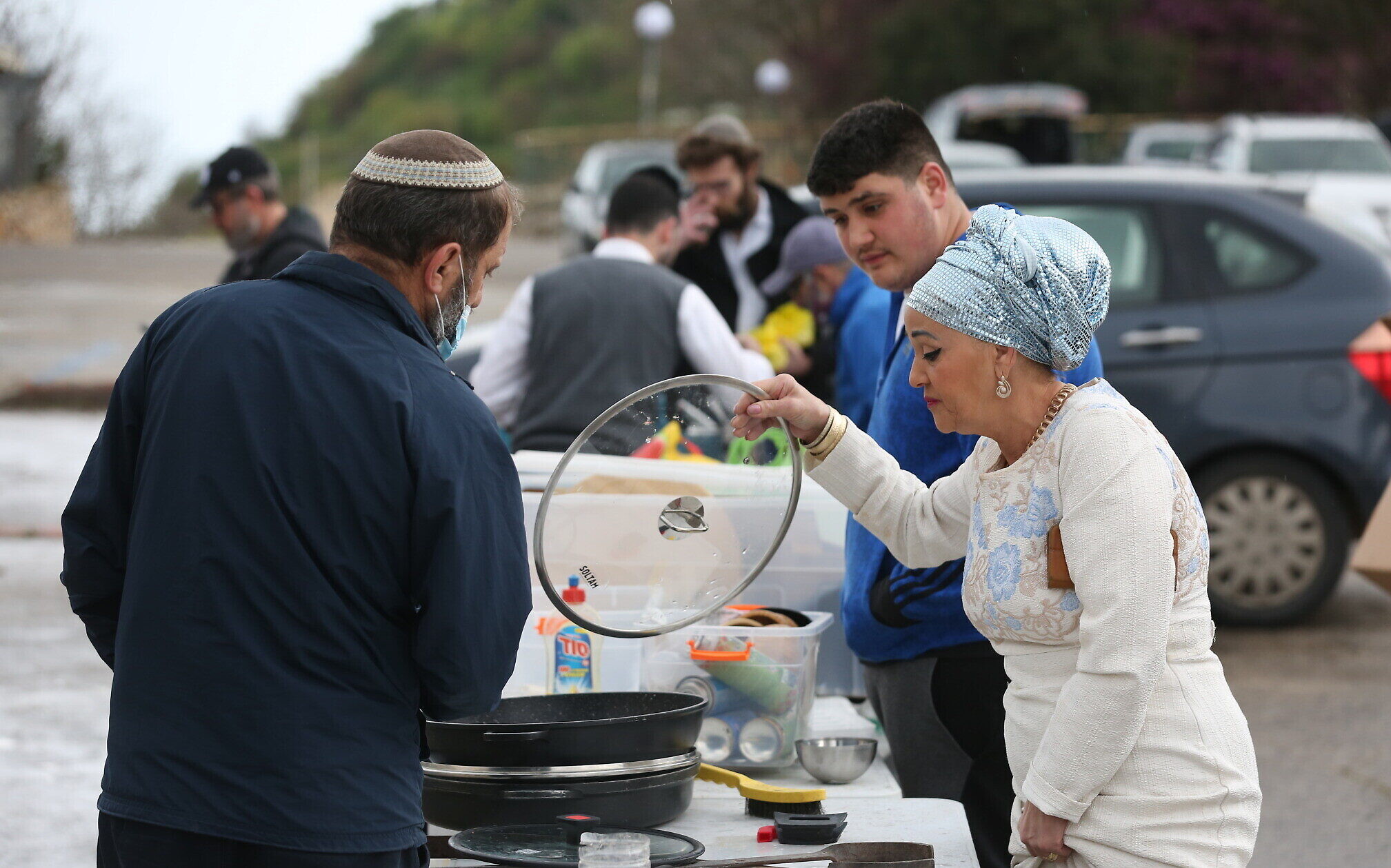
Holiday preparations involve spring cleaning to the extreme to remove even the tiniest crumbs of leavened bread from homes and offices. Cauldrons of boiling water are set up on street corners to boil kitchenware, and many burn their discarded bread, known as chametz. Supermarkets cordon off aisles with leavened goods, wrapping shelves in black plastic.
Most Israeli Jews — religious and secular alike — spend the Seder with extended family. Last year’s Passover was a major break in tradition.
Government-imposed restrictions forced the closure of synagogues and limited movement and assembly to slow the virus’ spread. Some conducted the ritual meal with their nuclear family, others over videoconference, while an unfortunate few held the Seder in solitude.
Another lockdown was imposed over the Jewish High Holidays in September, again preventing family gatherings, and a third came earlier this year with the emergence of more contagious variants of the virus.
By the third lockdown, Israel had launched one of the most successful inoculation campaigns in the world after the government secured millions of doses from Pfizer and Moderna. Israel has now vaccinated more than 80% of its adult population.
It’s too early to say that Israel’s coronavirus crisis is over, as new variants could emerge that are resistant to the vaccines.
For now, however, Israelis are enjoying what feels like a post-pandemic reality, lending special significance to Passover.
“It’s not only symbolic that it’s the holiday of freedom, but it’s also the holiday of the family,” said Rabbi David Stav, chief rabbi of the city of Shoham and head of the liberal Orthodox organization Tzohar.
“This year, families are uniting. People that were so lonely, especially older people, who were disengaged from their families, all of a sudden they discover the freedom and the joy of being together with them.”






The Times of Israel Community.