

Israel’s new ‘unity’ government is neither united nor likely to govern well
The deep distrust between Netanyahu and Gantz shapes every facet of the new coalition deal, transforming the nascent government into a two-headed hydra of contradictory impulses

 Add ToI as a Preferred Source on Google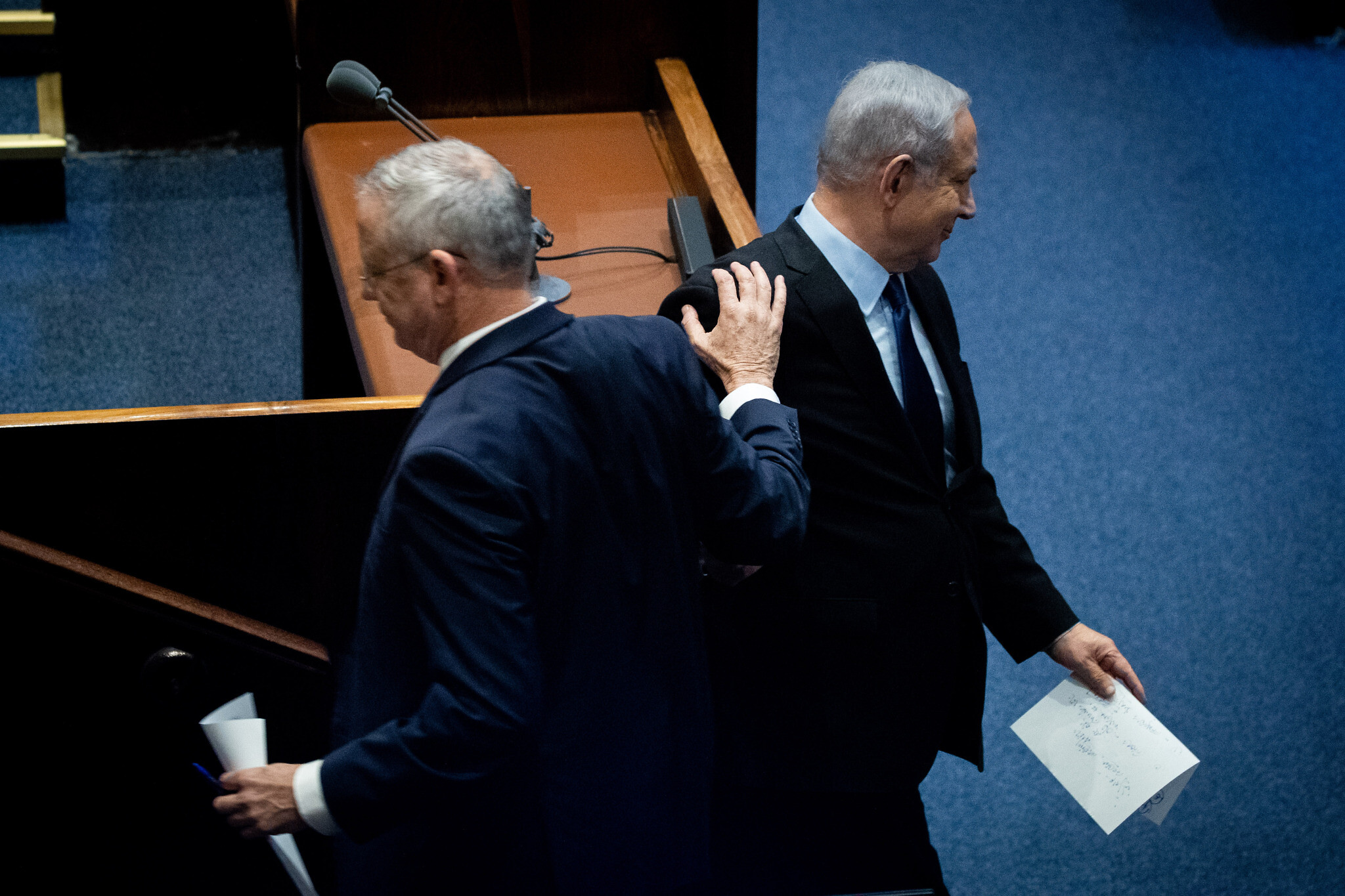
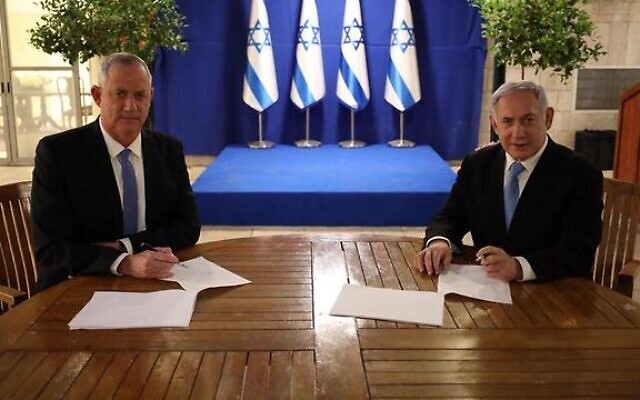
Israel’s 35th Government began to come into focus on Monday with the signing of a coalition agreement between Benjamin Netanyahu and Benny Gantz.
And what a strange government it is.
In that it avoids a fourth consecutive election in the midst of a coronavirus pandemic, it may be a laudable achievement. But scratch the surface of the 14-page agreement and one finds that the “unity” government being celebrated by the two leaders is a bloated, bifurcated regime shaped by the deep distrust upon which it was built.
So much about the accord is unprecedented that it is best to simply set the term aside and just take things as they come.
The agreement sets the government’s lifespan at 36 months, and divides it into two parts: a six-month “emergency period” and a longer “unity period” to follow.
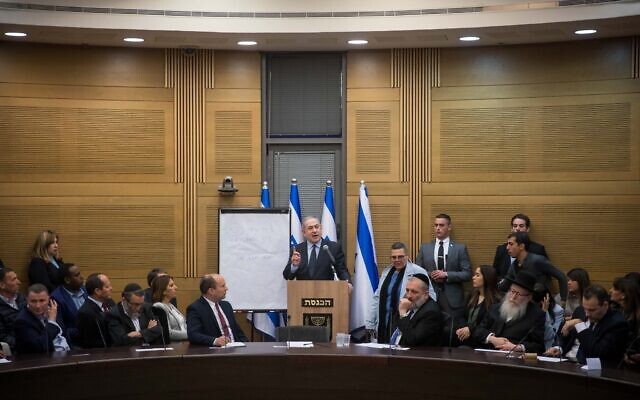
During the emergency period, which Gantz and Netanyahu can extend in three-month increments by mutual agreement, no legislation can be advanced that doesn’t either contend with the coronavirus emergency or is approved by both men.
That is, for the duration of the emergency period, each has a veto on legislative initiatives. There is one exception: annexation of parts of the West Bank, which Netanyahu is free to try to advance from July 1.
Blocs
“The government will be a two-bloc government,” declares Article 2. And it isn’t kidding.
The government’s fundamental structure is shaped by the two alliances led by Netanyahu and Gantz, the “Likud bloc” and the “Blue and White bloc.”
This is no simple matter of optics. Gantz and Netanyahu are each granted enormous power over their “blocs.” Each can fire a minister from his bloc, a power usually reserved for the prime minister alone. And neither — even if they happen to be a prime minister — can fire a minister from the other’s bloc.
Similarly, to move an agency or some legal power from the hands of one ministry to another would normally require the approval of the prime minister. No longer: it is now the head of the relevant bloc who must approve the move. Whatever branch of government is granted to the “Likud bloc” under the agreement becomes Likud’s fiefdom, and the same for Blue and White.
The government’s most basic structures, its most powerful committees — such as the security cabinet, which has the power to declare war, or the ministerial legislation committee — are divided between the blocs, with each bloc holding an equal number of members.
What little mention is made of specific policy priorities is also splintered along those lines. The right’s most prominent achievement — the coveted go-ahead for an annexation of some unspecified portion of the West Bank — is also the only item on the new government’s agenda that Blue and White isn’t required to support.
Meanwhile, Gantz won nearly everything he needed in his bid to show that he was fulfilling his vow to “defend democracy” and liberal values.
Likud was disarmed of the three ministries from which it led its culture war against the left: justice, communications and culture. Former speaker Yuli Edelstein, who defied a direct High Court order to convene a plenum vote on his successor (arguing it was an illegal imposition of the court’s will on the legislature) won’t return to the speaker’s chair.
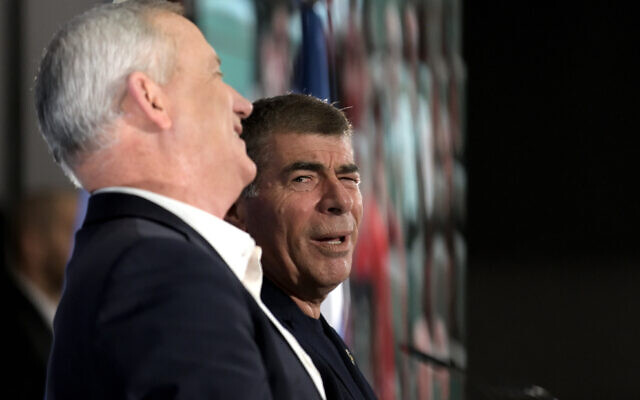
On the Judicial Appointments Committee, which is expected to appoint six Supreme Court justices in the new government’s lifespan, Gantz-allied Derech Eretz MK Zvi Hauser was selected as a compromise deciding vote on the committee. Hauser is a former Netanyahu cabinet secretary, a conservative on most issues, but thought to be a moderate on judicial appointments.
Distrust and verify
Each side is given sweeping powers to stymie the other side. Gantz and Netanyahu must agree on every item placed on the cabinet’s agenda. In the “emergency” phase, each has a straightforward veto on all legislation. In the later “unity” phase, Gantz’s justice minister — slated to be MK Avi Nissenkorn — will chair the powerful Ministerial Committee for Legislation, which gives the government’s imprimatur to new bills and whose decisions both blocs have committed to follow, but Likud will hold the deputy chairmanship. Both chair and deputy must agree on the committee’s agenda.
Then there are the astoundingly convoluted mechanisms by which each man hopes to force the other to fulfill their side of the bargain.
Gantz got a guarantee that if Netanyahu pushes a vote through the Knesset to dissolve the parliament and call early elections before Gantz has fulfilled his term as prime minister, then Gantz is automatically the interim prime minister in the months until a new government is sworn in. That is, Netanyahu will have to leave the PM’s chair no matter what.
Netanyahu, meanwhile, won the right to resign early from the premiership, let Gantz have his 18 months, and then return to complete his term — allowing him to enter the next election as prime minister once again.
Gantz is required to resign along with Netanyahu if Netanyahu is ruled unfit to serve as prime minister by the High Court of Justice in the first six months of the coalition’s lifespan — a measure Netanyahu believes will make the justices of the High Court think twice about removing him.
At every turn, each man gets some guarantees that the other will find it in their interest to uphold the agreement.
In other words, each believes that the other may renege at every turn.
Incoherence
The new government will struggle to function as a coherent organization. With a central policy-making process not only missing but nigh unattainable in the bifurcated “blocs” formalized in the agreement, individual ministries and the ministers who lead them will find themselves free of the kind of mandatory coordination and centralized control that governments can usually impose on their disparate parts.
Take for example the West Bank settlements that will seek to capitalize on any Israeli declaration of sovereignty in the coming months to encourage a growth in population and economic development. The heads of controversial outlying settlements will undoubtedly find a sympathetic ear in the right-wing-led ministries of transportation or housing — both vital to their development — but will face a colder reception in the ministries of agriculture and economy, on which their livelihoods depend and which are slated to be led by the Gantz bloc’s Blue and White and Labor respectively in the new cabinet.
Will the new government support those settlements or try to limit their growth? Both.

What will the government’s economic policy look like with a finance minister hailing from economically liberal Likud and an economy minister, Labor’s Amir Peretz, who entered politics through the trade unions?
And so on.
Put all that together — the division of all things by “blocs,” the mutual vetoes, the compliance mechanisms each has tried to impose on the other, the policy chaos that is likely to ensue — and the new government’s fundamental character comes into view.
Israel’s 35th Government is being billed by Likud and Blue and White as a “unity government,” but it is more likely to be defined by its disunity, and to be overwhelmed from the start by the mutual suspicion and petty politicking that drove the past year’s political deadlock.










The Times of Israel Community.