

Israel’s Supreme Court president mourns Ruth Bader Ginsburg
Jewish US Supreme Court justice was ‘a groundbreaking jurist and an inspiration to judges across the world,’ says Esther Hayut
 Add ToI as a Preferred Source on Google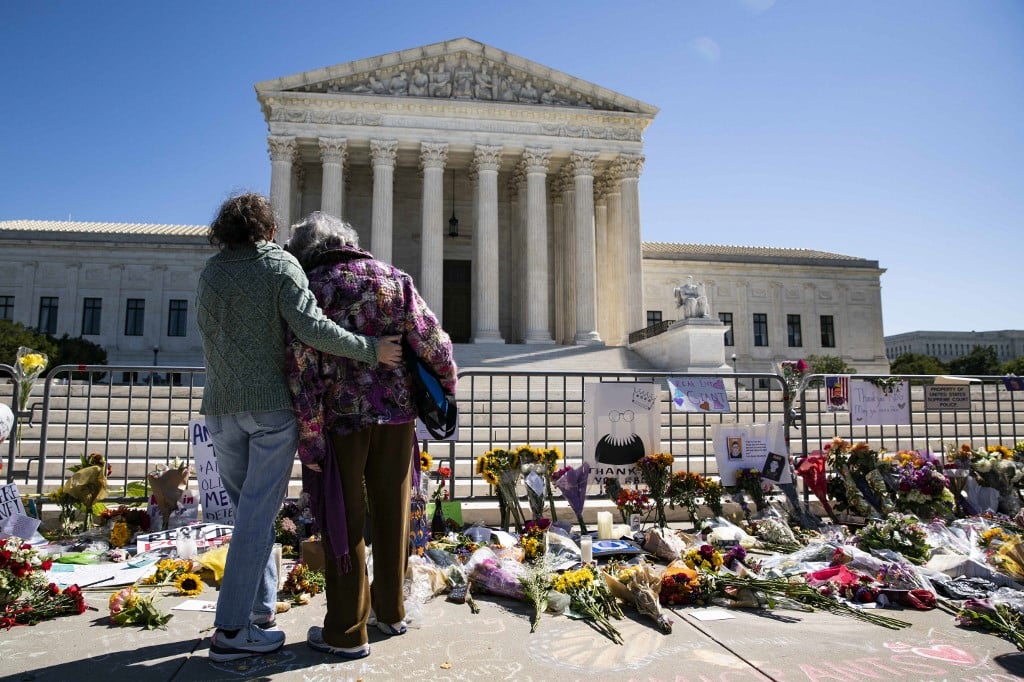
Israel’s Supreme Court President Esther Hayut on Monday paid tribute to US Supreme Court Justice Ruth Bader Ginsburg, who died Friday at the age of 87.
“Justice Bader Ginsburg was a groundbreaking jurist and an inspiration to judges across the world,” said Hayut in a statement. “She is the second woman appointed to the American Supreme Court and the first Jewish woman appointed to this post.”
Bader Ginsburg’s visit to Israel’s Supreme Court two years ago was an “unforgettable event,” said Hayut, who is the third woman to hold the position of Israel’s chief justice.
“A truly great person whose work touched entire communities and crossed generations and genders. Such was Justice Bader Ginsburg,” continued Hayut. “She held a dialogue of morality not only with members of her generations, but also with young women and men who learned from her about the importance of equality and the upholding of human rights.

“I have no doubt that the legacy of this wonderful woman and judge, and the fruits of her labor, will continue to accompany us all for many generations,” said Hayut.
Ginsburg died Friday at age 87 from pancreatic cancer. She served on the court for 27 years, appointed in 1993 by US President Bill Clinton.
Prime Minister Benjamin Netanyahu on Sunday paid tribute to Ginsburg.
“I join the American people in mourning the passing of Ruth Bader Ginsburg, one of the great judicial leaders of our time,” Netanyahu said.
“She was proud of her Jewish heritage and the Jewish people will always be proud of her,” he wrote on Twitter.
News of her death broke after the start of the Rosh Hashanah holiday. Netanyahu issued his statement shortly after the holiday ended in Israel.
I join the American people in mourning the passing of Ruth Bader Ginsburg, one of the great judicial leaders of our time. She was proud of her Jewish heritage and the Jewish people will always be proud of her.
— Benjamin Netanyahu – בנימין נתניהו (@netanyahu) September 20, 2020
Ginsburg, from New York, was the first Jewish woman to serve on the nation’s highest court.
Ginsburg was frank about the importance of Jewish tradition in influencing her life and career, hanging the Hebrew injunction to pursue justice on the walls of her chambers.
“I am a judge, born, raised and proud of being a Jew,” she said in an address to the American Jewish Committee following her 1993 appointment to the court. “The demand for justice runs through the entirety of Jewish history and Jewish tradition.”
In her 27 years on the court, Ginsburg emerged not only as the leader of the court’s liberal wing, but as a pop cultural phenomenon and feminist icon.

She won liberal acclaim by penning blistering dissents in high-profile cases concerning birth control, voter ID laws, and affirmative action.
Ginsburg attributed her outsider perspective to her Jewish roots, pointing often to her heritage as a building block of her perspective on the bench.
“Laws as protectors of the oppressed, the poor, the loner, is evident in the work of my Jewish predecessors on the Supreme Court,” she wrote in an essay for the American Jewish Committee. “The biblical command: ‘Justice, justice shalt thou pursue’ is a strand that ties them together.”
Her death ignited a fierce partisan battle between Republicans and Democrats over her replacement, mere weeks before a presidential election, in a nation already frayed by fractured politics, the coronavirus pandemic, and the ensuing economic collapse, protests over police violence, and environmental disasters.
Agencies contributed to this report.










The Times of Israel Community.