

It keeps tunneling, but Hamas doesn’t want escalation… yet
Egypt has made it clear that there is to be no confrontation with Israel, but Hamas might initiate one if Gazans revolt

 Add ToI as a Preferred Source on Google
Avi Issacharoff, The Times of Israel's Middle East analyst, fills the same role for Walla, the leading portal in Israel. He is also a guest commentator on many different radio shows and current affairs programs on television. Until 2012, he was a reporter and commentator on Arab affairs for the Haaretz newspaper. He also lectures on modern Palestinian history at Tel Aviv University, and is currently writing a script for an action-drama series for the Israeli satellite Television "YES." Born in Jerusalem, he graduated cum laude from Ben Gurion University with a B.A. in Middle Eastern studies and then earned his M.A. from Tel Aviv University on the same subject, also cum laude. A fluent Arabic speaker, Avi was the Middle East Affairs correspondent for Israeli Public Radio covering the Israeli-Palestinian conflict, the war in Iraq and the Arab countries between the years 2003-2006. Avi directed and edited short documentary films on Israeli television programs dealing with the Middle East. In 2002 he won the "best reporter" award for the "Israel Radio” for his coverage of the second intifada. In 2004, together with Amos Harel, he wrote "The Seventh War - How we won and why we lost the war with the Palestinians." A year later the book won an award from the Institute for Strategic Studies for containing the best research on security affairs in Israel. In 2008, Issacharoff and Harel published their second book, entitled "34 Days - The Story of the Second Lebanon War," which won the same prize.
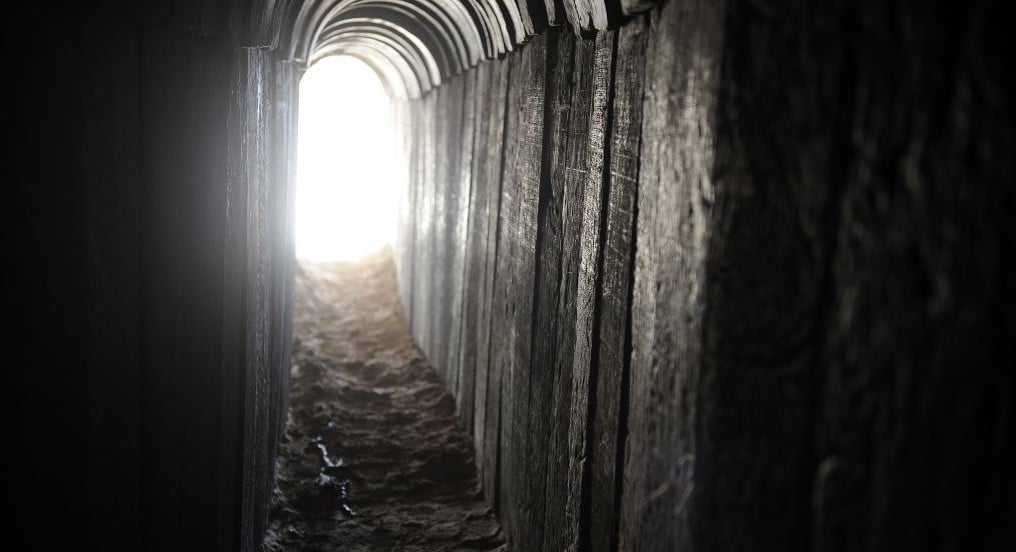
The presence and sophistication of the tunnel that the IDF exposed Sunday did not surprise Shin Bet and IDF officials in the Southern Command. IDF commanders in the area, at almost every opportunity, stress that Hamas is involved in a major effort to dig more and more tunnels between Gaza and Israel in order to use in them in case of renewed escalation.
Hamas isn’t even trying to hide its intentions. A statement from the Hamas military wing spokesman Sunday evening said that “the first tunnel will lead to a thousand more tunnels.”
A cursory examination of the border area also suggests that the digging of such tunnels is not an especially complicated task for an organization that has managed in the last six years to create a virtual tunnel city under Rafah on the Egyptian border. Adjacent to the Gaza-Israel border fence, there are plenty of houses, some of them only a few hundred meters from the Israeli side, and in every one of them Hamas could put a tunnel entrance.
Many Palestinians move in broad daylight along plots of land next to the border. Most of them are innocent civilians, but others may be Hamas activists involved in tunnel construction or gathering intelligence on the Israeli side. The ability of Hamas to dig tunnels is impressive, and it is no secret that under Gaza City, the organization built a network of trenches and tunnels that its leaders used to hide from the Israeli bombs during Operation Pillar of Defense in 2012 and even during Cast Lead in 2009. Hamas, it seems, has not stopped preparations for the next conflict with Israel for so much as a second, and the question about that next round is not one of “if” but of “when.”
Yet make no mistake: Hamas has no interest in initiating a confrontation with Israel. Not right now, that is. On Sunday evening, Hamas’s Gaza Prime Minister Ismail Haniyeh hinted that the Strip’s Islamist rulers are not interested in escalation. In a speech to the graduates of a Gaza police officers’ course, Haniyeh said his forces are also concerned about Egypt’s security, and will guard the border with Sinai. The Hamas prime minister knows that the unequivocal Egyptian demand from his organization and from Haniyeh himself is to avoid any military conflict with Israel, otherwise the Egyptians themselves will act against Hamas.
Still, it is not clear how long Hamas will continue to maintain the quiet against Israel.
The conclusion of K., a resident of the northern Strip, may sound exaggerated. He argued recently that the economic situation of Gaza is so bad it is only a question of time until Gaza burns.
“It will not be directed against Israel, but against Hamas,” he claimed. “The residents are fed up. In six years they [Hamas] haven’t managed in bringing about any change. Quite the opposite. We still don’t have enough electricity and the economy is destroyed. We are still under siege — and not because of Israel, but because the Egyptians had a quarrel with Hamas. But before we reach a confrontation with Hamas, they [Hamas] will initiate an escalation with Israel and will fire Qassams, so the protests against them will stop.”
K. is a small-business owner who has never been big fan of Hamas. But he isn’t especially fond of the Palestinian Authority or Fatah either.
“Those ones were corrupt, now we have these guys. And we’re the ones who get hurt. We have a holiday in two days, Eid al-Adha, and people don’t have money. All the goods are expensive now, there are no building materials.”
K’s words are not unusual in the current reality in the Strip.
Israel’s understanding of the potentially explosive situation in the Strip — given the tunnel closings and price inflation — has likely led to subtle messages from Jerusalem to Cairo about the need to ease the blockade on the Strip slightly.
And so, miraculously, in parallel to the Israeli announcement about stopping the transfer of building materials from Israel to Gaza in response to the tunnel building Sunday, the Egyptians allowed 51 trucks of building materials to pass from Sinai to Gaza.
Let’s call it coincidental scheduling.








The Times of Israel Community.