

Jewish groups take point on combating campus assault
Hillel and Jewish fraternities were already teaching against sexual violence well before explosive Rolling Stone story
 Add ToI as a Preferred Source on Google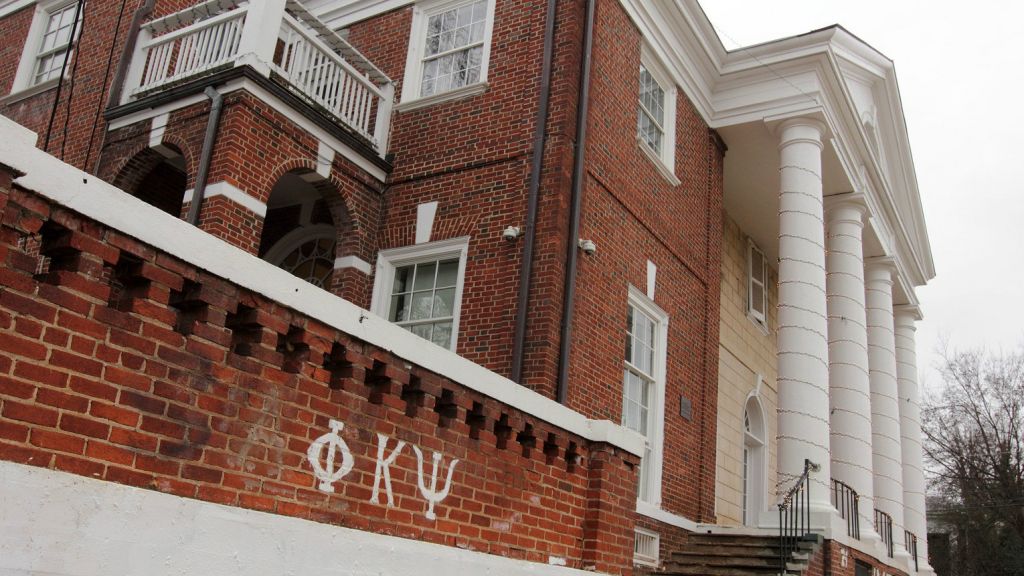
CHARLOTTESVILLE, Va. (JTA) – Jewish campus groups were ready for the painful national dialogue that took place in the wake of murky rape allegations at the University of Virginia.
That’s because organizations like Hillel and historically Jewish Greek houses such as Alpha Epsilon Pi, Zeta Beta Tau and Sigma Delta Tau had been having the conversations for months before the explosive Rolling Stone story made national headlines — first for the brutality of the alleged gang rape detailed in the magazine and then for the subsequent evidence of flawed reporting on the part of Rolling Stone.
Zeta Beta Tau last year joined Sigma Delta Tau and Jewish Women International in launching a workshop called “Safe Smart Dating.” Hillel International is a partner in the White House’s It’s On Us campaign against sexual violence, and the network of Jewish campus centers has also dedicated to sexual violence a stream of its Ask Big Questions program, which organizes lectures and salons on topics of Jewish interest.
Meanwhile, Alpha Epsilon Pi features sessions on consent at its conclaves and a fraternity brother, Matthew Leibowitz, launched the Consent is So Frat movement this year at Wesleyan University in Connecticut.
‘We need to take care of our own in creating a world in which consent is non-negotiable’
“The prevention of suffering is what we do as Jews, and making pathways for people to heal if they’ve been traumatized is also what we do,” said Rabbi Danya Ruttenberg, the editor of the anthology “The Passionate Torah: Sex and Judaism” and the director of education for Hillel’s Ask Big Questions program. “We need to take care of our own in creating a world in which consent is non-negotiable.”
The Rolling Stone story has begun to unravel. The magazine revealed that it had not reached out to the alleged assailants in the attack that was the article’s centerpiece, and friends of the alleged victim have since told the Washington Post that they had been misrepresented.
Revelations of the article’s problems had just begun to trickle out during a JTA reporter’s recent visit to the campus, but students and Jewish officials said the broader issue of whether women were safe on campus remained a preeminent topic of conversation among students at the school. Weeks earlier, in the wake of the article’s publication, students took part in large-scale protests in front of the fraternity where the alleged crime had taken place.

Since 2011, the university has been under federal investigation for allegedly not treating adequately complaints of sexual misconduct, and the Rolling Stone article broadly addressed the complaints.
Madison Orlow, 19, a first-year premed student, said the school’s initial reaction to the allegations did not reach far enough and led her to question its honor code.
The code, first formulated in the 1840s, mandates permanent dismissal if a student lies, cheats or steals.
“The honor code does not encompass all of the things that are needed,” said Orlow, volunteering at a Challah for Hunger booth on a chilly Thursday afternoon on the university’s fabled lawn, which was designed by the school’s founder, Thomas Jefferson.
“It doesn’t cover sexual assault,” offered her fellow volunteer, Patricia Garvey, 20, a student of environmental science. Volunteers for the group bake and sell challahs to students just before Shabbat; the proceeds go to the needy.
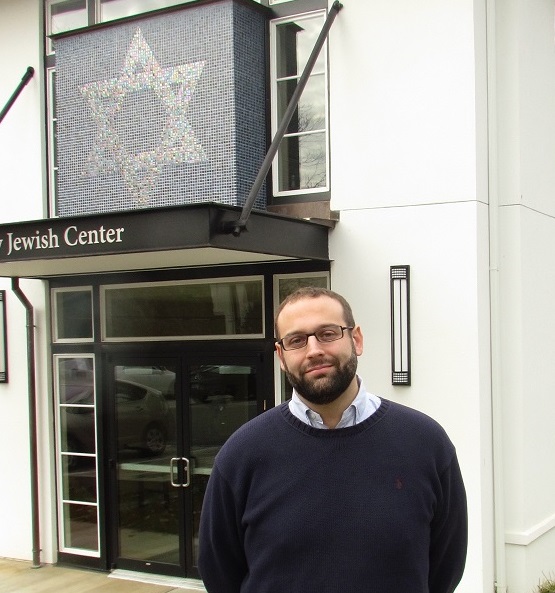
“There was an initial sense of ‘this needs to be dealt with,'” said Jake Rubin, the director of the university’s Hillel, the Brody Jewish Center, describing reactions by university administrators to the article.
“It certainly is a problem at the University of Virginia, but it is not only a problem at the University of Virginia. It has moved to what do we do, how do we fix this issue — being absolutely committed to really taking a hard look at the community and trying to figure out steps forward,” said Rubin.
The University of Virginia is not a destination university for students who want deep Jewish involvement, although in recent years the school has increased its Jewish profile. This year it added graduate courses to its Jewish studies program; three years ago the school opened a new Hillel building.
Among the 21,000 students overall at the university, there are 1,200 to 1,400 Jewish undergraduates and 400 to 600 Jewish graduate students, according to Rubin.
The modern Hillel building is not particularly distinctive-looking. It sticks out on University Circle, a street just off Rugby Road, the leafy winding causeway where many of the elegant Victorian fraternity houses are situated and ground zero for what the Rolling Stone article described as an out-of-control culture of drinking, sexual aggressiveness and worse.
Rubin said venues like Hillel provided a homey refuge for students dealing with what has been a traumatic semester, including the alleged kidnap and murder of a student and two suicides, in addition to the allegations described in Rolling Stone.
‘To have a resource for them that’s comforting in a sense, just to be there for them, that’s been our first priority’
“Frankly, students are overwhelmed,” he said. “To have a resource for them that’s comforting in a sense, just to be there for them, that’s been our first priority.”
Jewish fraternities are among those taking the lead nationally in addressing sexual assault on campus.
Leibowitz, a 22-year-old recent Wesleyan graduate, started Consent is so Frat this year in part because of reports of fraternity-related sexual assaults at Wesleyan during his undergraduate years. AEPi chapters at other campuses, including Rutgers, have spread the program.
The initiative developed and distributes a curriculum on consent that is aimed at members of fraternities and sororities.
Ruttenberg said the notion of sexual consent is rooted in Jewish texts.

“It’s deeply embedded in our tradition,” she said. “In the Talmud, consent is one of the great non-negotiables in any sexual encounter. The Talmud forbids marital rape, which is astonishingly forward-thinking, considering it took until 1993 for North Carolina to ban it. The Talmud says that if a woman is raped and has an orgasm, she is still raped.”
Jonathan Pierce, a past president of AEPi International, said the fraternity solicits advice on sexual consent from groups such as Jewish Women International, inviting its experts to speak at its annual conference, and from its own board of rabbis.
The AEPi website links to broad restrictions mandated by the Fraternal Information and Programming Group, to which it is affiliated. According to the guidelines from the national risk management association, fraternities “will not tolerate or condone any form of sexist or sexually abusive behavior on the part of its members, whether physical, mental or emotional. This is to include any actions, activities or events, whether on chapter premises or an off-site location which are demeaning to women or men, including but not limited to verbal harassment, sexual assault by individuals or members acting together.”
Pierce said the best programs arose from the grassroots, citing Consent is So Frat.
“This is where real learning takes place, you have your own members coming up with programs,” he said.
Jeffrey Kerbel, the president of the University of Virginia’s AEPi chapter, said its consent education begins with pledges and is sustained throughout the brother’s university career.
“This responsibility and this education are also stressed to our probationary members – first through formal trainings and then through further emphasis within the chapter,” he said via email. “Our aim is to emphasize these points consistently and frequently; otherwise we risk growing vulnerable to the social and cultural influences that can diminish the value of consent and the place it must have in society.”
The “Safe, Smart Dating” workshop was scheduled before the Rolling Stone article for a University of Virginia appearance in April.
The two-hour presentation starts with students texting their encounters with sexual assault, firsthand or otherwise. The texts are projected on a screen, prompting discussion in smaller groups.

Case studies also are included, including the 2010 murder of University of Virginia lacrosse player Yeardley Love by George Huguely, also a lacrosse player at the university, as well as more ambiguous outcomes, such as the acquittal of Taylor Watson, a Minnesota man who had sex with a friend who was in a drunken stupor. Jurors accepted the defense’s argument that the woman had deliberately intoxicated herself before asking to sleep at Watson’s apartment.
Zeta Beta Tau and Sigma Delta Rau train campus facilitators to run the program.
“It’s starting conversations that people are often uncomfortable with and unwilling to have,” said Dana Fleitman, the director of prevention for Jewish Women International.
‘It’s starting conversations that people are often uncomfortable with and unwilling to have’
Included among the hypotheticals handed out to participants on slips of paper are scenarios of digital abuse through online harassment, she said.
“The girlfriend who texts all the time and gets mad if you don’t respond” is one scenario, she said.
Laurence Bolotin, the national director of Zeta Beta Tau, said the program does not “reinvent the wheel” but guides students on how to use existing resources, including sexual assault responders on campuses. A focus of the program, like the programs that Hillel directs, is how to be an “active bystander,” or to intervene when witnessing what appears to be sexual assault.
“It’s not a Greek issue, it’s a college issue,” Bolotin said in an interview.









The Times of Israel Community.