

Kathmandu hopes to emulate Israel’s tourism bounce-back
Israel adept at drawing back visitors even after traumatic times, Kathmandu mayor finds on trip following devastating Nepal earthquake
 Add ToI as a Preferred Source on Google
Melanie Lidman is an AP reporter and former Times of Israel reporter
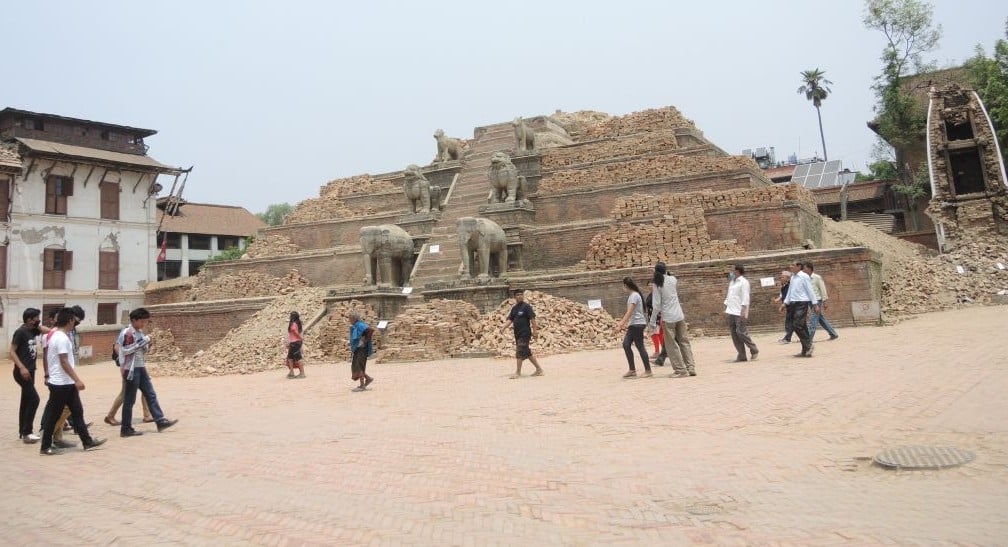
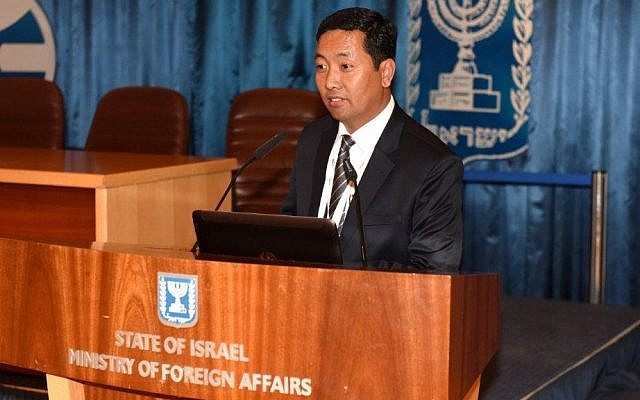
Six months after a 7.8 magnitude earthquake devastated Nepal, Kathmandu Mayor Rudrah Singh Tamang said his city can learn a lot from Israel’s tourism infrastructure and commitment to agricultural innovation during a brief visit to the country October 18 to 23.
Tamang visited Israel as part of the 30th International Mayor’s Conference in Israel, which hosted 40 mayors from the United States, China, India, Nepal, Turkey, Europe, Africa and Latin America. New York City Mayor Bill de Blasio also joined the trip, which was sponsored by the American Council for World Jewry, the American Jewish Congress and Israel’s Foreign Ministry.
“We can learn lessons from Israel about improving our tourism industry,” Tamang told The Times of Israel. “In Israel, you have half of the country’s population as incoming tourists each year.”
Nepal’s economy is heavily dependent on tourism, which accounts for 8 percent of the economy. Though this figure sounds small, the country is still mostly agrarian, with 70% of the labor force working in agriculture. Outside of farming, tourism is one of the most important sectors.
The April 25, 2015, earthquake, which killed almost 9,000 people, also wreaked havoc on the economy by destroying the spring tourism season. Currently, debilitating fuel shortages due to issues on the border with India have dampened the first steps toward rehabilitating the shattered economy, and discouraged some tourists from returning to the country for the fall trekking season as well.
Israel also deals with fluctuating tourism rates that change depending on the political situation. According to the Tourism Ministry, summer tourism was down 25% in 2014 due to Operation Protective Edge, but the 2015 tourism statistics have already surpassed the same time period from 2013.
The Israel Hotels Association claims it lost over NIS 1 billion ($260 million) due to loss in bookings during the 50-day war in summer 2014.
The Israeli tourism industry employs some 200,000 people, about 6% of Israel’s labor force, and tourism revenue brings in about $41 billion per year.
Tamang said Nepal hopes to emulate Israel’s ability to quickly give a boost to tourism. “We have to connect tourism with government and economic initiatives, not expect tourism to just do it alone,” he said.
Kathmandu emerged from the earthquake largely unscathed, and almost 90% of the buildings in the city were intact and safe for habitation. The major damage was in rural villages in regions like Sindhupalchuk, as well as Langtang, a popular trekking region. In those areas, whole villages were demolished in seconds. The challenge now has been to ensure that families get some kind of shelter during the rainy season so they can concentrate on planting their crops and returning to normal life.
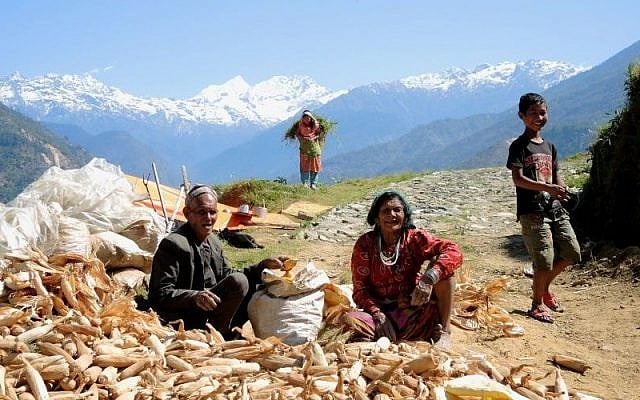
But for the half a million people involved in the Nepalese tourism industry, normalcy is a long way away. According to government tourism figures, tourism in Nepal plunged by 90% following the earthquake, and overall numbers could be down by 40% for 2015, the Guardian reported.
Tourism brings in approximately $1.6 billion each year, out of approximately $20 billion gross domestic product (in comparison, Israel’s GDP is approximately $304 billion).
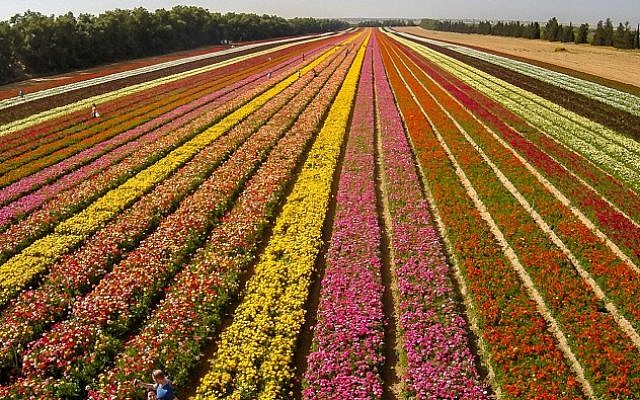
In addition to tourism, Israel’s agricultural ingenuity also impressed Tamang, who visited a local hydroponic company, which grows plants without soil in water and fertilizer.
“In Kathmandu, we have no [open] land, so we want to promote terraced farming, we want to give classes in Kathmandu to transfer knowledge to other places,” Tamang said. He noted while hydroponics is too complicated and expensive for widespread use in his city, his country has worked with Israeli scientists on projects like utilizing coconut hair to grow vegetables in urban areas.
Nepal just concluded celebrations of Dashain, the most important holiday of the year. Although the holiday has Hindu roots, it has turned into a national festival and is also celebrated by Buddhists and Christians. During the holiday, families scattered across the country gather together in their ancestral villages to slaughter a goat and reconnect with family members.

The celebrations took on increased significance this year, six months after the earthquake. Fuel shortages meant some families could not travel back to their villages. Tamang said that while it was difficult for him to be away from his family during the holiday, he was taking full advantage of the opportunities in Israel. Instead of attending the official Dashain celebration at the Nepali Ambassador’s residence in Herziliya, Tamang visited the Dead Sea. “It was marvelous!” he said.
Tamang also noted that Israel, as well as other countries, can learn some things from Nepal in the wake of the earthquake.
“It’s important to keep social harmony during disasters,” he said. Tamang highlighted the fact that even in the direct aftermath of the disaster, the more than 100 ethnic groups across Nepal put aside tribal differences to work together. Many other countries in the world could have broken along sectarian lines in the wake of such a disaster.
Another important lesson from the earthquake aftermath he hopes Nepal can export to the rest of the world is listening to the villagers. “People need to work with the communities, because the communities can solve at least half their problems on their own,” he said. “People can learn from Nepal. Even after the earthquake, you didn’t see sad faces. People were even laughing! That’s our nature.”








The Times of Israel Community.