

‘Kibbutz Tel Aviv’ evacuees cook up some solace in culinary workshops
Displaced residents from Gaza border communities share a meal and their stories as they peel and chop
 Add ToI as a Preferred Source on Google
Jessica Steinberg, The Times of Israel's culture and lifestyles editor, covers the Sabra scene from south to north and back to the center
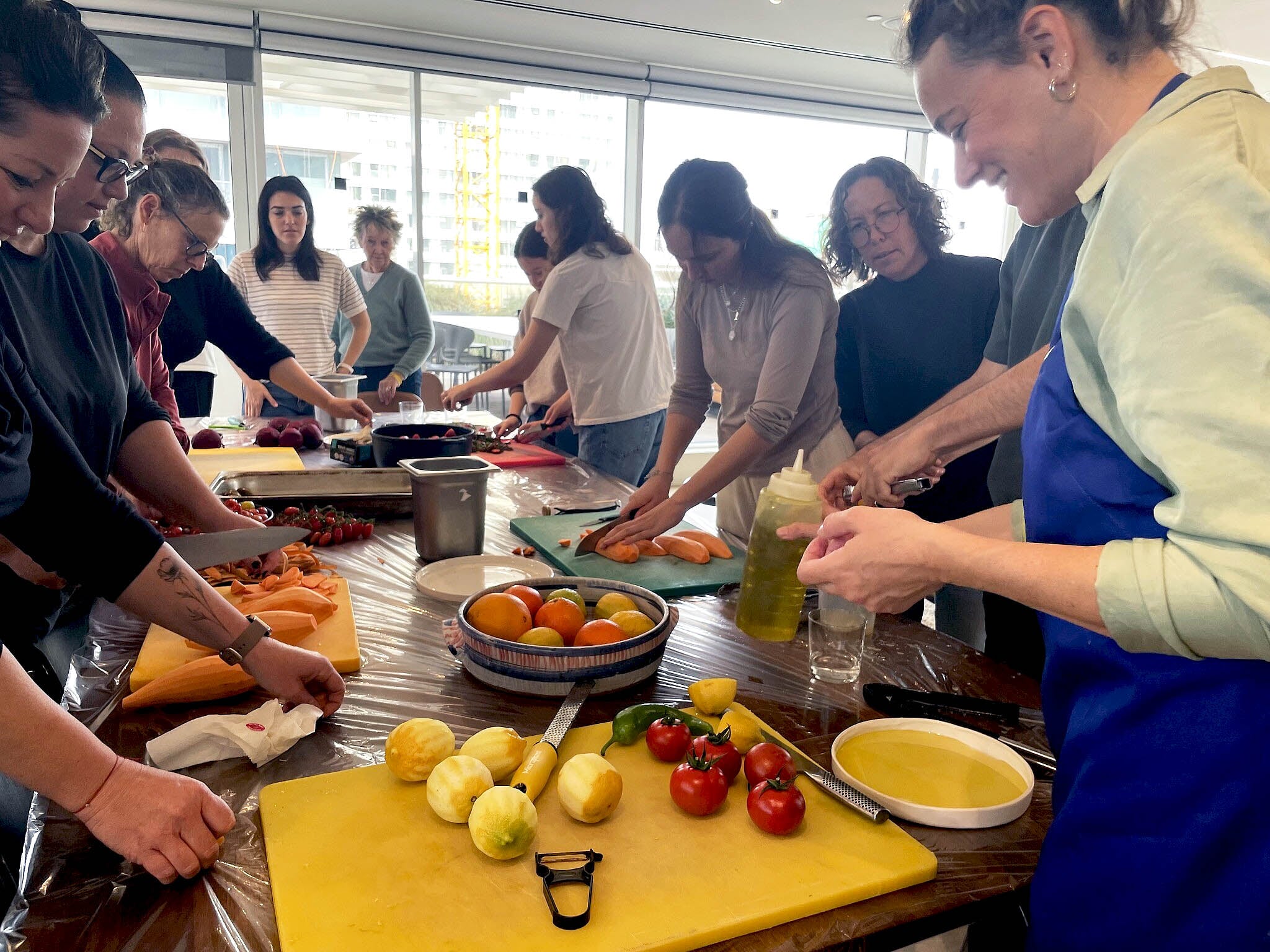
The group of kibbutz evacuees chopped and mixed, sliced and diced, stirred and folded, participating in a workshop organized and run by Asif, a Tel Aviv culinary institute that has operated as a kind of gastronomical community center since October 7.
They oohed as singer and former “Master Chef” participant Adi Weinberg took half of a tomato and squeezed its innards into a plate of olive oil. Then they ahhed their appreciation as cookbook author Adeena Sussman, who was leading the workshop, showed them an easy way of squeezing lemons with a pair of kitchen tongs.
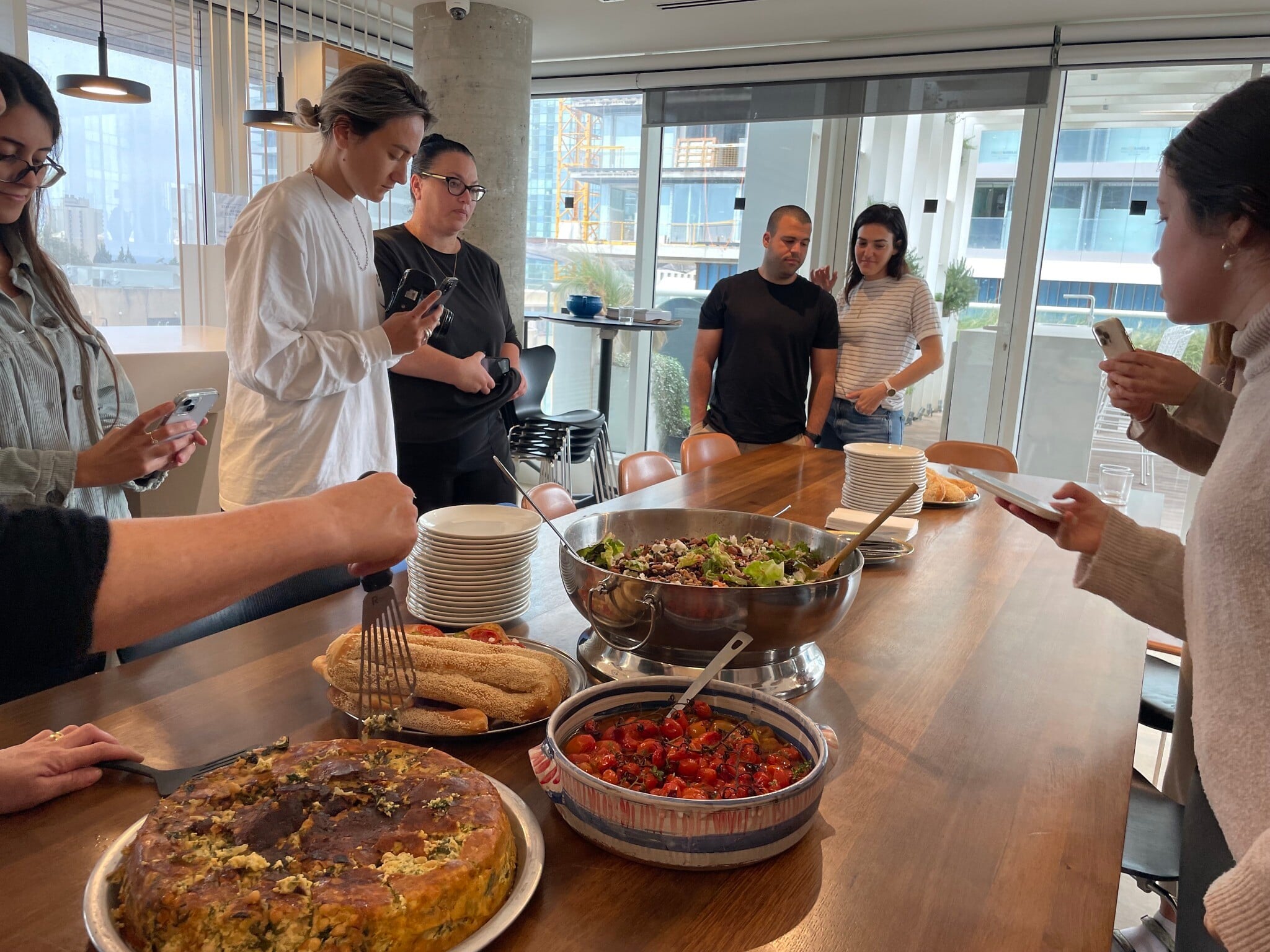
After about two hours, the group dined on fresh beigele — ring-shaped bread studded with sesame seeds — dipped in olive oil with tomato seeds and chopped chili peppers, along with a massive, round cheesy frittata full of vegetables and chickpeas, salad with roasted beets, sweet potato and seeds, and a dessert of yogurt dolloped with homemade strawberry jam and edible flowers.
The Asif institute has been holding these kinds of workshops once or twice a week for months, said CEO Chico Menashe.
“We found muscles we didn’t know we had,” said Menashe. “We realized we could identify needs in a moment, take a week or two to develop a pilot and then it’s out.”
In the months since October 7, the culinary center has cooked thousands of meals in its restaurant kitchen for evacuees and has joined in the effort to cook for IDF soldiers.
Asif opened its downstairs cafe kitchen to evacuee families who missed cooking their own food. When the cafe reopened for business, the center began offering culinary tours for reservist spouses in Tel Aviv, Jerusalem and other cities.
On Sunday, as the workshop participants ate lunch, some shared their stories from the devastating Hamas attack of October 7.
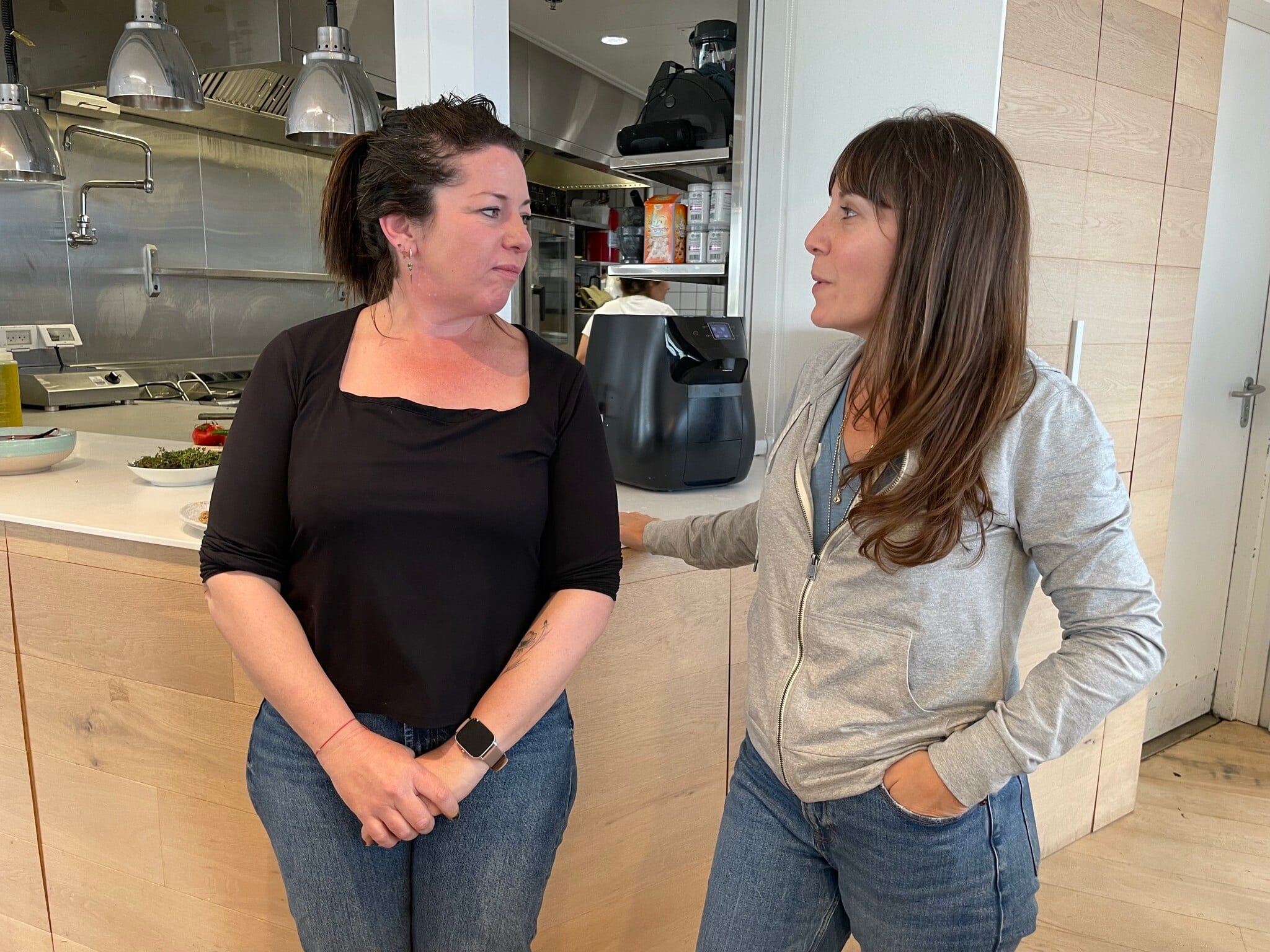
Shunit Dekel was at the Asif workshop with one of her best friends, taking a few hours to relax. An ambulance driver and first responder, the Moshav Talmei Yosef, was abroad on October 7 when she began hearing about the attack.
Her children, ages 12 and 15, were with their father, her ex-husband, at his home in Kibbutz Ein Habesor, one of the Gaza border communities that was attacked. They first sheltered in an outside bomb shelter when the rocket attacks began and then hid inside his house, where he stood guard with a gun as terrorists began infiltrating the community.
When Dekel landed at 2 p.m., she went to a Magen David Adom station in the southern town of Ofakim. She drove an ambulance back and forth to nearby intersections to bring the injured and to determine those who were dead, at times swerving to avoid terrorists, at other times unsure if they were terrorists or soldiers or security forces on the road.
Dekel’s children and ex-husband finally left the kibbutz on the night of October 8, and by then she was called up for reserve duty.
She and her children spent the next two months living in a hotel in Eilat, and then another month and a half in a Tel Aviv hotel, as she commuted to the north for reserve duty, switching off with her children’s father.
They were later lent an apartment in the Tel Aviv neighborhood of Neve Tzedek. Her children are enrolled in a local school there and she’s done with reserve duty for now.
“We’re nesting,” she said. “And we’re the lucky ones.”
One of the couples, Paz Sela and Shai Sela-Asraf, described themselves as part of “kibbutz Tel Aviv,” the community of evacuees from the south temporarily making their home in the big city.
The couple met in the army and settled in Nir Am, where Shai Sela-Asraf was born and raised, and now they have a 14-month-old and a four-year-old son.
When the rockets began falling on October 7, they hid in their safe room, ready to throw what they needed into their suitcases and head out.
“We’ve done this before,” said Sela-Asraf. “I have a note in my phone about what to bring. We figured we’d go to a hotel for a week or two; I know to pack bathing suits.”
But this time was different, and it was nighttime before they heard escaped the kibbutz by car, telling their four-year-old to keep his head down so as not to see the bodies on the side of the road.
After sheltering with Sela’s mother for a night, they headed to Ein Yahav, a moshav in the Arava, with 10 other Nir Am families. They then moved to Tel Aviv with the rest of the Nir Am community, eventually finding a temporary apartment.
“We don’t want to be evacuees anymore,” she said. “We have to get the hostages back and then we can think about it. We can’t return until they return.”








The Times of Israel Community.