

Lebanese president warns of ‘new wars’ over multiple disputes with Israel
Aoun says Beirut is determined to stand its ground in conflicts over offshore natural gas rights, border wall
 Add ToI as a Preferred Source on Google
Dov Lieber is a former Times of Israel Arab affairs correspondent.
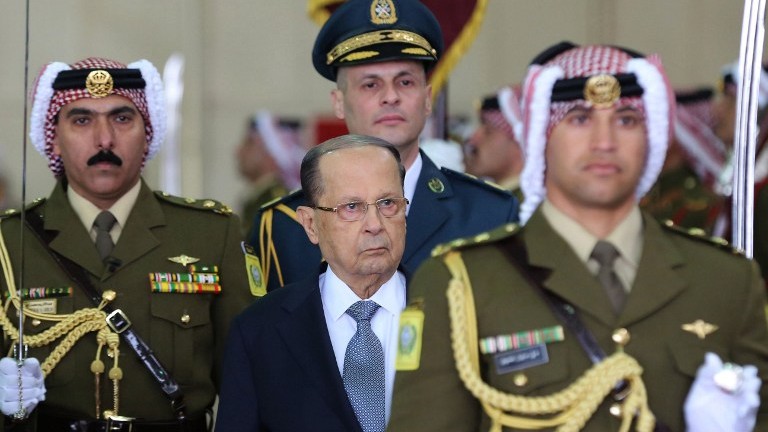
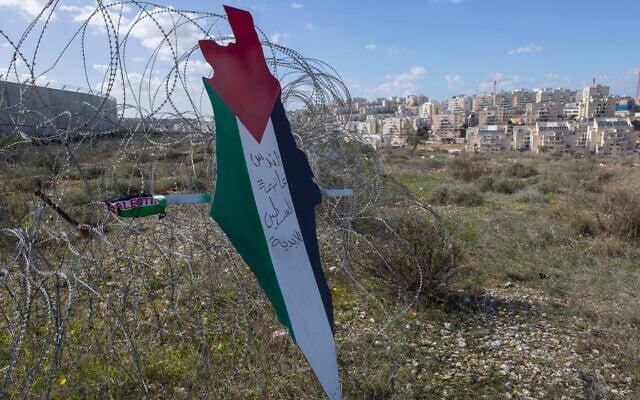
Lebanese President Michel Aoun on Monday warned that a number of mounting disputes with Israel, including contested rights to offshore natural gas exploration and the construction of a border wall by Israel, could lead to war.
“Lebanon has taken a decision to defend itself whether there is an Israeli attack on its land or on its oil rights,” Aoun said in an interview on the Egyptian news program ON Live.
“Until now,” he added, “there hasn’t been an attack…There are forces intervening diplomatically and politically to help resolve this dispute,” he added.
On Thursday Reuters reported that senior American envoy David Satterfield, the acting assistant US secretary of state, had relayed a message from Israel to the Lebanese that Jerusalem does not want an escalation of violence.
Aoun, however, warned that if Israel carried out its threats, it could lead to a new round of military conflict between the two sides.
“The Israeli verbal provocation does not matter to us, but if it comes into effect, there will be new wars,” he said.
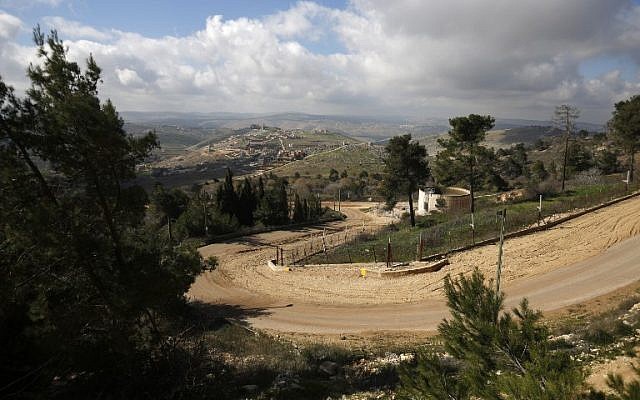
Aoun added that should Israel build a wall on Lebanese territory, it could have “catastrophic” results. However, he said that he hoped it wouldn’t lead to war.
“We have put forward a solution. There are disputed points along the border with Israel. So let’s resolve this dispute on these points first, and they can build any wall they want on their land,” the Lebanese president said.
Aoun contended during the interview that Israel has “made itself a racist state” and is responsible for the lack of peace with its Arab neighbors.
Israel “wants only dominance and its results,” he said.
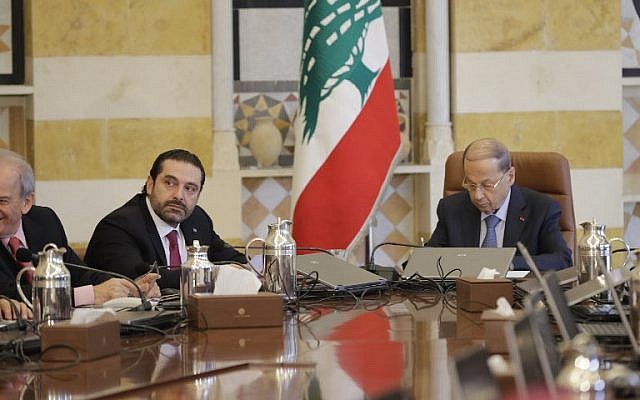
The Lebanese daily An-Nahar reported that Aoun, Parliament Speaker Nabih Berri, and Prime Minister Saad Hariri met in Beirut Monday to discuss “Israel’s aggression” against Lebanese sovereignty.
During the talks, according to the report, Hariri said that “discussions with the international community are ongoing in order to preserve Lebanon’s sovereignty.”
The three Lebanese leaders, along with Brigadier General Malek Chams, Lebanon’s coordinator with the United Nations peacekeeping force known as UNIFIL, discussed the message brought by the US envoy Satterfield last week.
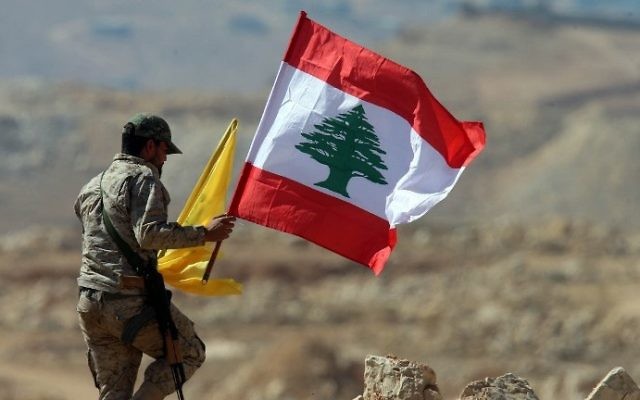
Hezbollah, a powerful terror group considered to have more military clout than the Lebanese army itself, recently threatened to open fire on IDF soldiers building the barrier, Israel’s Hadashot TV news reported earlier this month.
The message was delivered to Jerusalem via UNIFIL, the report said. The UN force, fearing a possible escalation, passed the message on to the US and French ambassadors, who updated the Prime Minister’s Office in Jerusalem on the matter.
The Israeli government, unimpressed, responded with a threatening message of its own, the report said. Israel said it was acting in its own sovereign territory in accordance with the UN Security Council resolution adopted after Israel withdrew from Lebanon in 2000.
Israel does not intend to halt the construction, Jerusalem said, and Hezbollah will “pay dearly” if it tries to inflame tensions. “Israel’s reaction will be strong and painful,” sources in Israel’s security establishment were quoted as saying.
Tensions also flared last week when Lebanon issued an offshore oil and gas exploration tender on the country’s maritime border, prompting a war of words with Israel which has laid claim to one of the fields in question.
On Friday, Lebanon signed its first contract to drill for oil and gas off its coast with a consortium comprising energy giants Total, ENI, and Novatek, including in a block disputed by Israel.
Lebanese officials say that the country will start exploratory offshore drilling in 2019, and that Lebanon wants to assert its resource rights along the length of its maritime territories.
Defense Minister Avigdor Liberman called the move “very provocative,” and suggested that Lebanon had put out a tender to international groups for a gas field “that is by all accounts ours.”
Israel has also threatened to keep Iran from building factories to manufacture advanced missiles in Lebanon. Prime Minister Benjamin Netanyahu warned the country’s enemies “not to test us,” and said the IDF was prepared for “every scenario.”
Times of Israel staff and agencies contributed to this report.








The Times of Israel Community.