

Linking ancient snails to an Israeli flag in space, a common thread
The elusive dye used to create the biblical blue, ‘techelet,’ in the Ancient Near East is spotlighted in a new Bible Lands Museum exhibit, ‘Out of the Blue’
 Add ToI as a Preferred Source on Google
Marissa Newman is The Times of Israel political correspondent.
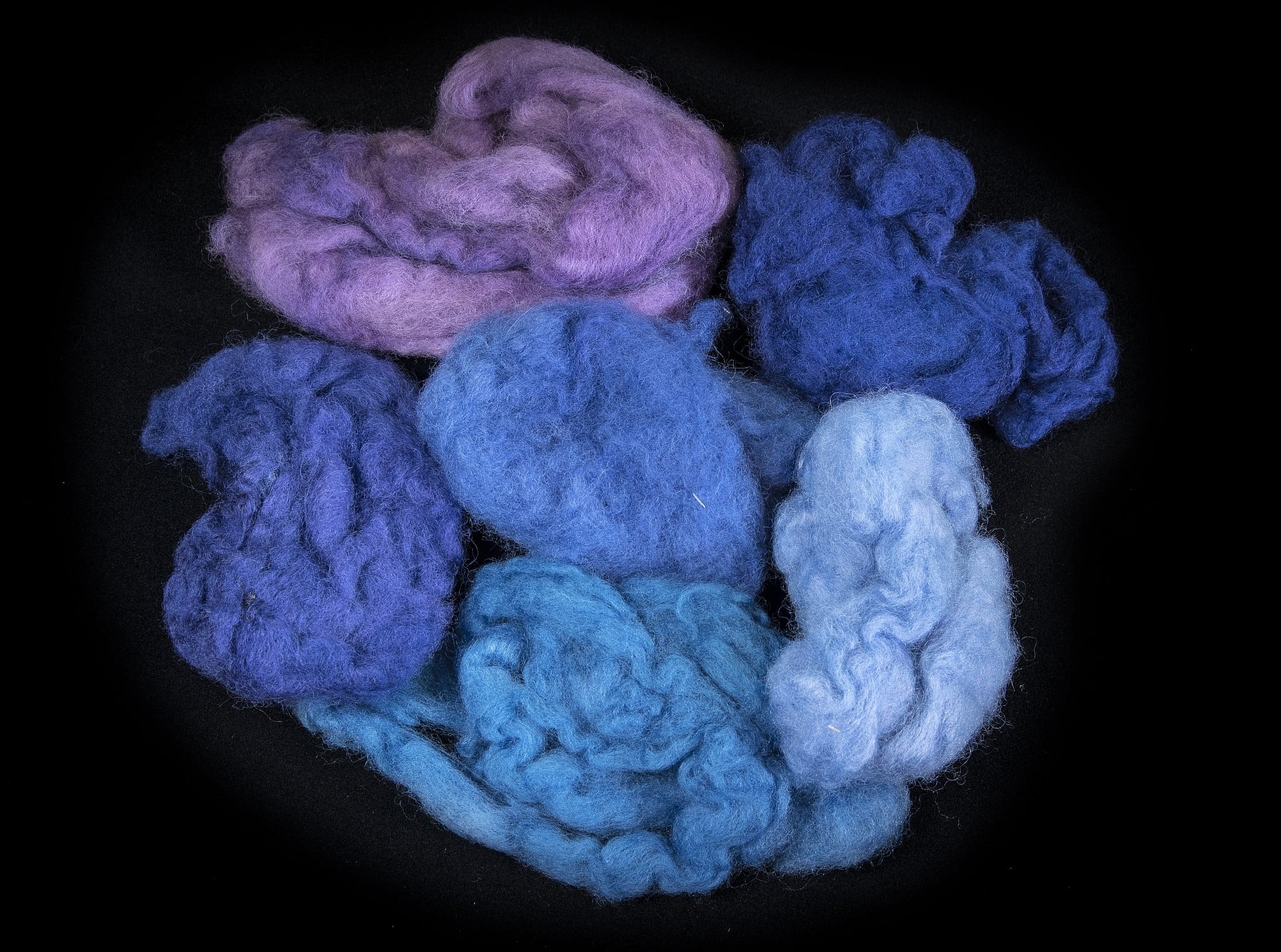
It was the color of the sea, the sky, the divine sapphire-hewn Throne of Glory, according to the Tannaite sage Rabbi Meir. It was a color used in the Jewish temples, the hue of its high priests’ robes, and the shade of the blue tassel that the Bible commands be affixed to one’s garments.
But starting in the seventh century CE, the source of the natural dye to produce the biblical tekhelet [blue] — as well as its royal purple counterpart, argaman — faded from history for hundreds of years.
Long sought by Jews to revive the ancient practice of wearing a fringe of techelet, the revered colors were also the subject of other Ancient Near East cultures’ fascination and ritual worship and the source of a hugely prosperous ancient dyeing industry, according to a new exhibit at Jerusalem’s Bible Lands Museum, “Out of the Blue,” which is set to open on June 1.
The exhibit spotlights the lure of the blue stone lapis lazuli for ancient Egypt (spurring the production of the first imitation blue dyes), Caanan, and Mesopotamia, featuring ritual items and jewelry, including a rare lapis lazuli-dotted horned crown of a Mesopotamian deity.
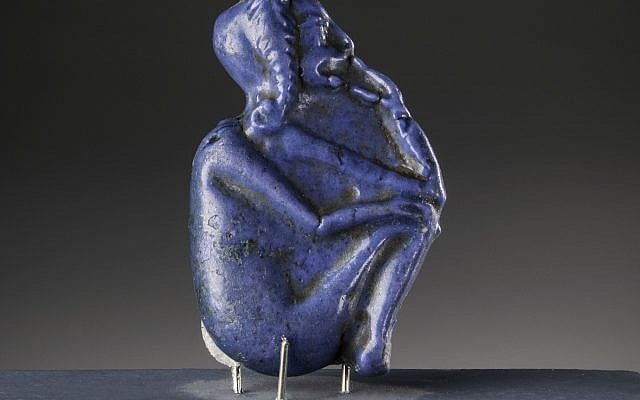
18th Dynasty, 1550-1307 BCE (Courtesy of the Bible Lands Museum/Moshe Caine)
It pivots into the lucrative purple dye industry of the ancient Phoenicians, drawn from snails (their name meaning the “purple people”); points to the proud adoption of the shade by Persian and Roman royals; underlines finds linking the elusive techelet and argaman with the Murex trunculus shellfish and notes Jewish scholarly efforts to revive the pigment based on a cryptic Talmudic description of the hilazon snail that produces the sacred ink.
Set to be exhibited for the first time, for example, are punctured, ancient Murex trunculus snail shells, excavated at the Tel Shikmona site in northern Israel and dating back to the 10th-7th centuries BCE, according to a curator at the museum, Yehuda Kaplan.
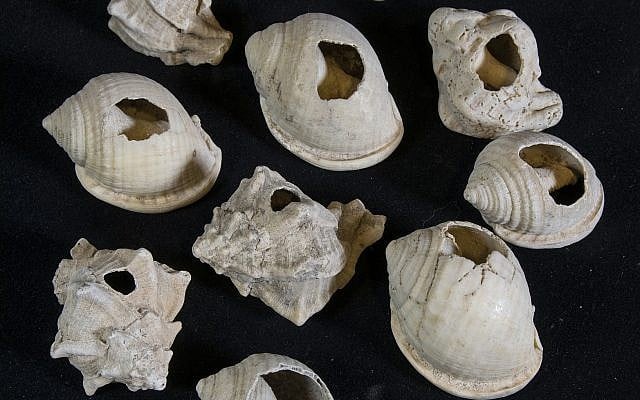
“And you can see that for some of them, there is a breach in the shell,” he said during a tour of the exhibit. It was from those holes that a gland from the snail was extracted, the source of the rich dyes, with each yielding only a “minuscule” amount of the rare and highly coveted pigment, according to the museum. For a single kilogram of dye, thousands or even tens of thousands of the snails were needed.
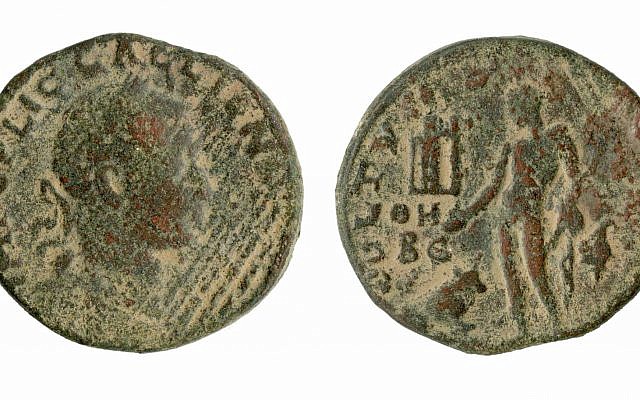
In a showcase nearby are coins minted in the Phoenician city of Tyre, now southern Lebanon, in which snail shells — its “trademark” — are featured, further bolstering the link between the creature (still found on Israel’s shores) and the purple dye.
“These snails, the Murex trunculus, probably about 4,000 years ago it was discovered that they could produce magnificent dyes with the most beautiful colors, dyes that were fast on wool, never faded. And that was something in the ancient world that was simply unheard of, it was priceless,” said Dr. Baruch Sterman of the Ptil Tekhelet organization, which produces techelet fringes to revive the Jewish commandment, and co-author of a book on the subject, “The Rarest Blue.”
At some point, added Sterman, those dyed fabrics were “worth up to 20 times their weight in gold.”
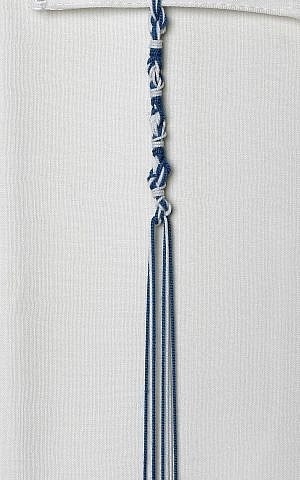
Since the 19th century, Jewish scholars have searched for the source of the techelet, most prominently pitting Rabbi Gershon Hanokh Leiner — the Hasidic Radzyner rebbe, who maintained it was derived from a squid — against Rabbi Isaac Herzog, who would go on to become Israel’s first chief rabbi, and who disputed Leiner’s claim in his 1914 doctoral dissertation.
(Though the modern day ritual use of techelet drawn from the Murex trunculus has made inroads in some Orthodox circles in recent years, it remains the subject of rabbinic debate and has not been unanimously adopted.)
Herzog — the grandfather of Israel’s opposition leader Isaac Herzog — leaned toward endorsing the Murex trunculus as the source of the Biblical techelet, but was stumped by one little detail: The snail produced by the dye appeared to be strictly purple, said Sterman, who was preparing a demonstration of the dye process from the snail gland for the group of journalists at the museum.
That was a discovery that would take until 1985 to unravel, Sterman related while stirring the dye concoction, when chemist Dr. Otto Elsner of Israel’s Shenkar College of Fibers “accidentally” stumbled upon the answer: Exposed to ultraviolet light and subsequently oxidized, the color of the dye changes to blue.
A dank odor suddenly permeating the air outside the museum, Sterman pulled a yellow swab of cotton out of the mixture and into the air.
Slowly, it turned a pale, sky blue.
From Masada to the Israeli flag
Other finds presented in the exhibit were found in the nearby mountains, such as pieces of garments unearthed at the Jewish fortress of Masada during excavations in the 1960s that were later determined — using high performance liquid chromatography (HPLC) in the 1990s — to have been dyed with a murex solution, Kaplan said.
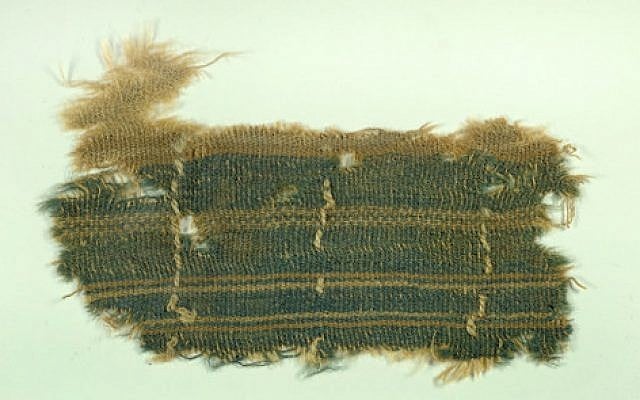
Nearly 2,000 years on, the glass-encased blue and purple fragments from the massive and ultimately devastating Roman siege — as well as several other pieces from the Wadi Muraba’at caves, dating back to the 2nd century and the Bar Kochba revolt — remain vibrant, a testament to the durability of the ancient, mysterious dyes.
In tribute to Israel’s 70th anniversary, the exhibit closed with a few items on techelet as the source of inspiration for the State of Israel’s flag, which resembles the fringed prayer shawl.

“The tekhelet blue, which reminded every Jew of their connection to God, remained in the memory of the people and became an integral part of the national symbol of the State of Israel,” the museum said.
The original banner to fly outside the United Nations in May 1949 upon Israel’s acceptance as a member state appears in the Bible Lands Museum exhibit.
And at the exit is a 1975 flag sent up to space on the Apollo and Soyuz spacecraft during the world’s first International Manned Space Flight.
The latter, suggested curator Kaplan, weaves together the connection between the serene blue dye from a humble snail and the lofty heavens.









The Times of Israel Community.