May 24: Iran claims it downed an Israeli surveillance drone; IDF says not familiar with incident
Leaders of Islamic countries reportedly backed Trump on Iran deal during phone call, but request to join Abraham Accords met with silence * Arab parties urge Ra’am to join efforts to revive Joint List
Police and security forces are swarming the area around the White House on Saturday evening after reports of shots fired.
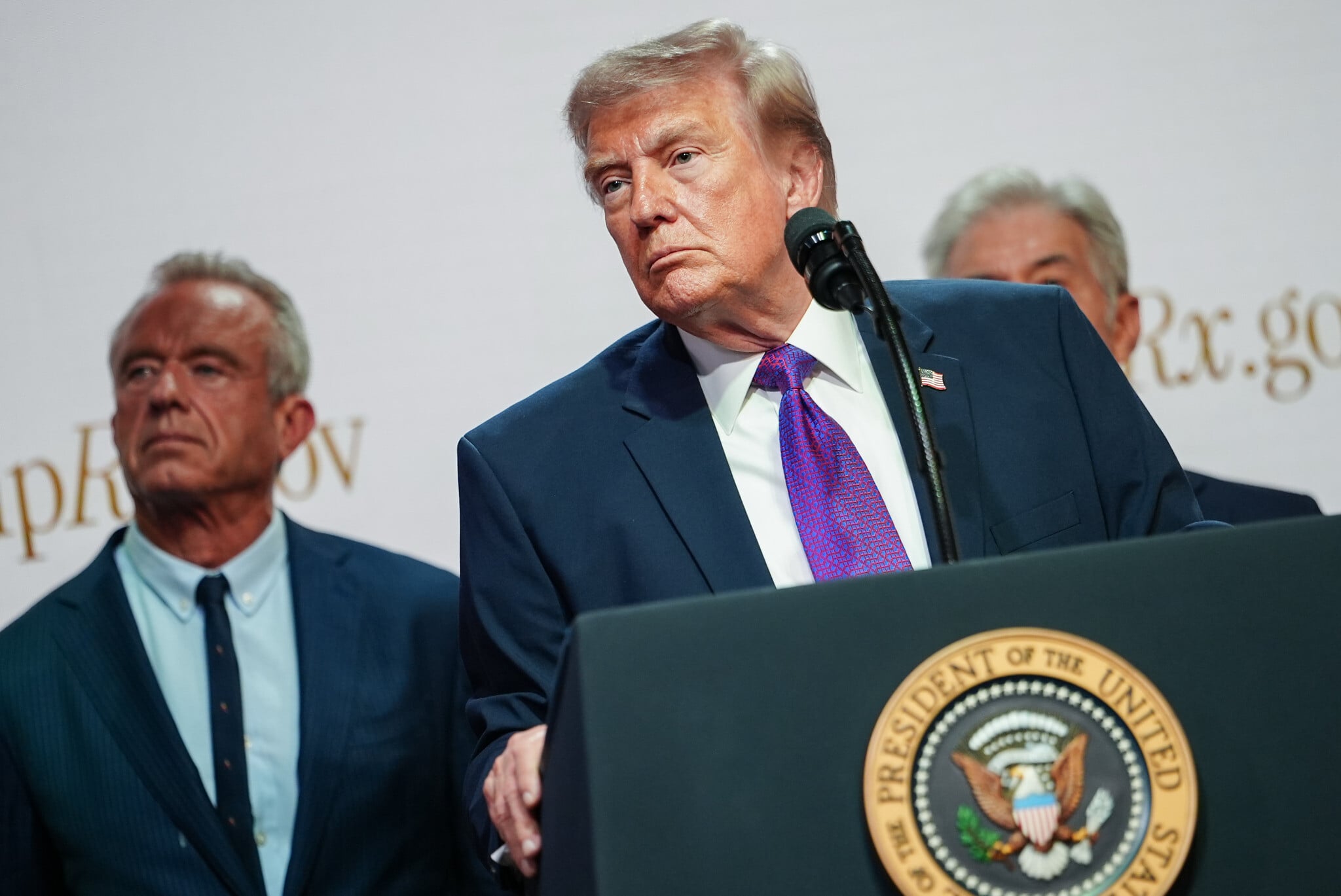
US President Donald Trump is at the White House working to negotiate a deal with Iran.
There are no immediate reports of any injuries. On X, the Secret Service says it is “aware of reports of shots fired near 17th Street and Pennsylvania Avenue NW” — one block from the White House — and is “working to corroborate the information with personnel on the ground.”
In a social media post, FBI Director Kash Patel says officers were responding to shots fired and said he will “update the public as we’re able.”
While Iran’s Fars news has derided President Donald Trump’s talk of a deal being nearly done, with the Strait of Hormuz to reopen, three senior Iranian officials tell the New York Times that Tehran has agreed to “a memorandum of understanding that would stop the fighting and reopen the Strait of Hormuz.”
The deal would release $25 billion in Iranian assets frozen overseas, the officials are quoted as saying.
The Times says the officials say the agreement “would halt fighting on all fronts, including in Lebanon.”
They add that its terms focus “on opening the strait— including lifting the US naval blockade against Iran and allowing free commercial traffic without Iran charging any tolls.”
And, reports the Times, the officials say issues relating to Iran’s nuclear program will be put off, to be negotiated within 30 to 60 days.
The Times adds the caveat that it is “not clear if the proposal Iranian officials said they had agreed to was what President Trump was referring to in his post on social media.”
Citing Middle East officials, The Times also says the leaders of Arab and Muslim-majority countries with whom Trump spoke in a conference earlier today told him that they support the proposal and urged him to accept it.
A person who approached a White House security checkpoint and began firing at officers has died, according to federal officials.
The US Secret Service says in a statement that, according to a preliminary investigation, the person approached a checkpoint shortly after 6 p.m. ET (1 a.m. Israel time), and “removed a weapon from his bag and began firing at posted officers.”
Officers returned fire and hit the suspect, who was transported to an area hospital, where he later died, according to the Secret Service.
A bystander was struck, but a law enforcement official says it isn’t clear whether that person was struck by the suspect’s initial bullets or those fired subsequently by officers.
Secret Service says none of its officers were injured, and that US President Donald Trump — who was at the White House at the time — was not “impacted.”
Iran has agreed to give up its stockpile of highly enriched uranium as part of an agreement with the US to end the war, two US officials tell the New York Times.
According to the officials, Iran has committed in a general statement to giving up the uranium, rather than reaching an agreement with the US on exactly how it will relinquish it. Instead, the exact details will be worked out during the negotiations that will begin once a deal is reached.
The report comes days after Iranian sources claimed that Iran’s supreme leader, Ayatollah Mojtaba Khamenei, had issued a directive that the near-weapons-grade uranium should not be sent abroad.
Iran has a stockpile of more than 400 kilograms of highly enriched uranium in its possession, which Israeli officials have said is sufficient for 11 nuclear bombs if enriched further.
Earlier this month, a senior Israeli military official said if the uranium wasn’t removed, the war launched in February could be considered “one big failure.”
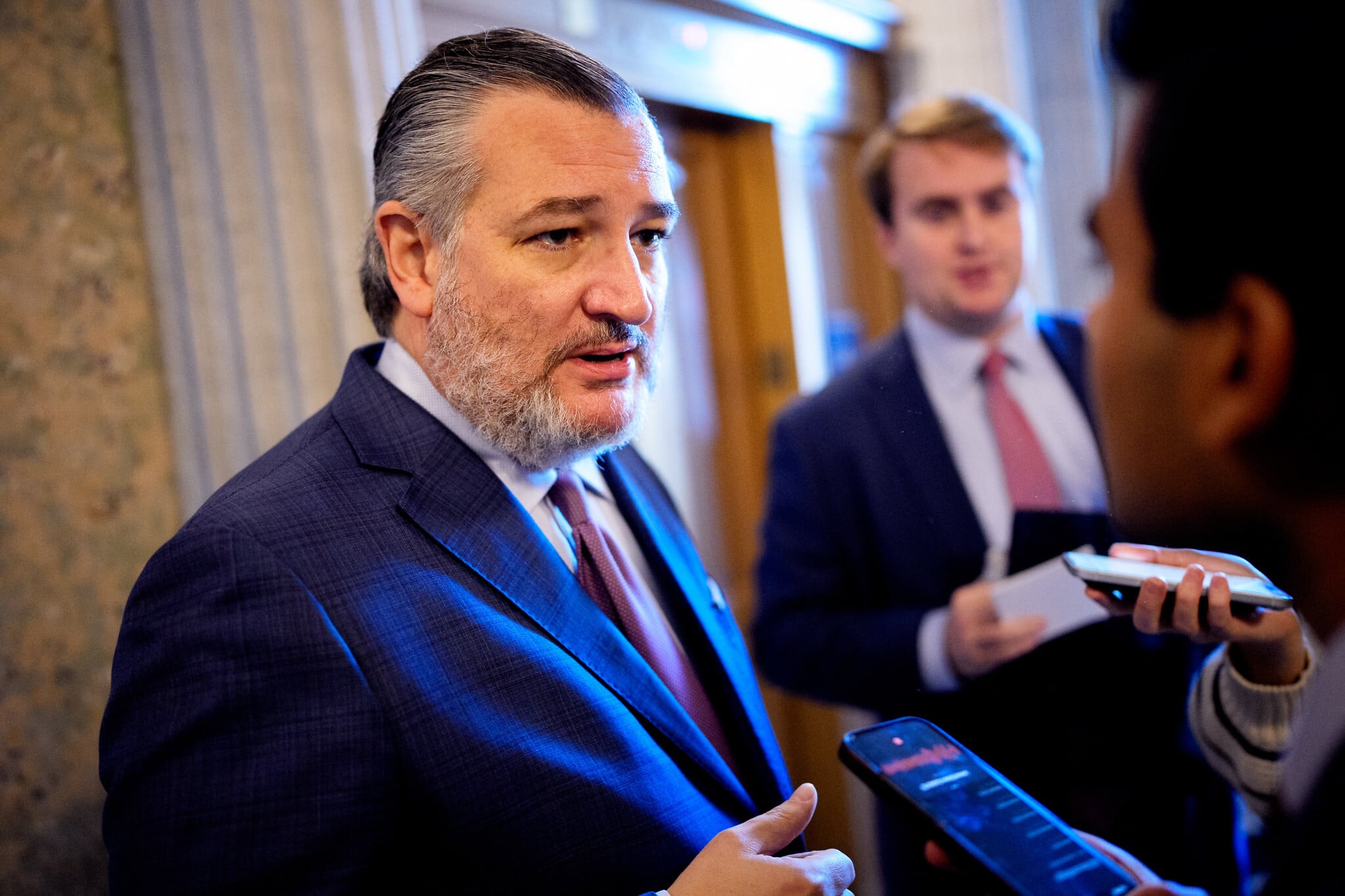
US Senator Ted Cruz, Republican of Texas, speaks to members of the media as he walks out of the Senate Chamber on December 11, 2025, in Washington, DC. (Andrew Harnik / GETTY IMAGES NORTH AMERICA / Getty Images via AFP)
Republican US Senator Ted Cruz says he is “deeply concerned” by the reported terms of an emerging deal between the US and Iran to end the war launched jointly by the US and Israel against the Islamic Republic on February 28.
“President Trump’s decision to strike Iran was the most consequential decision of his second term. He was right to do so, and we achieved extraordinary military results,” Cruz writes on X, becoming the latest Republican to voice dissent over the issue.
“If the result of all that is to be an Iranian regime—still run by Islamists who chant ‘death to America’—now receiving billions of dollars, being able to enrich uranium & develop nuclear weapons, and having effective control over the Strait of Hormuz, then that outcome would be a disastrous mistake,” the Texas senator continues.
Unlike other Republicans who have voiced criticism, Cruz directly names Trump in his statement, although he appears to try to distance the president from the potential deal, saying instead that it is being “pushed by some voices in the administration.”
“President Trump believes in peace through strength, and his strong leadership has already made America much safer. He should continue to hold the line, defend America & enforce the red lines he has repeatedly drawn,” he adds.
Pakistan’s Prime Minister Shehbaz Sharif congratulates US President Donald Trump “on his extraordinary efforts to pursue peace” amid a push to finalize an agreement to end the US-Israeli war with Iran.
In a statement on X, Sharif says Trump’s “very useful and productive” phone call with regional leaders on Saturday “provided a useful opportunity to exchange views on the current regional situation and how to move the ongoing peace efforts forward to bring lasting peace in the region.”
“Pakistan will continue its peace efforts with utmost sincerity and we hope to host the next round of talks very soon,” he adds.
The US and Iran are close to signing a deal involving a 60-day ceasefire extension, during which the Strait of Hormuz would be reopened, Iran would be able to freely sell oil and negotiations would be held on curbing Iran’s nuclear program, Axios reports, citing a US official.
According to the Axios report, during the 60-day period covered by the memorandum of understanding (MOU), the Strait of Hormuz would be open with no tolls and Iran would agree to clear the mines it deployed in the strait to let ships pass freely.
In exchange, as part of the proposed deal, the US will lift its blockade on Iranian ports and issue some sanctions waivers to allow Iran to sell oil freely, the report adds.
The draft agreement also includes commitments from Iran to never pursue nuclear weapons and to negotiate over a suspension of its uranium enrichment program and the removal of its stockpile of highly enriched uranium, the Axios report says.
The MOU also makes clear that the conflict between Israel and Hezbollah will end, the report says.
Israel will be permitted to strike Hezbollah if the terror group instigates or carries out attacks, the report says.
“If Hezbollah behaves, Israel will behave,” the US official says. “Bibi has his domestic considerations, but Trump has the interests of the US and the global economy to think about.”
Prime Minister Benjamin Netanyahu expressed concerns about a number of issues during a call with UP President Donald Trump yesterday, the report says.
Iran gave the US through the mediators verbal commitments about the scope of the concessions it’s willing to make on suspending enrichment and giving up the nuclear material, two sources tell Axios.
The US would also agree to negotiate over lifting sanctions and unfreezing Iranian funds during the 60-day period, the Axios report says.
The US official says he hopes the deal will be announced later today.
The report says that if Tehran is willing to meet Trump’s demands over its nuclear program, there’s an opportunity for ties between the countries to be “reset” and Iran to try to reach full economic potential.
The White House does not immediately respond to Reuters’ request for comment on the report.
Lebanon’s civil defense agency says its regional facility in the southern city of Nabatieh has been destroyed by an Israeli strike.
The Directorate General of Civil Defence says the building had collapsed and a large number of vehicles and equipment had been damaged by a “direct hit in a hostile Israeli strike.”
It adds there are no reports of casualties among its personnel, who had been moved to another location before the incident.
There is no comment from the Israel Defense Forces, which routinely issues evacuation orders ahead of strikes on Hezbollah in other to reduce harm to civilians.
The IDF says a soldier was moderately wounded and another was lightly wounded yesterday in southern Lebanon after a drone struck an area where troops were operating.
The military says the wounded soldiers were taken to hospital for treatment, and their families have been notified.
???? صور | مستوطنون دمروا فجر اليوم شواهد لخمسة قبور في مقبرة قريتي كيسان والرشايدة، شرق بيت لحم، علماً أنه تم تدمير شواهد قبور في المقبرة ذاتها قبل خمسة أيام. pic.twitter.com/wG0O5PYjIh
Pakistan’s Foreign Minister Ishaq Dar says “meaningful progress” has been achieved in US and Iran negotiations, offering grounds for optimism that a positive and durable outcome is within reach.
Earlier today, Pakistan’s Prime Minister Shehbaz Sharif congratulated US President Donald Trump for what he described as “extraordinary efforts” to pursue peace, adding that Pakistan remained committed to continuing talks and hoped to host the next round soon.
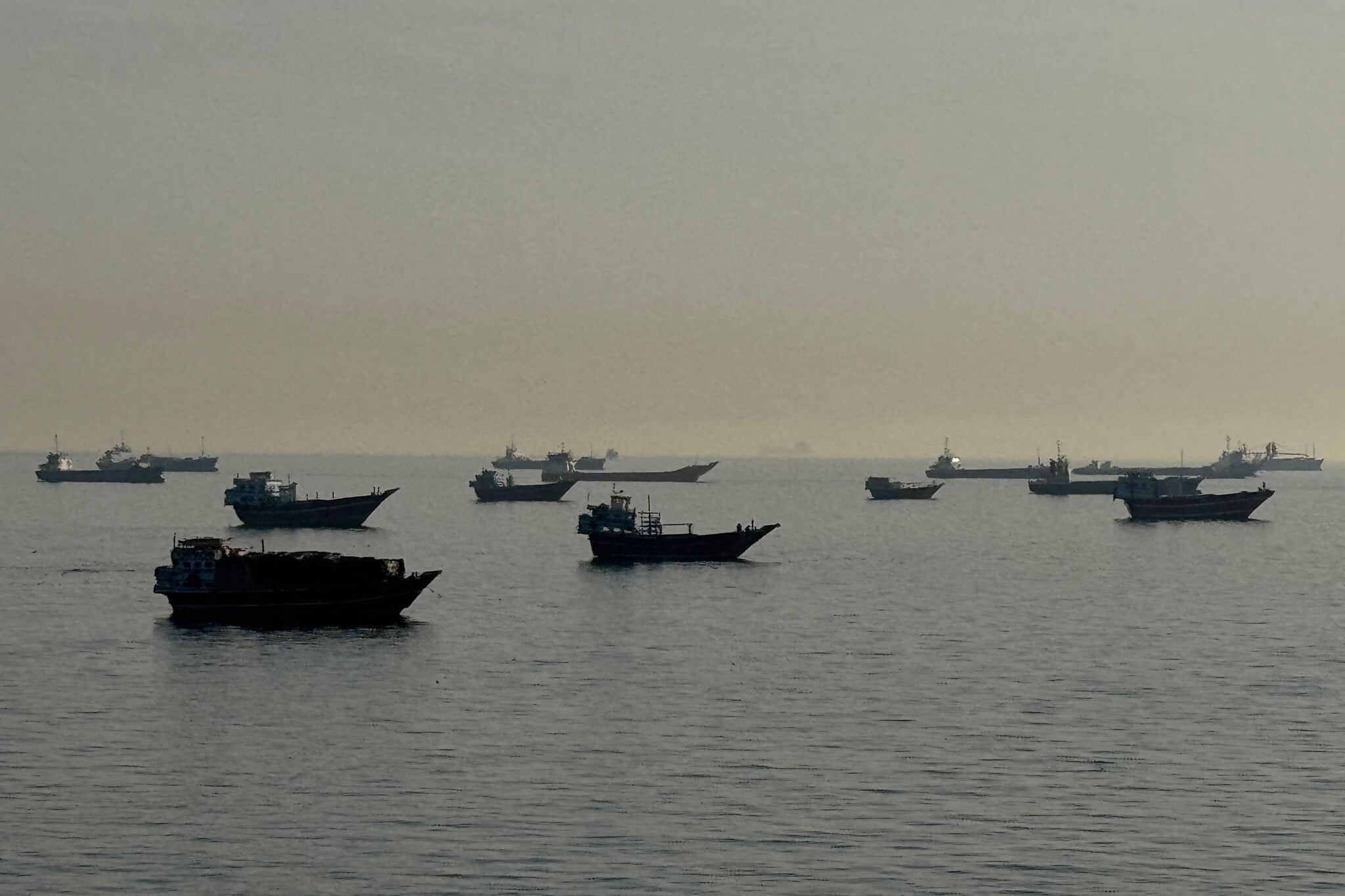
Vessels are seen anchored in the Strait of Hormuz, off the port city of Khasab on Oman's northern Musandam Peninsula on May 17, 2026. (AFP)
An unnamed Israeli official expresses concern over the proposed agreement between the US and Iran, telling Channel 12 news that “the emerging deal is bad.”
The official says that the framework of the deal shows Tehran that it can weaponize the Strait of Hormuz in a way that is no less effective than a nuclear weapon.
The unnamed official says that US President Donald Trump believes that the deal will be economic in basis and allows the opening of the key waterway without any progress dependent on concessions on Iran’s nuclear program.
The official tells the outlet that it is unclear what will happen after the first phase of the deal.
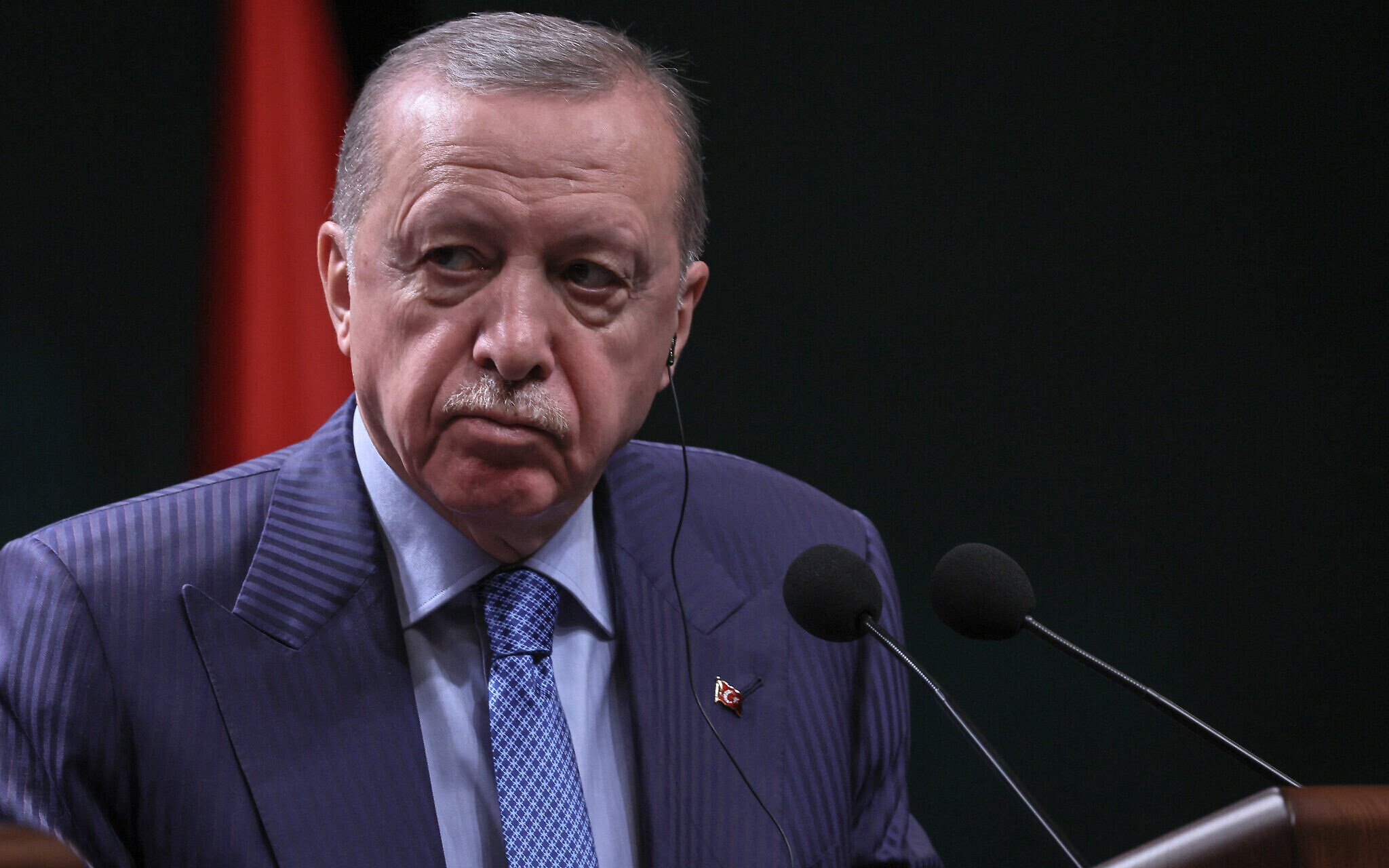
Turkey's President Recep Tayyip Erdogan (R) attends a joint press conference with the German chancellor at the Presidential Complex in Ankara, on October 30, 2025. (Adem Altan/AFP)
Turkey is ready to provide every kind of support during the implementation of a potential deal with Iran, President Tayyip Erdogan says in a call with US President Donald Trump and regional leaders.
Erdogan’s office cites him as saying during the call that an agreement to secure free passage through the Strait of Hormuz would support stability in the region, providing relief to the global economy.
The IDF says it struck and destroyed several Hamas weapons storage facilities in central Gaza over recent days.
According to the military, three weapons warehouses hit yesterday contained anti-tank missiles, firearms, RPGs, vests and other combat equipment.
A separate strike on Wednesday destroyed another Hamas weapons depot containing explosive devices, RPG launchers, hand grenades and ammunition magazines, the IDF says.
The military adds that secondary explosions were identified following the strikes, indicating the presence of weapons inside the depots.
במאמץ ממושך להסרת האיום: צה"ל תקף והשמיד בימים האחרונים מספר מחסני אמצעי לחימה של ארגון הטרור חמאס
כוחות צה"ל בפיקוד הדרום תקפו והשמידו במהלך היממה האחרונה, שלושה מחסני אמצעי לחימה של ארגון הטרור חמאס במרכז רצועת עזה. בין אמצעי הלחימה שהיו בתוך המחסנים והושמדו כתוצאה מהתקיפות… pic.twitter.com/o4VDklFhLx
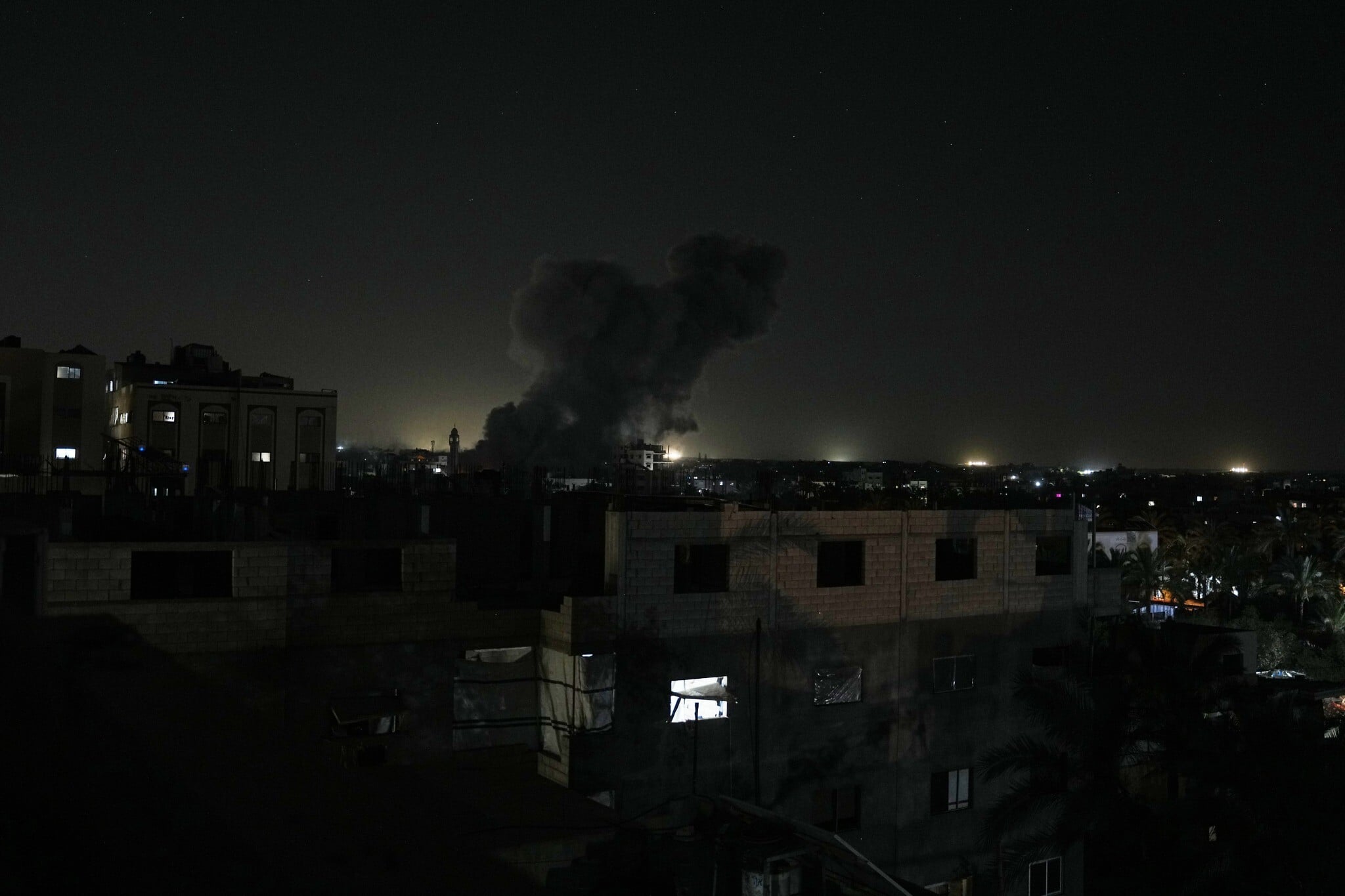
Smoke rises from an Israeli airstrike that targeted a building in Deir al-Balah, central Gaza Strip, May 23, 2026. (AP Photo/Abdel Kareem Hana)
Media outlets affiliated with Hamas in Gaza report that a man, a woman and their toddler son were killed in an IDF strike on their home in the Nuseirat refugee camp.
According to the reports, those killed were Ibrahim Abu Mallouh, 38, his wife Alaa Majdi, 38, and their one-year-old son Osama.
The Israel Defense Forces has not commented on the strike.
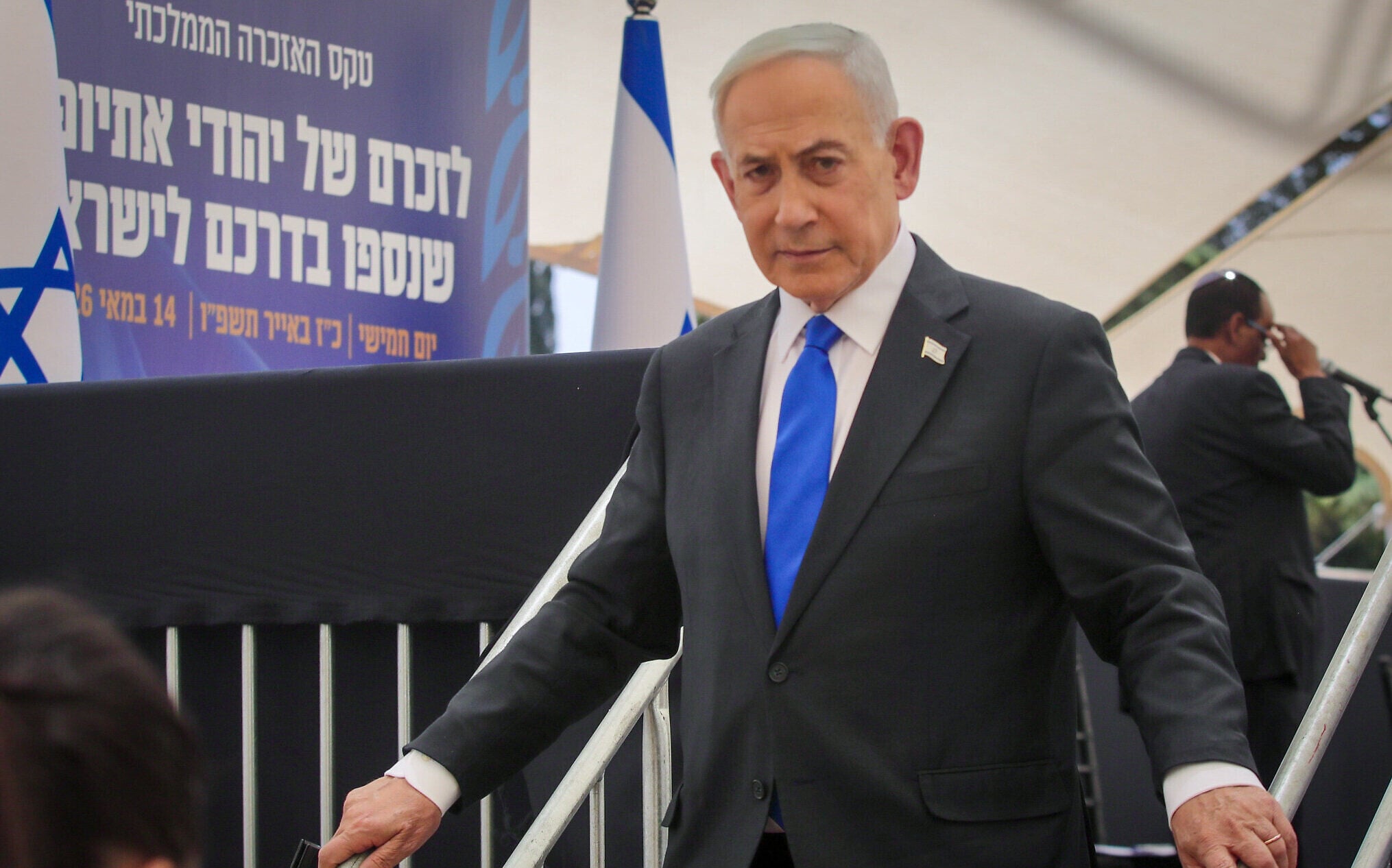
Prime Minister Benjamin Netanyahu seen at a ceremony at Mount Herzl, for the Ethiopian Jews who died while making their way to Israel. May 14, 2026. (Gil Yohanan/POOL)
Prime Minister Benjamin Netanyahu will hold a limited security cabinet meeting this evening to discuss the emerging US-Iran deal, an aide to one of the attending ministers confirms to The Times of Israel.
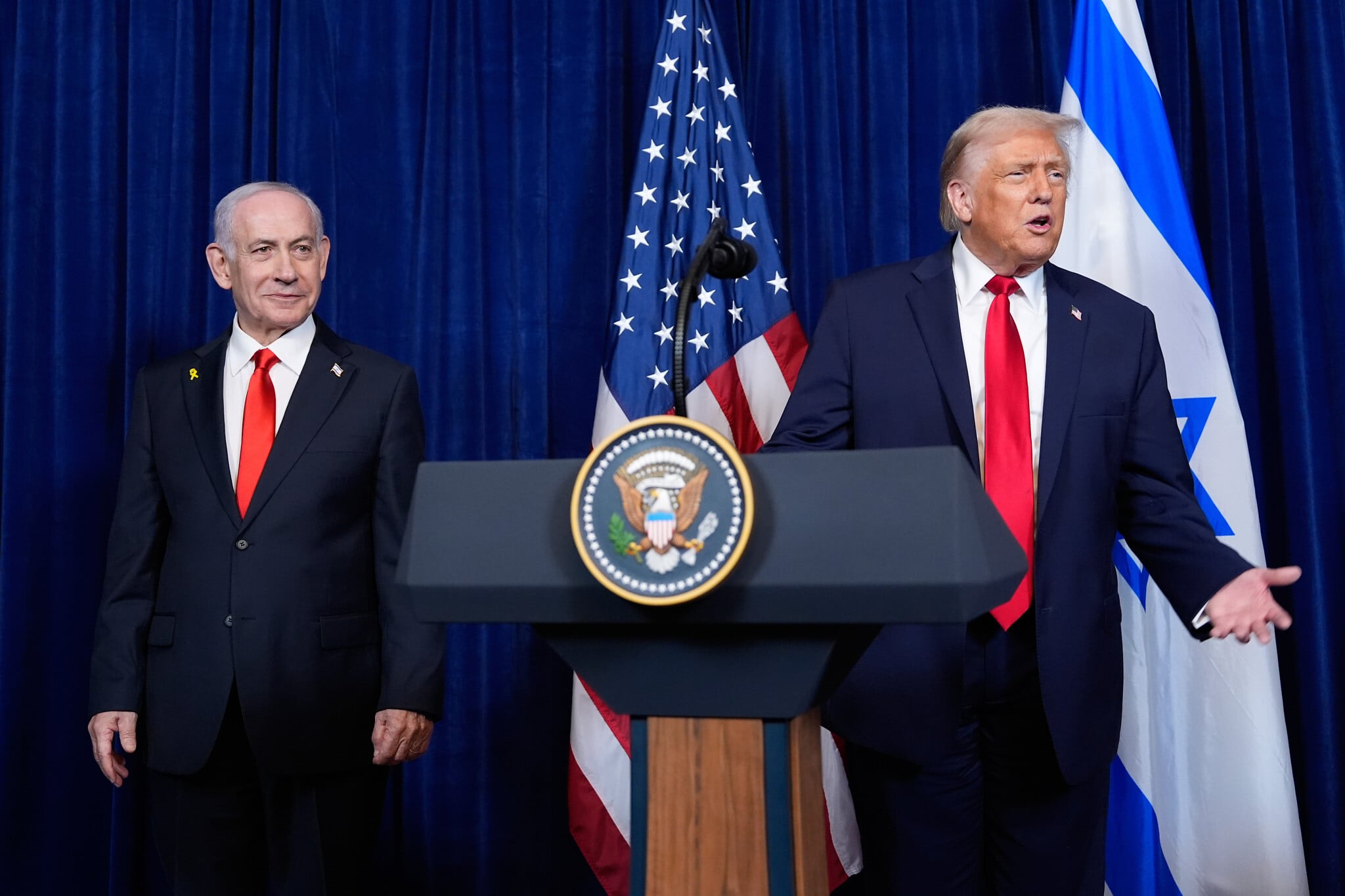
FILE - President Donald Trump answers a question from a reporter at the end of a news conference with Israel's Prime Minister Benjamin Netanyahu at Mar-a-Lago, in Palm Beach, Florida, December 29, 2025. (AP/Alex Brandon)
Prime Minister Benjamin Netanyahu expressed concern to US President Donald Trump about two specific areas of the emerging US-Iran deal — the clause dealing with Lebanon, and the postponement of dealing with the nuclear issue, the Kan public broadcaster reports.
According to Axios, the Memorandum of Understanding that is expected to be signed by the US and Iran and ushers in a 60-day ceasefire extension, contains a clause that would end fighting between Israel and Hezbollah in Lebanon. The report says Israel will be permitted to strike Hezbollah if the terror group instigates or carries out attacks.
Talks will only be held on potential curbs on Iran’s nuclear program once the 60-day period begins.
Troops operating in the Mount Dov area in southern Lebanon located and destroyed a Hezbollah tunnel stretching roughly 100 meters (328 feet), the IDF says.
According to the military, troops of the 810th Mountains Regional Brigade, operating under the 210th Division alongside the Combat Engineering Corps’ elite Yahalom unit, uncovered the tunnel during operations to dismantle Hezbollah infrastructure in southern Lebanon.
The tunnel contained four rooms used by Hezbollah operatives, the army says.
באורך של כ-100 מטרים: כוחות חטיבה 810 השמידו תוואי תת-קרקעי של ארגון הטרור חיזבאללה
Following the sirens that sounded a short while ago in the northern community of Shomera, the IDF says it identified a “suspicious aerial target” before later losing contact with it.
The statement implies that the military was no longer able to track the apparent drone on its surveillance systems, possibly after it left the monitored area, or that it fell.
The incident has since concluded, the military says, as an immediate threat is no longer detected. No injuries were reported.
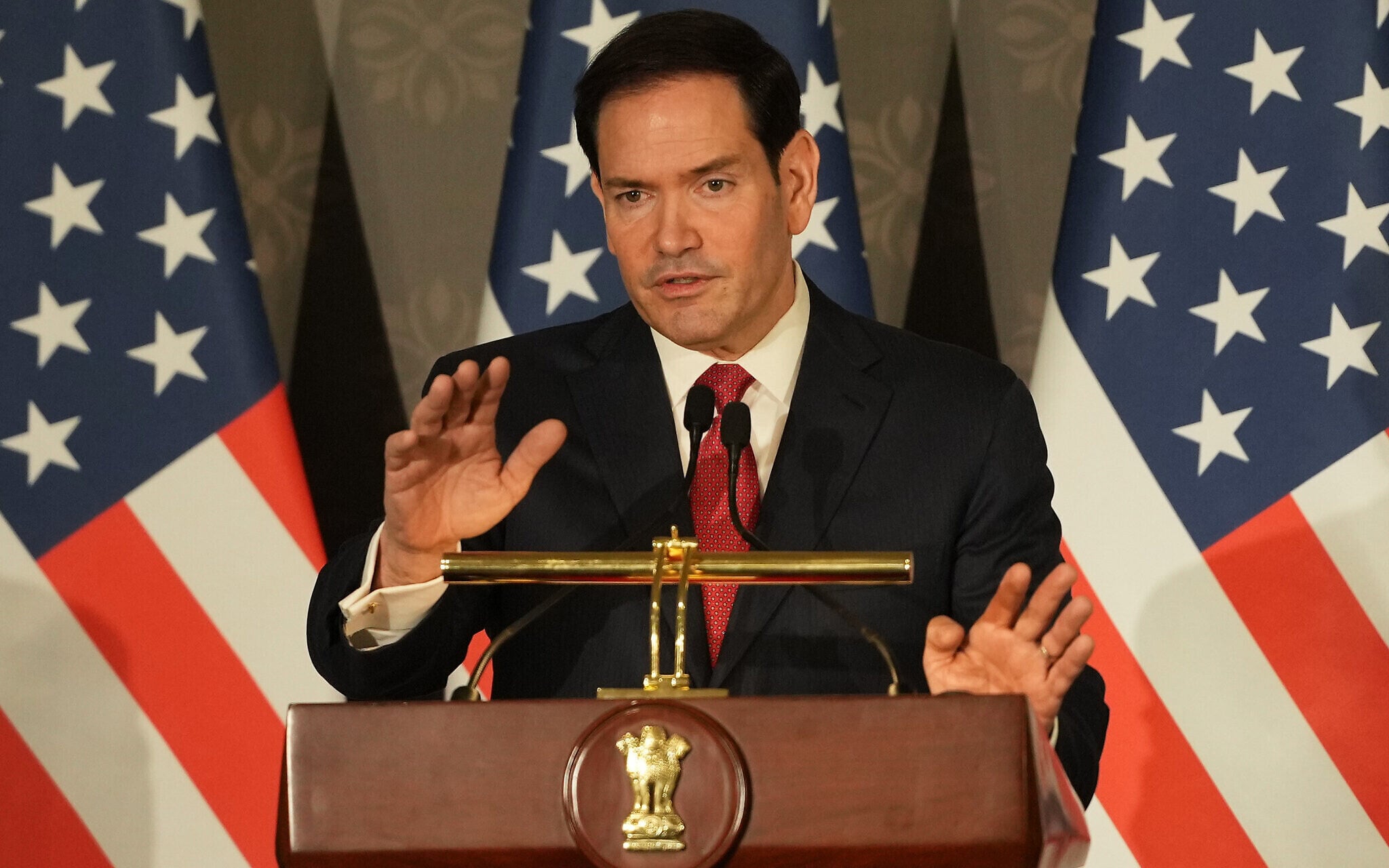
United States Secretary of State Marco Rubio speaks during a press conference in New Delhi, India, May 24, 2026. (AP Photo/Manish Swarup)
US Secretary of State Marco Rubio says he expects further news on the emerging US-Iran deal later today, and stresses that the main goal of an agreement is to prevent Iran from ever possessing a nuclear weapon.
“I believe there may be more news coming out a bit later today on [a deal with Iran], and I’ll leave it to [US President Donald Trump] to make further announcements on it,” Rubio tells reporters while on a diplomatic visit to India.
“Significant progress but not final progress” has been made on the deal, he adds, saying, “The ultimate goal is that Iran can never have a nuclear weapon…they will never possess a nuclear weapon – certainly not as long as Donald Trump is president.”
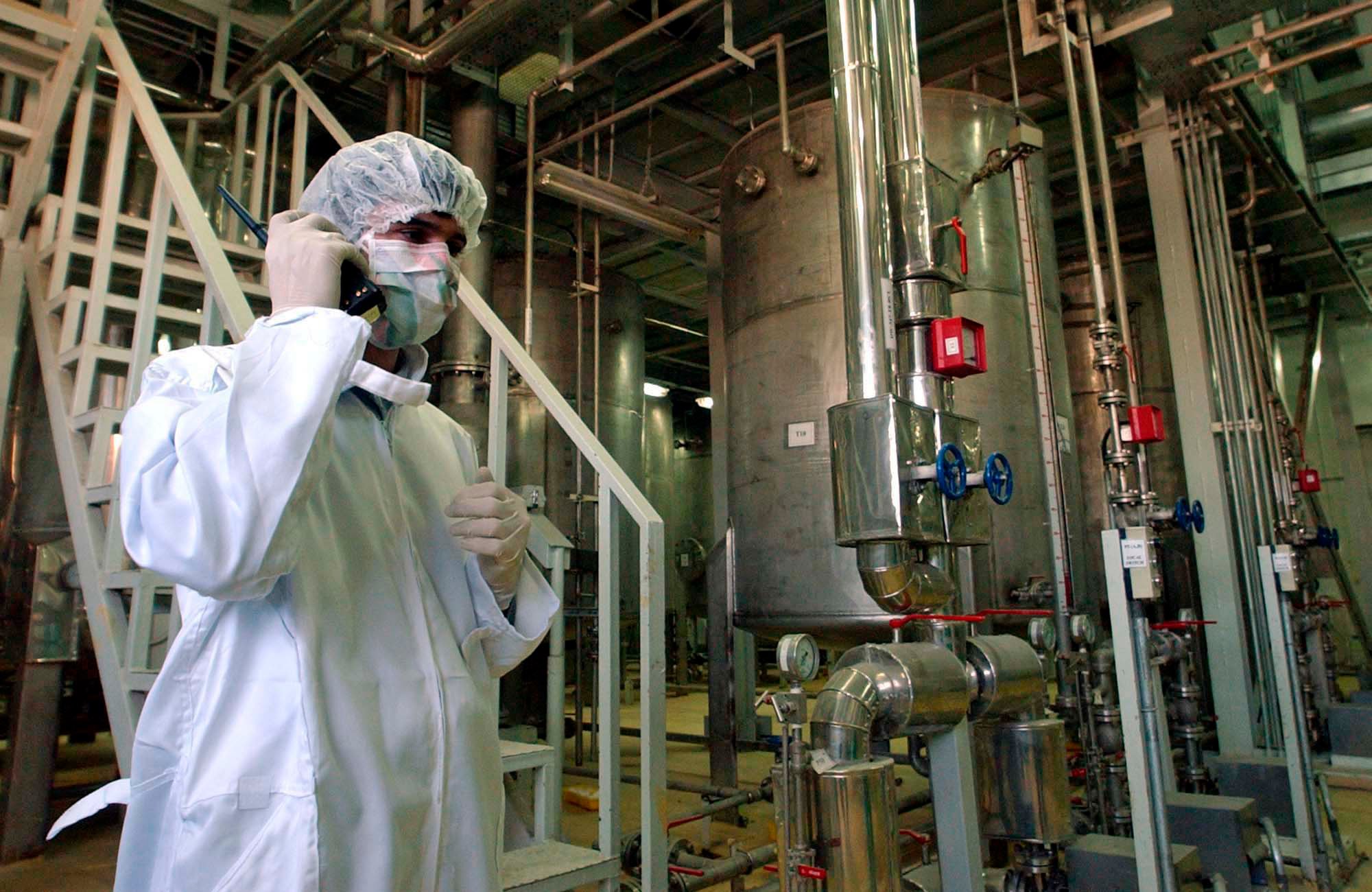
A person involved with security at the Uranium Conversion Facility just outside the city of Isfahan, Iran, on March 30, 2005. (AP Photo/Vahid Salemi, File)
A senior Iranian source tells Reuters that Tehran has not agreed to hand over its highly enriched uranium stockpile.
The source says Iran’s nuclear issue was not part of the preliminary agreement with the United States.
“The nuclear issue will be addressed in negotiations for a final agreement and is therefore not part of the current deal. There has been no agreement over Iran’s highly enriched uranium stockpile to be shipped out of the country,” says the source.
The comments come after two US officials told The New York Times that Iran has apparently committed to giving up the uranium, rather than reaching an agreement with the US on exactly how it will relinquish it. Instead, the exact details will be worked out during the negotiations that will begin once a deal is reached.
Axios reports that the draft agreement includes commitments from Iran to never pursue nuclear weapons and to negotiate over a suspension of its uranium enrichment program and the removal of its stockpile of highly enriched uranium.
Israeli security and rescue forces at the scene of a Hezbollah rocket strike in Kiryat Shmona, northern Israel, April 1, 2026. (Ayal Margolin/Flash90)
Iran’s Fars news agency says the emerging draft agreement between Tehran and Washington stipulates that the US and its allies will not attack Iran or its allies, and in return Iran pledges not to launch any preemptive attacks on the US or its allies.
According to Axios, the Memorandum of Understanding makes clear that the conflict between Israel and Hezbollah will end.
Israel will be permitted to strike Hezbollah if the terror group instigates or carries out attacks, the report says. The Iran-backed group renewed rocket and drone attacks on Israel in March.
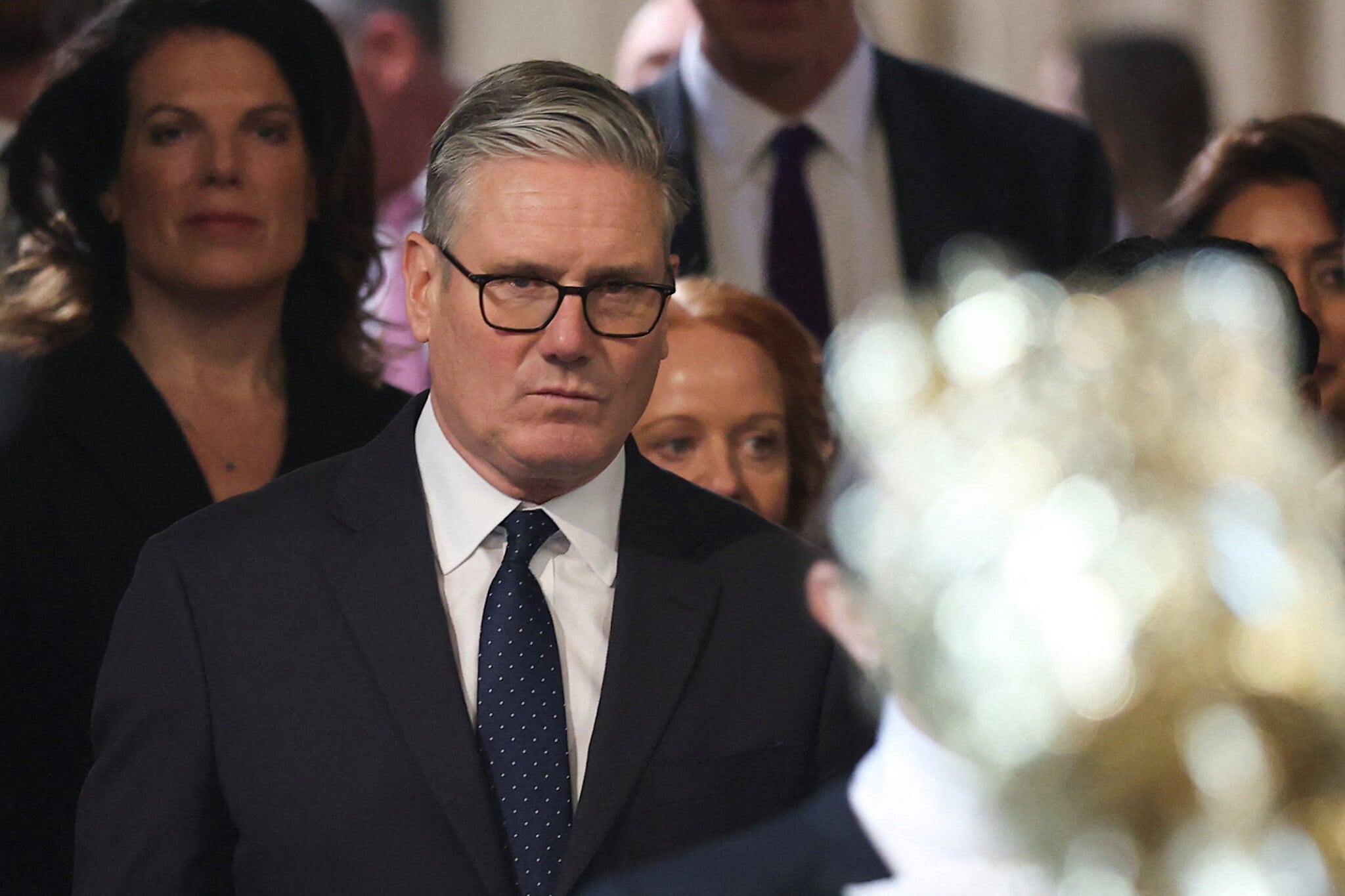
British Prime Minister Keir Starmer, center, walks through the House of Commons to attend the State Opening of Parliament at the Palace of Westminster, London, May 13, 2026. (Toby Melville/Pool via AP)
British Prime Minister Keir Starmer welcomes “the progress towards an agreement” to end the Iran war, as US officials said an announcement on a deal could be expected later in the day.
“We will work with our international partners to seize this moment and achieve a long-term diplomatic settlement,” Starmer says in a post on X.
The Knesset Education, Culture and Sports Committee Legal Adviser Tami Sela criticizes the controversial bill seeking to extend Israeli civilian responsibility over antiquities and archaeological sites in the West Bank and the Gaza Strip, stating it “contradicts international agreements that have been adopted into law” and “reinforces claims of ‘creeping annexation.'”
Sela’s position is expressed in a position paper published in conjunction with a meeting of the committee preparing the bill — which establishes a “Judea, Samaria and Gaza Heritage Authority” under the Heritage Ministry — for its final plenum readings to vote it into law.
“[Regarding West Bank Area’s A and B,] the bill stands in contradiction to the interim agreements to which the State of Israel is a signatory, and to the legislation adopted in Israel and the [West Bank] for their implementation,” writes the adviser, referring to the areas in the West Bank under the responsibility of the Palestinian Authority.
“Israel does not have any civil powers in the Gaza Strip,” she adds. “Beyond the fact that the application of civilian powers to [Area A, B and Gaza] contradicts international agreements that have been adopted into law in Israel and the area, it also raises substantial implementation and enforcement difficulties.”
Under the 1995 Oslo II Accords, the West Bank is divided into Area A, under full Palestinian control, Area B, under Israeli security control and Palestinian civilian control, and Area C, under full Israeli control.
Sela notes how, while Israel considers the West Bank disputed territory, in practice it applies the Law of Belligerent Occupation and rules the area under the authority of a Military Commander, temporary by nature.
The person currently responsible for the antiquities is now a staff officer of the Archaeology Unit of the Civil Administration, a branch of the Defense Ministry’s Coordinator of Government Activities in the Territories (COGAT), which is responsible for civilian affairs in the West Bank.
“The enactment of the bill could, especially cumulatively with additional legislation being promoted in the Knesset, reinforce claims that this constitutes a process of ‘creeping annexation,’ i.e., a stage within a gradual move to transform the territory into an area subject to the sovereignty and direct rule of the State of Israel, without considering all the implications of such a move, including on the rights and status of the Palestinian residents of the area,” Sela writes.
The committee has been running a series of marathon meetings to enable the Knesset to approve the proposal as quickly as possible in light of the time crunch caused by lawmakers’ decision to begin the process of dissolving parliament early.
The timeline for advancing legislation is further complicated by the looming summer recess, which is expected to begin in July and run almost until October. Elections must be held by October 27 at the latest.
However, it is also possible that the antiquities bill will not be put up for final votes in the plenum if the coalition decides not to move forward with it, or if legislation to dissolve the Knesset advanced last week is fast-tracked to be passed into law in the coming days.
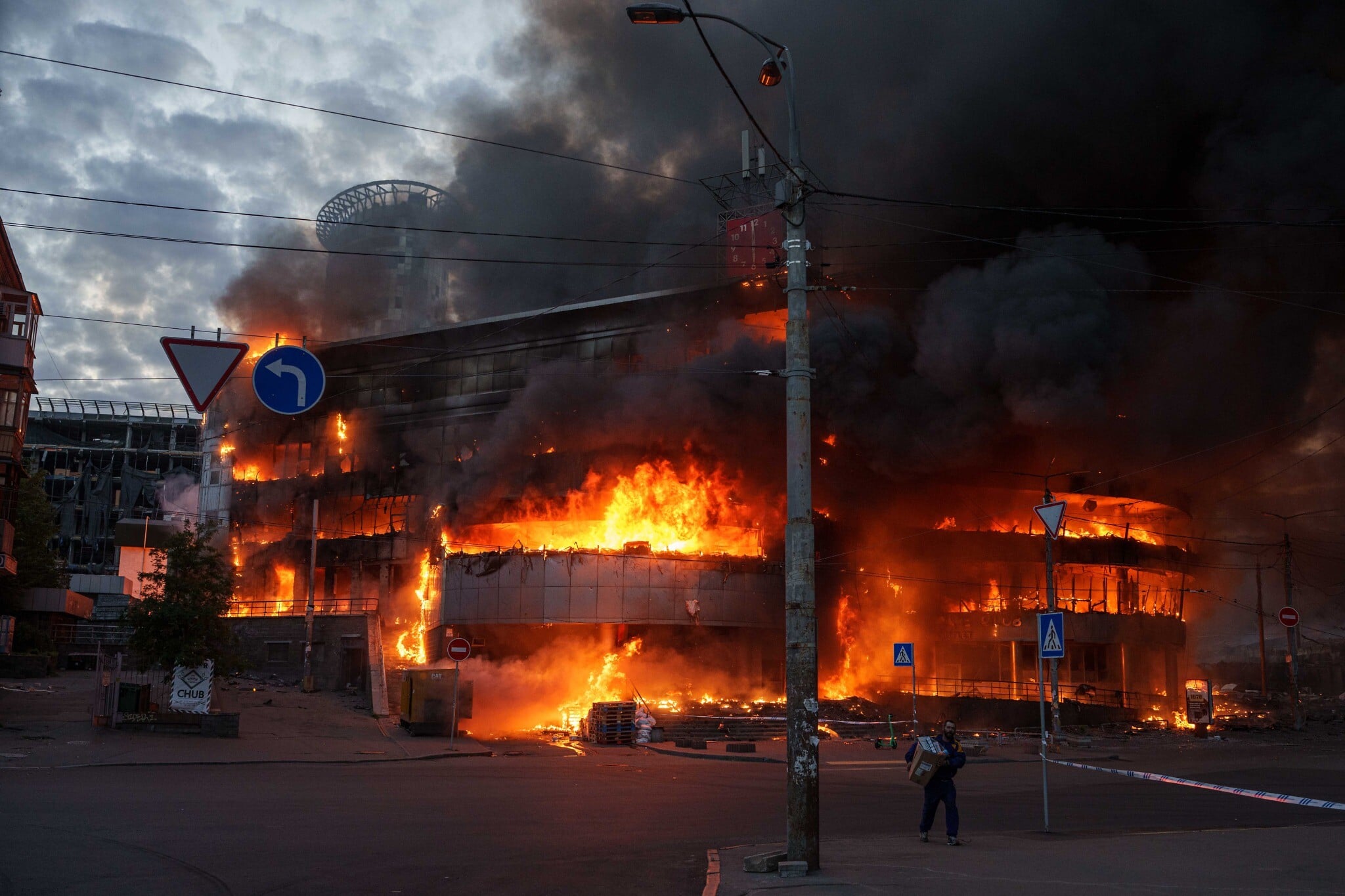
A man carries a box from a burning trade center after a Russian strike on Kyiv, Ukraine, on May 24, 2026. (AP Photo/Evgeniy Maloletka)
Ukrainian President Volodymyr Zelenskyy says Russia used the powerful hypersonic Oreshnik ballistic missile during a mass drone and missile attack on Kyiv that killed at least two people, marking the third time the weapon has been used in the four-year war.
The intense aerial assault damaged buildings across the Ukrainian capital, including near government offices, residential buildings and schools.
The Oreshnik, which is capable of carrying nuclear or conventional warheads, struck the city of Bila Tserkva in the Kyiv region, Zelenskyy says in a post on Telegram. The target was not immediately clear.
Russia’s defense ministry confirms it used the Oreshnik, as well as other missile types, to strike Ukrainian “military command and control facilities,” air bases and military industrial enterprises. It did not specify where the targets were.
The ministry adds the attack was retaliation for Ukrainian strikes on “civilian facilities on Russian territory,” without immediately giving details.
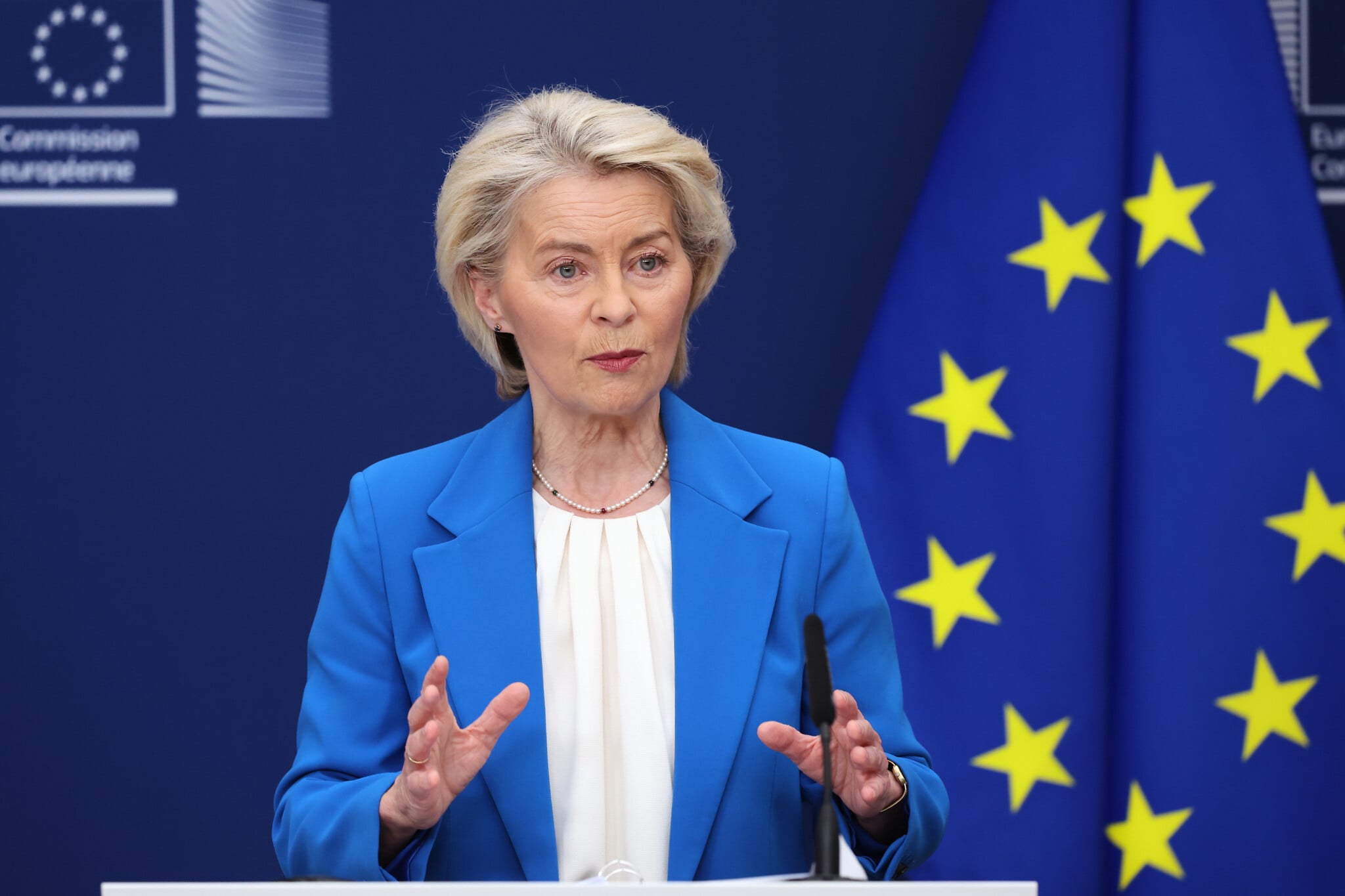
European Commission President Ursula von der Leyen speaks during a media conference regarding energy at EU headquarters in Brussels, Monday, April 13, 2026. (AP Photo/Omar Havana)
European Commission President Ursula von der Leyen welcomes signs of progress in talks over a possible peace deal between the United States and Iran.
“I welcome the progress towards an agreement between the US and Iran. We need a deal that truly de-escalates the conflict, reopens the Strait of Hormuz and guarantees toll-free full freedom of navigation. Iran must not be allowed to develop a nuclear weapon,” von der Leyen writes on X.
US President Donald Trump said earlier that Washington and Iran have “largely negotiated” a memorandum of understanding.
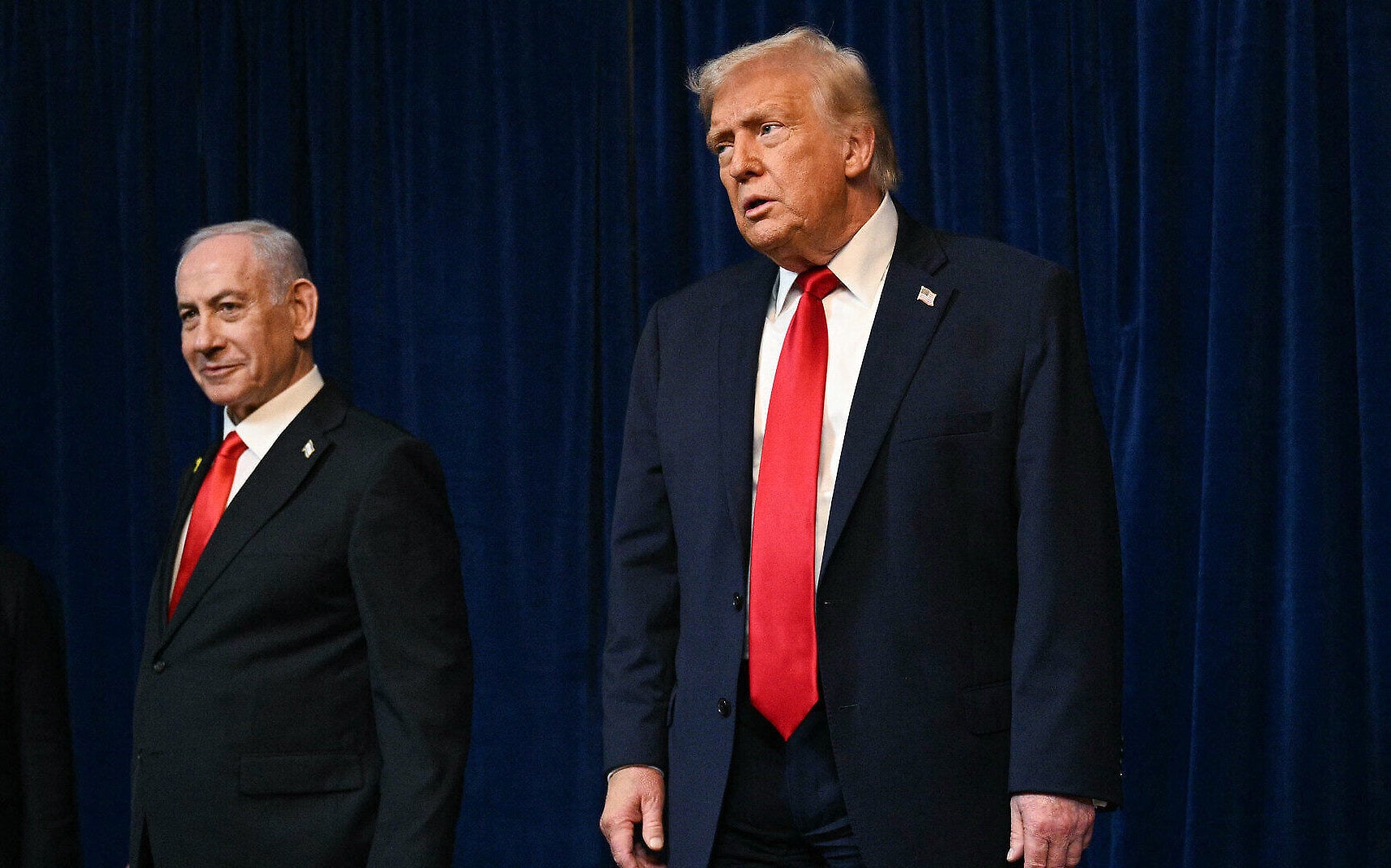
US President Donald Trump (right) and Prime Minister Benjamin Netanyahu leave at the conclusion of a joint press conference at Mar-a-Lago, in Palm Beach, Florida, on December 29, 2025. (Jim WATSON / AFP)
US President Donald Trump reassured Prime Minister Benjamin Netanyahu in a phone call last night that the final agreement with Iran will fully dismantle Tehran’s nuclear program, a senior Israeli official says in a statement.
Trump “clarified that he will stand firm in the negotiations on his longstanding demand for the dismantlement of Iran’s nuclear program and the removal of all enriched uranium from Iranian territory, and that he will not sign a final agreement without these conditions being met,” the official says.
Washington is keeping Jerusalem updated on the negotiations “over a memorandum of understanding to reopen the Strait of Hormuz and enter negotiations toward a final agreement on the points that remain in dispute,” the statement reads, adding that Netanyahu thanked Trump for his “exceptional commitment to Israel’s security.”
Yesterday, The New York Times reported that the US has almost completely excluded Israel from the negotiations.
For his part, Netanyahu told Trump that Israel will preserve its freedom of action against “all threats in all arenas,” the official says.
“The prime minister emphasized that Israel will preserve its freedom of action against threats in all arenas, including Lebanon, and President Trump reiterated his support for this principle,” the official says.
According to Axios, the Memorandum of Understanding being discussed makes clear that the conflict between Israel and Hezbollah will end, though Israel will be permitted to strike Hezbollah if the terror group instigates or carries out attacks.
A senior Iranian source told Reuters that Tehran has not agreed to hand over its highly enriched uranium stockpile under the preliminary agreement.
There has been no public statement from Netanyahu amid the growing reports of a nearing deal.
The State Attorney’s Office charges a man with murder for the lethal stabbing of Mar’i al-Dabari last month in Ofakim.
The defendant, 20-year-old Qusai Jaradat, is accused of stabbing Dabari with his pocket knife shortly after a brawl broke out between the two on April 5.
Prosecutors say that Dabari, a 36-year-old from the Bedouin town of Segev Shalom, traveled with his friend that afternoon to Ofakim, where Jaradat lives. The two men, who had a prior acquaintance, encountered each other in the city and soon became embroiled in a physical fight.
Onlookers managed to break up the brawl and Dabari drove off with his friend, but Jaradat allegedly pursued them, following them into a shopping center parking lot where the fight resumed.
Dabari’s friend grabbed him and guided him back to their car while telling the defendant that they weren’t “looking for problems,” prosecutors write.
Jaradat nevertheless lunged at Dabari, stabbing him in the chest and thigh, then fled the scene, according to the indictment.
Dabari’s friend rushed him to a nearby gas station, where he phoned emergency medical services, but was pronounced dead on the scene by medics.
Prosecutors request to keep Jaradat in custody until the end of legal proceedings against him.
Following the sirens that sounded a short while ago in the areas of Arab al-Aramshe and Idmit, the IDF says an interceptor was launched at a “suspicious aerial target” that came from Lebanese territory.
The results of the interception are under review, the military says.
The IDF adds that the sirens were triggered by the interception attempt and not by Hezbollah rocket fire.
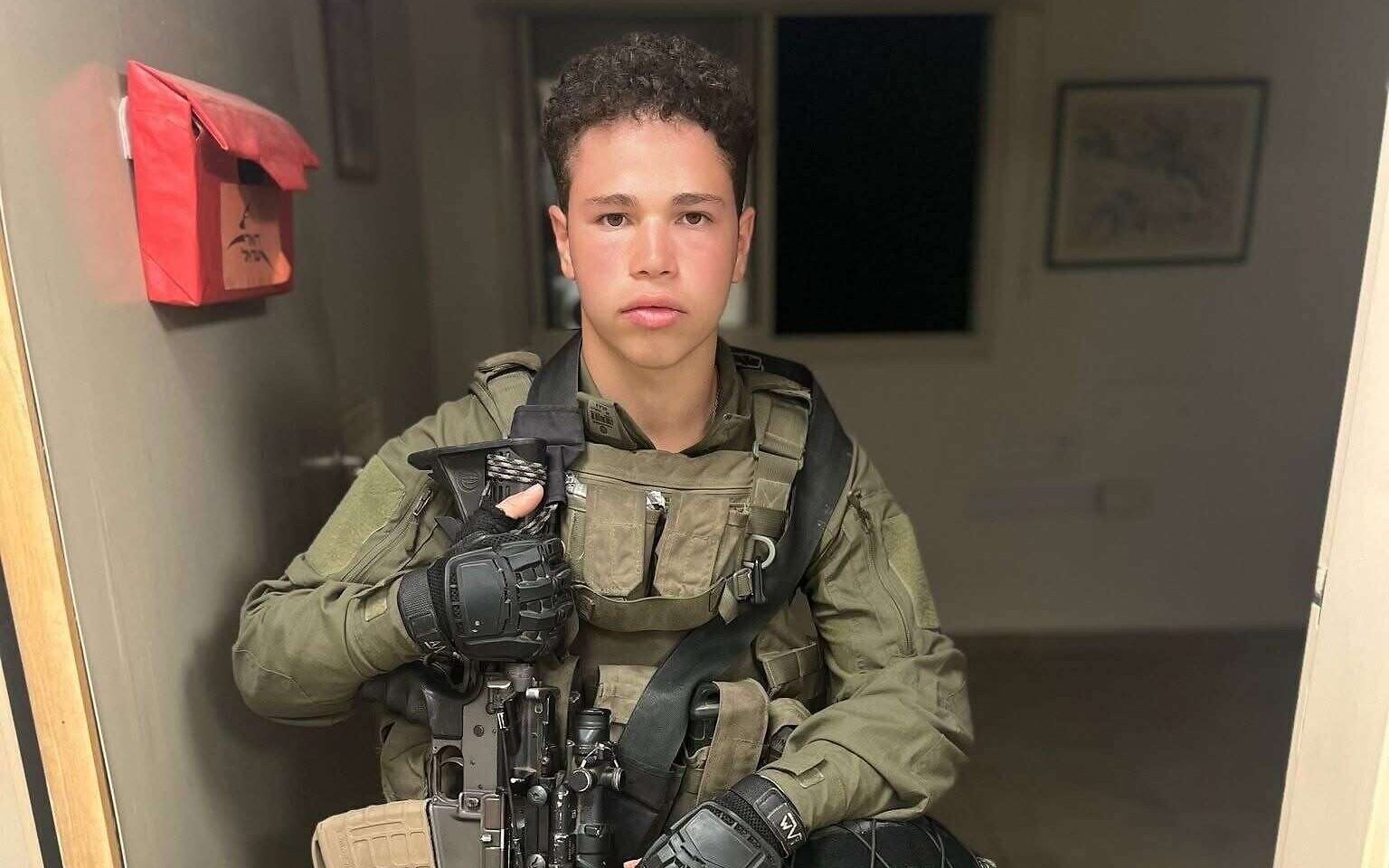
Discharged IDF combat soldier Alex Miller (Courtesy)
Alex Miller, a 23-year-old discharged IDF combat soldier originally from the United States, recently died by apparent suicide after struggling with post-traumatic stress disorder linked to his military service.
According to the Katzrin municipality in the Golan Heights, where his father Danny lives, Miller was moderately wounded in a 2022 car-ramming attack in the West Bank while serving in a combat unit. Despite undergoing a difficult rehabilitation process, he later insisted on returning to military service alongside his comrades.
The municipality says Miller was also deeply affected by the death of his close friend, Sgt. First Class (res.) Noam Shemesh, 21, who was killed during fighting in southern Gaza in 2025.
Miller was his father’s only child and required special parental approval to serve in combat.
“We mourn this terrible loss, share in the family’s profound grief and send a huge embrace to his dear father, Danny Miller, during this unbearably difficult time,” the municipality says in a statement.
Haredi men block the entrance to Jerusalem in protest of the arrest of an ultra-Orthodox military draft dodger, September 13, 2023. (Yonatan Sindel/Flash90)
Following the recent rise in arrests of ultra-Orthodox draft dodgers, United Torah Judaism MK Meir Porush is set to submit a bill requiring the IDF to accommodate detainees’ religious lifestyle while allowing military courts to reduce prisoners’ sentences should prison authorities fail to provide such accommodations.
The IDF already provides for the religious needs of soldiers and the bill appears to be an attempt to shorten the incarceration of yeshiva students detained for refusing mandatory military conscription.
Someone arrested and detained by the military “is entitled to appropriate conditions for maintaining their religious lifestyle, and shall not be prevented from observing the commandments of their religion or belief,” a copy of the bill provided to The Times of Israel states, tasking the defense minister and Knesset Foreign Affairs and Defense Committee with enacting regulations for its implementation.
The bill would require military prison authorities to provide kosher food, dedicated time for public or individual prayer as well as access to a place for services, and access to holy items such as prayer books and tefillin (phylacteries). It would also prevent the military from requiring detainees to violate Shabbat or holidays and give them the right to speak with a religious leader within 24 hours of lodging a request.
It also calls for the establishment of a “dedicated wing for prisoners and detainees who declare that they maintain a religious or faith-based lifestyle, where an appropriate religious or faith-based lifestyle will be enabled.”
Should any of these conditions be violated, a military court would be permitted to “order any remedy it deems fit to ensure the fulfillment of the right, including reducing the period of detention or imprisonment,” the bill states.
The IDF issues evacuation warnings for ten villages and towns in Lebanon ahead of airstrikes targeting the Hezbollah terror group.
Residents of Mashghara, Deir al-Zahrani, al-Sharqiyah, Doueir, Qlaileh, Sohmor, Zibdin, Nabatiyeh at-Tahta, Arabsalim and Kfar Jouz are instructed to evacuate at least a kilometer away.
“In light of the Hezbollah terror organization’s violations of the ceasefire agreement, the IDF is forced to act against it with force and does not intend to harm you,” warns army spokesman Col. Avichay Adraee.
A Bahraini court sentences nine defendants to life in prison and two others to three years in jail for collaborating with Iran’s Revolutionary Guard Corps to carry out what it described as “hostile and terrorist acts” against Bahrain, the state news agency reports.
The defendants were involved in gathering information on sensitive sites and facilitating related financial transfers, the statement says.
The Iranian army downed an Israeli spying and surveillance drone in the Hormozgan province, Iran’s Mehr news agency reports, as expectations rose that a memorandum of understanding regarding a peace deal between Iran and the US could be imminent.
The wreckage of a shattered Orbiter drone, an Israeli product, was discovered in cooperation with Iranian naval forces, the agency said.
The Israel Defense Forces says it is not familiar with the incident.
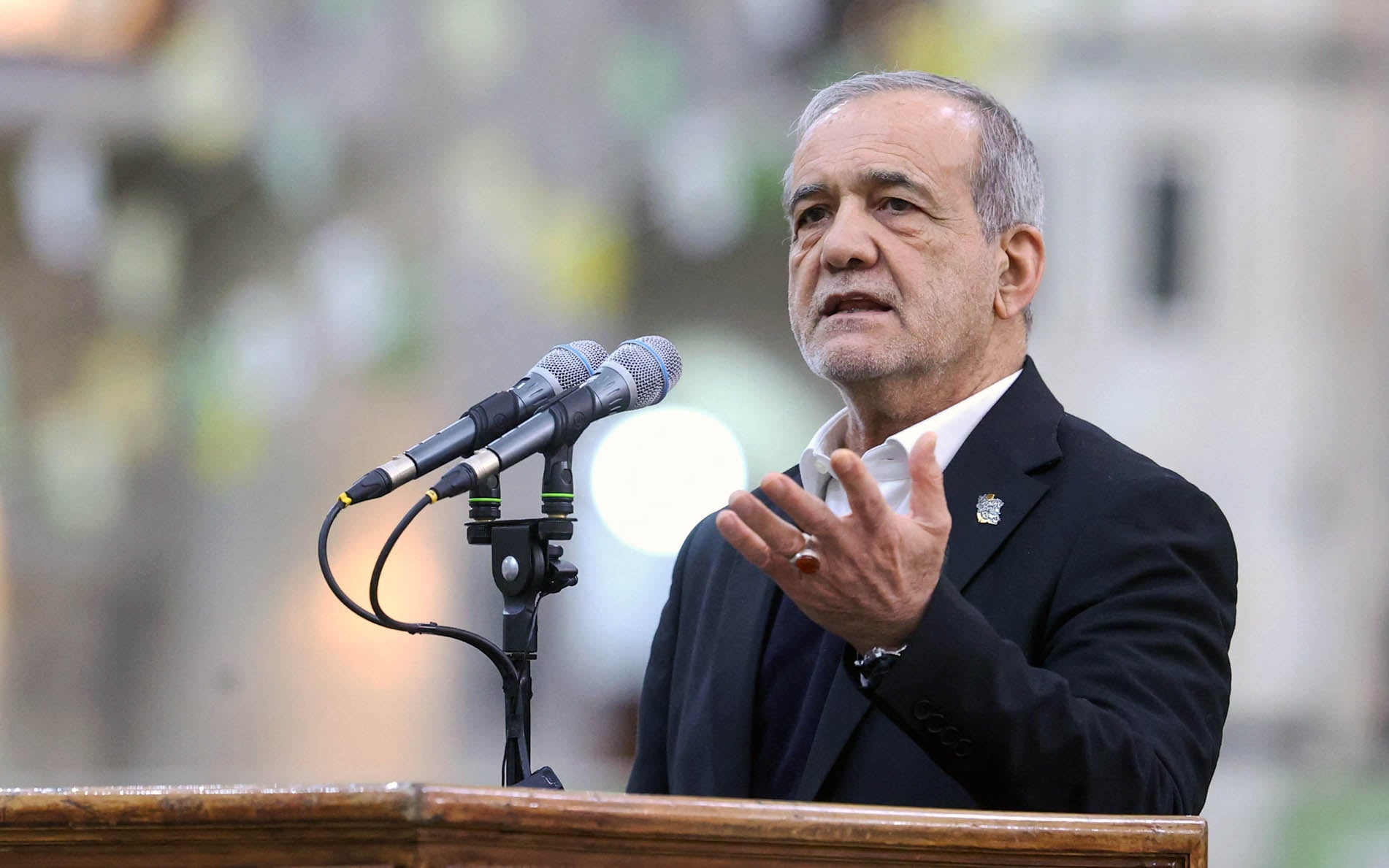
Iran's President Masoud Pezeshkian addresses cabinet members as they visit the tomb of the Islamic Republic's founding supreme leader, Ruhollah Khomeini, in Tehran, Iran, on January 31, 2026. (Handout/Iranian Presidency/AFP)
Iran’s President Masoud Pezeshkian says Tehran is ready to assure the world that it is not seeking nuclear weapons, as a preliminary deal between Iran and the US begins to emerge.
“We are not seeking unrest in the region,” he tells IRNA, claiming instead that “the one seeking to destabilize the region” is Israel.
Iran, which is avowed to destroy Israel, has a stockpile of more than 400 kilograms of uranium that has been enriched to a point that it is a short technical step from weapons-grade. Israeli officials have said it is sufficient for 11 nuclear bombs if enriched further.
Tehran has long claimed that it is not seeking nuclear weapons, despite the fact that it has enriched uranium to a level that the UN atomic agency says has no civilian use.
Pezeshkian also says that Tehran’s negotiating team “will not compromise the country’s honor and pride in any way.”
The IDF has prevented the deployment of an unspecified “key combat support system” to a military outpost in southern Lebanon manned by ultra-Orthodox soldiers from the Hasmonean Brigade, allegedly over concerns about the presence of female soldiers, Haaretz reports.
According to the report, soldiers told the outlet that senior officers decided against deploying the system to the outpost because the unit operating it is partially made up of women, while the ultra-Orthodox troops stationed at the outpost avoid interaction with the opposite sex for religious reasons.
The military denies the claim, telling Haaretz that the system was assigned to a different location due to operational considerations.
An IDF graphic showing the Home Front Command's latest version of its app, May 18, 2026. (Israel Defense Forces)
The Home Front Command is set to begin issuing advance alerts ahead of incoming rocket fire from Hezbollah in Lebanon, with the new warning system expected to go into effect in the coming days, Channel 12 reports.
According to the report, the alerts will provide civilians with additional time to prepare before sirens sound, ranging from just a few extra seconds in communities along the northern border to as much as two minutes in more distant areas of the country.
The early warning system will reportedly apply only to rocket fire and not to drone attacks.
A similar system was developed during the 12-day war with Iran in June 2025, when the Home Front Command began issuing advance alerts of a few minutes before ballistic missile attacks, allowing civilians additional time to reach shelters ahead of sirens.
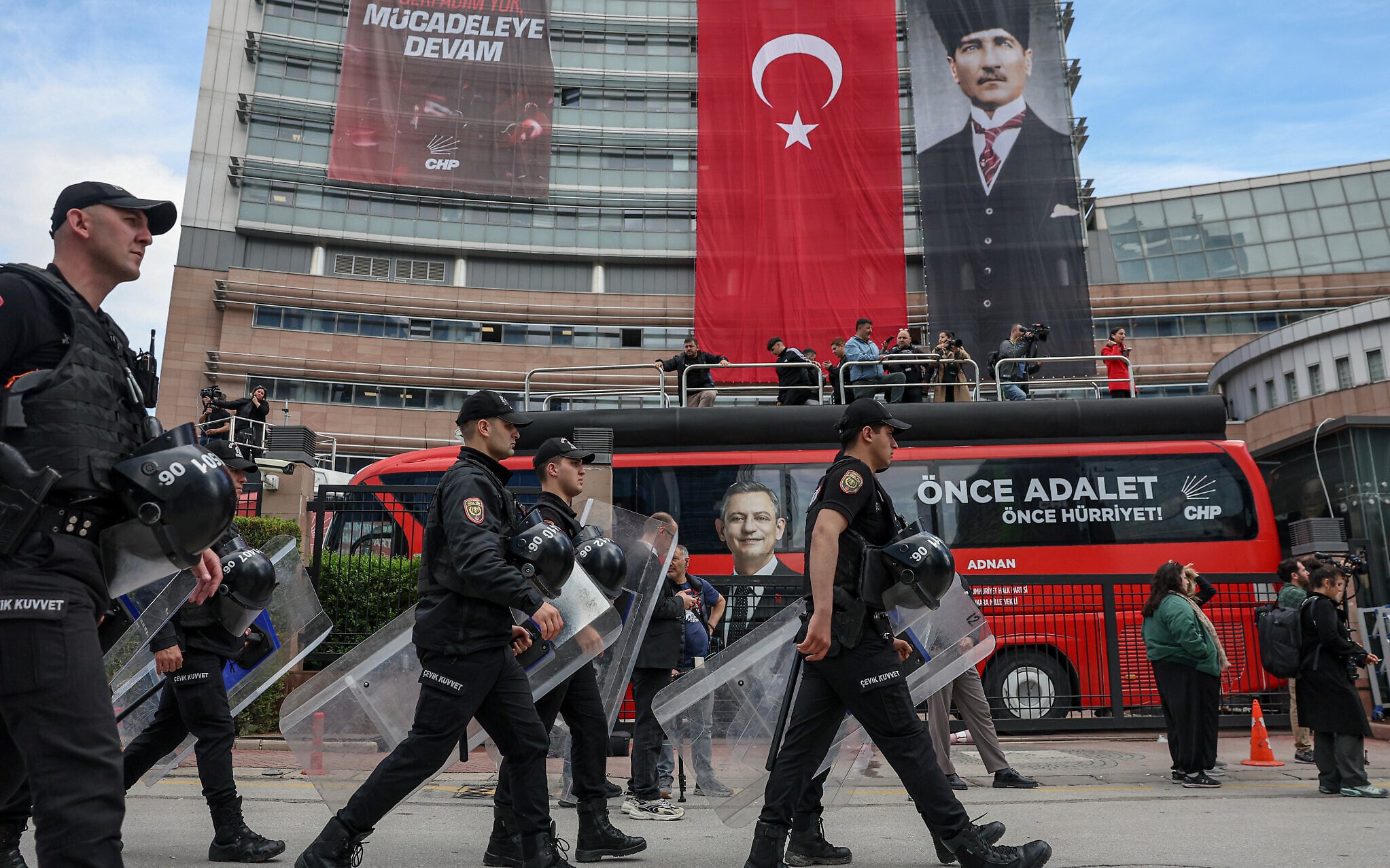
Police officers arrive at Turkey's main opposition Republican People's Party (CHP) headquarters in Ankara, Turkey, May 24, 2026, to evict supporters gathered inside. (Ugur Yildirim/DIA Photo via AP)
ANKARA, Turkey — Police storm the offices of Turkey’s main opposition CHP party, firing tear gas and rubber bullets at a crowd of party supporters and officials gathered outside the gates.
It was a violent end to a standoff that had been going on for several hours between members of the Republican Peoples’ Party, or CHP, and its new court-appointed leadership.
Footage taken by local media in the courtyard and inside the building show huge clouds of tear gas with riot police storming through the premises, before journalists were removed by the police. Correspondents who had been in the building during the raid report that doors and furniture were destroyed.
Tension had been rising since Thursday, when an appeals court on Thursday nullified the election of Ozgur Ozel as party chairperson in November 2023, suspending him and members of the party’s executive board.
Immediately after the raid began, Ozel posted a 3-minute video on social media in which he said, “We are under attack. Our crime? To make our party Turkey’s number one party after 47 years. Our crime? Defeating the Justice and Development Party,” referring to the AKP party led by President Recep Tayyip Erdogan.
“We will resist here till the end. And if they forcibly remove us, we’ll resume our march towards (becoming) the administration in the square,” he said.
The court ruling said Ozel should be replaced by Kemal Kilicdaroglu, his predecessor, who led the party for 13 years but never won any national elections.
Here is police in Ankara breaking the CHP headquarters gate after Kilicdaroglu resorted the police violence to seize the building pic.twitter.com/0DtdqXBPWG
Herzliya’s Seven Stars Mall has been evacuated after a fire broke out on the roof of the shopping center, the Fire and Rescue Service says in a statement.
A firefighting team is at the scene working to extinguish the blaze, the statement reads.
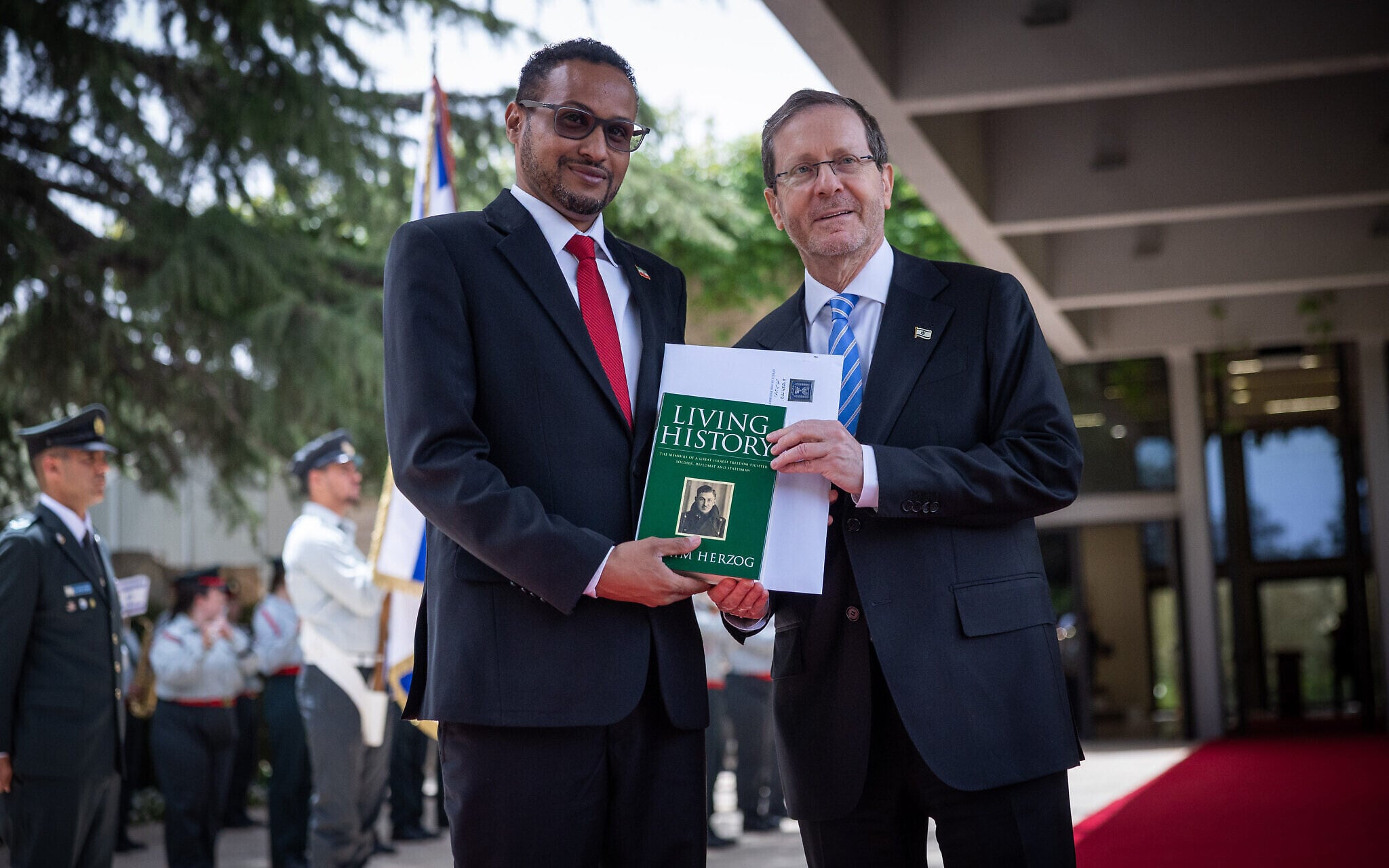
President Isaac Herzog (right) with Somaliland’s first ambassador to Israel, Dr. Mohamed Hagi, during a ceremony at the President’s Residence in Jerusalem, May 18, 2026. (Yonatan Sindel/Flash90)
The foreign ministers of over a dozen mostly Muslim-majority countries condemn Somaliland’s decision to open its first-ever embassy abroad in Jerusalem, in an official joint statement.
The foreign ministers of Saudi Arabia, Egypt, Qatar, Jordan, Turkey, Pakistan, Indonesia, Djibouti, Somalia, Oman, Sudan, Yemen, Lebanon, Mauritania and the Palestinian Authority “condemn in the strongest terms the illegal and rejected step represented by the so-called ‘Somaliland Region’ proceeding to open an alleged ’embassy’ for it in the occupied city of Jerusalem,” the statement reads, calling the move a “flagrant violation of international law and relevant international legitimacy resolutions.”
In December, Israel became the first country in the world to recognize Somaliland, which broke away from Somalia in 1991. It announced last week that it would open an embassy in Jerusalem, making it the eighth country to do so.
Most nations’ embassies in Israel are in Tel Aviv, with countries arguing Jerusalem’s standing can only be decided as part of a final status agreement between Israel and the Palestinians, who claim East Jerusalem as the capital of a future state. Israel took control of East Jerusalem — which includes the Old City and its holy sites — from Jordan during the 1967 Six Day War. Israel annexed the territory in 1980 and considers the entire city its capital.
Following the sirens that sounded a short while ago in the northern border communities of Avivim and Yir’on, the IDF says it identified a “suspicious aerial target” before later losing contact with it.
The statement implies that the military was no longer able to track the apparent drone on its surveillance systems, possibly after it left the monitored area, or that it fell.
The incident has since concluded, the military says, as an immediate threat is no longer detected. No injuries were reported.
US President Donald Trump posts an AI-generated image captioned “Adios” showing a US drone destroying an Iranian navy ship, amid reports of an emerging deal to end the war with Iran.
It is unclear what message Trump is trying to convey with the post amid the ongoing talks with Tehran.
According to multiple reports, confirmed by Israeli officials, the initial deal will focus on extending an existing ceasefire for another 60-days and opening the choked Strait of Hormuz to vital shipping, with the key issue of Iran’s nuclear activities relegated to discussions during that period, and no requirement for Iran to export its stockpile of highly enriched uranium.
In addition, the plan is said to include a ceasefire in the ongoing conflict between Israel and the Lebanese terror group Hezbollah, but does not include disarming the Iran-backed group.
JUST NOW: President Donald Trump posted on Truth Social an AI-generated image showing an Iranian Navy ship being destroyed by a U.S. drone, with the caption “Adios.”
This comes shortly after, just a day earlier, when President Trump posted that a memorandum of understanding for… pic.twitter.com/Yb1n7dcxv8
— Donald J Trump Posts TruthSocial (@TruthTrumpPost) May 24, 2026
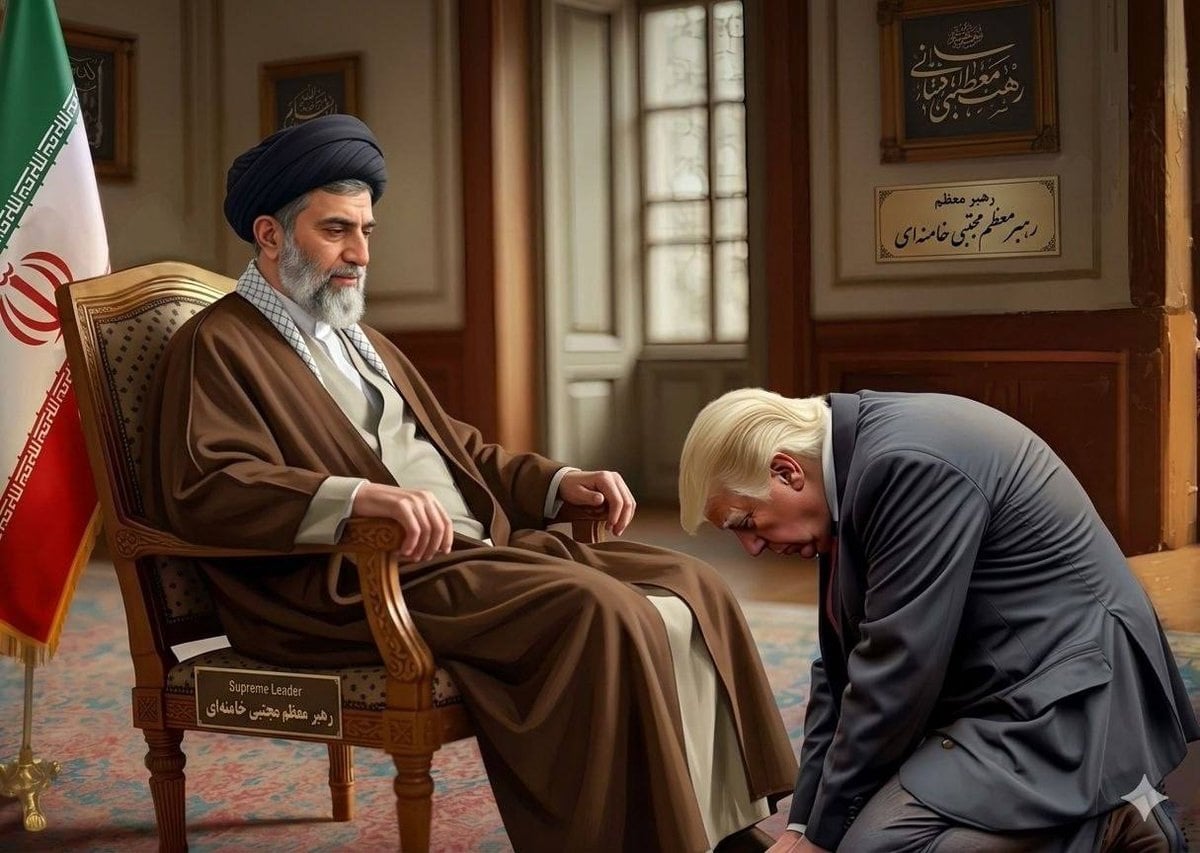
Overnight, Iran’s military spokesperson Ibrahim Al-Fiqar tweeted an AI-generated image of Trump on his knees and bowing before Supreme Leader Mojtaba Khamenei, with the caption, “The end.”
An AI-generated image of President Donald Trump on his knees and bowing before Supreme Leader Mojtaba Khamenei, with the caption, “The end,” tweeted on May 23, 2026, by Iran’s military spokesperson Ibrahim Al-Fiqar. (Via social media)
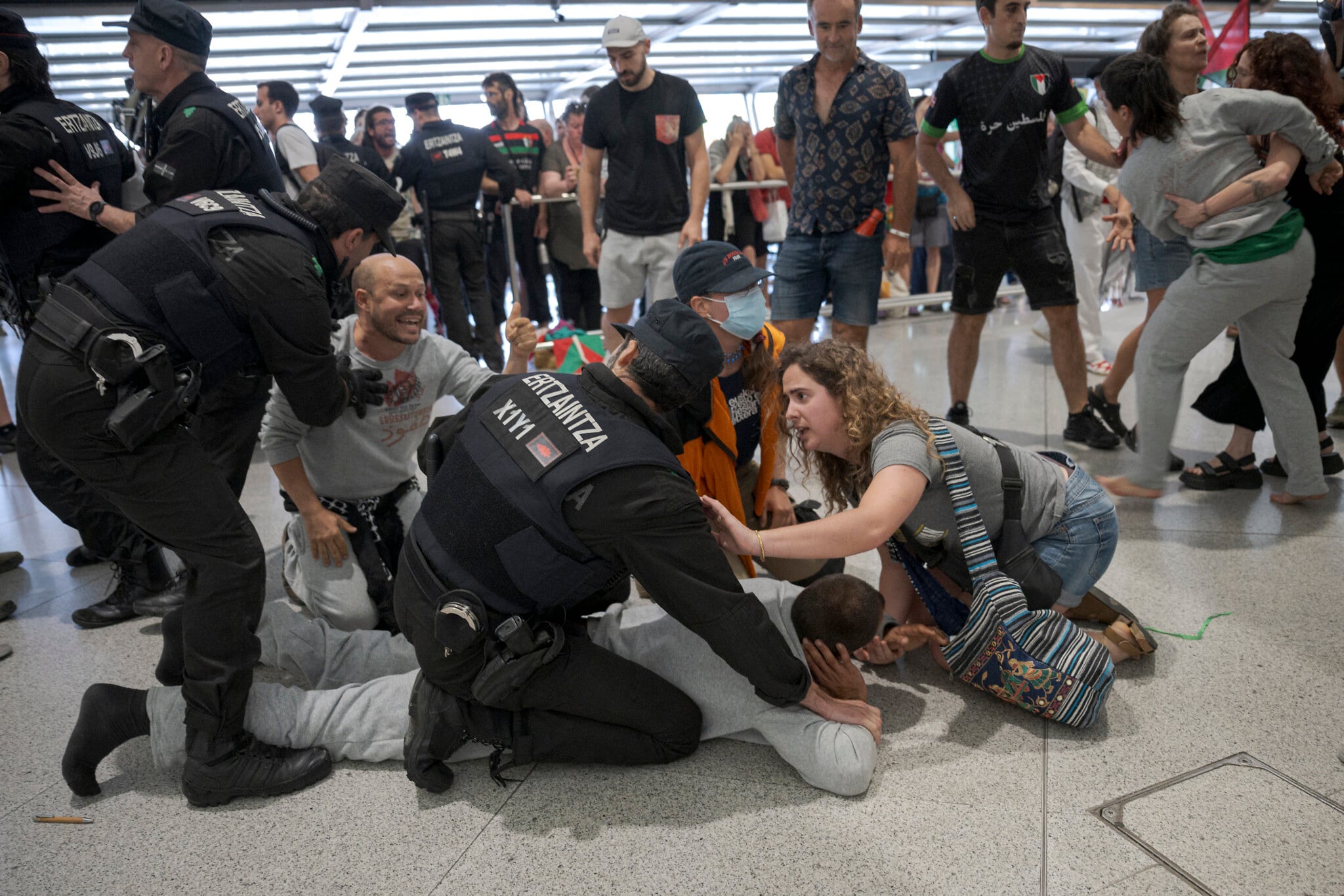
Basque police officers detain members of the Global Sumud Flotilla upon their arrival at Bilbao airport on May 23, 2026. (Idurre Etxaburu / AFP)
Israel summons the chargé d’affaires of the Spanish embassy to demand clarification on Spain’s treatment of activists from a Gaza-bound flotilla that returned from Israel, the Foreign Ministry says in a statement.
During the meeting with Francisca Pedrós, Foreign Ministry Political Director Yossi Amrani “pointed to the hypocrisy of the Spanish government, which sends its provocateurs to Israel and then condemns Israel for its lawful actions to enforce a legal naval blockade — while at the same time Spanish authorities employed severe violence against those same flotilla participants,” according to the statement.
Spanish police on Saturday detained four people at Bilbao airport following clashes that broke out after the activists returned home, with videos of the incident showing police beating activists with batons.
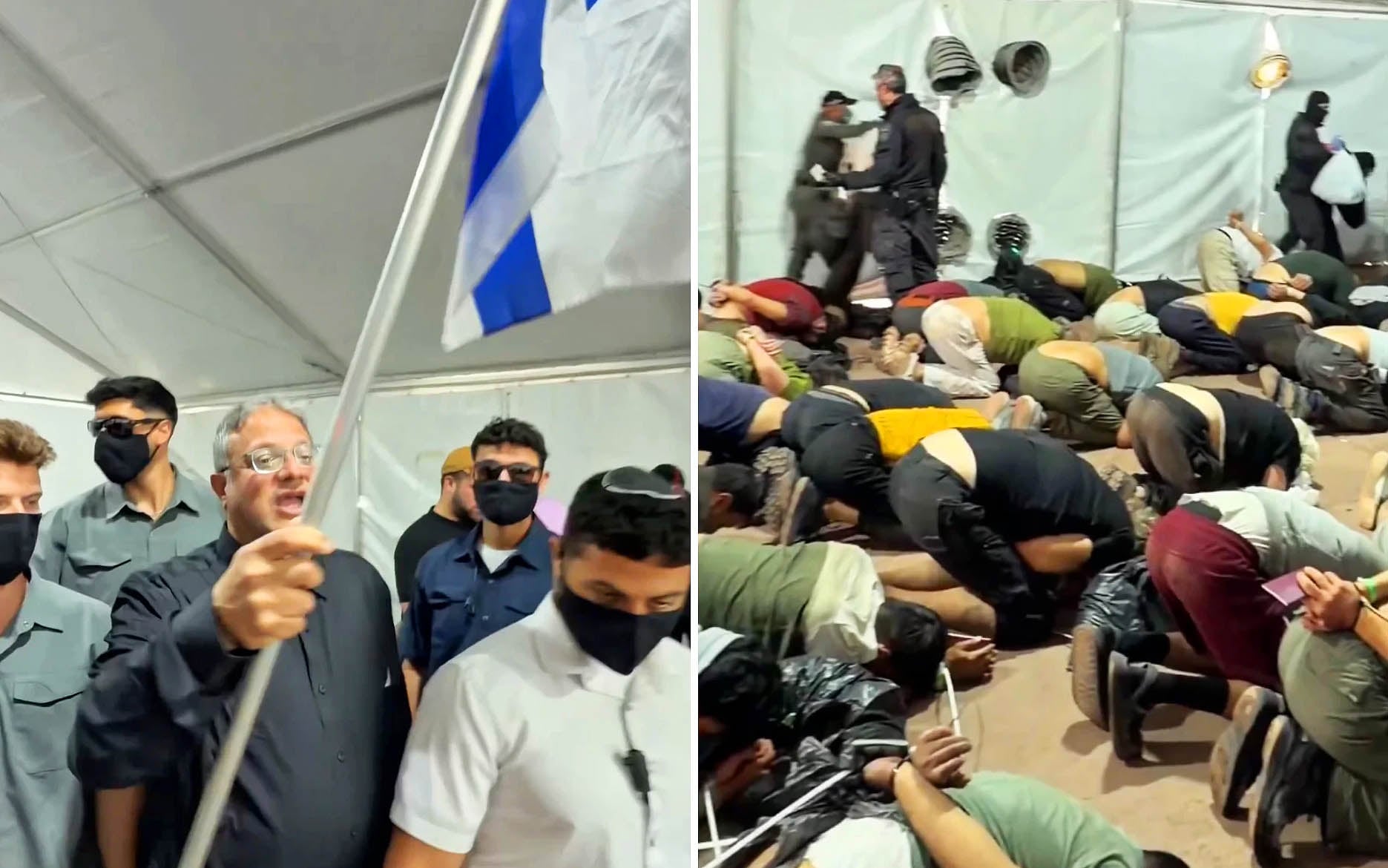
The incident came days after National Security Minister Itamar Ben Gvir sparked a diplomatic incident last week over a video he released showing him taunting the activists as they were forced to kneel on the floor with their hands bound. The video triggered an international outcry, with dozens of countries condemning Israel’s treatment of the detained activists.
Spain, a leading European critic of Israel, issued one of the sharpest condemnations of Ben Gvir’s behavior and called on the European Union to suspend its trade agreement with Israel.
Amrani demanded an explanation as to why Spanish Prime Minister Pedro Sánchez or any Spanish ministers “have still not seen fit to condemn the Spanish authorities’ violence, while they are always quick to condemn Israel on any pretext whatsoever,” the ministry’s statement adds.
A hearing in the High Court of Justice begins on petitions against Justice Minister Yariv Levin, demanding that he convene the Judicial Selection Committee to fill dozens of vacancies on judicial benches around the country.
There are currently 51 judicial vacancies on the country’s various magistrates’ and district courts, a number that will rise to 67 by the end of the year, but Levin has refused to fill them.
Following the last hearing on the petitions earlier this month, the three-justice panel asked Levin to submit a timeline to the court for making the appointments by May 7, but he told the court in response that he was willing only to make appointments to the magistrates’ courts and make temporary appointments to the district courts.
Levin lacks a majority on the Judicial Selection Committee to guarantee his preferred candidates can get appointed to serve as judges on these courts.
Petitioners have argued his decision not to convene the committee is an unlawful veto over the judicial appointments process, although Levin asserts that the authority to convene the committee lies only with him as the chairman of the panel.
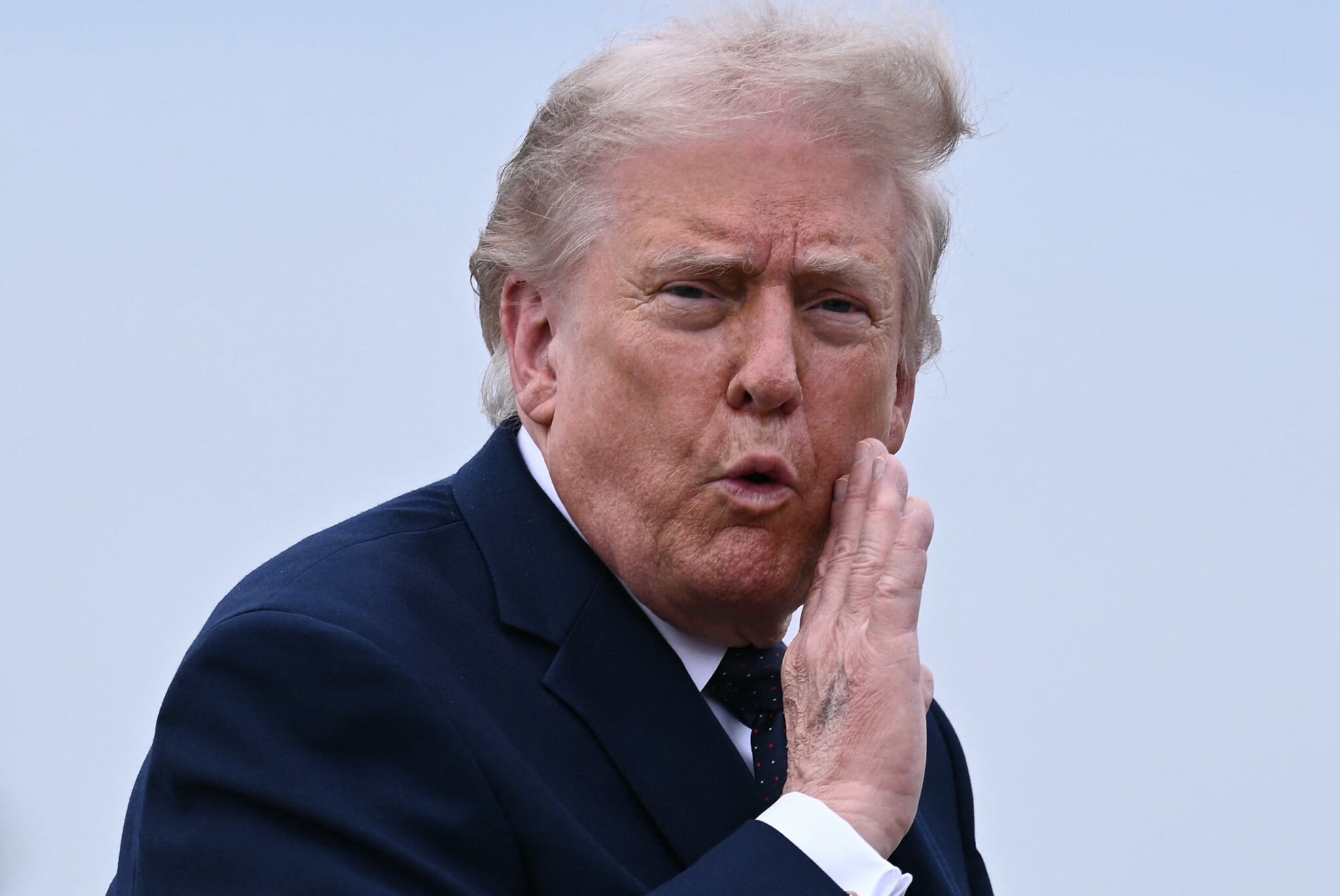
US President Donald Trump gestures as he walks to board a plane at Morristown Airport in Morristown, New Jersey, on May 22, 2026. (Brendan SMIALOWSKI / AFP)
US President Donald Trump says reaching a deal with Iran depends entirely on him and assures he does not “make bad deals,” in a phone interview with ABC News.
Whether or not a deal is reached “is totally up to me, and if there is news, it’s only going to be good news — I don’t make bad deals,” Trump tells the network, declining to talk further about details of the deal.
The IDF issues evacuation warnings for six villages and towns in southern Lebanon ahead of airstrikes targeting the Hezbollah terror group.
Residents of Kfar Sir, Sir El Gharbiyeh, Zrariyeh, Ansar, Mazra’at Kawthariyat ar Ruzz and Kharayeb are instructed to evacuate at least a kilometer away.
“In light of the Hezbollah terror organization’s violations of the ceasefire agreement, the IDF is forced to act against it with force and does not intend to harm you,” warns army spokesman Col. Avichay Adraee.
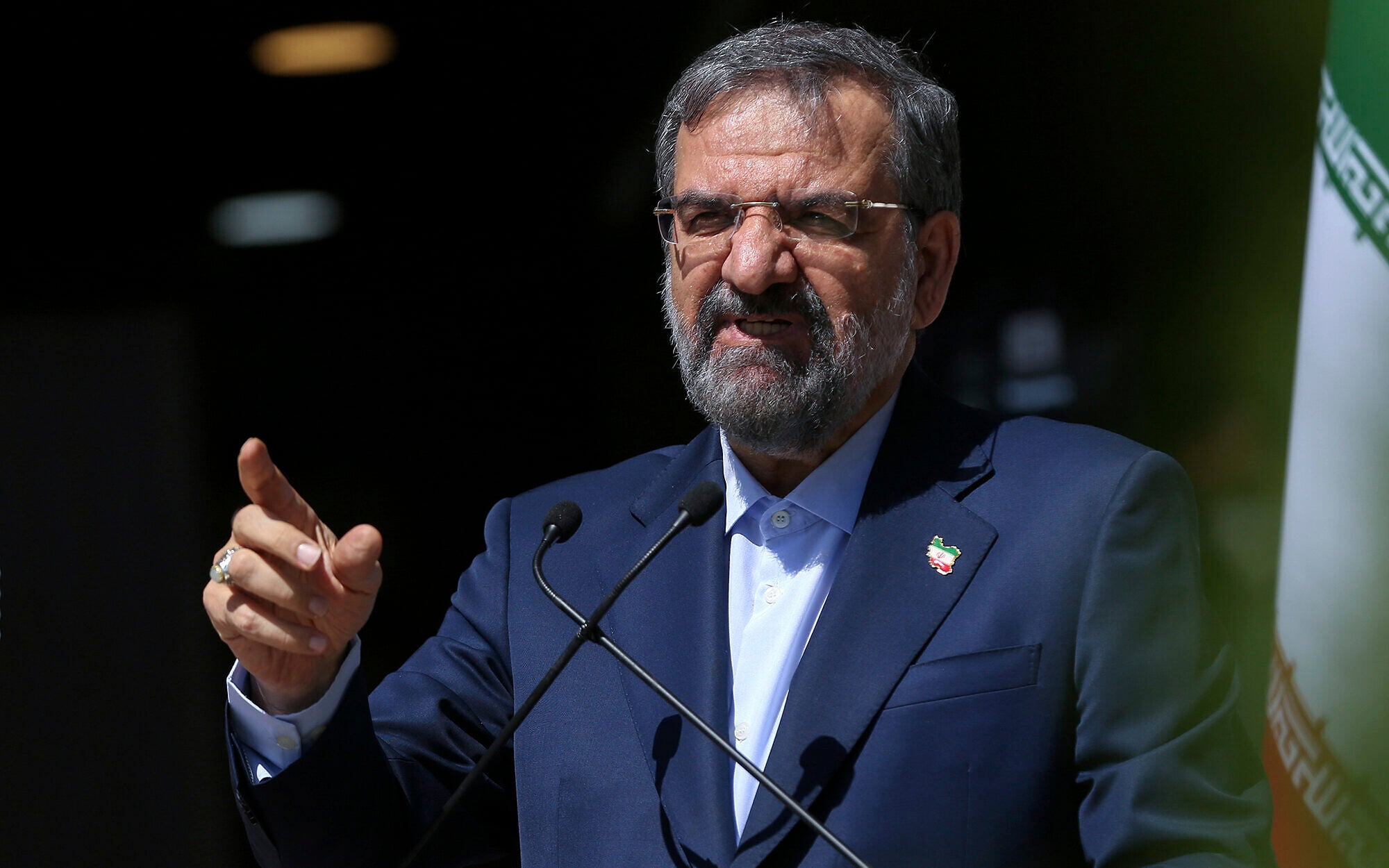
In this picture made available by Young Journalists Club, YJC, then-presidential candidate Mohsen Rezaei speaks with state-run TV journalists in Tehran, Iran, June 12, 2021. (Ayoub Ghaderi/ Young Journalists Club, YJC via AP/File)
Mohsen Rezaei, a military adviser to Iran’s supreme leader, says that managing the Strait of Hormuz is Tehran’s “legal right,” in order to ensure national security.
“Iran’s management of Hormuz Strait ends 50 years of insecurity in the Persian Gulf,” Iranian news agencies quote Rezaei as saying.
The IDF publishes footage showing a strike that killed a Hezbollah operative who was allegedly riding a motorcycle near troops.
In a separate incident, the military adds that troops identified four Hezbollah operatives entering a site containing terror infrastructure yesterday and subsequently carried out a strike, killing them.
Soldiers also identified and struck several pieces of Hezbollah surveillance equipment used to monitor IDF troops and help direct attacks against them, the military says.
תיעודים מעין הטיל: כוחות היחידה הרב-מימדית ממשיכים לחסל מחבלי חיזבאללה בדרום לבנון
Following the sirens that sounded a short while ago in northern Israel, the IDF says it identified a “suspicious aerial target” before later losing contact with it.
The statement implies that the military was no longer able to track the apparent drone on its surveillance systems, possibly after it left the monitored area, or that it fell.
The incident has since concluded, the military says, as an immediate threat is no longer detected. No injuries were reported.
Prime Minister Benjamin Netanyahu, who has yet to publicly respond to the emerging US-Iran deal, shares an AI-generated image of him and US President Donald Trump on X, declaring that “Iran will never have a nuclear weapon.”
— Benjamin Netanyahu – בנימין נתניהו (@netanyahu) May 24, 2026
Israel has reportedly been almost entirely excluded from the talks on the Iran deal, which does not definitively address key strategic concerns for Israel regarding dismantling Iran’s nuclear, missile, and regional proxy programs, and is said to include a ceasefire with Iran-backed Hezbollah in Lebanon.
An Israeli official said earlier today that Netanyahu was assured by Trump that a final agreement will ensure Iran does not get a nuclear weapon.
President Isaac Herzog slams the “brutishness” of settler violence in the West Bank while appearing to take a shot at far-right National Security Minister Itamar Ben Gvir over the treatment of prisoners in Israeli custody, at a ceremony granting the Jerusalem Unity Prize.
“We are witnesses to a wave of terrible violence that is being carried out by an anarchist mob, acts that defile and violate every basic moral, legal, and Jewish norm,” he says.
“We must not tolerate this brutishness that comes from the margins of society and threatens us all. Our people are a magnificent people, with tremendous strengths, but we must draw red lines. I stand here and say it out loud — unity begins with humanity,” he adds.
Herzog stresses that it must be “forbidden to abuse prisoners” no matter how terrible their crimes are, possibly referring to National Security Minister Itamar Ben Gvir’s video of himself tormenting activists detained from the Global Summit Flotilla.
Responding to the speech, Ben Gvir writes on X, “A president who calls hundreds of thousands of Israeli citizens brutes is not fit to be president. Full stop.”
President Donald Trump speaks to reporters during an event at the White House in Washington, May 23, 2026. (AP Photo/Julia Demaree Nikhinson)
US President Donald Trump calls negotiations with Iran “constructive,” while noting that “time is on [Washington’s] side” and the US naval blockade against Iran will remain in effect until an agreement is reached.
“The negotiations are proceeding in an orderly and constructive manner, and I have informed my representatives not to rush into a deal in that time is on our side,” Trump writes on Truth Social. “The Blockade will remain in full force and effect until an agreement is reached, certified, and signed. Both sides must take their time and get it right. There can be no mistakes!” he adds.
President Trump on Iran:
One of the worst deals ever made by our Country was the Iran Nuclear Deal, put forth and signed into existence by Barack Hussein Obama and the rank amateurs of the Obama Administration. It was a direct path to Iran developing a Nuclear Weapon. Not so… pic.twitter.com/OTzn1BzcQL
Trump repeats his assertion that whatever deal is reached with Iran will be better than the one previously negotiated by the Obama administration, saying the current deal will be “THE EXACT OPPOSITE.”
“Our relationship with Iran is becoming a much more professional and productive one,” Trump continues, while adding that “they cannot develop or procure a Nuclear Weapon or Bomb.”
He thanks regional countries for their “support and cooperation,” which he says “will be further enhanced and strengthened by their joining the Nations of the historic Abraham Accords” normalization agreements brokered by his administration, and goes as far as to suggest that Iran, which is sworn to Israel’s destruction, perhaps “would like to join [the Accords], as well!”
In his first public response to the emerging deal between the US and Iran, Prime Minister Benjamin Netanyahu says he received assurances from US President Donald Trump last night that Iran’s nuclear program will be fully dismantled and that Israel will retain freedom of action against military threats with any agreement.
“I spoke last night with [Trump] about the memorandum of understanding to reopen the Straits of Hormuz and the upcoming negotiations toward a final agreement on Iran’s nuclear program,” Netanyahu says in a statement on X, saying the leaders “agreed that any final agreement with Iran must eliminate the nuclear danger.”
“That means dismantling Iran’s nuclear enrichment sites and removing its enriched nuclear material from its territory,” Netanyahu continues, though it is unclear that Trump assured him specifically about those terms.
“President Trump also reaffirmed Israel’s right to defend itself against threats on every front, including Lebanon,” the premier adds.
Iran has reportedly refused to address the nuclear issue in the MoU to be potentially signed, and is only open to discussing it during talks on a final agreement. The initial 60-day ceasefire to be reached was reportedly said by US and Iranian officials to include a ceasefire with Iran-backed Hezbollah in Lebanon
Netanyahu adds that he thanked Trump “for his unwavering commitment to Israel’s security.”
I spoke last night with President @realDonaldTrump about the memorandum of understanding to reopen the Straits of Hormuz and the upcoming negotiations toward a final agreement on Iran’s nuclear program.
I expressed my deep appreciation to President Trump for his unwavering…
— Benjamin Netanyahu – בנימין נתניהו (@netanyahu) May 24, 2026
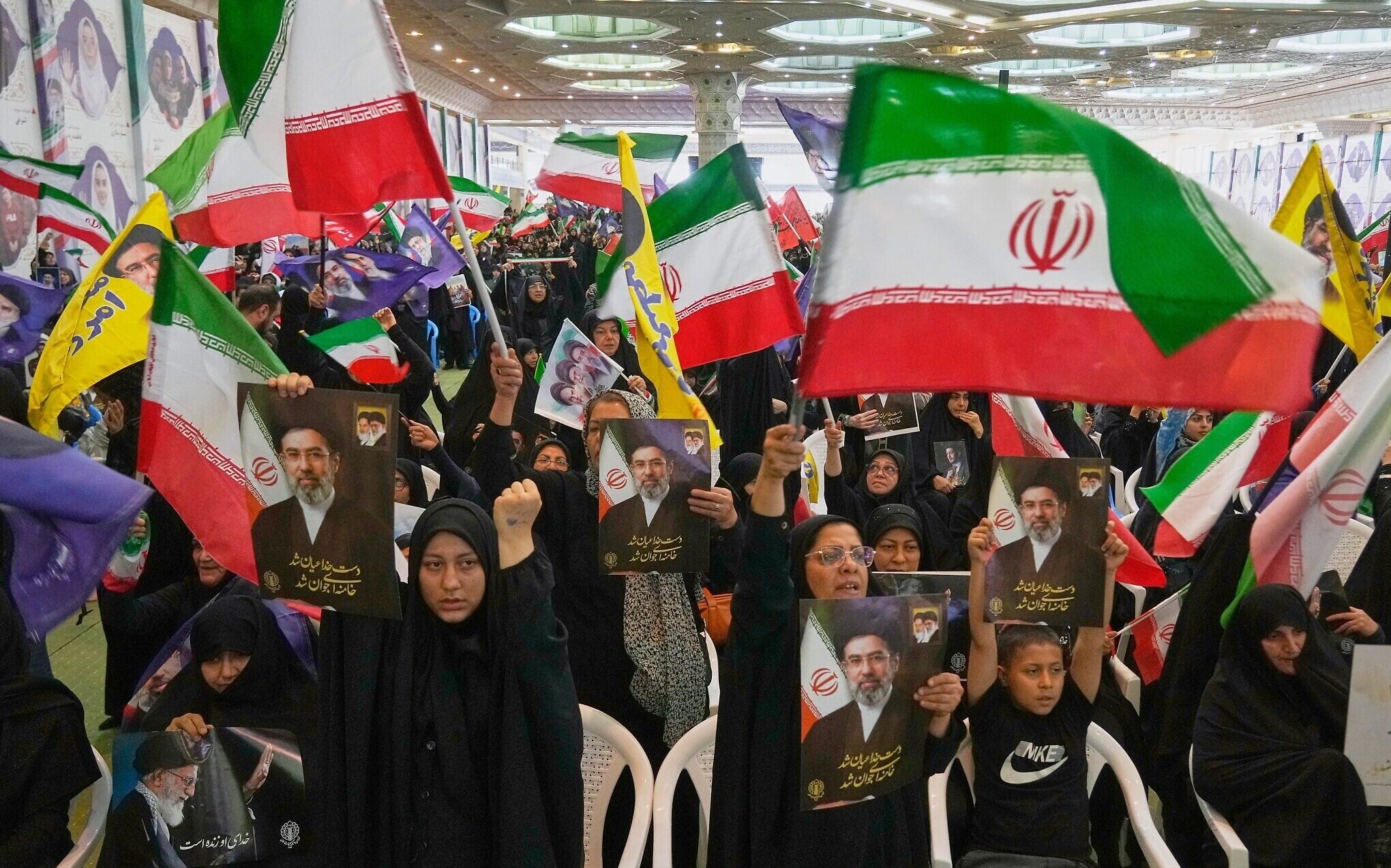
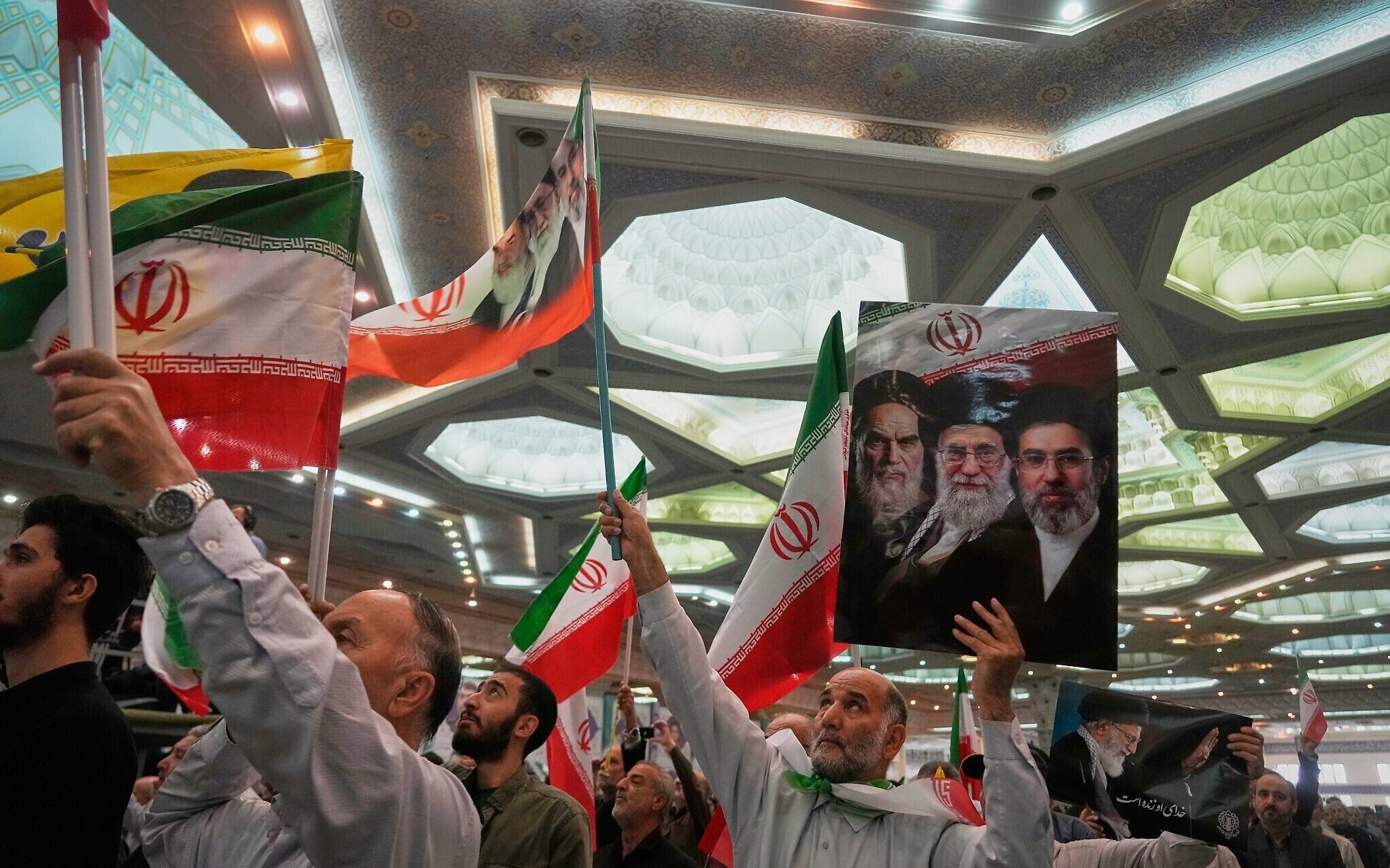
Government supporters hold Iranian flags and pictures of Iran's Supreme Leader Ayatollah Mojtaba Khamenei, during a ceremony honoring the armed forces and those killed in the war with Israel and the US at the Imam Khomeini Grand Mosque in Tehran, Iran, May 24, 2026. (AP Photo/ Vahid Salemi)
A senior US official just briefed reporters that an agreement with Iran “will be signed in the coming days,” though not today, and that Supreme Leader Mojtaba Khamenei has approved the broad framework of the agreement, Israel’s Channel 12 news reports.
Still, nothing is done until it’s done, the official reportedly clarifies, and there is still wording that each side wants to work on. The official is evidently referring to a Memorandum of Understanding (MoU) discussed by US President Trump yesterday.
The official says the Iranians gave assurances — verbal and in writing — that any subsequent permanent deal will include the “disposal” of all enriched uranium, higher and lower levels. They did not specify how the stockpiles would be disposed of.
The Iranians also agreed that they will suspend enrichment for a period to be negotiated, the TV report says.
“Without the uranium [being taken care of], there’ll be no dollars [for Iran],” the US officials is quoted as saying.
The MoU itself provides, first, for a 60-day extension of the current ceasefire, the TV report says. The Strait of Hormuz will be reopened and Iran will remove the mines it has deployed in the strait in recent months. The US, for its part, will gradually remove its blockade of Iran’s ports. During the 60 days, Iran will be free to sell oil, and the US will lift some sanctions. If Iran implements various other steps, the US will unfreeze billions of dollars of Iranian assets held overseas. During the 60 days of negotiations, limitations on Iran’s nuclear program will be discussed.
Shas MK Ya'akov Margi at the Knesset, the Israeli parliament in Jerusalem, on January 30, 2024. (Chaim Goldberg/ Flash90/ File)
Shas MK Ya’akov Margi announces that he will not run in the upcoming elections and will leave the Knesset at the end of the current term, according to Hebrew media reports citing an announcement from the politician, bringing to an end a 23-year parliamentary career and making him the second Shas lawmaker in a week to announce his resignation.
In a statement, the ultra-Orthodox lawmaker says that he recently informed party chairman Aryeh Deri that he does not wish to be included on the party’s next Knesset slate, though Deri asked him to delay the decision.
His announcement comes a week after fellow Shas MK and former minister Moshe Arbel submitted his resignation from the Knesset.
Like Arbel, Margi gives no reason for his decision, but emphasizes that he is not leaving the wider Shas movement, calling Shas “my home,” and pledging to fulfill any role assigned to him by the party leadership.
Margi was first elected to the Knesset in 2003, and has served as Religious Affairs Minister and, more recently, as Welfare Minister until Shas quit the government last summer in protest over the failure to pass a draft exemption law for yeshiva students.
Following sirens that sounded a short while ago in the northern border community of Kiryat Shmona, warning of a suspected drone infiltration, the IDF says an interceptor missile was launched toward a “suspicious aerial target,” before contact with it was lost.
The statement implies that the military was no longer able to track the apparent drone on its surveillance systems, possibly signifying that it was successfully intercepted or that it left the monitored area.
The incident has since concluded, the military says, as an immediate threat is no longer detected. No injuries were reported.
The military adds that an alert in the nearby community of Yiftah was triggered by a false identification.
Settlers earlier today uprooted 150 trees belonging to Palestinians in the area of the village of Nahalin, east of Bethlehem in the southern West Bank, Palestinian media outlets report.
???? شاهد| مستوطنون يقطعون ويقتلعون نحو 150 شجرة في منطقة عين فارس ببلدة نحالين غرب بيت لحم. pic.twitter.com/znwb6dim38
The IDF says it killed a Hamas operative involved in the terror group’s October 7, 2023, onslaught on southern Israel, who had recently been planning attacks against troops operating in Gaza.
According to the military, Louay Hisham Mahmoud Basal, a sniper in Hamas’s Zeitoun Battalion in Gaza City, was killed in a strike on Friday.
An intelligence analysis found that Basal infiltrated the Zikim military base during the October 7 attacks, the IDF says.
The military says Basal had recently posed an “immediate threat” to troops operating in the area.
להסרת איום מיידי: צה"ל חיסל מחבל מארגון הטרור חמאס שפשט לבסיס זיקים בטבח ה-7 באוקטובר
במהלך סוף השבוע, כוחות צה"ל בפיקוד הדרום חיסלו את המחבל לואי השאם מחמוד בצל, ששימש כצלף בגדוד זייתון של ארגון הטרור חמאס והיווה איום מיידי על כוחותינו.
Displaced residents wave a flag with the image of Hezbollah leader Naim Qassem as they return to their villages following a ceasefire between Israel and Hezbollah, in Zefta, southern Lebanon, April 17, 2026. (AP Photo/Hassan Ammar)
BEIRUT, Lebanon — Hezbollah chief Naim Qassem says that his terror group’s disarmament was unacceptable and amounted to “annihilation,” as Lebanon prepares for a new round of direct talks with Israel in Washington early next month.
“Disarmament means stripping Lebanon of its defensive capability and the capability of the resistance (Hezbollah) and this people, paving the way for annihilation,” he says in a televised address, adding: “Disarmament is annihilation and we cannot accept it.”
A state monopoly on weapons demanded by Lebanese authorities, “at this stage is aimed at targeting the resistance and is an Israeli project,” he adds.
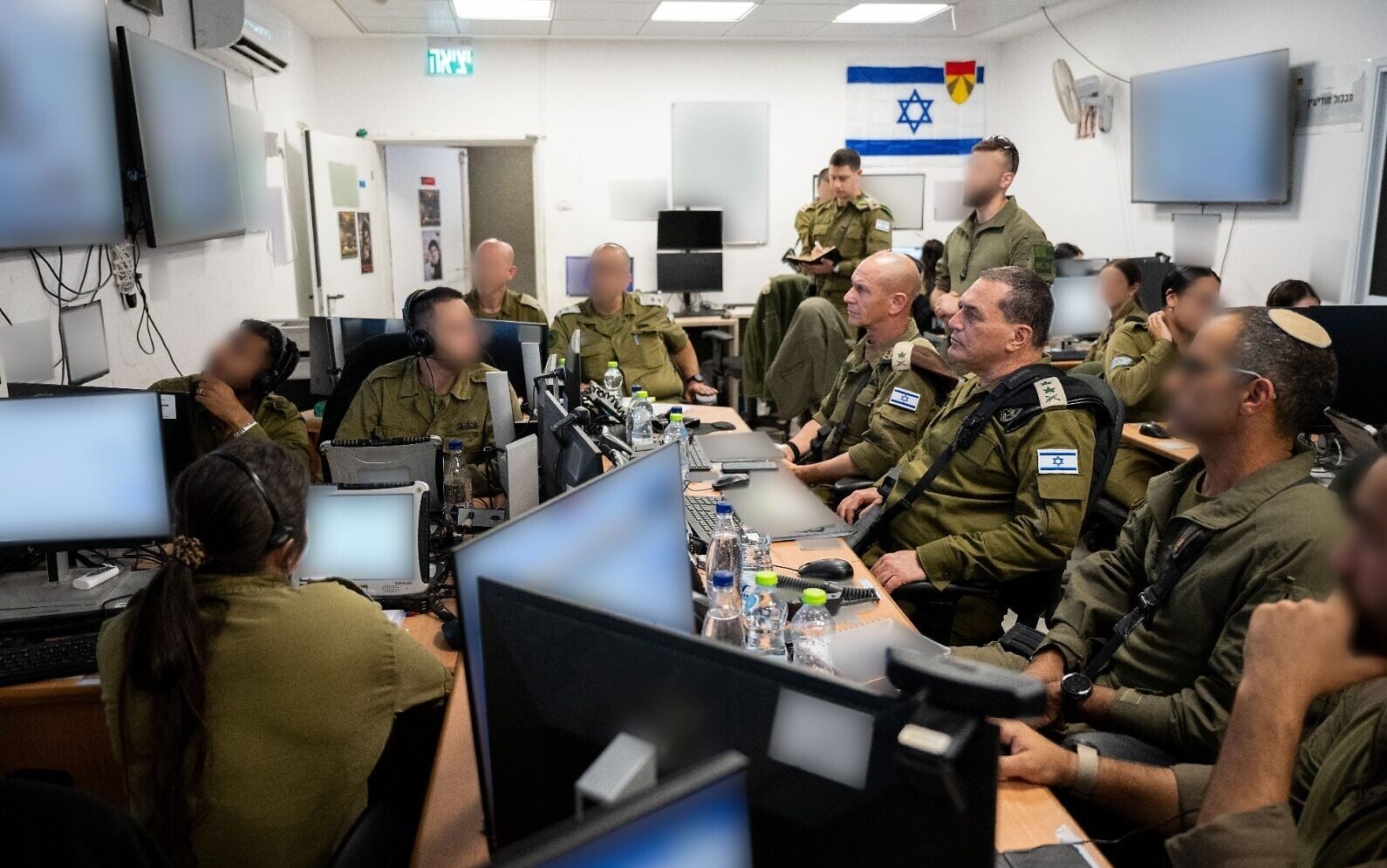
IDF Chief of Staff Lt. Gen. Eyal Zamir visits the 401st Armored Brigade headquarters, May 24, 2026. (Israel Defense Forces)
After holding a situational assessment, IDF Chief of Staff Lt. Gen. Eyal Zamir approves plans for the continuation of fighting against Hezbollah in Lebanon, the military says.
During a visit to the Northern Command and later to the headquarters of the 401st Armored Brigade, which has been operating in Lebanon, Zamir says the IDF is “determined to deepen the blow against Hezbollah.”
“In the Northern Command, we continue striking Hezbollah in every dimension,” Zamir says, adding that “the security of residents and the safety of our troops come above all else.”
The chief of staff also says the military remains “prepared to immediately return to intense fighting and further weaken the Iranian terror regime and its capabilities,” amid ongoing regional tensions.
Zamir’s remarks come as the United States and Iran work to negotiate a lasting peace agreement, which is reportedly expected to be signed in the coming days, and may include a clause calling for a cessation of fighting in Lebanon.
Zamir additionally praises the 401st Brigade and wishes a speedy recovery to its commander, Col. Meir Biderman, who was seriously wounded last week while leading troops in southern Lebanon.
BEIRUT, Lebanon — Hezbollah chief Naim Qassem again urged Lebanese authorities to abandon direct talks with Israel, ahead of a fourth round of such discussions in Washington early next month.
“Direct negotiations are completely unacceptable and are a pure gain for Israel,” he says. Addressing Lebanese authorities, he adds: “Abandon the direct negotiations and do not give to America so that it gives to Israel… don’t be with them and stab us in the back.”
Following sirens that sounded a short while ago in the northern border communities of Adamit and Shlomi, warning of a suspected drone infiltration, the IDF says interceptor missiles were launched at several “suspicious aerial targets” before contact with them was lost.
The statement implies that the military was no longer able to track the apparent drones on its surveillance systems, possibly signifying that they were successfully intercepted or that they had left the monitored area.
The incident has since concluded, the military says, as an immediate threat is no longer detected. No injuries are reported.
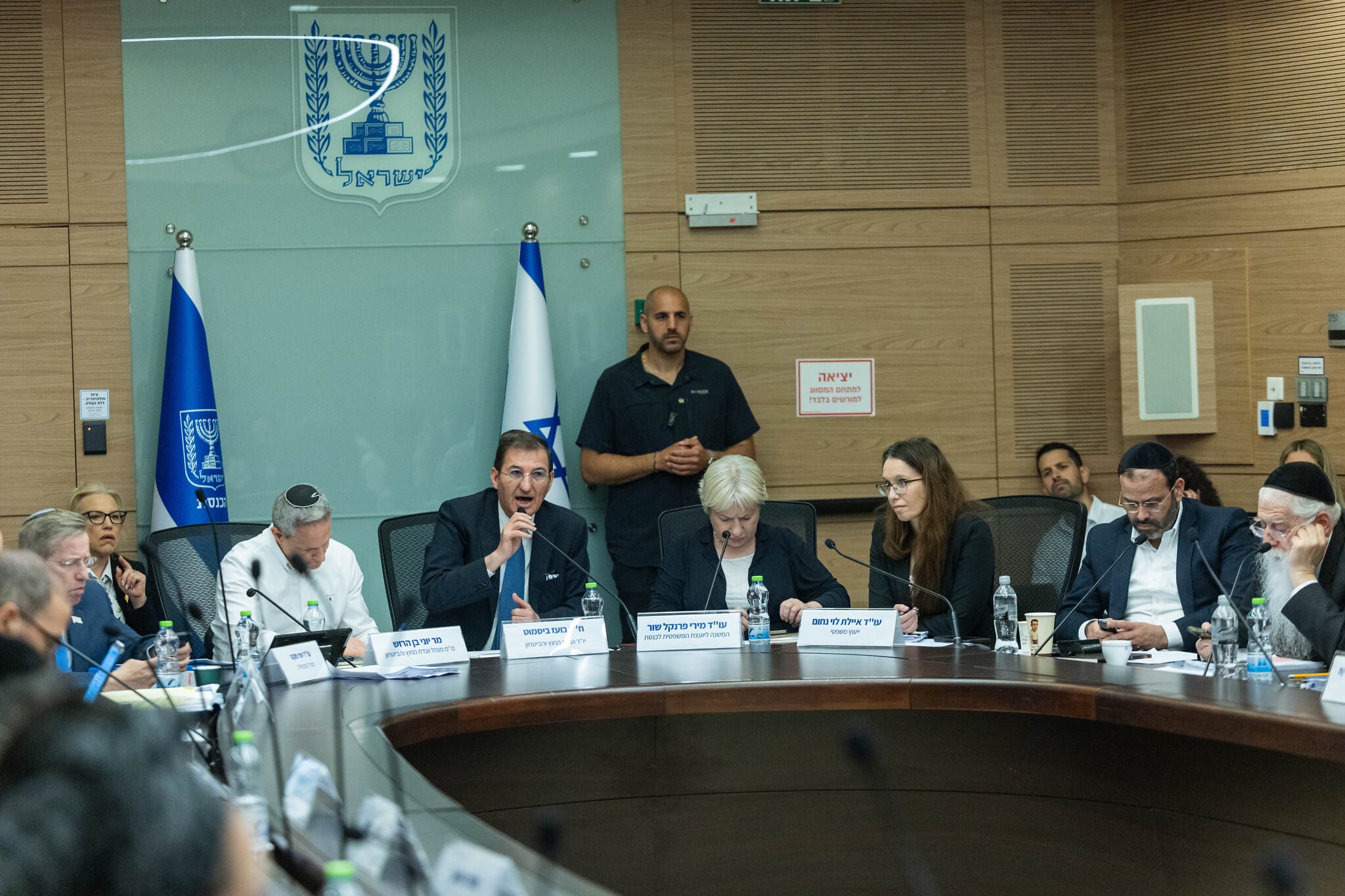
MK Boaz Bismuth chairs a meeting of the Knesset Foreign Affairs and Defense Committee, May 20, 2026. (Yonatan Sindel/ Flash90)
The leadership of the Knesset Foreign Affairs and Defense Committee is preparing to distribute an updated draft of the coalition’s controversial Haredi draft exemption bill to lawmakers, Hebrew media outlets report.
The bill — which would ostensibly increase military conscription in the Haredi community, but ultimately enables continued exemptions for full-time yeshiva students — is widely seen as legally iffy and loophole-laden. It has generated intense resistance even among members of Netanyahu’s coalition.
Prime Minister Benjamin Netanyahu in recent days has been putting pressure on coalition MKs opposed to the legislation to come around and support it.
Asked to confirm that members of the committee are expecting an updated draft, member Tally Gotliv (Likud) tells The Times of Israel that she “finds it unlikely that it will advance to the plenum.”
A man holds a sign depicting, from left, the late Iranian revolutionary founder Ayatollah Ruhollah Khomeini, the late supreme leader Ayatollah Ali Khamenei, and current Supreme Leader Ayatollah Mojtaba Khamenei during a ceremony honoring the armed forces and those killed in the war with Israel and the US at the Imam Khomeini Grand Mosque in Tehran, Iran, May 24, 2026. (AP Photo/Vahid Salemi)
Senior Israeli security officials have expressed alarm towards the proposed US deal with Iran, which is reportedly expected to be signed in the coming days. They are warning that, “as it seems, this does not serve Israel’s interest,” Channel 12 reports.
According to the report, officials fear the deal would grant Iran time for economic and military recovery, after which “it will be hard for the Americans and us to go back and fight.”
The report adds that Israeli officials are particularly focused on whether Iran’s nuclear material will actually be removed from the country, as US President Donald Trump has repeatedly pledged.
Officials also reportedly warn that the agreement does not address Iran’s missile program or Tehran’s regional proxy network, and stress that any agreement must preserve the IDF’s freedom of action in Lebanon.
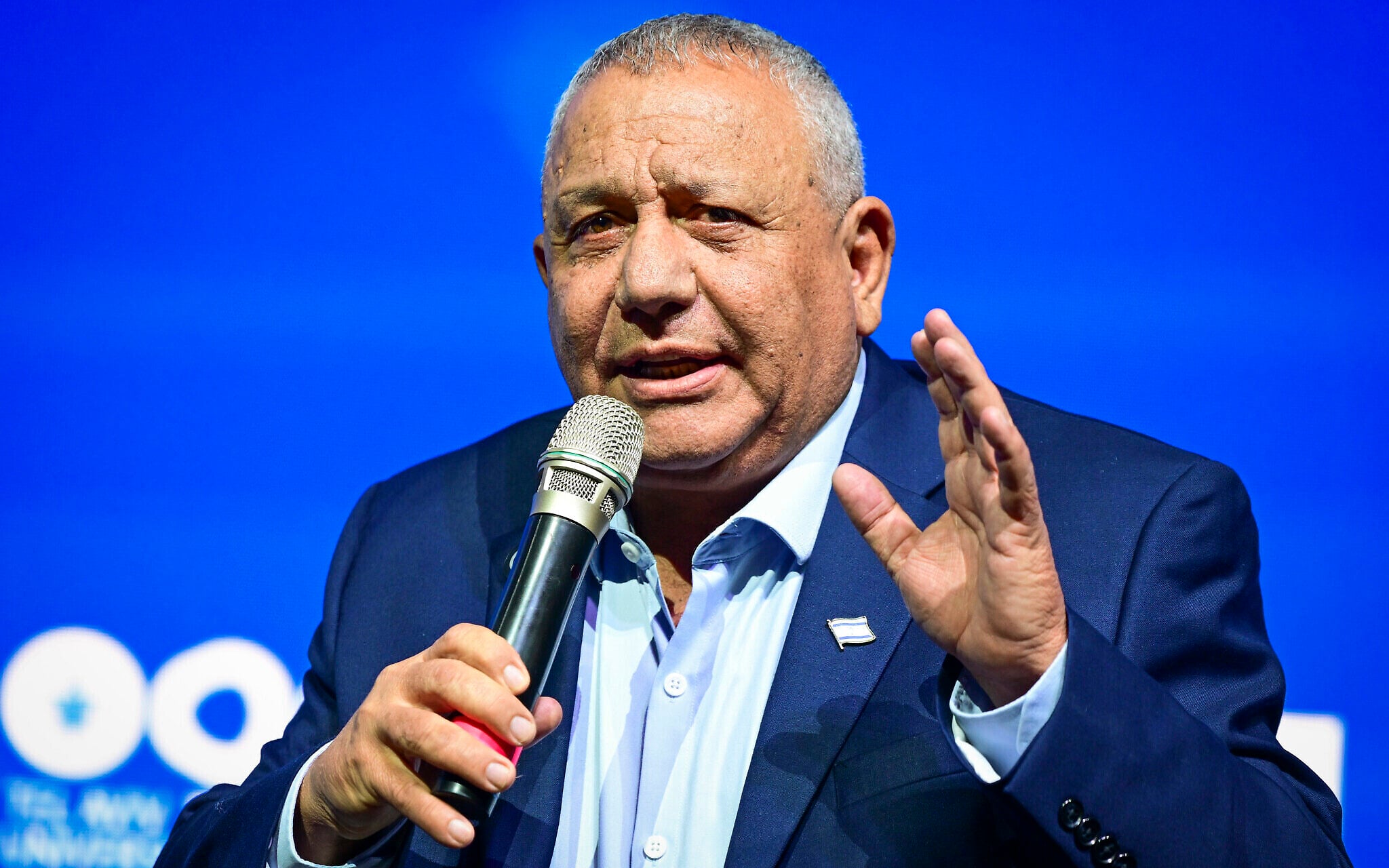
Former IDF chief Gadi Eisenkot, head of the Yashar party, speaks during a conference at Tel Aviv University, May 12, 2026. (Avshalom Sassoni/ Flash90)
Yashar chairman Gadi Eisenkot met with Degel HaTorah chairman Moshe Gafni last week after the Haredi party’s spiritual leader, Rabbi Dov Lando, called to dissolve the Knesset and declared his faction’s separation from Prime Minister Benjamin Netanyahu’s rightwing bloc, Channel 12 reports.
According to the network, it remains unclear what was said during the meeting and spokespeople for both politicians declined to comment on the matter. Eisenkot, who has indicated that he supports granting service exemptions for up to three percent of Haredim, has said that he maintains good relations with the Haredim, despite differences of opinion. He recently generated anger by stating that he would join a coalition “with those who strengthen Israel” when asked if he would sit with the Haredi parties.
This has caused tension with other opposition bloc leaders.
Asked last week by Army Radio about the possibility of a merger with Eisenkot, Yisrael Beytenu chairman Avigdor Liberman said there were “fundamental gaps” that “need to be cleared up before a merger.”
Liberman said Yisrael Beytenu was “unwilling to give up even a millimeter on the full conscription law,” referring to the effort to draft ultra-Orthodox men, who currently enjoy broad de facto exemptions from mandatory military service.
Senior Israeli officials are concerned that the emerging US-Iran agreement could severely restrict Israel’s freedom of action against Hezbollah in Lebanon, according to a report by Channel 12.
The report says the proposed deal would reportedly bring a complete end to the fighting in Lebanon alongside the end of the US-Iran war, prompting Prime Minister Benjamin Netanyahu to raise concerns in a phone call with US President Donald Trump yesterday.
According to Channel 12, Netanyahu focused his efforts on maintaining Israeli operational freedom in Lebanon, later claiming in a statement by a senior official that Trump agreed Israel would “preserve its freedom of action against threats in all arenas, including Lebanon.”
A senior American official cited by the network reportedly says that, as part of the proposed agreement, if Hezbollah attempts to attack Israel or rearm, Israel would be able to defend itself, but that if Hezbollah adheres to the ceasefire, Israel will have to as well.
The report also says that Netanyahu told Trump he believes the Iranian supreme leader, Mojtaba Khamenei, may ultimately reject the agreement.
A senior US official tells the network that Netanyahu had been updated throughout the negotiations and expressed concerns about “different aspects of the agreement,” but ultimately “accepted the matter with resignation.”
Ultra-Orthodox Jewish men protest against the jailing of yeshiva students who evaded the draft outside the home of Military Police chief Brig. Gen. Yuval Yamin in Ashkelon, May 14, 2026. (Tsafrir Abayov/Flash90)
The Knesset’s Haredi parties have rejected the latest draft of the coalition’s Haredi conscription exemption bill, calling the future of the controversial legislation into question, Channel 12 reports.
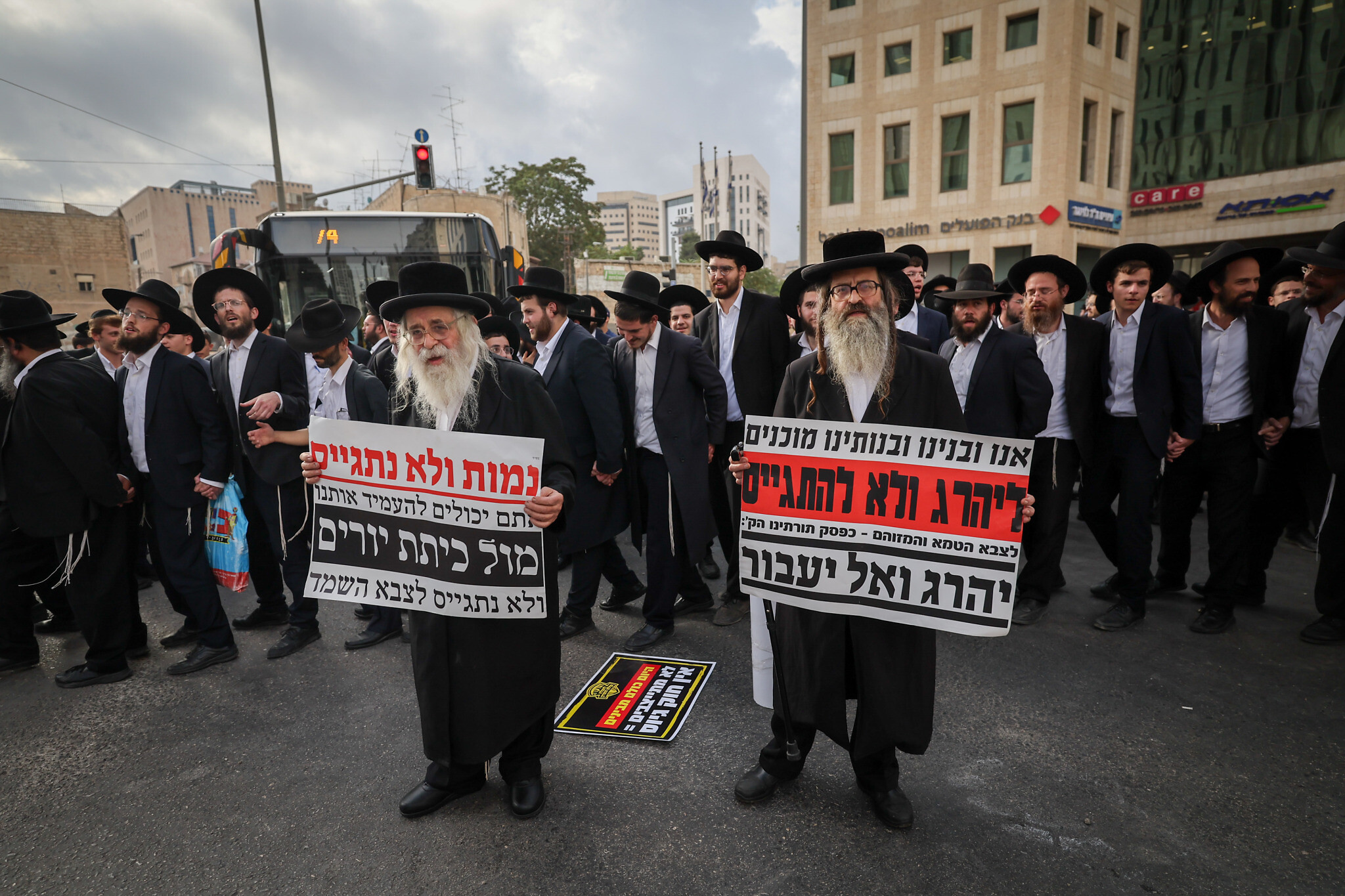
This likely means that the Haredim will continue pushing for early elections during the middle of the High Holidays, likely on September 15.
“Rabbi Lando’s general instruction to the Degel HaTorah MKs is not to advance the bill at this time,” a spokesman for the party’s spiritual leader tells The Times of Israel.
The Times of Israel understands that Rabbi Lando does not believe that the exemption law will actually end up being passed and that the recent push to advance it through the Knesset is part of a larger electoral maneuver on the part of Netanyahu. He further believes that the leaders of the coalition are playing games with him.
The coalition’s draft exemption bill — which would ostensibly increase military conscription in the Haredi community, but ultimately enables continued exemptions for full-time yeshiva students — is widely seen as legally iffy and loophole-laden. It has also generated intense resistance even among members of Netanyahu’s coalition.
Several weeks ago, Prime Minister Benjamin Netanyahu told Haredi MKs that the coalition did not have the votes to pass the draft exemption legislation, and reportedly asked them to agree to shelve the bill until after the elections, prompting them to push to dissolve the coalition.
In an effort to win the Haredim over and to avoid the September election that the Haredim are widely believed to favor, Netanyahu placed the bill back on the parliamentary agenda, but the move was rejected by Rabbi Dov Lando, the spiritual leader of the UTJ subfaction Degel Hatorah, who instructed lawmakers last week “not to get drawn into political games and to support the dissolution of the Knesset.”
The leadership of the Knesset Foreign Affairs and Defense Committee is preparing to distribute an updated draft of the coalition’s controversial Haredi draft exemption bill to lawmakers, Hebrew media outlets reported this evening.
Asked to confirm that members of the committee are expecting an updated draft, member Tally Gotliv (Likud) told The Times of Israel that she found it “unlikely that it would advance to the plenum,” while opposition member Moshe Tur-Paz (Yesh Atid) said that he did not believe a new version would be submitted.
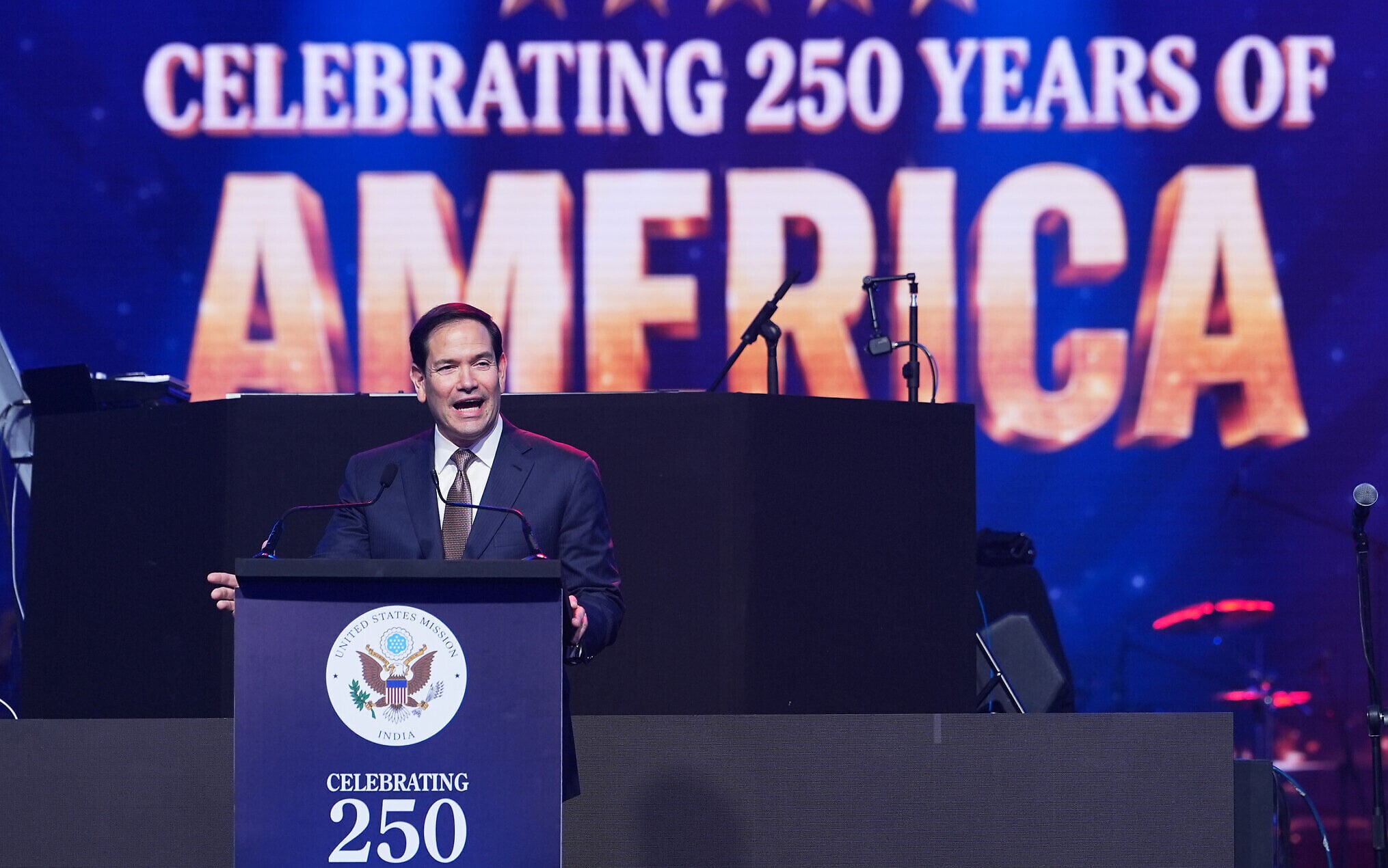
United States Secretary of State Marco Rubio speaks at an event celebrating the United States' 250th anniversary, at the Bharat Mandapam convention center, in New Delhi, India, May 24, 2026. (AP Photo/Julia Demaree Nikhinson, Pool)
NEW DELHI, India — US Secretary of State Marco Rubio tells The New York Times that an agreement with Iran had garnered regional support, but a nuclear deal could not be achieved “in 72 hours on the back of a napkin.”
His comments come after US President Donald Trump told his negotiators “not to rush into a deal” with Iran to end the three-month war.
“We’re not kicking it till later. Nuclear talks are highly technical matters. You can’t do a nuclear thing in 72 hours on the back of a napkin,” Rubio tells the Times in a brief interview.
“So right now, we have seven or eight countries in the region that are endorsing this approach, and we’re prepared to move forward on this approach,” he says.
US President Donald Trump vows that a deal reached with Iran “will be a good and proper one,” appealing to the public not to listen to “losers” who are critiquing the emerging deal.
“If I make a deal with Iran, it will be a good and proper one, not like the one made by [former president Barack] Obama, which gave Iran massive amounts of CASH, and a clear and open path to a Nuclear Weapon,” he writes in a Truth Social post.
“Our deal is the exact opposite, but nobody has seen it, or knows what it is. It isn’t even fully negotiated yet. So don’t listen to the losers, who are critical about something they know nothing about. Unlike those before me who should have solved this problem many years ago, I don’t make bad deals!”
National Security Minister Itamar Ben Gvir taunts detained flotilla activists at Ashdod Port on May 20, 2026. (Screen grab/Ben Gvir's X account)
The foreign ministers of the Group of Eight Arab-Islamic states strongly condemn the actions of far-right National Security Minister Itamar Ben Gvir towards participants in the Gaza-bound flotilla while they were in Israeli detention.
Governments have expressed outrage after Ben Gvir posted a video in which he taunted activists who were pinned to the ground. Some of the detainees, who had intended to bring humanitarian aid to Gaza, later alleged that they were physically assaulted in detention, which the Israeli Prison Service denied.
The eight nations — Saudi Arabia, Egypt, Jordan, Qatar, the United Arab Emirates, Turkey, Indonesia, and Pakistan — say in a statement: “Ben Gvir’s deliberate public humiliation of detainees is a disgraceful assault on human dignity and a clear violation of Israel’s obligations under international law, including international humanitarian law, and international human rights law.”
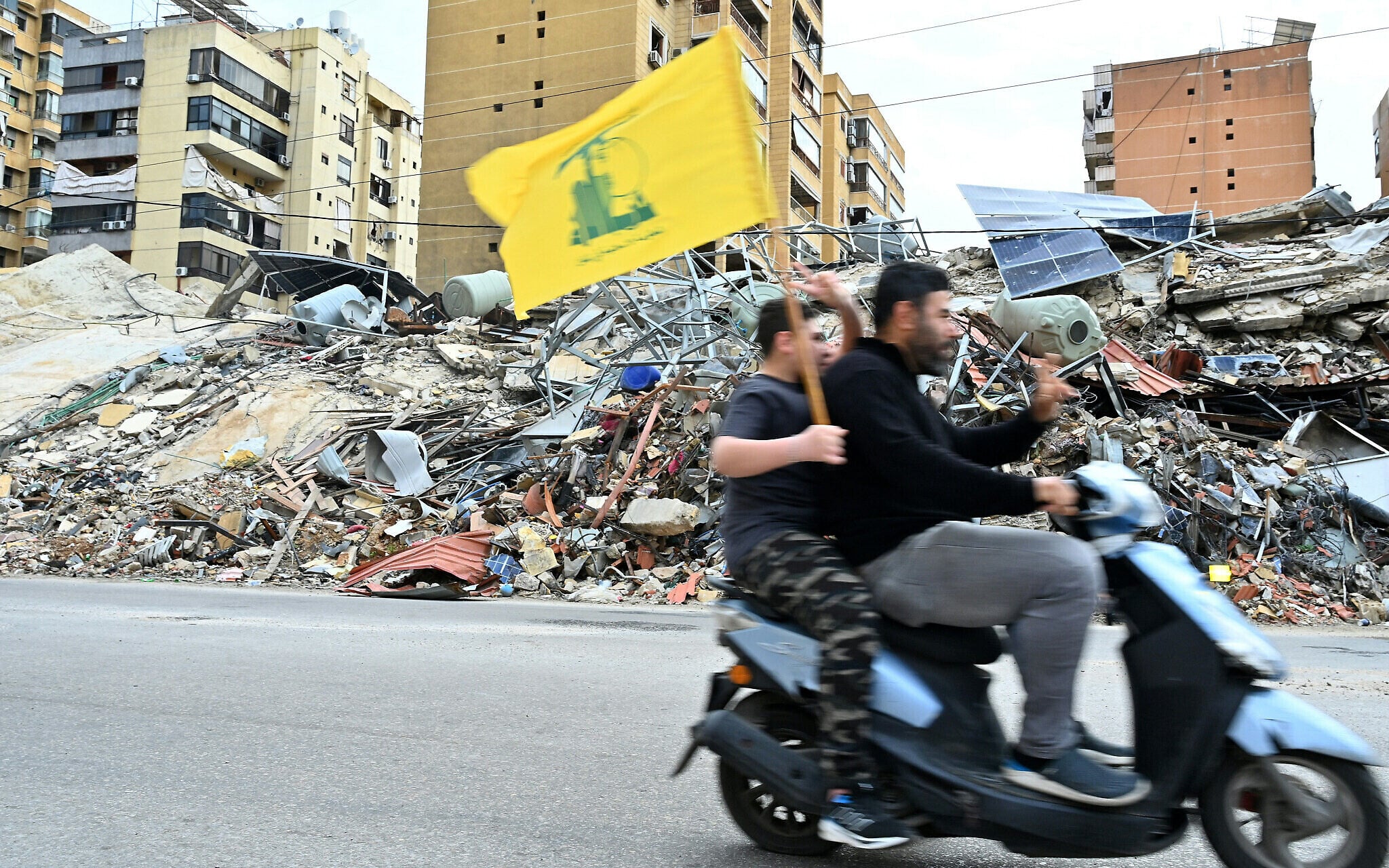
Hezbollah supporters carry the Iran-backed terror group's flag while they ride a motorcycle past destruction, upon their return to their neighborhood in Beirut's southern suburbs, after a 10-day ceasefire with Israel came into effect, April 17, 2026. (Fadel Itani/AFP)
NEW DELHI, India — US Secretary of State Marco Rubio accuses Hezbollah in a statement of trying to plunge Lebanon “back into chaos.”
Rubio denounces what he called Hezbollah’s “reckless call to overthrow Lebanon’s democratically elected government” and says the Iran-backed terror group was “actively trying to drag Lebanon back into chaos and destruction.”
An earthquake measuring 3.5 on the Richter scale was felt earlier this evening in the area of the Sea of Galilee in northern Israel, the Geological Survey of Israel says in a statement.
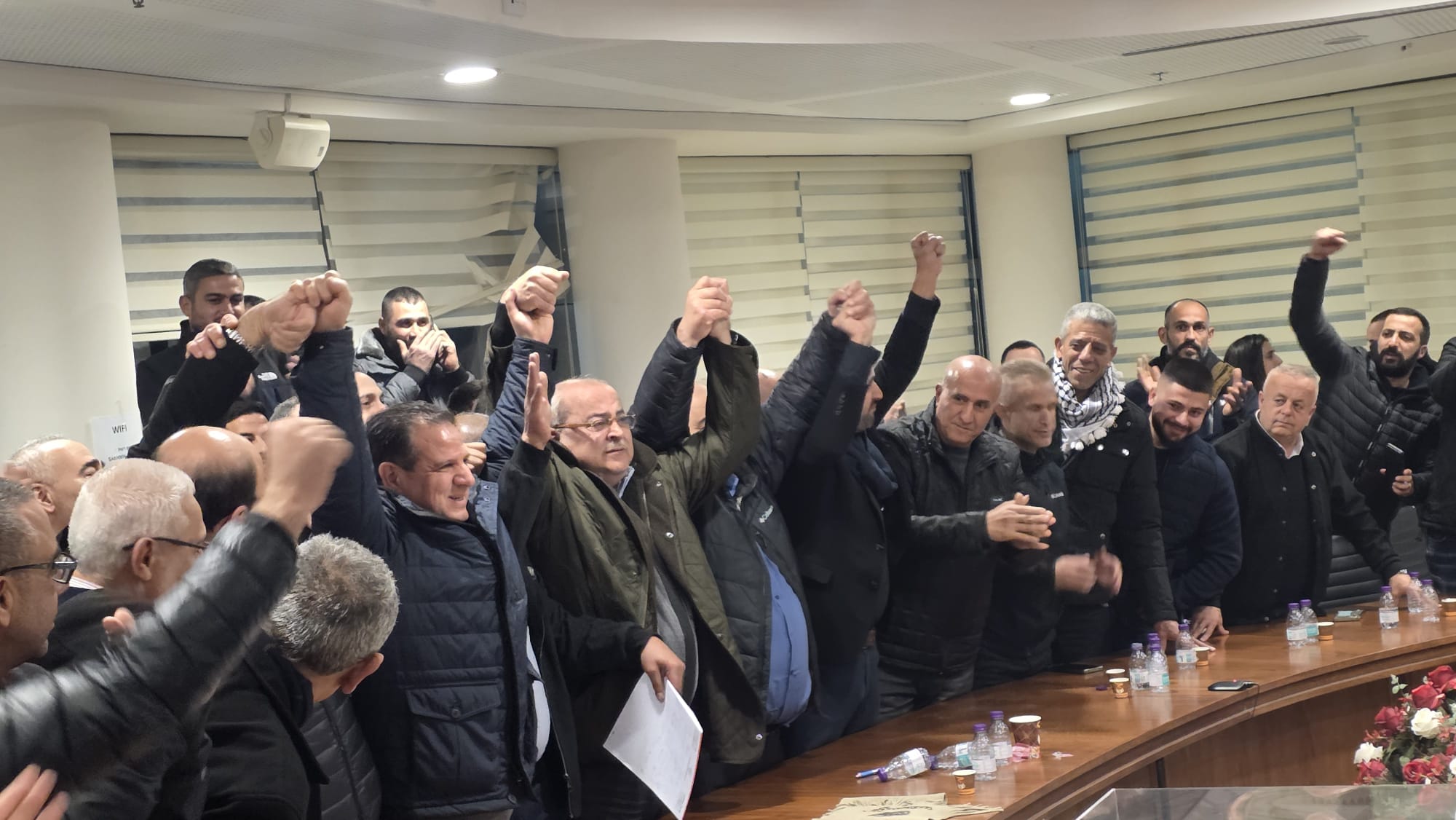
Leaders of the Arab parties celebrate after signing an agreement to work towards a Joint List in Sakhnin, January 22, 2026. (Courtesy of Hadash-Ta'al)
Arab-majority political parties Hadash, Ta’al, and Balad express their readiness to form a technical joint electoral list ahead of the upcoming elections and call on the Islamist Ra’am, whose officials did not take part in recent consultations, to join the efforts.
“We would want Ra’am to also be a partner in the political agreement, but we are aware of significant gaps in positions between us relating to the nature and path of the Joint List,” the statement says.
However, due to recognition of the “existential dangers” Arab parties are facing, Hadash, Ta’al, and Balad say they want to include Ra’am in an agreement forming a new Joint List “to strengthen Arab representation and overthrow the extremist right-wing government.”
Historically, the largest and most influential of the Arab factions, Hadash has long championed re-establishing the unified slate of Arab parties.
Despite uniting sharply dissonant ideological views, the alliance has a track record of energizing Arab voters and bringing the community unprecedented political influence. At its peak in 2020, it won 15 seats out of 120 in the Knesset, making it the third largest party.
The bloc split due to internal fighting in 2021, when Mansour Abbas’s Ra’am broke away to join the short-lived coalition led by Naftali Bennett and Yair Lapid that ousted Netanyahu from power. The joint slate collapsed the following year as the nationalist Balad party pursued an ultimately unsuccessful solo run.
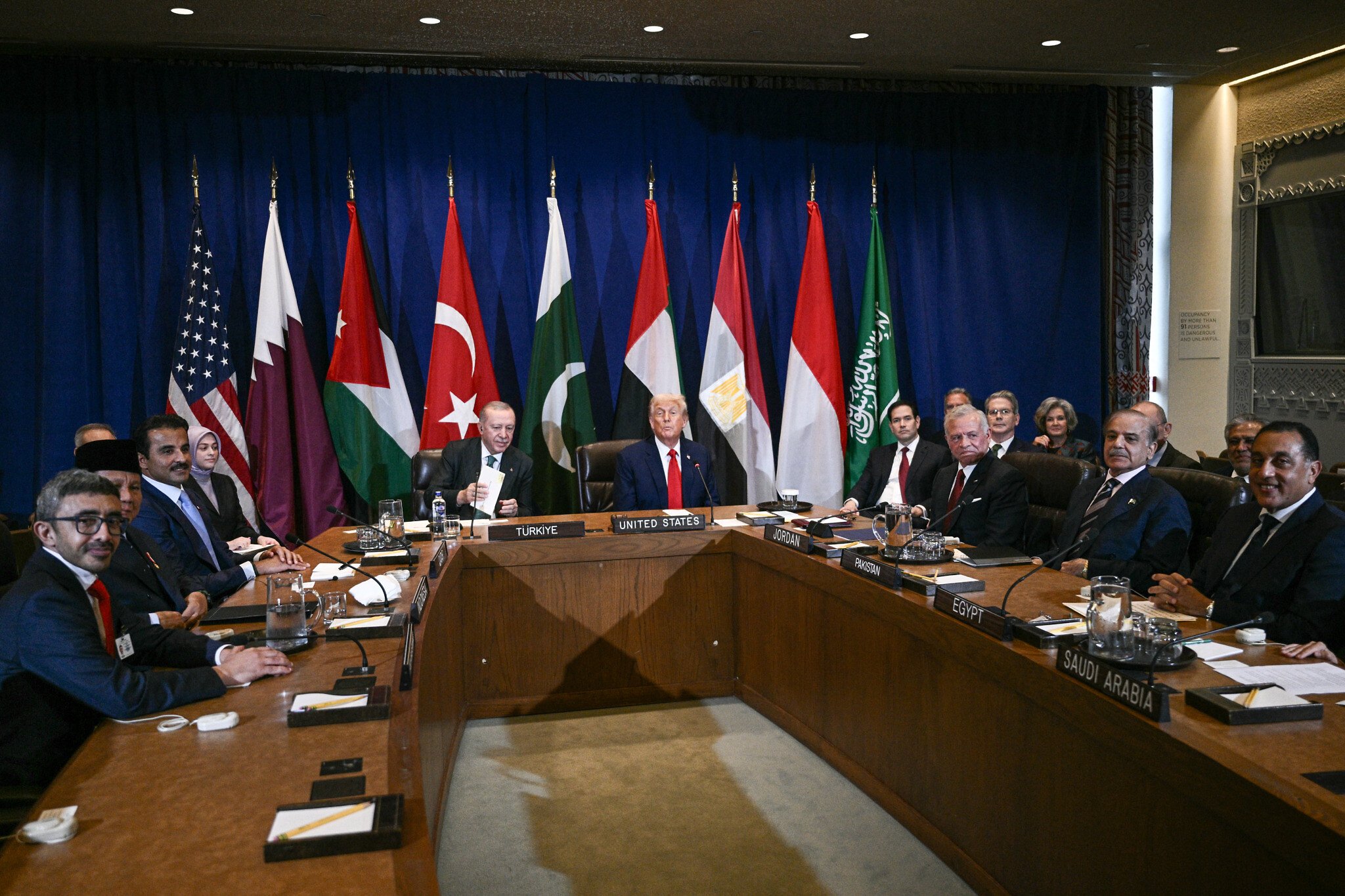
Seated at main table, L/R, UAE Foreign Minister Sheikh Abdullah bin Zayed Al Nahyan, Indonesia's President Prabowo Subianto, Qatar's Emir Sheikh Tamim bin Hamad al-Thani, Turkey's President Recep Tayyip Erdogan, US President Donald Trump, Jordan's King Abdullah II, Pakistan's Prime Minister Shehbaz Sharif, and Egypt's Prime Minister Mostafa Madbouly attend a multilateral meeting to discuss the situation in Gaza, on the sidelines of the United Nations General Assembly in New York City on September 23, 2025. (Brendan SMIALOWSKI / AFP)
US President Donald Trump told the leaders of several Arab and Muslim countries in a Saturday phone call that he expects them to normalize relations with Israel if he reaches a deal to end the war with Iran, two US officials tell the Axios news site.
During a phone call, the leaders of Saudi Arabia, the United Arab Emirates, Qatar, Pakistan, Turkey, Egypt, Jordan, and Bahrain all told Trump “we are with you on this deal” that is emerging with Tehran, one of the officials say.
Another official with knowledge of the call says Trump told the leaders he would call Prime Minister Benjamin Netanyahu next, and that he hoped he would join a group call with the Muslim and Arab leaders in the future.
Trump then said he wanted those countries that have yet to join the Abraham Accords to do so and normalize relations with Israel, the two officials say.
Saudi Arabia, Qatar, and Pakistan have never established formal ties with Israel.
“There was silence on the line and Trump joked and asked if they are still there,” one of the officials tell Axios.
Help us report truthfully on social media
As a multimedia journalist, my job is to take the quality, fact-based journalism produced by The Times of Israel newsroom and make it accessible across every platform — from Instagram posts to podcasts to short-form videos.
This is how many, especially young people, consume news these days. But misinformation is rampant on social media. Our team at ToI produces accurate, responsible short-form reporting on Israel and the Jewish world.
If you believe in the importance of factual social media journalism, please consider joining our reader support group, The Times of Israel Community. Your financial support is essential to sustain responsible multimedia reporting.
We’re really pleased that you’ve read X Times of Israel articles in the past month.
That’s why we started the Times of Israel - to provide discerning readers like you with must-read coverage of Israel and the Jewish world.
So now we have a request. Unlike other news outlets, we haven’t put up a paywall. But as the journalism we do is costly, we invite readers for whom The Times of Israel has become important to help support our work by joining The Times of Israel Community.
For as little as $6 a month you can help support our quality journalism while enjoying The Times of Israel AD-FREE, as well as accessing exclusive content available only to Times of Israel Community members.
Thank you, David Horovitz, Founding Editor of The Times of Israel


 Add ToI as a Preferred Source on Google