

 From the Liveblog of
Tuesday, November 4, 2025
From the Liveblog of
Tuesday, November 4, 2025
Comptroller pans government’s handling of wartime economy
 Add ToI as a Preferred Source on Google
Sam Sokol is a former political correspondent at The Times of Israel. He was previously a reporter for the Jerusalem Post, Jewish Telegraphic Agency and Haaretz. He is the author of "Putin’s Hybrid War and the Jews"

In a scathing report, the state comptroller finds that the government had made insufficient preparations for future emergencies following the coronavirus pandemic, which would have made it easier to protect the Israeli economy during the war in Gaza.
According to the comptroller’s office, the past two years of war will end up costing NIS 250 billion ($76 billion) by the end of 2025, with all Israelis “paying this enormous price, and future generations will pay it as well.”
In the two years prior to October 7, 2023, the government did not deal at all with the issue of economic emergency preparedness, the comptroller’s office found. Moreover, the Finance Ministry did not prepare any plans for an extended war lasting longer than a month, and “there was no emergency surplus in the state budget that would allow for immediate financing of military and civilian needs.”
The comptroller also found that the disbursement of war budgets in 2023 and 2024 was also “significantly delayed.”
In addition, the ministry did not create a “contingency plan that would allow for the rapid distribution of grants to affected populations” nor “finish mapping the needs of government ministries in times of emergency,” the comptroller found, calling on Prime Minister Benjamin Netanyahu to appoint a figure to develop a strategy for dealing with economic risks arising from emergencies such as wars, epidemics, and natural disasters.
The government has struggled to provide a response to the needs of the home front, such as the reconstruction of the north, and fundamental issues such as dealing with the shortage of workers in the economy remained without a comprehensive systemic response, the comptroller’s office stated.
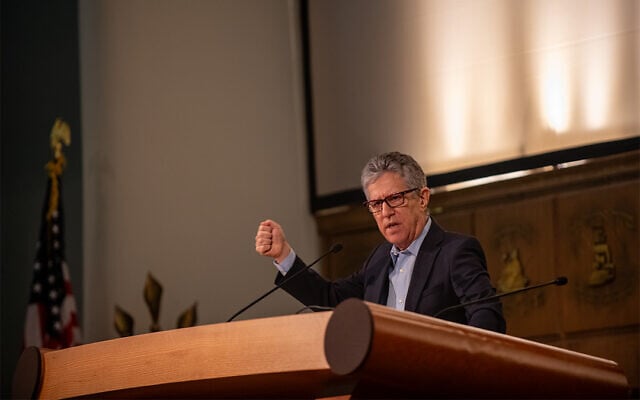
In a video statement, State Comptroller Matanyahu Englman called out Netanyahu, Finance Minister Bezalel Smotrich, as well as former finance minister Avigdor Liberman for failing to address emergency preparedness.
Moreover, the government failed to adequately curtail coalition spending, with an audit revealing that despite a Finance Ministry decision in late 2023 to divert NIS 1.6 billion ($489.5 million) in coalition funds to war needs, only NIS 860 million ($262.9 million) ended up diverted.









The Times of Israel Community.