

Lockdowns on Bnei Brak and parts of Jerusalem set to ease as regulations expire
Health Ministry encouraged by effects of containment measures, but unnamed officials express concern that decision not based only on infection rates
 Add ToI as a Preferred Source on Google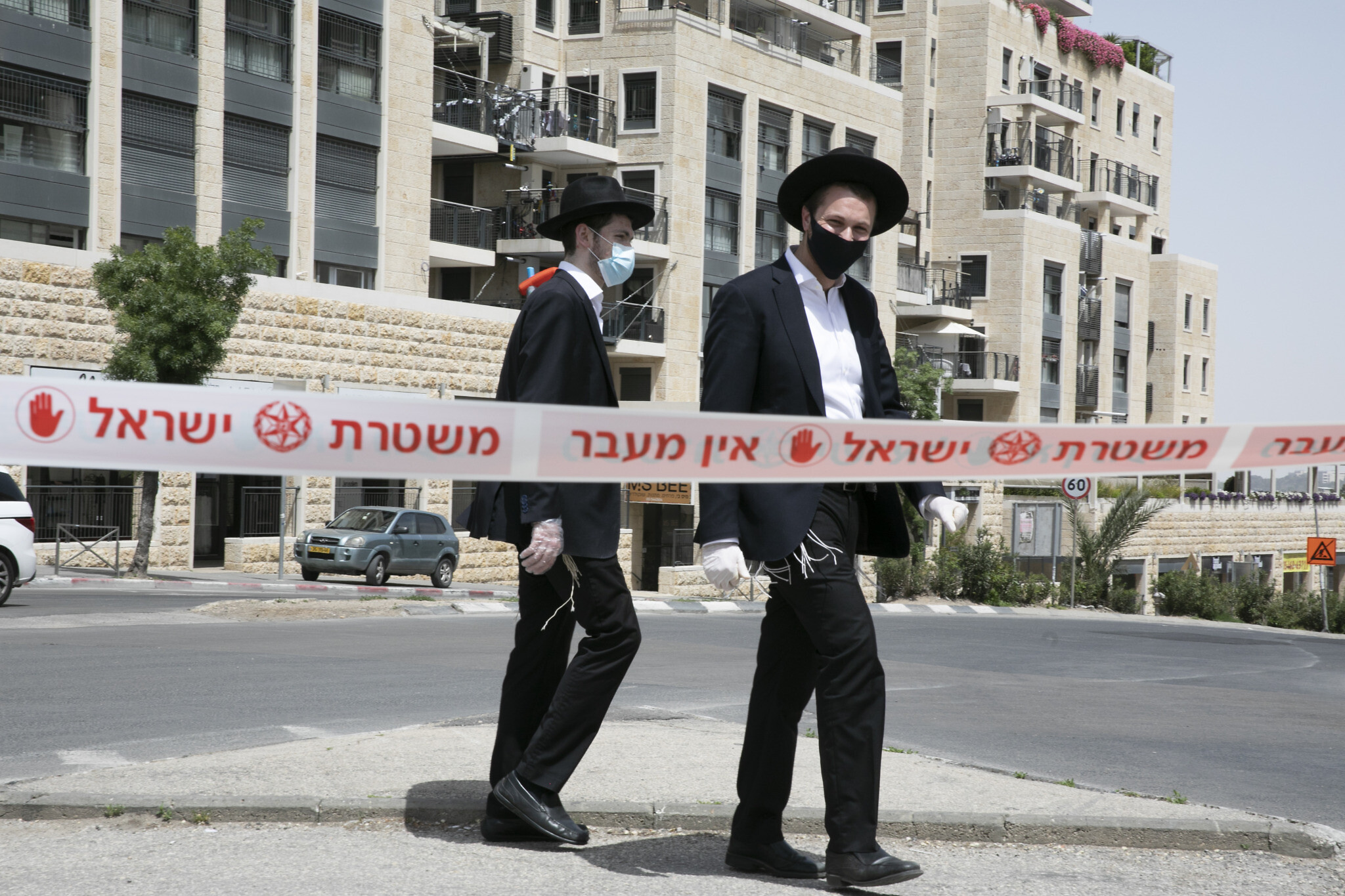
Emergency quarantine measures blocking off the ultra-Orthodox city of Bnei Brak and many Jerusalem neighborhoods that had high rates of coronavirus infection were set to be rolled back Monday, the latest in a series of tentative steps the country is taking to emerge from a month under lockdown.
The regulations for Bnei Brak and Jerusalem’s mainly ultra-Orthodox neighborhoods expired at midnight Sunday and were unlikely to be renewed, as infection rates there appeared to have leveled off.
A cabinet meeting was set for Monday at 10 a.m. to discuss the issue, but ministers were not expected to reimpose the measures, which tightly restricted movement in and out of the lockdown zones demarcated by the authorities.
The authorities are not expected to recommend further action after figures appeared to showed the virus’s spread has slowed down in these predominantly ultra-Orthodox areas, and after local officials pledged to move the remaining sick residents to isolation hotels, according to a Health Ministry statement on Sunday night.
According to Health Ministry figures, Jerusalem has seen the highest number of infections in the country, with over 2,500 as of Sunday morning. Bnei Brak, an ultra-Orthodox town of 200,000 near Tel Aviv, has the second highest with over 2,300 confirmed cases, and the highest per capita rate.
While a slowdown in confirmed cases has been recorded in both places, the figures are saddled by inconsistencies in testing rates and a lack of publicly available information on daily new cases in specific cities, making it impossible to independently verify the reported slowdown.
However, unnamed senior officials told Channel 12 news that a decision to ease regulations on the two predominantly ultra-Orthodox areas was also due to pressure exerted on Health Minister Yaakov Litzman by rabbis and local leaders.

According to the report, Health Ministry director-general Moshe Bar Siman-Tov originally said that the closures would only be eased when infection rate data showed a slowdown and there was disquiet over the fact that the additional vector of municipal assistance in moving people to hotels was taken into account.
Bnei Brak Mayor Avraham Rubinstein, who had protested the closure placed on his city earlier this month, told the Kan public broadcaster Monday that he believed the peak of infection in the city had passed. “I am not sure it helped. The infection rates were dropping even without a closure,” he said, giving no evidence for the claim. “I hope we are after the peak. A wonderful job has been done here. Most of the public listened. The instructions of the rabbis are much stricter than the orders of the Health Ministry.”
Many members of the ultra-Orthodox community were slower to begin heeding social distancing regulations and initially resisted the shutdown of schools and synagogues, leading to higher infection rates in those areas.
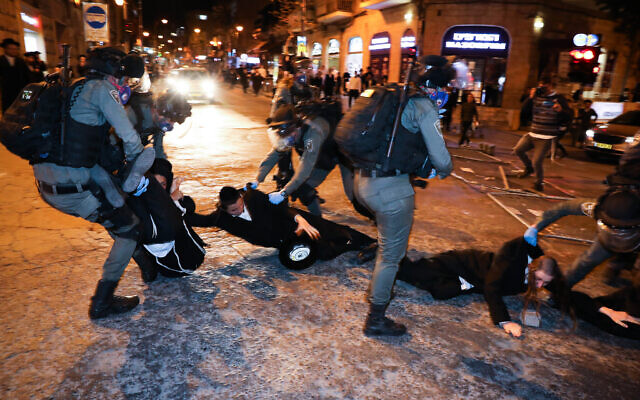
Police in Jerusalem’s ultra-Orthodox enclave of Mea Shearim have continued to face resistance from hardliners who reject the state’s authority. On Sunday night, officers clashed with stone-throwing ultra-Orthodox rioters the neighborhood who were protesting coronavirus restrictions. Five demonstrators were arrested.
The rollback of specialized restrictions would put both cities under the same rules as the rest of the country, which as bar people from venturing more than 100 meters from their homes except to purchase food and supplies or go to work. As of Sunday, they may also go 500 meters from home for exercise or prayer, and 500 meters from their workplace for prayer.
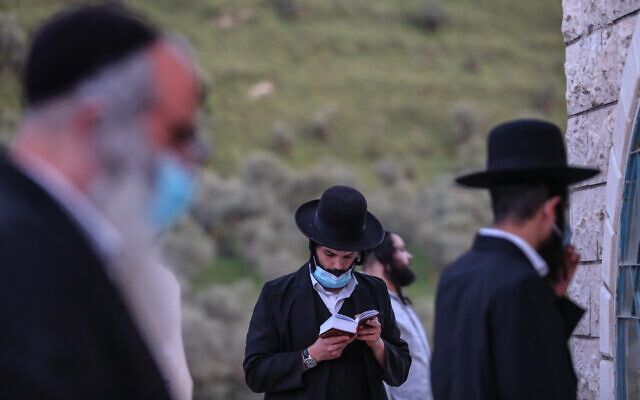
Sports activities are allowed in fixed pairs, or with people from the same household. Outdoor prayer groups of up to 19 people are also allowed, with two meters between worshipers, wearing masks.
Despite the eased rules, ministry officials have urged Israelis to continue maintaining social distancing regulations and not to become complacent.
Bnei Brak was the first city to be placed under strict lockdown on April 3, with residents only allowed to leave town to work in key industries or for medical care. Several Jerusalem ultra-Orthodox neighborhoods were put under a similar lockdown a week later. For the last week, residents have been able to leave to work under eased restrictions.
On Saturday, the Arab Israeli communities of Deir al-Asad and Bi’ina became restricted areas amid fears of a coronavirus outbreak in the area. The two adjacent towns in northern Israel, which are a single municipality, will be locked down for seven days.
The death toll from the coronavirus in Israel rose to 173 Monday, with 13,654 confirmed cases, according to the Health Ministry.
A total of 150 patients are in serious condition, including 114 on ventilators, a slight increase on figures from a day earlier. There were 134 in moderate condition, and 9,326 have light symptoms. Meanwhile, 3,872 people have recovered from the disease.





The Times of Israel Community.