

New support for lone soldiers who don’t call Israel home
They left their families to volunteer for the IDF. But what happens to these veterans when they go back to their countries?
 Add ToI as a Preferred Source on Google
Reporter at The Times of Israel
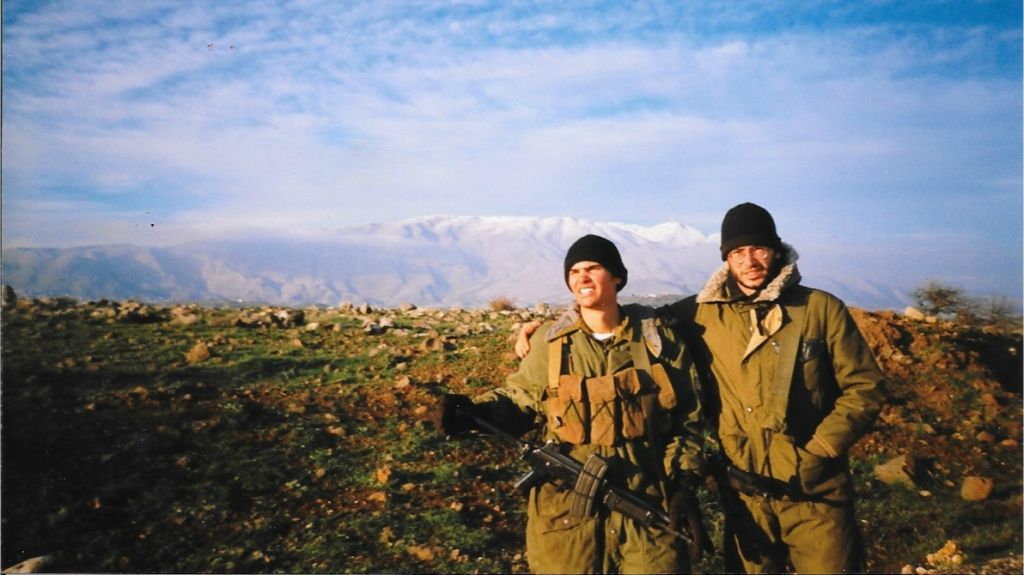
NEW YORK – In the late 1960s, Sammy Bar-Or made aliyah alone from Iran with visions of red-booted Israeli paratroopers dancing in his head. He was 13.
“I used to look at pictures of myself then and ask my parents how the hell they could have let me do that? I was so young,” Bar-Or said from his home in New Jersey. “They told me, ‘Sammy you had no idea what you were like then.’ I was just so much in love with Israel and being a Zionist.”
After attending one year of university in Tel Aviv, Bar-Or enlisted in the Israel Defense Forces, IDF. He served as a paratrooper from 1970 – 1973. For three years he kept his lone soldier status mum.
“I didn’t want to let any of my friends know I was a lone soldier. I didn’t want their pity or for them to treat me different,” Bar-Or said.
Times have changed. Lone soldiers, IDF troops who serve without family in the country, now enjoy a great deal of support through organizations such as the Friends of the Israel Defense Forces (FIDF), Aluf Stone (the official IDF lone soldiers veterans association) and the Michael Levin Lone Soldier Center.
However, there is little direct support for those lone soldier veterans who don’t remain in Israel, Bar-Or said. That’s something he hopes to change.
As one of the co-founders of the FIDF’s New Jersey chapter, Bar-Or wants to create a network there for former lone soldiers. He envisions lone soldiers who are two to three months from the end of their service tapping into a wealth of job and housing leads, educational and financial support.
Tim Bailey grew up in what he called “a heavily Christian home.” He didn’t find out until late teens that his mother was Jewish. Not wanting to make aliyah and officially immigrate to Israel, Bailey served as a Machal volunteer. Although his poor eyesight barred him from serving as a paratrooper, his dream, he joined the 188th “Barak” Armored Brigade.
Unlike those who serve in the US military, there is no GI bill equivalent for lone soldiers who return to their countries of origin
After Bailey’s service in the 188th ended he returned to the US. But re-entering civilian life wasn’t an option for the Syracuse, NY native. He applied for a job with the US National Park Service where he was happy to discover his service in the IDF was, he said, an advantage.
Now, after nearly two decades in law enforcement, Bailey is in graduate school for public policy. Unlike those who serve in the US military, there is no GI bill equivalent for lone soldiers who return to their countries of origin.
“While that would have been nice, it wasn’t part of the deal – that’s just how it is,” Bailey said.
Two lone soldiers, Max Steinberg, 24, from California, and Sean Carmeli, 21, from Texas, were killed during Operation Protective Edge, bringing media attention to the phenomenon. Of the more than 2,500 lone soldiers serving in the IDF, at least 750 are American, according to the FIDF. Though statistics on the number of active duty lone soldiers are available, there are no precise figures on the number of such veterans, according to the FIDF.
Because there are no precise numbers, it takes one veteran to find another. Bailey served with Joel Chasnoff in the 188th.
Chasnoff grew up in Chicago. He attended Solomon Schechter, a Jewish day school, and spent summers at Camp Ramah. After visiting Israel on a teen-tour when he was 17, Chasnoff decided if he were to one day call Israel his homeland, he would first need to defend it.
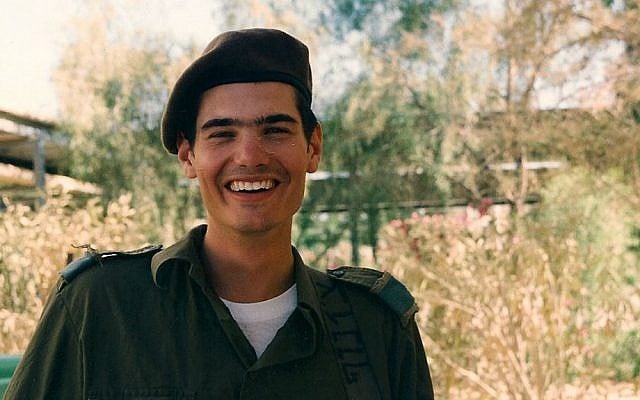
Chasnoff made aliyah after graduating from University of Pennsylvania. Like 50 percent of all lone soldiers, Chasnoff chose a combat unit. Assigned to the 188th Armored Brigade, he deployed to Lebanon in 1998 for operations against Hezbollah.
After his tour of duty Chasnoff returned to New York City to pursue his career as a comedian and writer. Adjusting to the yellow river of taxis and crowded subways was easy.
“Honestly the army is a very intense experience. I was so happy to be out of it. Personally, I was not worried about how to acclimate,” Chasnoff said. “Yes, there was sometimes an emptiness, I’d been somewhere so intense and suddenly I wasn’t.”
Veterans like Chasnoff are keeping a close watch on Israel as Operation Protective Edge continues.
“When these operations come up, that’s when it gets difficult,” Chasnoff said. “We know what its like to go in, we know what it’s like not knowing what’s gong to happen.”
In the nearly 20 years since he left the IDF, Chasnoff said he hasn’t found the need for veterans groups. Rather, he prefers meeting other former lone soldiers when he performs comedy or talks about his 2010 memoir “The 188th Crybaby Brigade.” He also stays in close touch with Tim Bailey.
“There is an amazing connection between people who have done this,” he said of meeting other veterans and active duty soldiers.
Upon returning stateside, lone soldier veterans face a range of reactions from civilians who learn of their overseas service. Some greet these veterans with admiration, others with confusion.
Still, most people are simply curious about his decision to serve in the IDF, Chasnoff said.
“Once in a while I’ll meet someone older, someone who served in World War II or Vietnam and they will ask if I ever considered serving in the US military,” Chasnoff said. “I understand that — this country took in my great grandparents. But no one ever called me a traitor.”



The Times of Israel Community.