

No, Syrian rebels aren’t tricking the IDF into providing aerial support
Dr. Yehuda Balanga debunks ‘conspiracy theory’ that Israel is being deliberately provoked into hitting regime positions, explains Assad’s rationale for shooting at Israeli fighter jets
 Add ToI as a Preferred Source on Google
Judah Ari Gross is The Times of Israel's religions and Diaspora affairs correspondent.
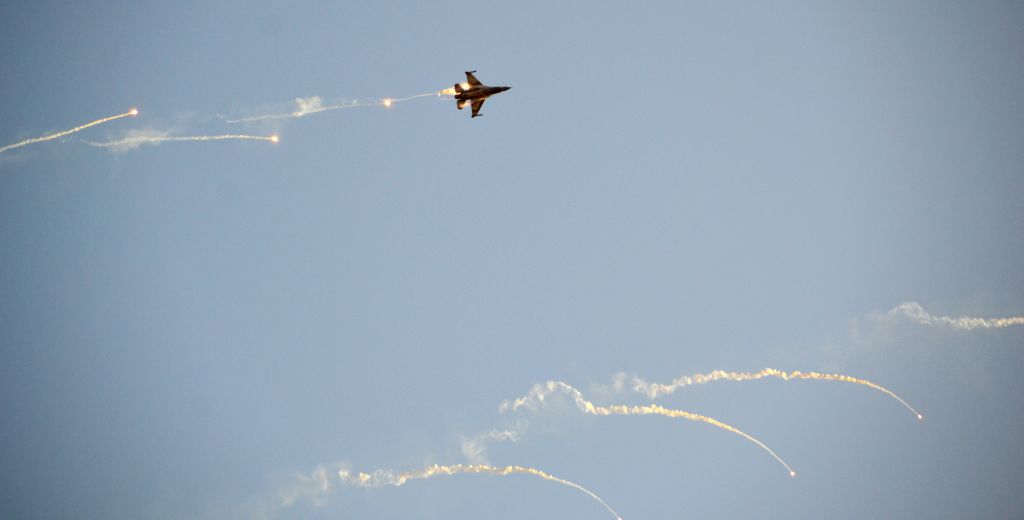
Almost like clockwork, within hours of a mortar or rocket hitting the Golan Heights — spillover from fighting in southern Syria — local Arabic media reports Israeli airstrikes against Syrian regime artillery positions, followed by official IDF confirmation a short while later, after the aircraft land back in Israel.
That happened twice on Tuesday, with Israel Air Force jets hitting Syrian army artillery batteries just after midnight and then again late that night, after four projectiles landed in Israeli territory on Monday evening and during the day on Tuesday.
The border with Syria, which had been quiet for months, has seen an escalation in these “spillover” incidents, as a newly strengthened Syrian President Bashar Assad turns his attention to the Syrian Golan Heights and attempts to wrest control of it from the numerous rebel groups that have set up shop in the area, Dr. Yehuda Balanga of Bar Ilan University’s Middle East Department told The Times of Israel.
Despite the ceasefire, the Syrian Army, allegedly aided by Hezbollah operatives, has been waging a bloody war with the Fateh al-Sham Front, an al-Qaeda-linked group that was formerly known as the al-Nusra Front, and the Khalid ibn al-Walid Army, an Islamic State affiliate that is the successor to the Yarmouk Martyr’s Brigade.

In addition to those larger groups, numerous small-scale militias are also taking part in the fighting near the Israeli border, Balanga said.
According to Israeli logic in recent months, it doesn’t really matter which group fired the specific projectile: The Syrian government is ultimately responsible for whatever comes across the border, and so the Syrian army will be targeted.
‘The attack comes within Israel’s policy of supporting terrorist organizations in Syria’
That policy has given way to a “conspiracy theory” touted by Assad’s government, some analysts and an Israel Knesset member that says rebels are taking advantage of Israel’s tactics and are deliberately firing at the Golan Heights in order to provoke Israel into striking Syrian positions, making the IDF a sort-of de facto ally of the rebels, Balanga said.
“It’s a conspiracy theory that the Syrian media especially likes to express,” he said over the phone.
Indeed, after both the early morning and late-night airstrikes on Tuesday, the Sana news agency, a government mouthpiece that publishes in Arabic, English, Hebrew and other languages, made just such a claim.
“The attack comes within Israel’s policy of supporting terrorist organizations in Syria,” the news site wrote Wednesday morning about the late-night airstrike.
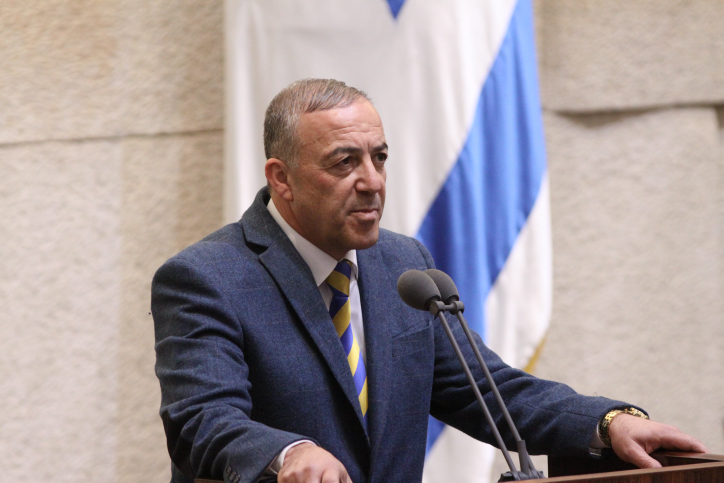
MK Akram Hasson, a member of the Kulanu party, went further, saying Defense Minister Avigdor Liberman provided the Fateh al-Sham Front with protection, logistical support, and possibly with “advanced technology” during its campaign in southern Syria.
To Balanga, that theory is bunk.
“I don’t buy the conspiracy, as though it would be good for the rebels if Israel were to enter the war and be the one that brings down Assad,” Balanga said.
“The rebels absolutely do not want to be identified as being assisted by Israel, by the Zionists,” he said.
Balanga’s explanation for the mortars landing in Israel is the obvious one: The projectiles hitting are spillover fire from the fighting in Syria, not a convoluted method of getting aerial support from the IDF.
In a statement about the Tuesday night bombing run, the IDF also clarified its position on the issue.
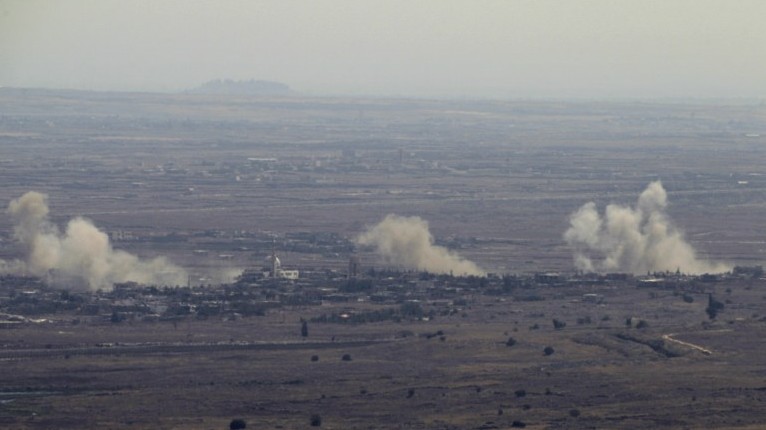
“The IDF sees the regime as responsible for what happens in its territory, with that being said [the army] will not hesitate to act against any opposition forces in Syria,” the army said in a statement.
This was, in fact, Israel’s operating method in the past, striking the source of the spillover fire, and not necessarily Syrian military positions.
“When there was errant fire like this, Israel knew how to get across the message to both Assad and to the Syrian opposition,” Balanga said. “And therefore there were a few months of quiet.”
Scoring PR points
As much as the opposition groups don’t want Israel to be directly involved in the fighting in Syria, Assad and his army also would rather the Jewish state keep out of the civil war, Balanga said.
While the Syrian army has scored some victories and feels confident enough to turn its sights back to the city of Quneitra and the surrounding area, adding the IDF to its list of immediate adversaries is not high on Assad’s to-do list.
So why then did the Syrian army fire surface-to-air missiles at the Israeli fighter jets carrying out the strikes early Tuesday morning, a move that — if successful — would have forced a dramatic retaliation by the IDF?
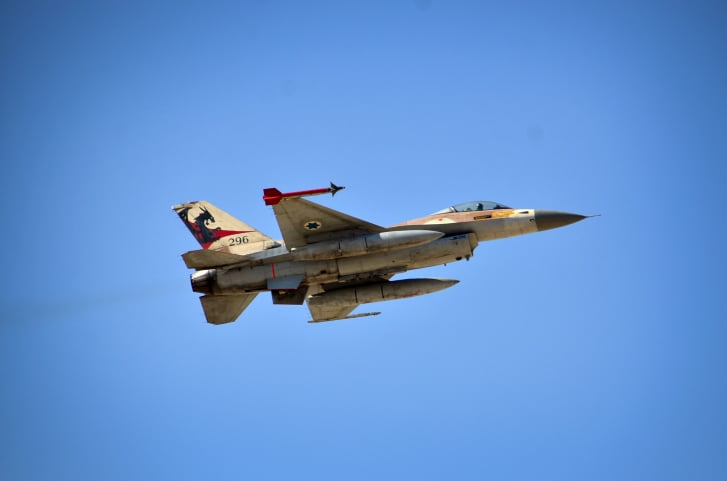
According to Balanga, a modern Syrian history researcher, the anti-aircraft fire was more of a public relations move than a serious military attack.
On Tuesday morning, Syrian media triumphantly announced that Assad’s army had shot down, according to the various accounts, an Israeli fighter jet or an unmanned drone or both, during the IDF’s bombing run shortly after midnight. The Israeli military swiftly denied the claim.
The S-200 missile defense battery used by Syria were located far away from where the Israeli aircraft were operating and “did not present a threat to our forces,” the army said in response to the Syrian claims.
https://www.facebook.com/C.Military1/photos/pcb.577901819059905/577901785726575/?type=3&theater
For Assad, however, shooting at the Israeli aircraft and claiming that they were downed was a victory in and of itself.
“Assad is winning in this war, but a few more wins would only help him, not hurt him. And no one in the Syrian public is actually going to ask themselves what happened,” Balanga said.
“If [Syrian media says] the plane was shot down, that’s just fine.”








The Times of Israel Community.