

PA state-sponsored hate speech must stop, human rights expert says
Incitement should be combated by peace-seeking NGOs, Canada’s former justice minister Irwin Cotler believes
 Add ToI as a Preferred Source on Google
Elhanan Miller is the former Arab affairs reporter for The Times of Israel
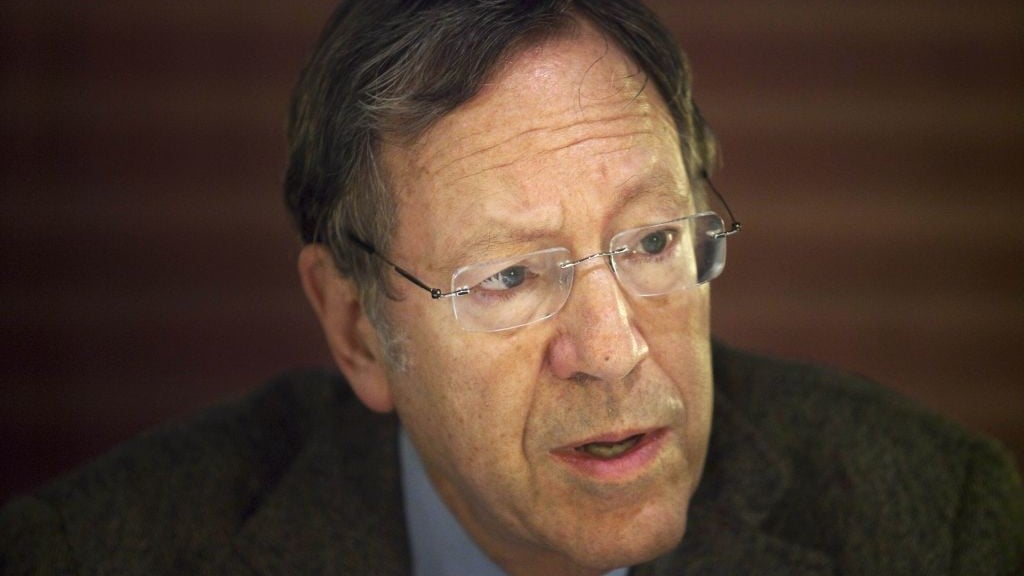
Irwin Cotler traces his lifelong commitment to fighting hate speech and incitement to the foundational Jewish values he got from his parents.
“My mother used to say to me that ‘life and death is on the tip of the tongue.’ While I was getting this at home, I would be going to school where the refrain was ‘sticks and stones may break my bones but words will never hurt me,'” the former Canadian justice minister and attorney general told The Times of Israel during a visit to Jerusalem.
“I learned that wasn’t true; that words can hurt.”
A week after the Israeli cabinet dedicated the bulk of its weekly meeting to Palestinian incitement, the Canadian parliamentarian regrets not having been more vociferous in highlighting what he believes to be widespread, state-sanctioned Palestinian incitement.
“I must admit, I probably haven’t spoken out against it as much as it deserves to be spoken out against. Maybe, like others who wanted to see the peace process sustained and advanced, I didn’t take as strong a position against [Palestinian] hate speech as I should have … I acknowledge this as a failure on my part.”
‘Maybe, like others who wanted to see the peace process sustained and advanced, I didn’t take as strong a position against [Palestinian] hate speech as I should have’
Cotler began working on hate speech in 1965 as a law student at McGill University, where his dean Maxwell Cohen headed the first and only Canadian commission on hate propaganda. As a young lawyer, he served as special assistant to minister of justice John Turner who in 1968 drafted the first Canadian anti-hate legislation, prohibiting the promotion of hatred and contempt against an identifiable group. As an academic, he chose to specialize in hate speech.
“While I was a law professor, I litigated the three major cases in hate speech jurisprudence in Canada before the supreme court,” he said. “The constitutionality of our anti-hate legislation was challenged, and the court upheld the constitutionality on all three cases.”
“Pervasive” Palestinian hate speech is particularly severe because it is state-sanctioned, emanating from official media, television and religious discourse in mosques, Cotler said.
“In Israel there’s hate speech as well,” he acknowledged, “but it doesn’t emanate from the state, nor sanctioned by it. There are laws against incitement.”

Cotler measures his shortcoming on the Palestinian front in comparison with Iran, as well as a number of other nondemocratic states with which he was involved as a human rights advocate. Over the past several years, the Liberal member of parliament has dedicated much of his time to Iranian hate speech against Israel and the Jews under former Iranian president Mahmoud Ahmadinejad.
“I believe that Ahmadinejad and those associated with him should be brought to justice for their standing violation of the Genocide Convention’s prohibition against direct and public incitement to violence.”
The Geneva Convention, he emphasizes, does not require genocide to actually take place for incitement to it to be considered a crime. Thus, during his tenure as justice minister, Canada expelled Rwandan asylum-seeker Leon Mugesera after the Supreme Court convicted him of incitement to genocide in Rwanda.
“It was a very interesting case, because his incitement was in 1992; he left before the acts of genocide began in 1994 … the Supreme Court found he was inadmissible for refugee status and that his speech constituted incitement to genocide. The case was so important because his defense was ‘I wasn’t there for the genocide.’ The court, however, found that incitement alone constitutes the crime, and he was sent back to Rwanda.”
As justice minister and attorney general from 2003 to 2006, Cotler said one of his first moves was the National Justice Initiative against Racism and Hate.
As recently as 2010, Cotler brought up the issue hate speech in his meetings with PA President Mahmoud Abbas.
“His answer to me was ‘I’m not going to say that there’s no hate speech, there is. I’m not even going to say that there’s also hate speech in Israel. But I’ve agreed to a tripartite committee that will review the question of hate speech.”
Abbas then suggested that Cotler try to convince Israeli Prime Minister Benjamin Netanyahu to revive the activity of Israeli-Palestinian-American committees established in 1998 to define and combat hate speech on both sides.
The Israeli position, Cotler said, was that “we had a committee that didn’t really work. We know what has to be done, so we should go ahead and put an end to it,” a position he found reasonable.
Cotler later returned to Abbas and tried to convince him to end hate speech against Israel for domestic reasons, regardless of negotiations with Israel.
“Leaving aside the Israeli-Palestinian component, I told Abbas: ‘You should do away with hate speech because it is not only a threat to Israeli-Palestinian peace but it’s a threat to your own society. You want to bring up children not in a culture of hate but in a culture of respect for the other, for the inherent dignity of all people’.”
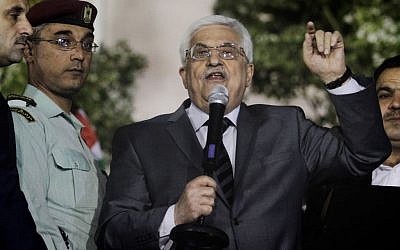
Non-democracies where free speech is prohibited, such as Iran or the Palestinian Authority, have an even greater obligation to prevent hate speech than free societies such as the US where all speech is protected, Cotler said.
“If it’s a non-democracy where there’s no opportunity for democratic free speech, then the state has a particular responsibility to ensure that hate speech does not fester. What’s happening in the Palestinian Authority is exactly the opposite; that hate speech is not only being permitted, it’s being encouraged.”
Israel has brought up the issue of hate speech only belatedly, Cotler lamented. Intelligence Minister Yuval Steinitz has only recently begun speaking out publicly on the phenomenon, and Prime Minister Netanyahu brought it up in his recent discussions with US Secretary of State John Kerry.
“I’m sorry it came so late. I think it should have been part of the peace process. I’ve even been disappointed that the NGOs that speak to the issue of peace and human rights have not brought it up. It should have been brought up by people who care about Palestinian self-determination.”
“[Stopping hate speech] is a precondition for peace between peoples as well as between states. I think we have to look for what will best bring about that kind of relationship … namely education for peace.”




The Times of Israel Community.