

PM, Bennett meet in last-minute bid to reach outpost bill compromise
Netanyahu cabinet in standoff ahead of Monday vote on legislation that would retroactively validate illegal West Bank settlements
 Add ToI as a Preferred Source on Google
Prime Minister Benjamin Netanyahu met with Jewish Home party leader Naftali Bennett and Attorney General Avichai Mandelblit Saturday evening, in an eleventh-hour effort to reach a compromise to the cabinet standoff over the so-called Regulation Bill ahead of Monday’s Knesset vote on the controversial legislation.
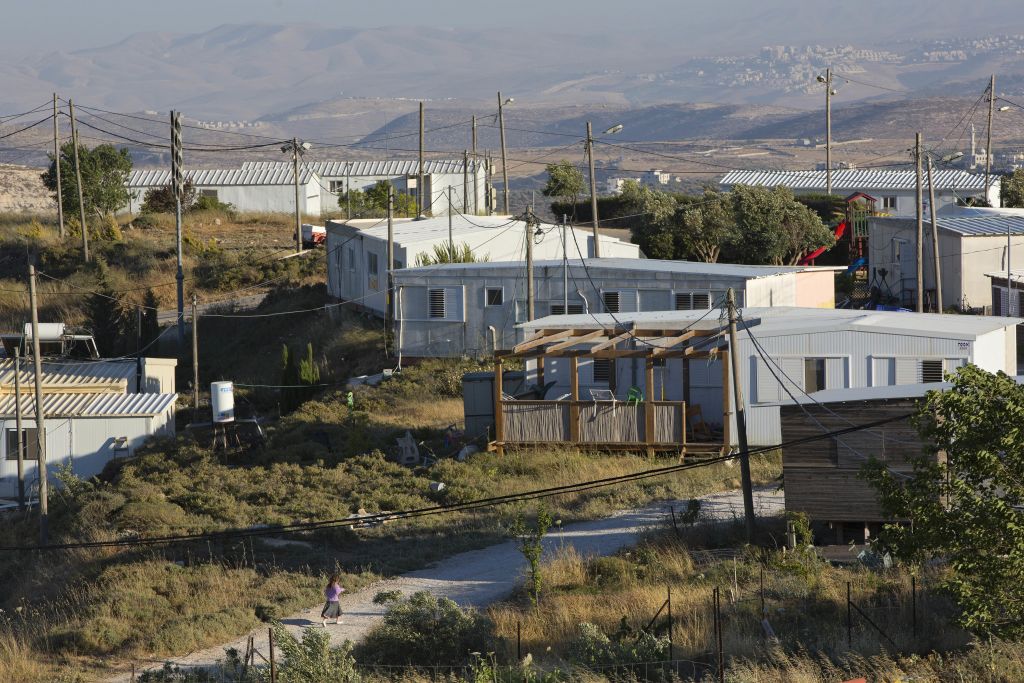
The bill proposed by the national-religious Jewish Home party has been presented as a plan to avert the court-ordered December deadline to demolish the illegal outpost of Amona, and would see the government retroactively legalize other West Bank outposts built on privately-owned Palestinian land.
Various versions of the Regulation Bill have passed the initial legislative hurdles in the Knesset in recent weeks despite repeated objections from Mandelblit and efforts by Netanyahu to delay the vote.
According to the Ynet news website, Bennett is being pressured to agree to remove a clause that overrides the High Court of Justice’s ruling to evacuate Amona.
On Saturday night, however, Bennett said no coalition compromise had been reached on the contentious issue.
“Nothing has been concluded regarding the regulation of settlements in [the West Bank],” Bennett posted on Facebook. “We expect the Regulation Bill to pass in full as required by the coalition agreement.”
Opposition to the Amona clause from Finance Minister Moshe Kahlon last week saw the Knesset vote on the bill pushed off to Monday.
Kahlon’s 10-seat Kulanu faction has de facto veto power over legislation in the 67-seat coalition, as bills require a 61-seat majority to pass.
After over a decade of legal wrangling, the High Court of Justice ruled in 2014 that the Amona outpost, near Ramallah, which was founded in 1996 and is home to some 40 families, was built on privately-owned Palestinian land and ordered it razed by December 25 of this year.

The issue has galvanized pro-settlement politicians who have sought legislative ways to circumvent the court’s decision. But past proposals to grant the state the ability to seize the private land for Amona residents’ use were met with vociferous opposition of officials and political leaders. Mandelblit told lawmakers last month that such a breach of property protections would be deemed unconstitutional by the High Court of Justice. Netanyahu and Defense Minister Avigdor Liberman have both expressed misgivings or opposition to the idea.
Kahlon’s opposition to the measure has sparked frantic maneuvering in Netanyahu’s coalition. According to Knesset sources, his party opposes the bill’s article 7, that explicitly overturns the High Court of Justice verdict forbidding the expropriation of the privately-owned Palestinian land on which Amona sits.
Last week, Jewish Home MK Nissan Slomiansky said that when the Regulation Bill is finally put to its first of three votes on Monday, lawmakers would take the rare step of voting on two versions of the bill at once – one that explicitly overturns the High Court of Justice’s ruling on Amona and a second that leaves Amona out of the bill’s protections – while negotiations over its final version would take place in committee after the vote.
He asserted the bill now enjoys the support of “both the Knesset legal adviser and the Knesset speaker.”
But legal adviser Elazar Stern later warned that the version of the bill that overturned the High Court verdict on Amona may mark a “very problematic” precedent for Israeli legislation “in that it cancels the final verdict of a court.”
According to Stern, “We examined all the examples brought to the committee that seemed to offer a precedent for legislation that canceled court verdicts, and all these examples, as well as others, not only did not seek to cancel a verdict, but in fact contained the explicit caveat that they would not apply to previous verdicts.”
Raoul Wootliff and Marissa Newman contributed to this report.










The Times of Israel Community.