

Polls open in Iran’s vital post-nuke deal elections
As moderates face off against hard-liners for parliament and key leadership panel, Khamenei urges voters to ‘make the enemy disappointed’
 Add ToI as a Preferred Source on Google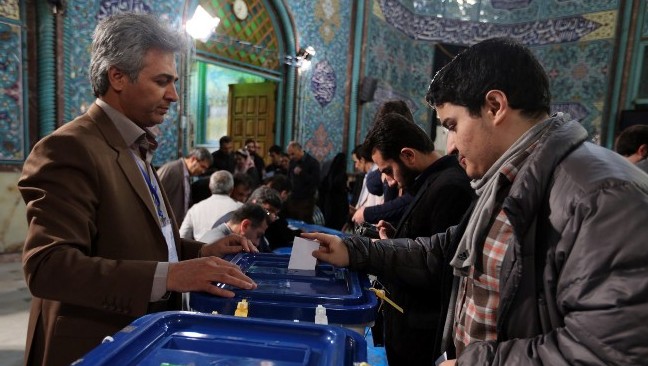
TEHRAN, Iran — Polls have opened in Iran’s parliamentary elections, Iranian state TV said Friday morning, the first elections since Iran’s landmark nuclear deal with world powers last year.
At the same time as parliamentary elections, Iranians were also voting for the Assembly of Experts, a clerical body empowered to choose or dismiss the country’s supreme leader.
Some 53,000 polling stations throughout Iran take ballots for Iran’s 290-member parliament and the 88-member Experts Assembly. Nearly 55 million Iranians are eligible to vote. The vote is largely a referendum on relatively moderate President Hassan Rouhani following last summer’s historic nuclear agreement, which curbed Iran’s nuclear activities in exchange for the lifting of international sanctions.
Reformists seeking greater democratic changes and moderates supporting Rouhani are pitted against hard-liners who oppose the nuclear deal and openings with the West.
Rouhani billed the polling as vital to curbing conservative dominance in parliament and speeding up domestic reforms.
A pro-government coalition called “The List of Hope” Rouhani’s ambitions in the polls.
While MPs are elected for four years the assembly will be granted an eight-year term. Should Khamenei, who is 76, die during that time its members would pick his successor.
Voting started at 8 a.m. (0430 GMT) and will close at 6 p.m. although officials said polling stations could stay open if there are queues and more time is needed to cast ballots.
Supreme Leader Ayatollah Ali Khamenei cast his vote early Friday morning in a televised ceremony and urged everyone to do so “quickly, as it’s both a duty and a right.”
“Everyone must vote, those who love Iran, those who like the Islamic Republic, those who love the grandeur and glory of Iran,” he told a state television reporter after casting his vote.
“We have enemies. Elections should be such that make the enemy disappointed. We must vote with insight and open eyes.”
As Iran’s ultimate authority, Khamenei’s powers outrank those of Rouhani, but the president is looking for gains in parliament to allow him to build on the nuclear deal by bringing improvements at home.
The economy has featured strongly during the election campaign as Iran faces a stubborn challenge to overcome the damage that almost a decade of sanctions caused.
The elections will be a crucial indicator of the future direction Iranians want for their country.
“I expect the situation of the country to improve through reforms,” Atefeh Yousefi, 38, told AFP while waiting in line at a polling station in Tehran, adding that she regretted boycotting elections in the past.
Rouhani has played up the potential for foreign investment which he says will bring jobs, particularly for Iran’s youth whose unemployment rate of 25 percent is two-and-a-half times the national average.
However, conservatives say strong economic growth will only be possible if an emphasis is placed on domestic production under a “resistance economy” model more in tune with the ideals of Iran’s 1979 Islamic revolution.
Although he returned the economy to growth after inheriting a recession, the president remains vulnerable as the benefit of sanctions relief and a return of international business will take time.
If voters support the pro-Rouhani list, a coalition of moderate and reformist candidates, the president could swing the balance of power in parliament, creating an opening for social and political reforms on which he has so far been blocked by lawmakers.
But a one-week official campaign for the parliamentary election has been largely overshadowed by controversies over who was allowed to run for office.
The exclusion of thousands of candidates — reformists said they were worst hit, with the barring of their most prominent faces leaving them with untested hopefuls — has raised concerns over turnout.
A total of 4,844 candidates, about 10 percent of whom are women, are standing in the parliamentary election. Only 159 clerics — a fifth of the applicants — are seeking a place on the Assembly of Experts.
The main conservative faction is headed by Gholam-Ali Hadad Adel, a former parliament speaker, whose daughter is married to one of supreme leader Khamenei’s sons.
Results from outside Tehran are expected within 24 hours but the vote tally in the capital, which has a population of 12 million and is electing 30 lawmakers, will take three days.




The Times of Israel Community.