

Revoking Knesset seats or citizenship: Understandable, but undemocratic
Netanyahu threatens to punish citizens who call for Israel’s destruction by taking away their passports. Defenders of democracy would be aghast
 Add ToI as a Preferred Source on Google
Raphael Ahren is a former diplomatic correspondent at The Times of Israel.
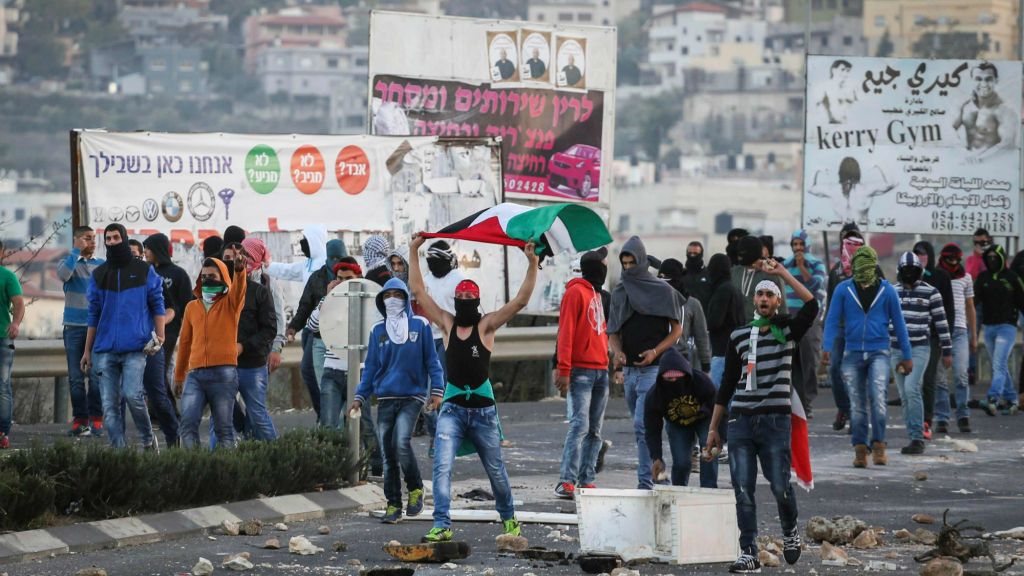
If you hate the State of Israel so much that you call for its destruction or express support for terrorists killing its people, you don’t deserve the privilege of holding Israeli citizenship, with all the benefits that entails. Certainly you shouldn’t be allowed to sit in parliament on the taxpayer’s dime and agitate against the very state you’re representing.
This ostensibly logical argumentation underpins recent efforts, pushed by far-right lawmakers and even the prime minister, to stem the tide of anti-Israel agitation by Arab-Israeli lawmakers and pro-Palestinian protestors on the streets in Jerusalem and nationwide.
However, it is ethically problematic and legally complex.
That apparently won’t stop the government from trying: “I will instruct the interior minister to evaluate revoking the citizenship of those who call for the destruction of the State of Israel,” Prime Minister Benjamin Netanyahu declared this week, apparently referring to Israeli Arabs who protested the killing Friday night of a 22-year-old man in the Galilee town of Kafr Kanna.
Acting against Knesset members
On Sunday, the Ministerial Committee for Legislation was set to discuss a bill that would strip an MK’s parliamentary seat if the lawmaker expressed support for an armed campaign of an enemy state or terror group against Israel during a war or military action. The discussion was pushed off for two weeks. But the debate persists, with right-wing politicians hoping for the rapid ouster, especially, of MK Hanin Zoabi (Balad), who has empathized with armed resistance against Israel.
“She makes strong statements on Hamas websites. We don’t think that’s suitable for a member of Knesset, who is supposed to represent her public in the Knesset, to specifically call for action against Israel, and it is about time that this MK should not be allowed to continue,” MK Faina Kirschenbaum (Yisrael Beytenu) said this week.

Zoabi is a controversial figure, who participated in the 2010 flotilla that sought to break the Gaza blockade and ended with the death of nine Turkish pro-Palestinian activists. In June, she said the kidnappers of Naftali Fraenkel, Gil-ad Shaar, and Eyal Yifrach — three Israeli teens who were later found killed — were “not terrorists.”
While many Israelis’ anger and resentment at such positions may be understandable, stripping an elected parliamentarian of his or her mandate is not so simple in a country that values free speech and abides by the rule of law.
“As of today, the Knesset is unable to do such a thing,” said Amir Fuchs, a researcher at the Israeli Democracy Institute and head of its Defending Democratic Values project. “If an MK indeed expressed support for terrorism he can be convicted. And after a conviction that includes moral turpitude, his tenure expires.”
‘Impeaching an incumbent MK without a criminal conviction is really not considered acceptable in a democracy’
However, impeaching an incumbent MK by a vote of parliament, without a criminal conviction, “is really not considered acceptable in a democracy,” he added.
That doesn’t mean that it can’t happen. But before the proposed legislation could become binding, the Basic Law: The Knesset would have to be amended. Paragraph six clearly states that “every Israel national who on the day of the admission of a candidates list containing his name is twenty-one years of age or over shall have the right to be elected to the Knesset unless a court has deprived him of that right by virtue of any Law.” In other words, supporting terrorism is indeed illegal, but a lawmaker would have to be convicted before he or she could be stripped off his mandate.
It doesn’t take much to change the Basic Law. Once greenlighted by the Ministerial Committee for Legislation, the bill would have to be discussed twice in the Constitution, Law and Justice Committee and could then be passed in three readings in the Knesset with a simple majority.
If the Knesset voted to change a Basic Law, the Supreme Court would likely refrain from intervening. While it theoretically has to the power to do so, there is no precedent for such a case.
Passport punishment
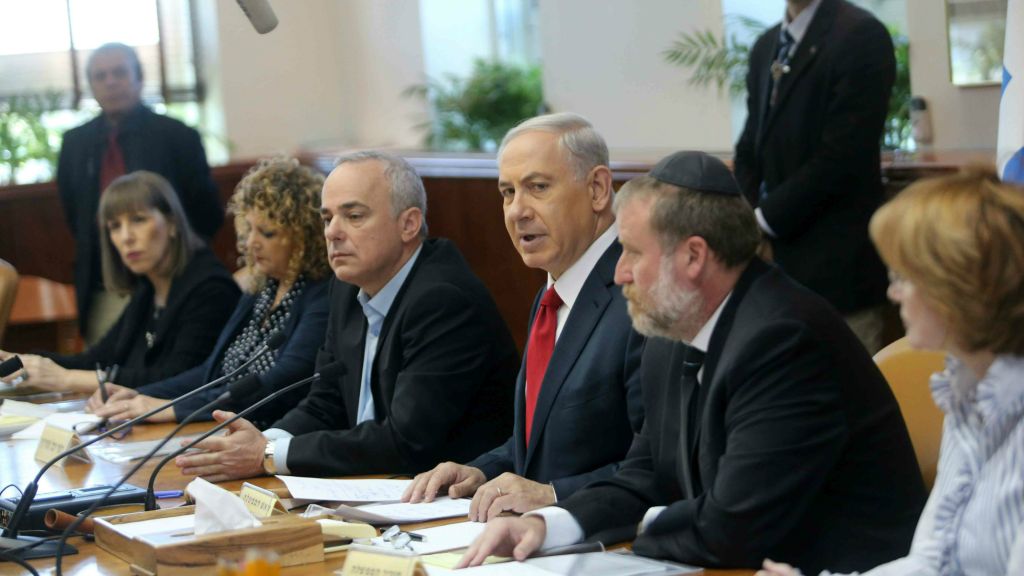
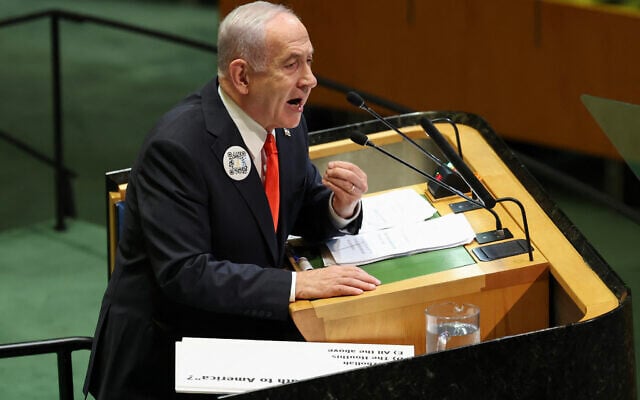
What about Netanyahu’s idea to punish Israelis who call for Israel’s destruction by stripping them of their citizenship? Apparently he really means it. He repeated the threat twice early this week, and on Monday, at the beginning of the weekly Likud faction meeting, declared to “all those who are shouting against Israel and demonstrating against it — you are welcome to move to the Palestinian Authority or to Gaza, Israel won’t stand in the way.”
The idea is not really new. In 2011, the Knesset passed a law, proposed by Yisrael Beytenu MK David Rotem, that allows the Supreme Court to revoke the citizenship of Israelis convicted of terrorism or espionage. At the time, Foreign Minister Avigdor Liberman praised the move as a step toward “contending with the phenomenon of exploiting democracy in order to subvert it.”
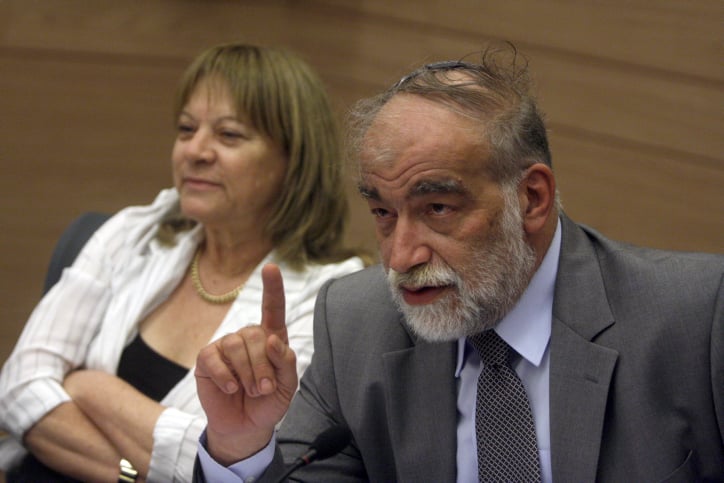
But Netanyahu’s plan takes this idea a significant step further. He seeks to punish Israelis for merely calling for Israel’s destruction, even if they have done nothing to further their goal. Yet more problematic is the prime minister’s apparent intention to transfer the authority to revoke a person’s nationality from the courts to the cabinet. A judge is supposed to be an independent arbiter of the law; the interior minister is a political figure who worries chiefly about his party and his popularity.
Both initiatives — to impeach MKs and to take away citizens’ nationality — threaten freedom of expression in radical ways, said Debbie Gild-Hayo, director of policy advocacy at the Association for Civil Rights in Israel. “As is known, the importance of freedom of expression lies precisely in protecting extreme and controversial expressions.”
In recent years, the Knesset has seen a trickle of anti-democratic bills that would drastically impede freedom of expression in various ways, she lamented. “These two latest initiatives are going down the same route but threaten to worsen dramatically the harm caused, because the sanctions they propose are particularly harsh and violate basic human rights, such as the right to vote and to be elected to the Knesset, or the right to citizenship.”
Some courts can revoke citizenship; ministers can’t
Indeed, citizenship is considered a basic right across the globe. “Everyone has the right to a nationality,” according to article 15 of the 1948 Universal Declaration of Human Rights. Therefore, states such as Canada, Croatia, Romania, the Netherlands, Poland, the Czech Republic and the Nordic States have no mechanism at all that would allow the government to strip nationals of their citizenship.
Other states, even democracies, do have elaborate provisions for the revocation of citizenship, according to a 2010 scholarly article [Hebrew link] on the matter by the Israel Democracy Institute’s Talya Steiner and Lina Saba-Habesch. The authorities in Great Britain and Greece, for example, can relatively easily rescind someone’s citizenship if he or she acted against the interest of the state, they wrote.
France, Germany, Austria, Italy, Australia and others allow for the revocation of citizenship if subjects join foreign armies.
American citizenship can be repealed in rare cases such as treason or attempts to overthrow the government, but only if a person was naturalized. This hasn’t happened in more than 40 years. Natural-born US citizens cannot have their nationality forcibly revoked.
But all countries that give themselves the right to void a person’s citizenship have one thing in common, Steiner and Saba-Habesch noted: this measure is only taken in the framework of legal proceedings. A court may do it. A political appointee like the interior minister, as Netanyahu wants, may not.
‘If violence continues and it will be impossible to drive safely on Israel’s streets, than such a law will become a reality’
In addition to the universal questions about repealing a person’s citizenship, the situation in Israel is yet more explosive since the threat of such a measure hangs exclusively over the heads of Arab Israelis, civil rights activists say. So far, no MK has proposed to revoke the nationality of Israeli Jews, not even of those guilty of nationally motivated crimes.
In the context of the recent tensions in Jerusalem and the Galilee, such legislative initiatives are especially troubling, “because they again convey a problematic message to the country’s Arab citizens, that their rights are always ‘on probation,’” the Association for Civil Rights’ Gild-Hayo said.
Netanyahu’s statements this week should be understood more as a warning than announcement of new government policy, according to Hebrew University political scientist Menachem Hofnung, an expert on civil liberties and constitutional politics: If the terror attacks and the anti-Israeli protests don’t subside, the prime minister is warning, the government will move ahead with his plan. “Netanyahu is saying, there is a limit.”
Hofnung added: I don’t think this plan will be actualized soon.” But, he went on, “if the trend [of violence] continues and it becomes impossible to walk or drive safely on Israel’s streets, then [such a law] will become a reality.”
Defenders of democracy, internationally and locally, would be aghast. “The revocation of citizenship is an extreme sanction,” Steiner and Saba-Habesch opined, “which a democratic state should avoid, and resort to only in extreme cases.”







- Israel & the Region
- Israel Inside
- Israeli citizenship
- ACRI Association for Civil Rights in Israel
- IDI Israel Democracy Institute
- citizenship
- Benjamin Netanyahu
- Hanin Zoabi
- Yisrael Beytenu party
- democracy in the Middle East
- Knesset legislation
- Ministerial Committee for Legislation
- freedom of speech
- David Rotem
- Kafr Kanna
- Basic Laws
The Times of Israel Community.