

Several cities keep schools shut despite revised guidelines allowing them to reopen
Ashkelon, Ariel and Dimona decide conditions are not yet suitable to reopen their education systems, though the Home Front Command designated them as areas at lower risk
 Add ToI as a Preferred Source on Google
Rossella Tercatin is The Times of Israel's archaeology and religions reporter.
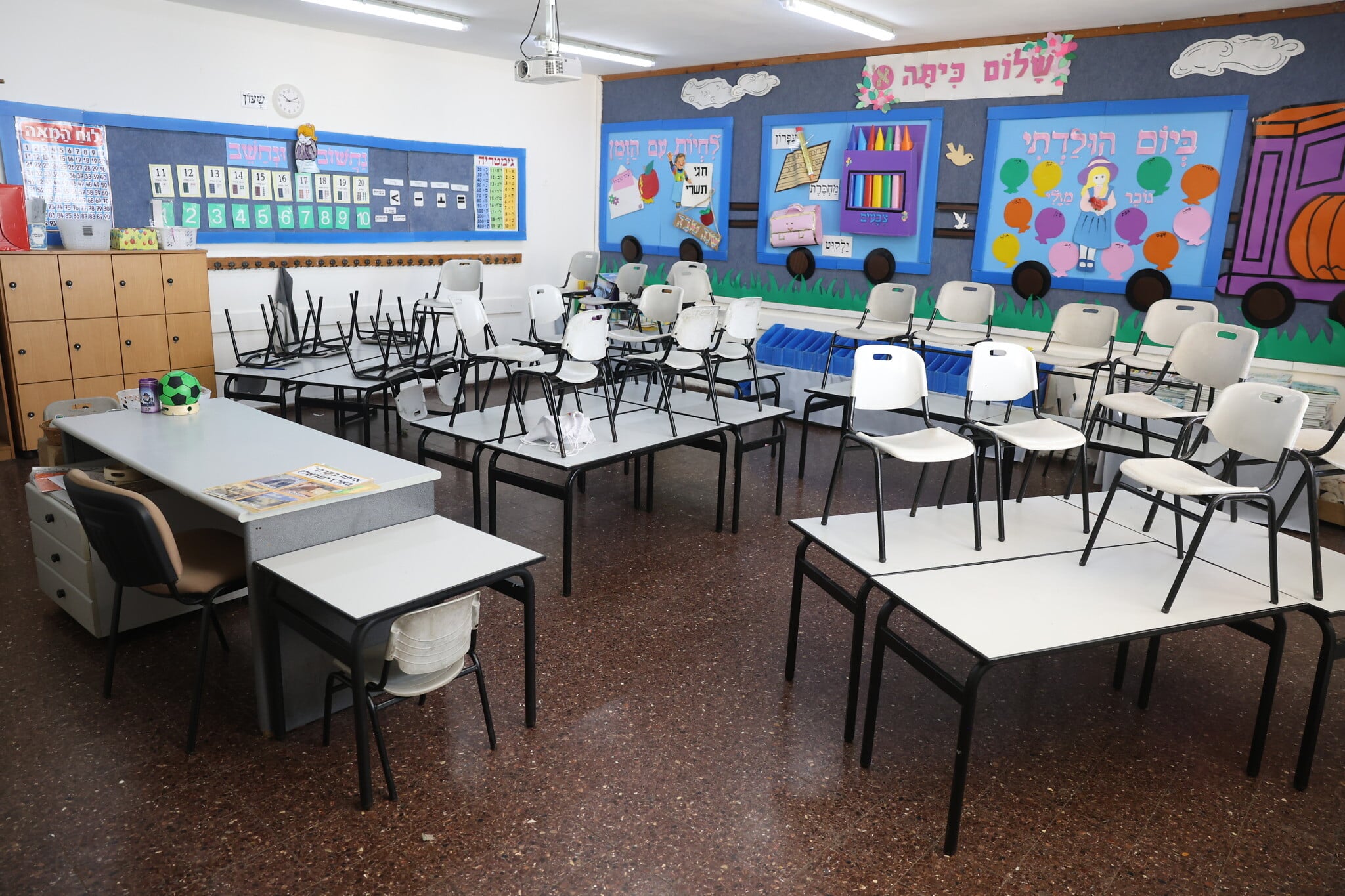
Several cities and towns, including Ashkelon, Ariel in the West Bank, and Dimona, announced they would not reopen schools on Monday, despite being allowed to do so under the Home Front Command guidelines issued on Saturday night.
“We will not take any risk when it comes to our children,” Ashkelon Mayor Tomer Glam said in a statement published on the municipality’s website.
“Despite the recent easing of the Home Front Command guidelines allowing schools to reopen, the threat has not disappeared. Sirens continue to sound and attacks are still ongoing,” he noted. “We know this is a difficult time that directly disrupts your daily lives. However, the only consideration guiding us — and I am sure it is the same for you — is the safety of our children.
“Although we are fully prepared for any possible scenario, educational institutions will reopen only when we know that our children are truly safe and protected,” Glam added.
Last week, Education Minister Yoav Kisch unveiled a plan to reopen schools in areas designated as “yellow,” or at lower risk of attacks, in a color-coding system used by the Home Front Command, provided the schools have access to shelters. Schools have been closed nationwide since February 18, when Israel and the US struck Iran, launching the current war.
On Saturday night, for the first time, some areas in the country were labeled as yellow, including the Beit She’an Valley, Jordan Valley, West Bank, Dead Sea area, West Lachish (where Ashkelon is located), the Gaza border communities, Western Negev, Southern Negev, and Arava.
The Education Ministry stressed that it would take 24 hours for local authorities and schools to prepare, setting Monday as the first day that schools could open.
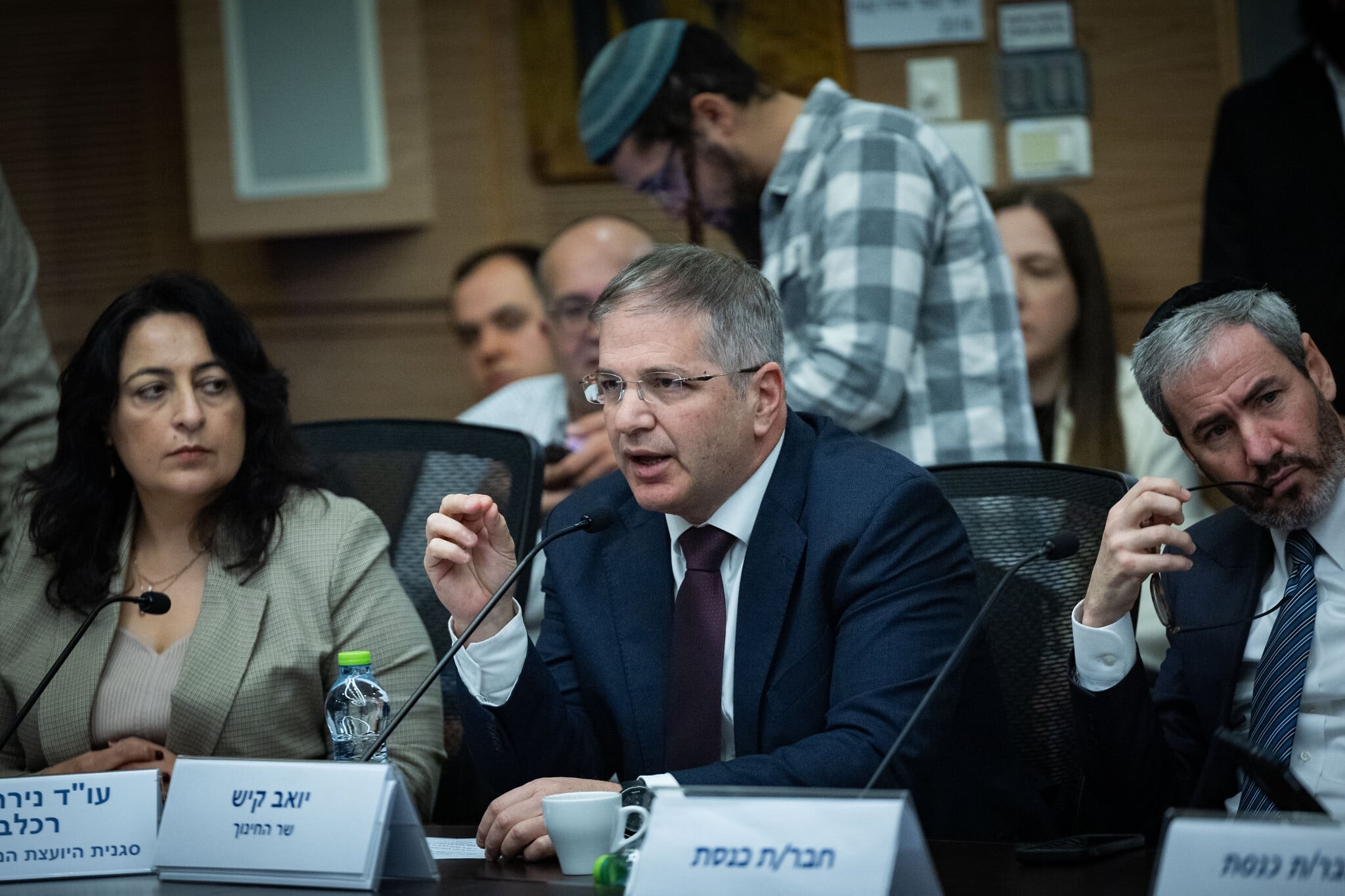
According to an Education Ministry spokesperson, some 390,000 students live in those areas, including children in daycares and in all the grades.
However, several municipalities have announced they do not see the conditions as suitable to reopen their education systems yet.
“Your safety is my most important mission,” Beny Biton, the mayor of Dimona in the Negev Desert, wrote in a message on his Facebook page addressing the city’s residents on Sunday.
“We have decided not to open the city’s education system,” he said, noting the two sirens that sounded in the city earlier in the morning. “While we understand the desire to return to a normal life, we are examining all aspects of the situation and recognize that the safety of our children is the most important thing of all.”
The Ariel Municipality also announced on Saturday night that schools would not reopen on Monday.
“Mayor Yair Chetboun and the city administration decided that classes will not take place in the city of Ariel on Monday, March 16, 2026, and that learning will instead be conducted remotely,” the municipality said in a statement. “Situation assessments will continue to be held daily, during which decisions will be made regarding the reopening of educational institutions going forward.”
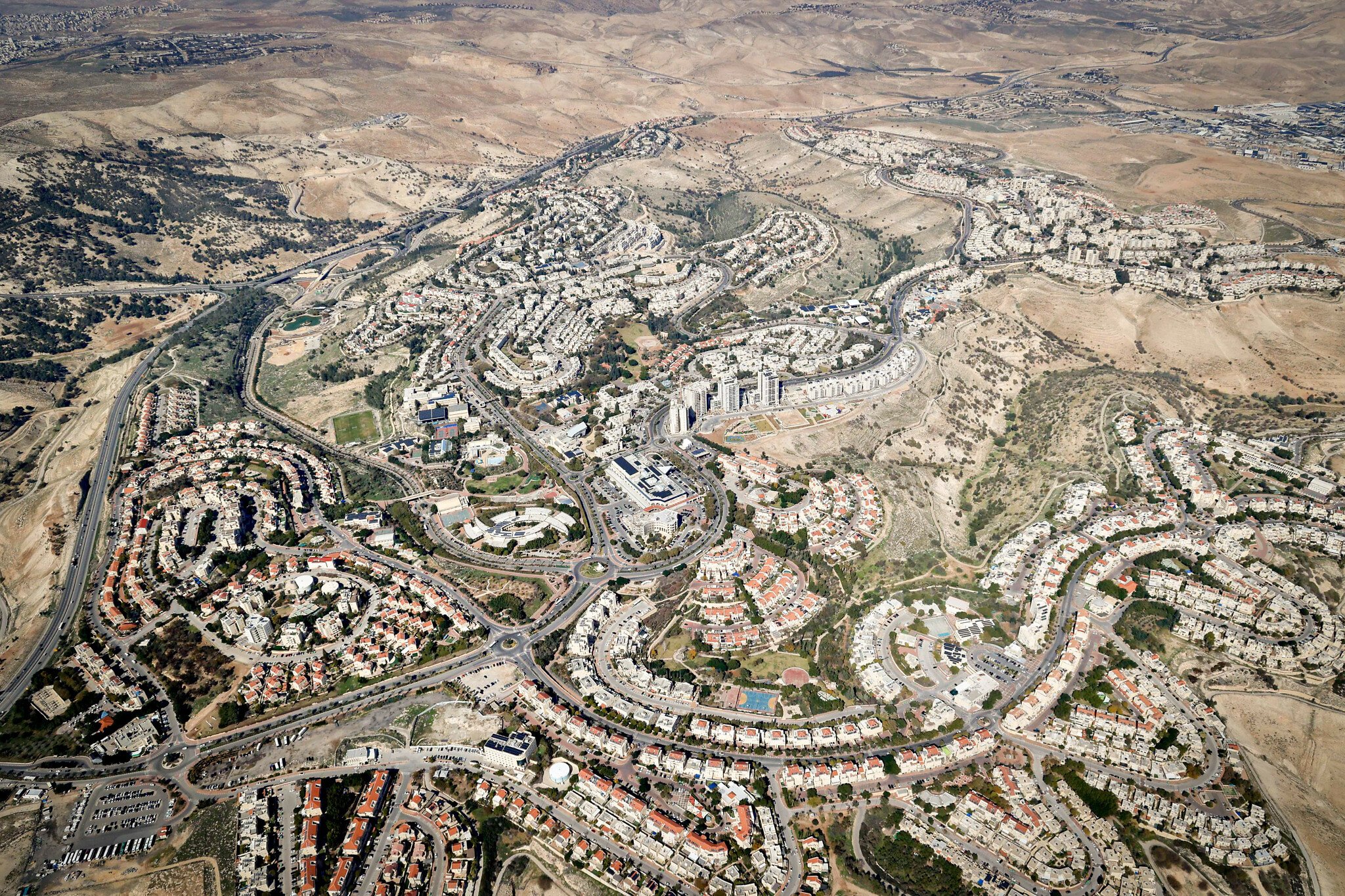
At the same time, the settlement of Ma’ale Adumin in the West Bank decided to partially reopen its education system, Mayor Guy Yifrah announced on Facebook.
“We are giving you the opportunity; you make the final decision,” he wrote, addressing the city’s residents. “Parents who do not wish to send their children to school are not required to do so.”
According to the statement, kindergartens in the city that have fewer than 20 children will be open until 2 p.m., with no afternoon program, while those with more than 20 children will operate on a rotation basis, with half of the children attending classes every other day. Public education for children under 3 will remain closed.
In elementary schools, only grades 1-2 will return to in-person classes, with the rest of the grades continuing to learn remotely. In middle schools, one grade level will study in person each day on a rotating basis, with remote learning the rest of the time. In high schools, grades 11-12 will return to school, while grade 10 will continue to learn remotely.
Ma’ale Adumin was among the local authorities that had expressed interest in reopening its school after Kisch announced the plan last week, together with Jerusalem. The capital, however, remained red in the Home Front Command’s assessment.
A spokesperson for Sderot, the largest city among the Gaza border communities, told The Times of Israel that on Sunday night the municipality also decided to partially reopen schools on Monday.
Among other areas that have made a similar decision are other Gaza border communities such as Kibbutz Be’eri, Nir Oz and Kissufim, the Arava, Mitzpeh Ramon and the settlements in Gush Etzion and the South Hebron hills in the West Bank.






The Times of Israel Community.