

Shortage of Palestinian workers at Israeli building sites leaves hole on both sides
With almost half of construction sites shut, workers from West Bank are likely to return under tight security, following general ban in wake of Hamas’s October 7 onslaught
 Add ToI as a Preferred Source on Google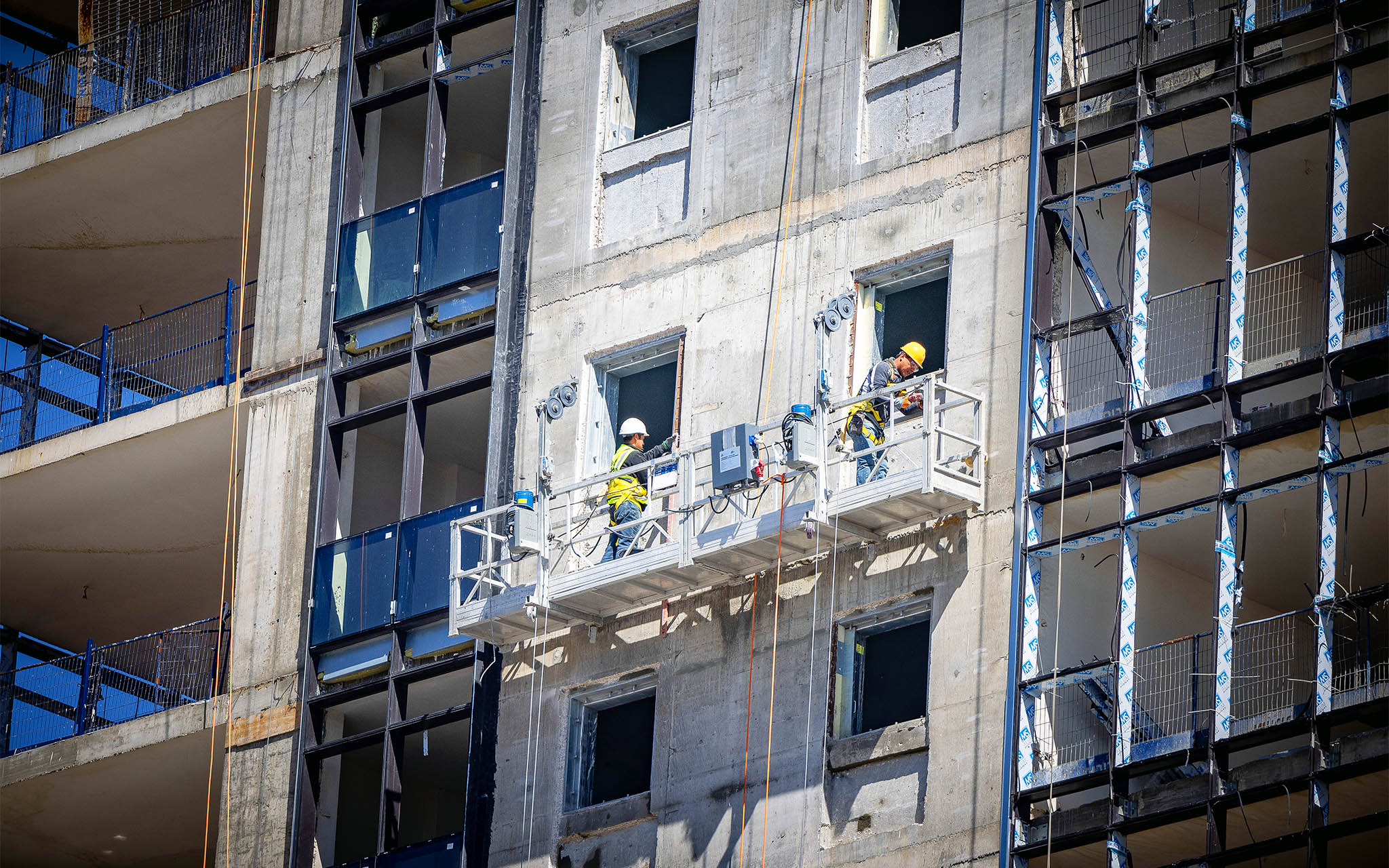
A buzz saw gnashes against metal pipes in one corner of a cavernous warehouse being built in the foothills of Jerusalem. Far on the other side of the dim hall, two workers grapple with a pit of unfinished flooring. All the rest is empty space.
Just 25 workers now toil on the three-story building, where six months earlier they numbered 125.
The missing workers are among some 200,000 Palestinians who used to commute daily from the West Bank, plus 18,500 from Gaza, all of whose work permits were canceled after Hamas’s October 7 onslaught on southern Israel, leaving an economic hole on both sides of the border.
They include around 80,000 Palestinians specializing in iron work, flooring, form work and plastering, who normally do the hard initial labor at most Israeli construction sites.
For Palestinians, it means families have been abruptly deprived of income from laborers who, in Israel, can earn several times the wages they would receive at home.
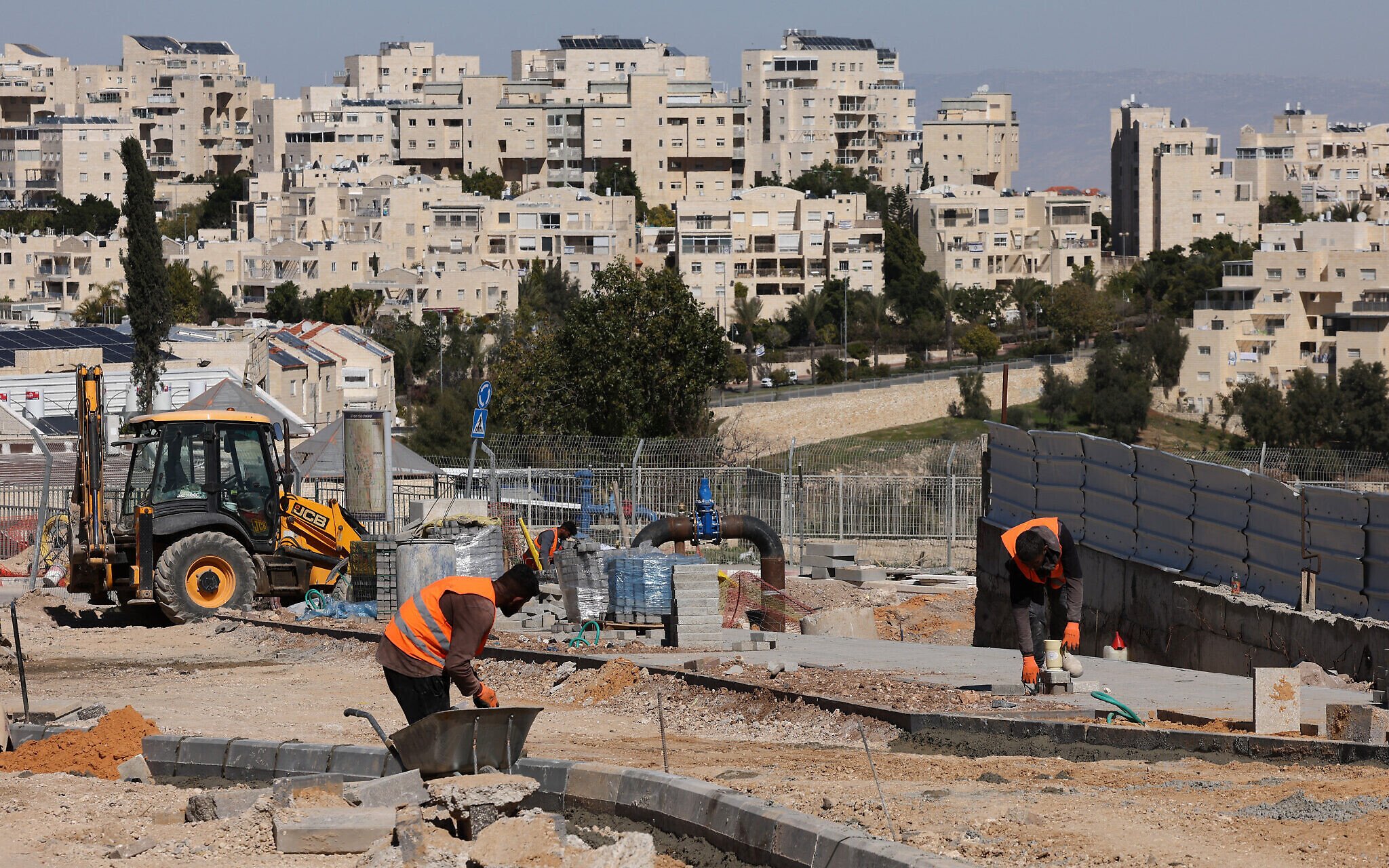
“I used to work well, and everything was fine. We were dependent on this work, with no other source of income,” said Mohammad Dabous, who for years traveled each day from his village Nilin in the northern West Bank to work on building sites in Modiin, a city just across the border in Israel.
“People had financial responsibilities, payments, checks, which all bounced back, whether for building or payments for cars, they are all in trouble,” he told Reuters.
The loss of wages has compounded the economic impact from the war in Gaza and unrest in the West Bank. An International Labor Organization report in March said unemployment in the West Bank and Gaza is seen rising above 50%, with a total of 500,000 jobs lost.
For Israel, the acute shortage of Palestinian workers following the October 7 Hamas massacre in Israeli towns, in which terrorists killed close to 1,200 people, brought building to a shuddering halt. Residential construction fell by 95% late last year, contributing to an overall 19% slump in economic activity.
Other sectors, such as agriculture and services, were also hit, but none as much as construction, which accounts for 6% of Israel’s $500 billion economy.
The sector has since recovered somewhat, relying in part on workers shipped in from Asian countries, but 40% of construction is still shut down. That will drag down the overall economy by 2%-3%, depending on the pace at which replacement foreign workers arrive, said Adi Brender, the Bank of Israel’s head of research. A halt to construction would worsen a housing shortage, contributing to inflation.
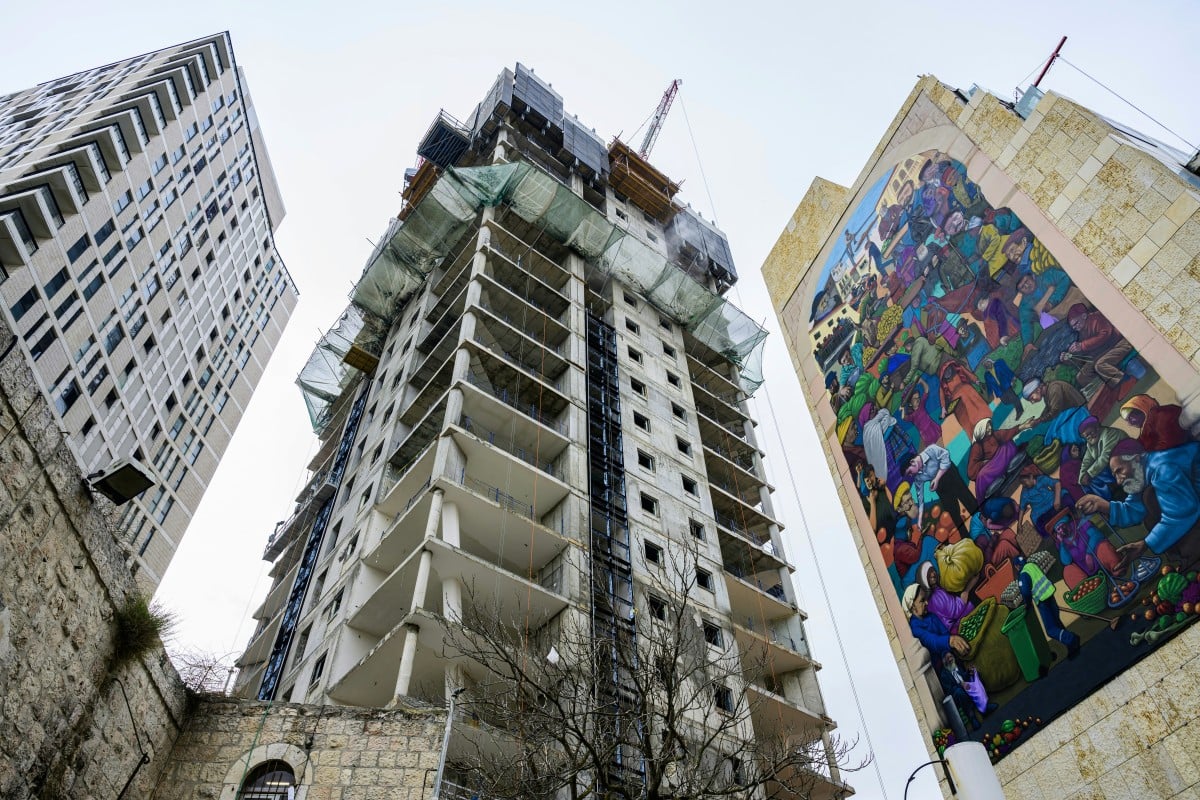
The warehouse being built in the Jerusalem foothills was supposed to be ready in December; now the contractors, Limor Brothers, hope to finish by summer.
“Today, we’re not looking to make a profit,” said the contractor’s manager of personnel and logistics, Ahmad Sharha. “We’re looking to finish the projects and not lose more money than we’ve already lost since the start of the war.”
Contractors say they are bleeding money and worried about fines from clients for missing deadlines. Wages for workers who are still available have as much as doubled.
“Every day, every week, contractors are failing or they’re stopping to work in the sector by their own decision,” said Raul Srugo, president of the Israel Builders Association.
Israel is fast-tracking recruitment of tens of thousands of foreign workers, with a quota of 65,000 authorized to come from countries such as India, Sri Lanka and Uzbekistan.
There is also early talk of letting Palestinians return. Some Israeli security officials worry that the loss of earnings in the West Bank could be making instability there worse.
A “limited pilot” for allowing in Palestinians will be discussed by the cabinet, Prime Minister Benjamin Netanyahu’s office said.
“The estimate is that the Palestinian workers will return, the question is when and how many,” said Yehuda Morgenstern, director general of the Construction and Housing Ministry. “Even if all the Palestinians return, we still need more working
hands.”
If Palestinian workers are allowed back, they will undergo more scrutiny and checks at border crossings even more onerous than before, said one Israeli security official.
Some Israelis remain opposed, including municipal leaders.
“Bringing those workers into Israel means risking the lives of my residents and I am not ready for that,” said Avi Elkabatz, mayor of Afula, a small city in the north. “There are many solutions for bringing in foreign workers from different countries without endangering the lives of Israeli citizens.”










The Times of Israel Community.