

WATCH: Rare ‘blood moon’ event illuminates night sky
First total eclipse, combined with unusually large moon, since 1982; won’t recur for 18 years
 Add ToI as a Preferred Source on Google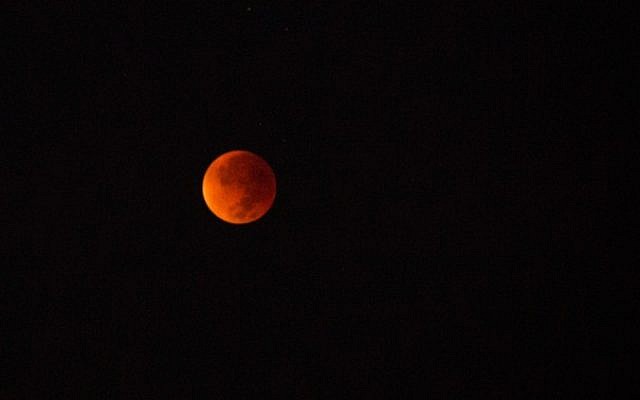
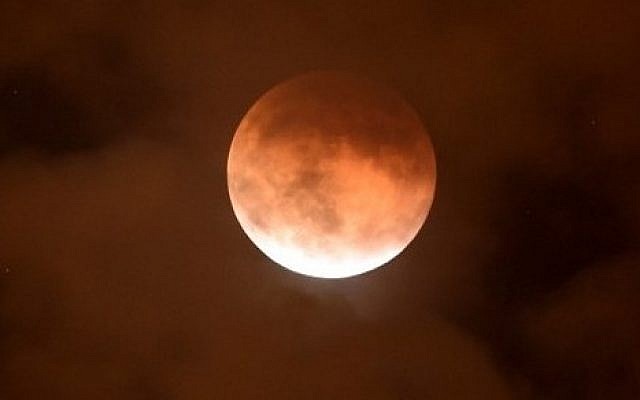
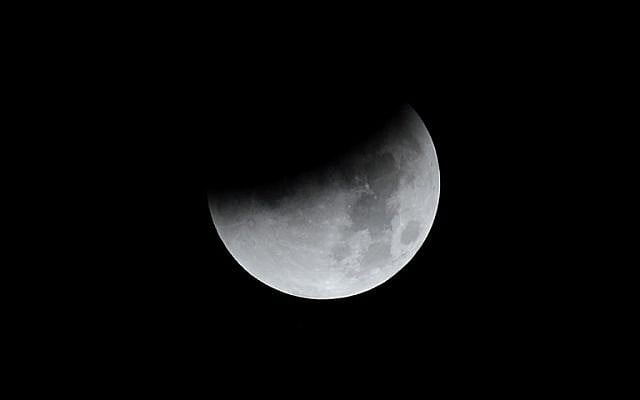
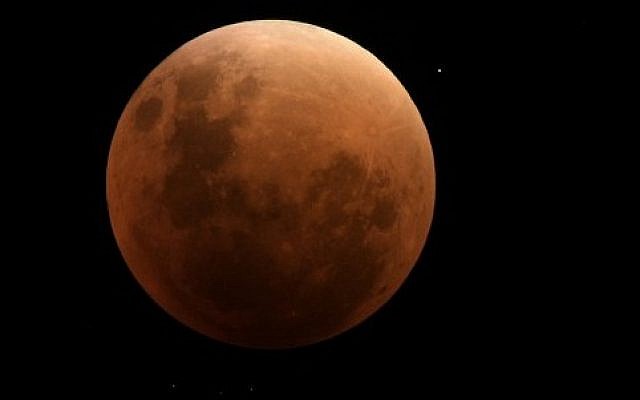
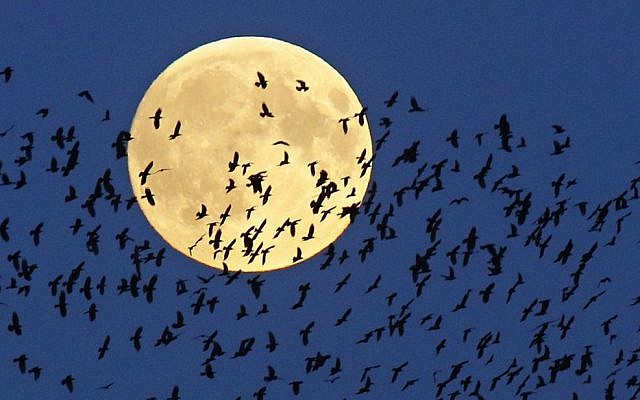
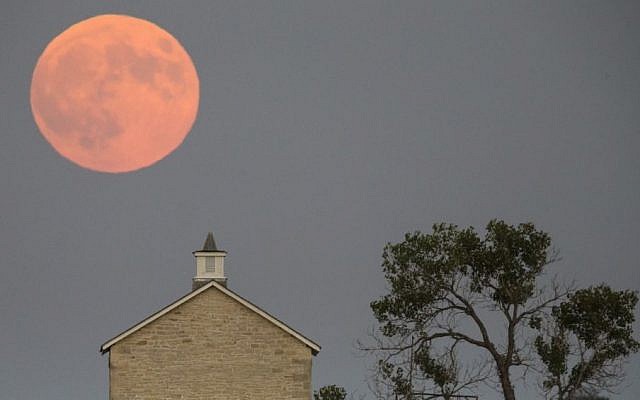
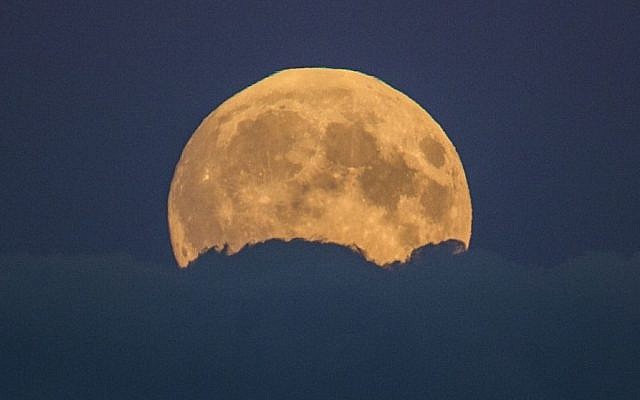
Stargazers across the world watched a rare total lunar eclipse combined with a so-called supermoon Sunday night.
In Israel the rare coupling was visible starting at 3:10 a.m. (0110 GMT) and reached its peak at 5:47 a.m.
It was the first time the events have made a twin appearance since 1982, and they won’t again until 2033.
When a full moon makes its closest approach to Earth, it appears bigger and brighter than usual and is known as a supermoon. That will coincide with a full lunar eclipse where the moon, Earth and sun will be lined up, with Earth’s shadow totally obscuring the moon.
Watch a live stream of the eclipse as it progresses here:
Blood moons are full lunar eclipses in which the sun’s rays entering through the earth’s atmosphere make for a red, or blood-like, appearance.
When a full or new moon makes its closest approach to Earth, that’s a supermoon. Although still about 220,000 miles (354,000 kilometers) away, this full moon looks bigger and brighter than usual. In fact, it will be the closest full moon of the year, about 30,000 miles (48,000 kilometers) closer than the average distance. (The moon’s orbit is far from a perfect circle.)
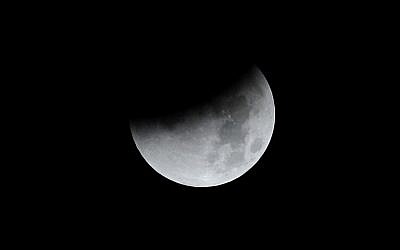
This eclipse marks the end of a tetrad, or series of four total lunar eclipses set six months apart. This series began in April 2014.
The 21st century will see eight of these tetrads, an uncommonly good run. From 1600 to 1900, there were none.
Observatories marked the celestial event with public telescope viewing, although magnifying devices weren’t necessary; the eclipse was easily visible with the naked eye. Astronomers urged stargazers to simply look to the east.
NASA planetary scientist Noah Petro is hoping the celestial event will ignite more interest in the moon. He is deputy project scientist for the Lunar Reconnaissance Orbiter, or LRO, which has been studying the moon from lunar orbit since 2009. “The moon’s a dynamic place,” Petro said. “We’re seeing changes on the surface of the moon from LRO. We’re seeing that it’s not this static dead body in the sky … it’s this great astronomical object that we have in our backyard, essentially. So people should get out and start looking at it.”
The rare confluence of a lunar eclipse and a super moon had prompted talk in some Christian circles of an impending apocalypse, but NASA reassured those who may be worried that no large object is likely to strike the Earth in the next few hundred years.










The Times of Israel Community.