

Startups dive in to keep birds off fishponds, help swimmers improve their game
National Center for Blue Economy showcases sustainable water and marine tech at third Blue Tech Summit in Haifa, northern Israel
 Add ToI as a Preferred Source on Google
Sue Surkes is The Times of Israel's environment reporter
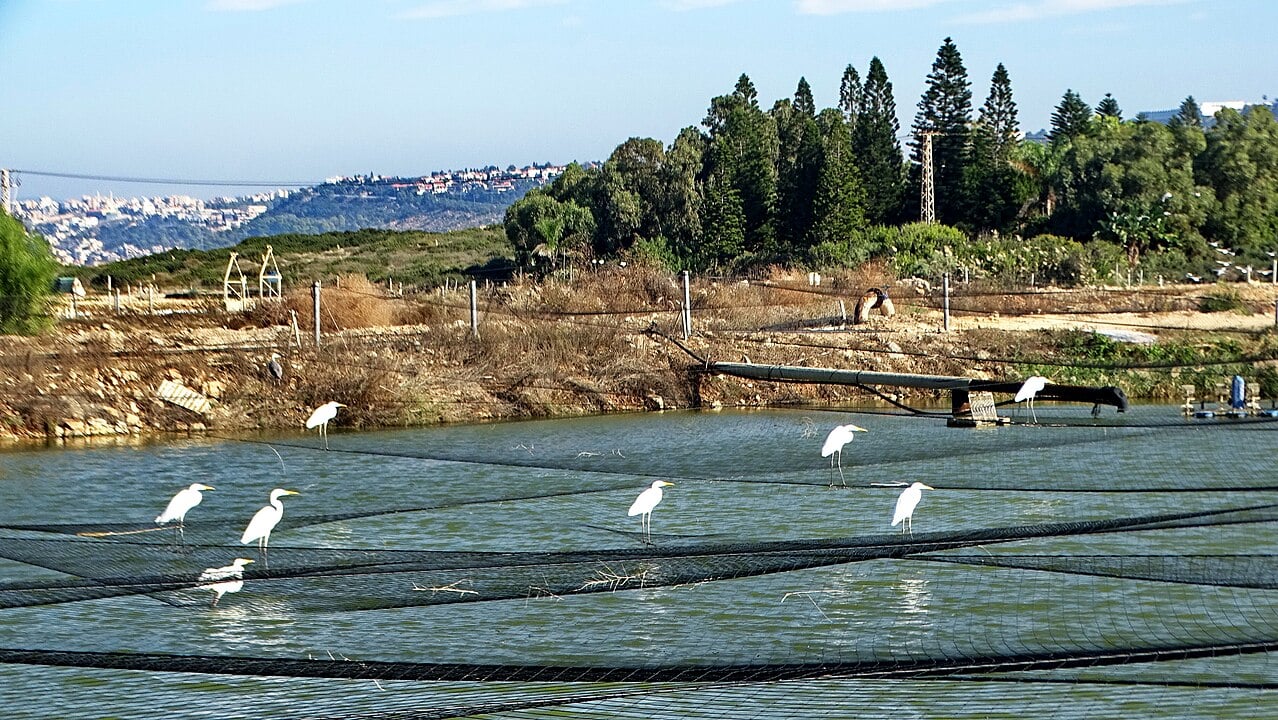
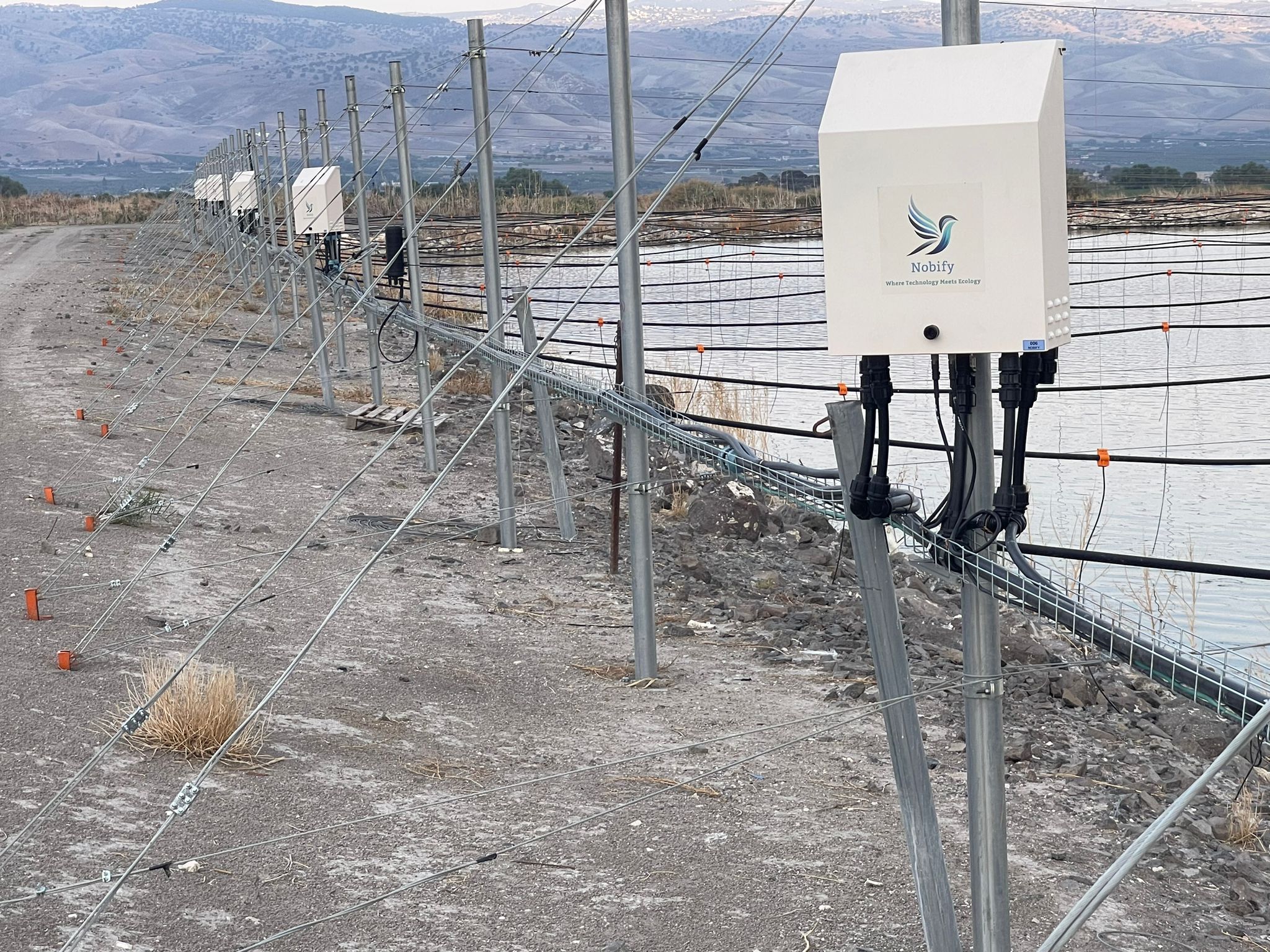
Nobify’s technique for scaring birds off fishponds sounded simple enough — erect rows of pipes like those used for drip irrigation, and shoot air at any bird that approaches.
But behind this lies deep knowledge about bird behavior, a system that locates birds in real time using high-resolution detection cameras and advanced data analytics, and special hardware that shoots compressed air down thin black hoses, suspended from pipes. The hoses whip around exactly where the birds are, and scare them away without touching them.
The project aims to stop birds from eating fish and transmitting diseases to fish ponds, and from defecating on solar panels and reducing their energy efficiency.
Six years in the making and already operating in fishponds in northeast Israel and reservoirs run by the Mekorot water company, it was one of a slew of startup products pitching for attention at this year’s third annual Blue Tech Summit in Haifa, northern Israel, on Tuesday.
CEO Ofir Tessler said his knowledge about bird-related risks came from his military service in the Israel Air Force.
He explained that Nobify’s system was more resilient, efficient, and sustainable than nets, which were clumsy to spread and often trapped birds within them.
Nobify, based in southern Israel, is conducting its first seed round and hoping to raise $2 million.
A virtual swimming trainer
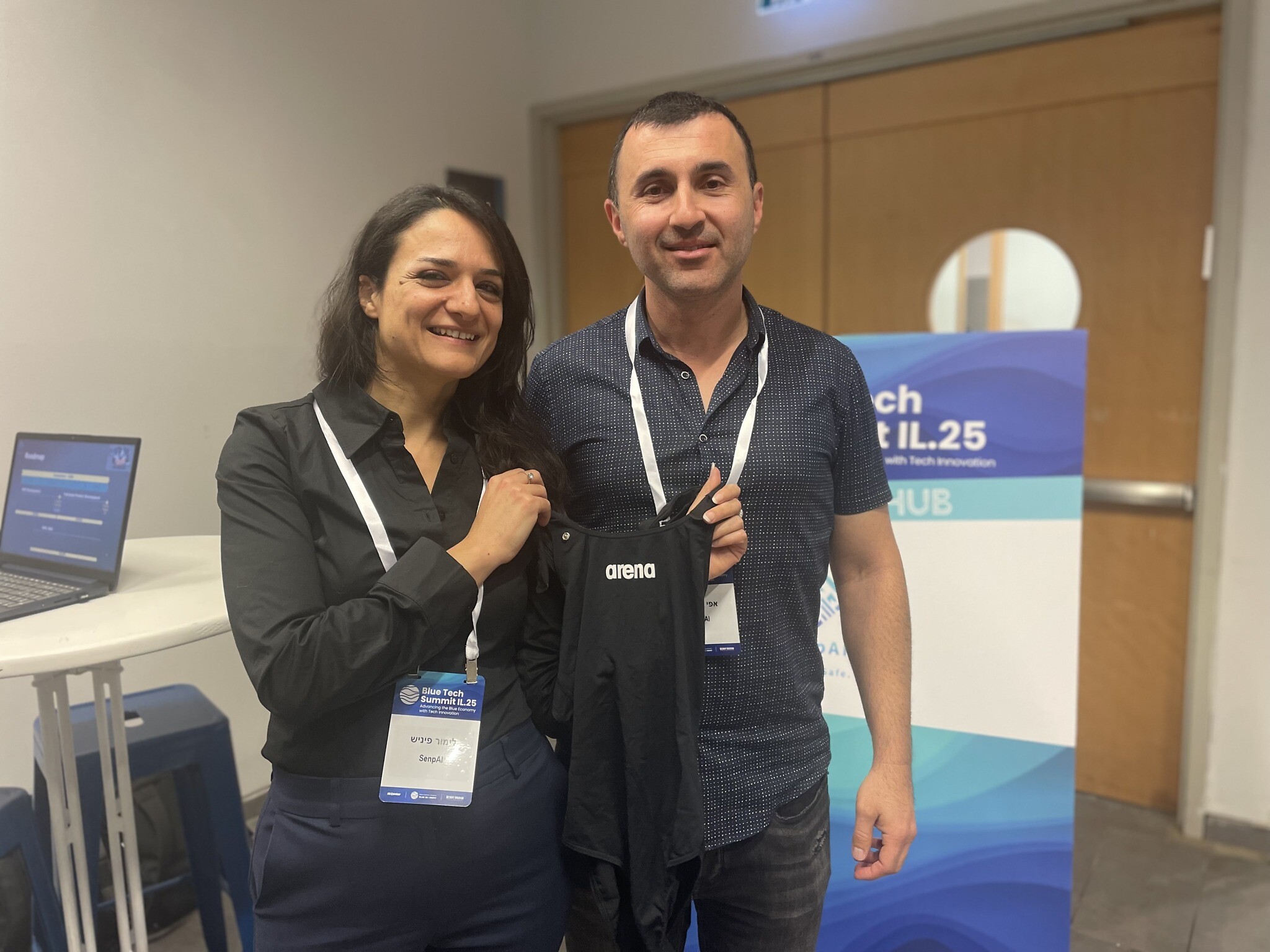
Also water-focused, SenpAI is developing a virtual swimming trainer that utilizes sensors, algorithms, and an application to help professional and hobby swimmers improve their technique and minimize injury.
Already patented in Israel, the US, Italy, and the UK, and awaiting approval elsewhere, the AI-powered technology provides way more information than existing wrist and body trackers, according to CEO Limor Finish. Finish, like her CTO Effi Pinhasov, spent 20 years working in Israel’s defense industries.
The product, whose sensors are roughly the size of hearing aid batteries, learns the swimmer’s style and provides feedback and recommendations on everything from body angle, speed, and acceleration to injury prediction and prevention. It offers an animated version of the user swimming, along with improvement tips.
Still at an early stage of development, a wired version of the sensors has been successfully tested on a real swimmer, Keren Ayzbruch. The ultimate product will be wireless.
Self-funding the project to date, Finish and Pinhasov are hoping to find first-round seed money for SenpAI, which means teacher in Japanese.
Burying CO₂
Rewind is exploring ways to bury biomass (organic material such as wood) to prevent the carbon dioxide that plants use to grow from escaping back into the atmosphere when they die and decompose.
The company is well known in environmental circles for its attempts to halt the escape of carbon dioxide by burying plant biomass deep in the Black Sea, where organic matter has been preserved for thousands of years thanks to a lack of oxygen.
But with slow and cautious progress there, the company has pivoted to terrestrial options for biomass burial.

Since May, it has been working with a coal mine in Georgia to bury sawdust and other wood waste from timber mills in subterranean chambers (stopes) left hollow after the coal has been removed. The mine needs to backfill these cavities anyway to prevent collapse, and so already has the permits to insert the biomass.
Mixed with mud and water to make it viscous, the sawdust is injected into the cavities, “rewinding” the process during which dead plant matter became coal over millions of years.
The company is now moving from the pilot to the commercial phase, and is looking for mine partners worldwide, explained CEO Ram Amar, a longtime climate activist and a member of the board of the Israeli Climate Action Fund, which brings Israeli philanthropists together to fund carbon-slashing projects.
“Today, we can bury around 1,000 tons a month, but we will grow to meet the scale of 100,000 tons per year by 2027,” Amar added.
The money for loading and transporting the sawdust, creating the slurry, injecting it into the ground, and yielding a profit will come from carbon credits.
Today, in an effort to reach net-zero emissions, many companies invest in environmental projects, such as afforestation, to offset or mitigate carbon emissions elsewhere in their operations.








The Times of Israel Community.