

Stuck at home, Independence Day revelers miss out on unusually clean air
Pollution levels in most of Israel are much lower than during same period in previous years as lockdown remains in place for holiday
 Add ToI as a Preferred Source on Google
Sue Surkes is The Times of Israel's environment reporter
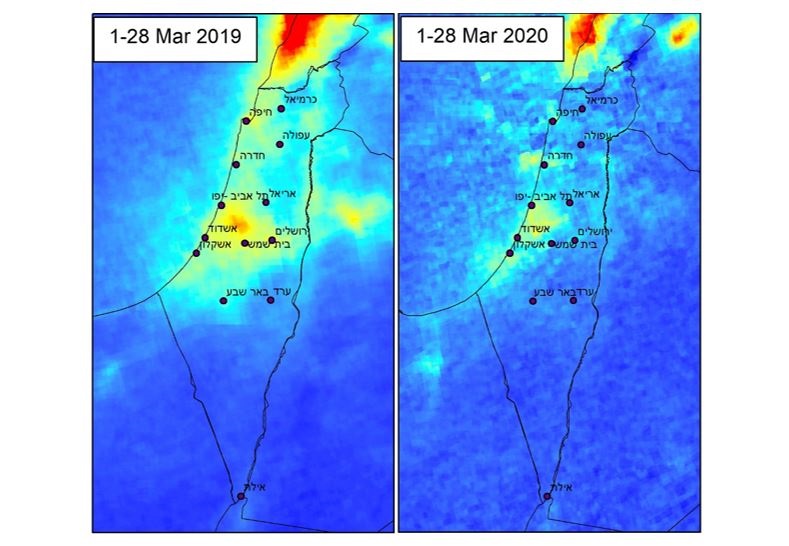
With the coronavirus lockdown still generally in place, including a ban on going further than 100 meters (330 feet) from home in a bid to prevent mass gatherings, grounded Israelis had to enjoy the unusually clean air from their yards or balconies as they celebrated the country’s 72nd Independence Day on Wednesday.
According to the most recent data from monitoring stations collected by the Environmental Protection Ministry between April 19 and 23, the air is cleaner than it has been during the same period in recent years in most areas of the country — similar to measurements taken the previous week.
On April 10, the ministry announced that nitrogen oxides in the air on the eve of the Passover holiday two days previously were 90 percent lower than during the first half of March, before coronavirus-related restrictions on movement were introduced. The levels were even 25% lower than during Yom Kippur in October last year, a holiday that generally sees a massive drop in traffic nationwide.
On April 5, the ministry released satellite images of Israel taken by the SENTINEL-5 mission, part of the European Earth observation program Copernicus, which it said echoed results from local monitoring stations showing a drop in nitrogen dioxide since the coronavirus outbreak began.

Nitrogen dioxide (NO2) is one of a group of gases called nitrogen oxides (NOx). While all of these gases are harmful to human health and the environment, NO2, primarily generated from the burning of fuel by power plants and vehicles, can cause breathing problems and reduce immunity to lung infections caused by viruses such as the coronavirus.
Last week, Amit Bracha, executive director of the environmental advocacy organization Adam Teva V’Din, wrote to the prime minister asking the government to prepare a strategic, multiyear plan that balances economic needs with those of environmental protection, public health and quality of life.

He added, “It’s no secret that a substantial quantity of the underlying illnesses that speed up deaths resulting from coronavirus infection and other infections result from environmental exposure to chronic air pollution, chemicals and pesticides, poor infrastructure in population centers and more.
“In light of that, the next world crisis, the environmental crisis, is knocking on humanity’s door, including on Israel’s door,” Bracha said.






The Times of Israel Community.