

Summit of all fears
The Iran saga keeps chugging along, Peres digs Facebook, and Tel Aviv says goodbye to an eyesore
 Add ToI as a Preferred Source on Google
Joshua Davidovich is The Times of Israel's Deputy Editor
All the papers this morning painted different shades of the ongoing Benjamin Netanyahu and Barack Obama get-together-to-attack-Iran saga. Since our last installment, the prime minister made a Holocaust-tinged case for stopping Iran and the US president and Defense Secretary Leon Panetta seemed like they were trying to talk Netanyahu down.
Yedioth Ahronoth starts things off with a whopper of a misquote of Obama splashed across its front page: “An Israeli attack on Iran will also hurt the United States.” Note to Yedioth editors, there’s no need to put the gist of a statement inside quote marks.
Haaretz takes the same interpretative tack, but bases its headline on the words of a single unnamed Israeli official: In Netanyahu’s equation, rockets on Tel Aviv are preferable to a nuclear Iran. Well, when you put it like that…
Netanyahu-friendly Israel Hayom goes for a panoply of quotes from the prime minister’s words: “masters of our fate,” and “2012 won’t be 1944.”
Maariv goes even straighter, with a scoop that Netanyahu has agreed to give Obama a limited “window,” though this is also based on a single Israeli source in Washington. Though the story seems to indicate it’s Obama who won this round, the story susses out that Netanyahu actually convinced the American leader to shorten said window during their meeting on Monday. “The gap [between the two on timelines] is starting to shrink,” the source tells the newspaper.
All the rest, as is the wont of the Israeli press, is commentary. And among that commentary is an analysis by Haaretz’s Aluf Benn (already posted online the day before) parsing Netanyahu’s speech to mean we are closer than ever to war with Iran. “There are those who believe he’s just a second-guessing coward who would never take it upon himself to initiate a war.… Nevertheless, Netanyahu took on a public obligation on Monday that would make it very hard for him to back away from the path of war with Iran.”
In Israel Hayom, Dan Margalit sees in all the big words and bluster a poker game being played out on the world stage. “One can insist that Netanyahu is speaking out of both sides of his mouth. On one side, he doesn’t object to American attempts to talk with Iran, but he also stands for the right of Israel to defend itself.”
Friends with Syrians
Israeli papers aren’t all doom and diplomacy though. President Shimon Peres‘s entry into the world of Facebook was also front-page news, with pictures of him and Facebook founder Mark Zuckerberg gracing the covers of all three tabloids. (Gray lady Haaretz takes a pass.) Peres makes it plainly clear that he’ll be fishing for Facebook friends, as he tells Zuckerberg. “And when I say friends, I mean firstly people from Syria and Iran. I’ll be happy if my friends are from there.”
Another big story making the rounds is rising electricity prices, which are being blamed partly on tensions with Iran. Yedioth tells the story of the Dahan family of Carmiel, whose bill jumped from NIS 839 a month to NIS 1,904. The electric company also blamed the cold winter, necessitating the use of dryers, heaters and water heaters, for the jump in prices.
Maariv reports that the number of army recruits who wanted to enter combat service is at a three-year low. The March draft saw only 72 percent wanting to slog it out in combat, compared to 79.5 percent a year ago.
Maariv also addresses violence in sports, following an especially chaotic game that saw dozens of fans arrested in Tel Aviv Monday night. Driving its point home, the paper runs a picture of a dummy front page with the headline “Soccer fan killed” and underneath, “Why are we waiting? In the end it will happen. Everyone knows it. It needs to stop now.”
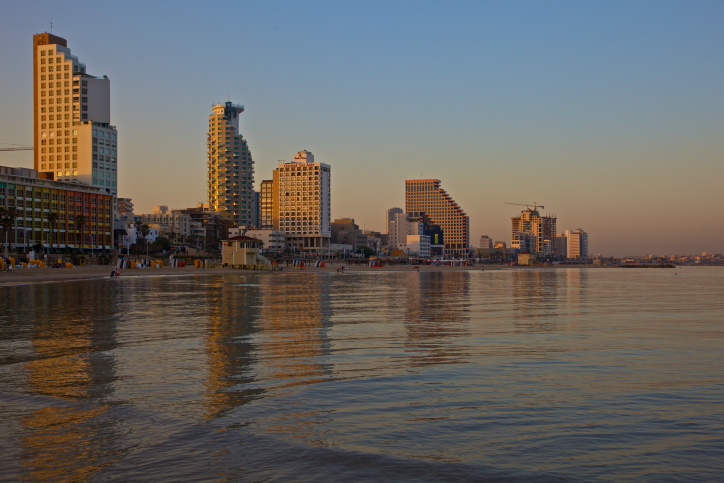
Haaretz says goodbye to one of Tel Aviv beach’s last stalwarts of a bygone era, the Dolphinarium, which will make way for some high-end residential towers. Known of late for the suicide bombing that took place there in 2001, the entertainment complex was once the belle of the beach, before it became a decrepit and uber-familiar part of the landscape. The site is an eyesore, the story says, and broke the continuity of being able to walk along the beach or even get to the water. But what comes next won’t be much better.
“Whoever thinks the Dolphinarium blocked the sea is forgetting that the new building that will be built will block it even more,” the entertainment center’s architect told Haaretz.
Waiting for tsunamis
In Maariv, an optimistic Nadav Haetzni wonders where the political tsunami we were promised last spring is. “It’s true, the disappointment of those same Israelis and Arabs that try to kick us out of the family of nations is difficult. But the facts speak for themselves: The Palestinians tried to isolate us, the Turks worked to humiliate us, Gush Shalom insisted we stand trial at the Hague. And meanwhile, the list of American officials on the line to Tel Aviv is breaking records and the number of European countries deepening diplomatic and intelligence ties with us is without precedent.
Noah Kliger has some ideas in Yedioth on how to stop the spate of hit-and-run car crashes in Israel: Stop allowing excuses. “If you want to lower the phenomenon of hit and run, you need to take action with a strong hand against the criminals and not accept their claims of defense, like ‘I was in shock,’ I lost my senses,’ or ‘I didn’t realize what had happened.'”
Haaretz’s lead editorial is unsurprisingly critical of Netanyahu over his trip to Washington. “Without knowing whether secret understandings were reached, the visit can only be defined as a failure. Netanyahu sought to lay the groundwork for a military operation against Iran, preferably an American operation, but alternatively an Israeli one. From that perspective, he returns from Washington empty-handed, and his government’s policy (which does not necessarily conform to Israeli interests) is in worse shape than when he left.”







The Times of Israel Community.