

Alawite-Sunni violence spills over to Lebanon
Clashes between supporters and opponents of the Assad regime engulf country’s north and south amid political deadlock
 Add ToI as a Preferred Source on Google
Elhanan Miller is the former Arab affairs reporter for The Times of Israel
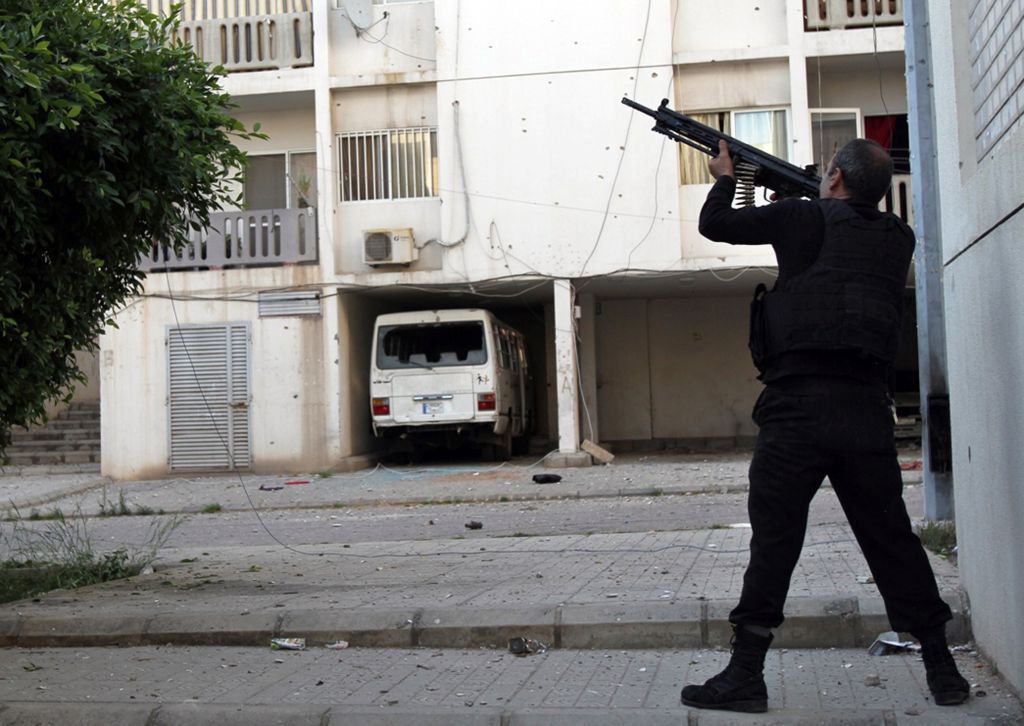
Sectarian violence in Lebanon peaked on Wednesday night when at least seven men were killed and 120 were injured in clashes between Alawite supporters of Syrian President Bashar Assad and Sunni opponents of the Syrian regime in the northern city of Tripoli.
Ongoing fighting between the sides in the neighborhoods of Jabal Mohsen and Bab Tabaneh intensified on Wednesday to include mortar shells and heavy gunfire, local media reported.
The clashes come as Syria’s government, backed by Hezbollah fighters sent from Lebanon, launched a massive offensive this week against the Syrian border city of Qusayr, which contains a sizable Lebanese population.
“There’s a sense in Lebanon that the war in Syria is closer to home than it was two or three weeks ago,” Omri Nir, an expert on Lebanese politics at Jerusalem’s Hebrew University told The Times of Israel. “There is also fear that Hezbollah is dragging Lebanon into the storm.”
In his last public speech on May 9, Hezbollah chief Hassan Nasrallah for the first time acknowledged that his forces were participating in fighting beyond the border. He justified the move with the need to defend Lebanese nationals, mostly of the Shi’ite faith, as well as Shi’ite holy sites in Syria.
If responding to violence against Shi’ites in Syria were left to the Lebanese government, Nasrallah said, nothing more would be done than a letter of protest to the Arab League.
US Secretary of State John Kerry on Wednesday confirmed that there were “several thousand” Hezbollah fighters on the ground in Syria.
Meanwhile, supporters of Islamist Sunni cleric Ahmad Assir from the southern city of Sidon on Wednesday prevented the burial of a Sunni Hezbollah fighter killed in Syria in a local cemetery.
Supporters of Assir sealed the roads leading to the cemetery with burning tires, forcing the funeral to take place at a Shiite cemetery in the city, the Saudi daily A-Sharq Al-Awsat reported.
A statement on Assir’s website said that the move “sent a message to all of Iran’s collaborators in Sidon,” adding that “the city wants you neither alive nor dead.”
Nir, the expert on Lebanese politics, said that tension in Lebanon is exacerbated by a political impasse surrounding a new election law meant to pave the way for parliamentary elections in mid-June. The country is currently ruled by a caretaker government following the resignation of Prime Minister Najib Mikati on March 22, with prime minister-designate Tammam Salam unable to form a new cabinet.
“If no agreement is reached between the political factions, Lebanon could find itself in June with no government or parliament. Everyone is worried of a political vacuum,” Nir said.







The Times of Israel Community.