

The Haggadah according to the Bronfmans
Edgar Bronfman Sr. and his wife, artist Jan Aronson, present their own version of the Passover text
- See more Times of Israel on Google - add us as a Preferred Source
Jessica Steinberg, The Times of Israel's culture and lifestyles editor, covers the Sabra scene from south to north and back to the center
Edgar Bronfman Sr. isn’t the first person who comes to mind when one thinks of Haggadah interpretations. The 83-year-old, thrice-divorced son of a Russian immigrant whiskey distiller — whose children, too, have gained notoriety — is known as a philanthropist and Jewish communal leader.
But his leadership roles in a variety of Jewish organizations over the last 30 years brought Bronfman closer to Judaism, beyond basic philanthropy to Israel and the Jewish Federation movement. When he became president of the World Jewish Congress in 1979, Bronfman began learning Jewish texts, a process that eventually led him to research and write his own version of the Haggadah. It was a personal project that became even more intimate when he asked his wife of 22 years, artist Jan Aronson, to illustrate the edition, leading her to bring her own thoughts and ideas to the book.
The Bronfman Haggadah, put out by art publisher Rizzoli, is the product of their partnership, a colorful, ecumenical, English-language approach to the Passover story, inculcating concepts particularly dear to Bronfman, including the notion that there is no freedom without responsibility.
An email conversation with Edgar Bronfman Sr. and Jan Aronson.
-
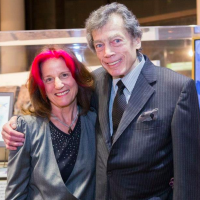
- Jan Aronson and Edgar Bronfman, illustrator and editor of The Bronfman Haggadah (Courtesy The Bronfman Haggadah)
-
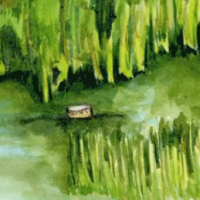
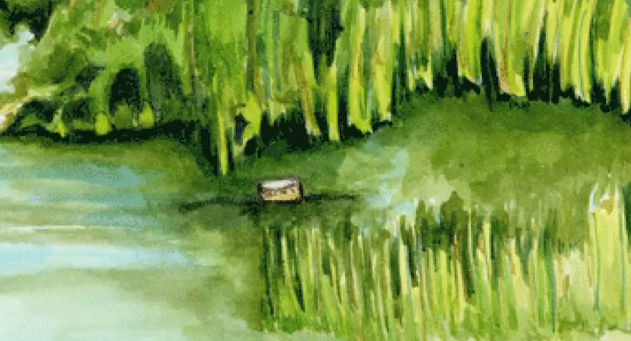
- Aronson wanted to illustrate the great width and length of the Nile River (Courtesy The Bronfman Haggadah)
-
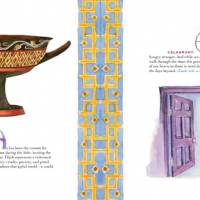
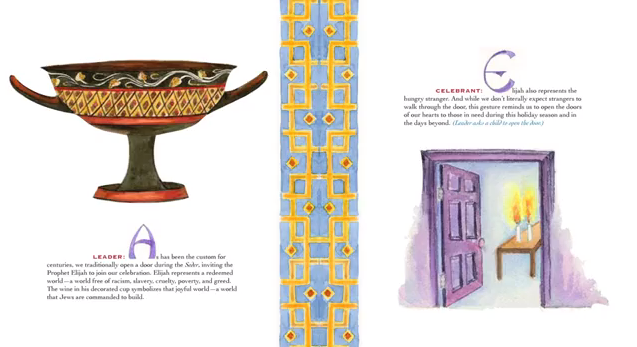
- Elijah and his cup are brought into the seder earlier in The Bronfman Haggadah (Courtesy The Bronfman Haggadah)
-
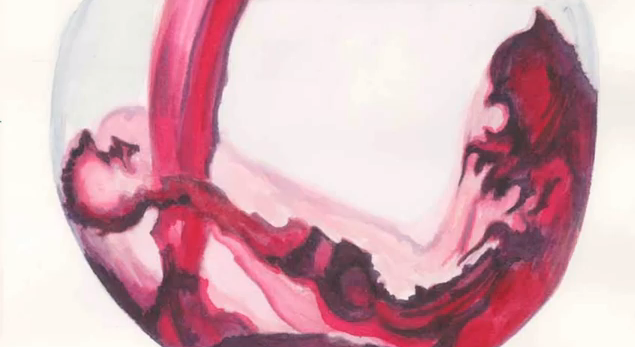
- Pouring the wine in The Bronfman Haggadah (Courtesy The Bronfman Haggadah)
-
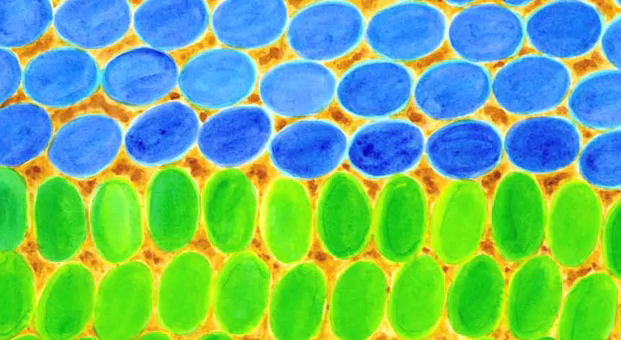
- God is understood as energy in The Bronfman Haggadah (Courtesy The Bronfman Haggadah)
Times of Israel: Creating one’s own version of the Passover Haggadah is a massive undertaking of scholarship and Jewish learning. How did you decide you were ready to embark on this project?
Edgar Bronfman Sr.: While I grew up in the Conservative tradition in a Jewish home, and never hesitated to give to Israel and the Federations, it wasn’t until my adult life that I forged a deep love of my Jewish community and Jewish life. I began doing work with Dr. Nahum Goldmann and the World Jewish Congress, which set me on a path toward finding a love of texts and learning. It was during my travels for the WJC [World Jewish Congress] that I encountered prominent Jewish thinkers, began to study the Talmud, and developed my own thoughts on how I could be a Jew without believing in God. Since that time twenty years ago with the WJC I have continued studying Talmud and Jewish philosophy on a regular basis. I came to a point in my learning where I wanted to share with others who were like me, who may have felt distanced from Judaism for one reason or another, how they too can find the great values Judaism has to offer.
ToI: Had you always done extensive research prior to each Seder, or was this a relatively new task for you in recent years?
EB: I have been researching and rewriting various version of this Haggadah for years now. For the past several years, I have brought text from my Haggadah to the Seder and found what worked and didn’t work, then gone back to do more research and prepare a new text in time for the next year.
ToI: It’s always a massive task to undertake a book, particularly when it’s one as ancient and rooted in tradition as a Haggadah. Were either of you nervous about the task ahead when you were just starting out?
Jan Aronson: I wouldn’t say I was nervous at the outset, but I did have my concerns. When Edgar first asked me to illustrate the Haggadah my reaction was, “But I’m not an illustrator.” He told me that was exactly why he wanted me to do it. Knowing that he was confident in my artistic ability to interpret the text made the experience entirely enjoyable, and not nerve-wracking in the least.
EB: This began as a personal project of mine that had developed over the years. It was something that grew naturally, and therefore didn’t seem like a daunting task.
ToI: Do you see this as a Haggadah for families with younger children, or more of an adult approach to the Seder?
EB: This is a Haggadah for adults to teach to children, and to learn something new for themselves. The Bronfman Haggadah seizes the opportunity to teach the children while we have their attention. Jan and I weren’t afraid to change some of the traditional aspects of the Passover seder in order to turn them into lessons for our children, lessons that can be appreciated and taught by the adults at the table.
While there are many Haggadot, there are none that take the opportunity to portray Judaism as an entire religion, or that are willing to include lessons beyond those told in the story of Passover. Passover is the time of year when kids are home, and we have their attention for one full night. And I thought that’s the time when we can teach them a little something about Judaism. A key lesson of the Exodus is that there is no freedom without responsibility. That is why my Haggadah goes beyond the traditional Passover story, past the crossing of the Red Sea, and takes us to Mt. Sinai, the building of the golden calf, and to the giving of the Ten Commandments.
JA: There are some lessons that I believe can be learned by anyone of any age. I found one traditional Seder moment, opening the door to Elijah, to be a particularly great opportunity to teach ourselves and our children about the Jewish value of generosity. I said to Edgar if we are going to teach our children and our young people to open the door to the stranger and to be generous why do we do it at the very end of the service when everybody is tired, everyone is full, the children are tired, they’re sprawled out on the couch and they want to go home? So why don’t we do it at the very beginning of the service when they’re all alert, they want something to do and they’re told to go open the door for Elijah? Do it at the beginning and children then know to open the door to the stranger, and they won’t ask why we’re going to give Elijah the leftovers at the end of the meal. No, invite the stranger to sit down and partake even before we light the candles so they’re truly a part of the service.
I was also very conscious as I was illustrating the Haggadah to incorporate all sorts of imagery so that every time you would turn the page you were going to be interested in what that page was saying. The combination of text and illustration was a wonderful challenge for me in that regard. How do I make this interesting? How do I keep the adults interested? How do I encourage the children who will be at the table maybe for the 1st time, maybe for the 10th time to open the Haggadah and look forward to turning the page and to being part of the service?
ToI: There’s virtually no Hebrew in the Haggadah; was that a decision made at the start, and why?
EB: I feel that to those of us not living in Israel, Hebrew can be intimidating and therefore alienating to many of the Jews we want to reach. It is a language understood by few, creating an inner circle of those who understand it at the Seder table, and an outer circle of those who don’t. By not including Hebrew, I had hoped to create a Haggadah that was approachable to all, regardless of their education or background.
ToI: The Haggadah market is a crowded and competitive one. Where does The Bronfman Haggadah fit in?
EB: We took traditional elements of the seder and turned them into teachable moments for both children and adults. For example, in The Bronfman Haggadah we changed the concept of the four children to the four types of Jews. There is the Wise, Rebellious, Simple, and Indifferent Jew, and this Haggadah teaches that each type of Jew ought to be welcomed with open arms into the community, no matter how distanced or disinterested they may be.
It is also a Haggadah that can teach individuals without much Jewish education. Very few Haggadot discuss the reason behind everything on the Seder plate. I wanted to be able to answer someone who asked “What is the reason behind this item?” That’s what this Haggadah can do — it can bring to life traditional Jewish elements often little understood.
ToI: Any partnership is complex. How was it to work together as a couple on this one?
JA: It was a wonderful opportunity for the both of us as partners and as individuals. Edgar has a burning passion to do something different, and my burning passion for my entire life has been to make art. So the two of us had this amazing chance to do something very special together.
EB: I asked Jan to read it, and to illustrate it. I didn’t want to tell her what to do. I knew how smart she is, what kind of an artist she is, and how Jewish she is, so putting all of this together, I knew I’d get something great. It was certainly great having someone who I loved working with me.





The Times of Israel Community.