

‘The worst is yet to come’: Palestinians confront Omicron-fueled winter COVID surge
PA health ministry reports 70,000 active cases in West Bank and Gaza Strip, but real figure is likely much higher
 Add ToI as a Preferred Source on Google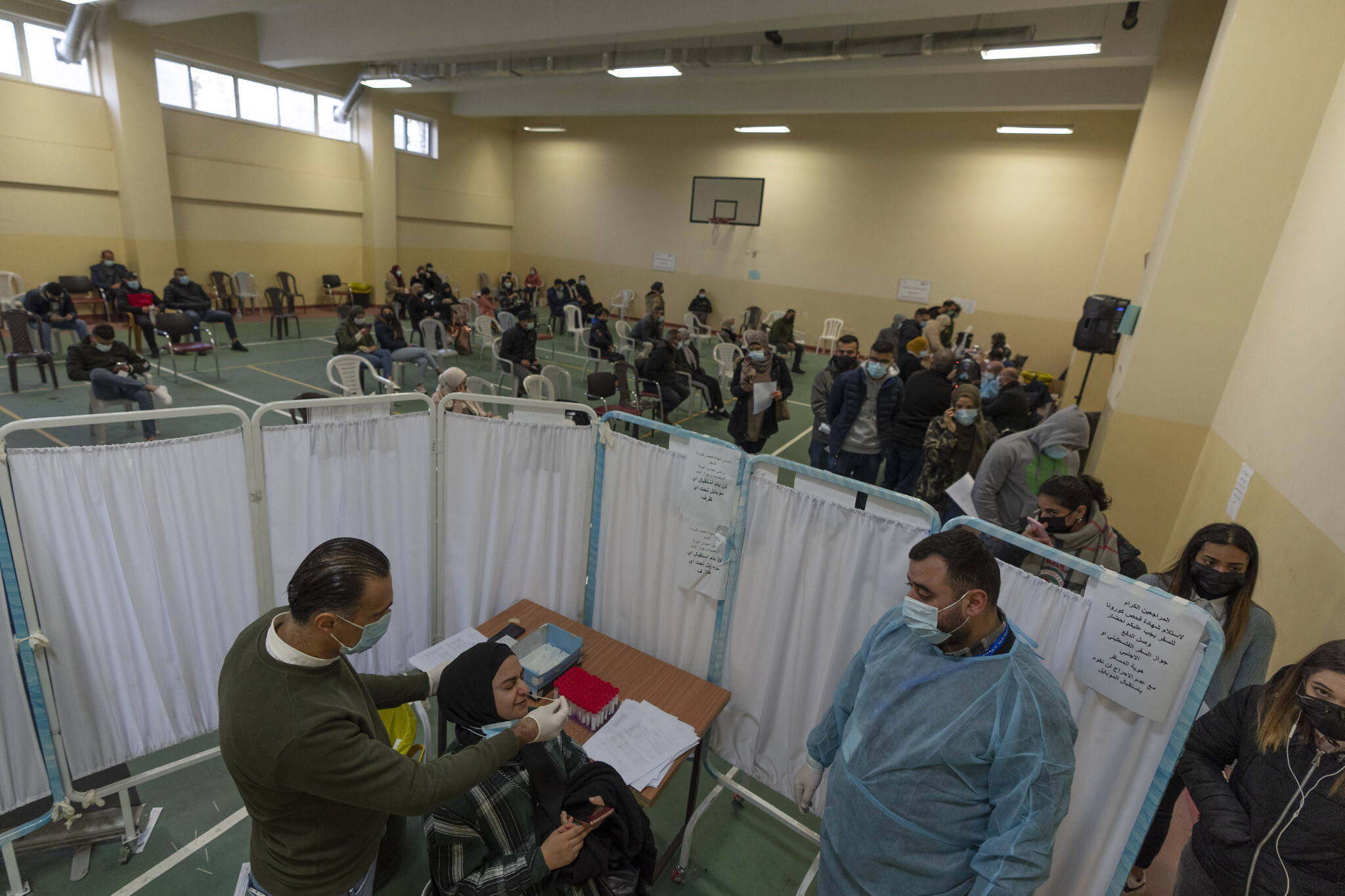
Palestinians are facing a winter coronavirus surge driven by the Omicron variant, placing stress on the medical system even though vaccines are widely available.
The Palestinian Authority’s Health Ministry reported over 70,000 active cases in the West Bank and the Gaza Strip on Thursday, more than twice the number at the height of previous surges.
The real figure is likely much higher, as Omicron tends to cause milder symptoms, especially in vaccinated patients, and many people are testing at home.
At least 268 people have been hospitalized in the parts of the West Bank administered by the Palestinian Authority, including 80 in intensive care and 24 people on ventilators. Gaza currently has at least 63 serious cases.
The PA has reported at least 4,859 deaths in the West Bank and Gaza since the start of the pandemic.
Dr. Mahdi Rashed, director of health services for the Ramallah governorate, where the PA is headquartered, said hospitals across the territory are at about 85 percent capacity. “It’s a dangerous sign, and a sign that the worst is yet to come,” he said.
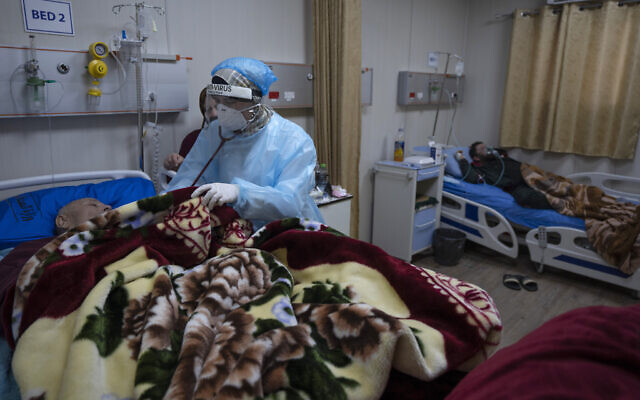
The number of serious cases is not yet as high as during a surge last spring, before vaccines were widely available, but Rashed said the current surge hasn’t yet peaked.
The outbreak follows a similar Omicron surge in Israel, where the number of infections hit all-time highs and hospitals have been greatly strained. While infections remain high in Israel, the surge has begun to recede.
Israel launched one of the earliest vaccination rollouts in the world last year, and last summer, it also offered the PA 1 million doses that were close to their expiration date, but the Palestinians refused, saying they didn’t meet their standards. Most of the doses were sent to South Korea instead.
Human rights groups charge that international law requires Israel as an occupying power to provide vaccines for Palestinians.
Israel rejects the characterization that it occupies Palestinian territory, deeming the West Bank “disputed.” Israeli officials have also pointed to bilateral agreements between Israel and the Palestinians which designate responsibility for health care to the Palestinian Authority.
Israel has provided vaccines to its own Arab citizens, Palestinians in East Jerusalem, and tens of thousands of Palestinians who enter Israel to work.
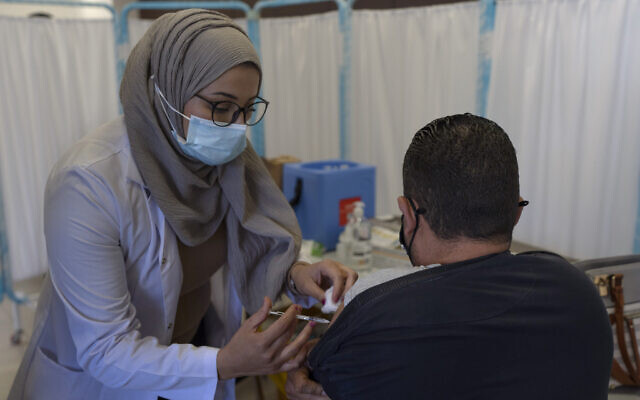
The Palestinian Authority has meanwhile secured its own supply of vaccines, including through a World Health Organization program for developing countries, but only around half of Palestinians have received them.
A vaccination center in Ramallah was mostly empty this week. A testing center adjacent to it was far busier, with dozens of Palestinians coughing through their masks and showing other symptoms of the virus.
Dr. Abdelbasit Zeineddin said up to 2,000 people show up each day, with around half testing positive.
“The numbers are much higher than before,” he said.
Lama Abu Hilou, 22, has had two vaccine doses but started showing symptoms of the virus this week. She said she came to be tested because she fears it spreading among her extended family. Like many Palestinians, they live in the same apartment building and often gather together.
“It’s not just one person getting it, you hear about entire families, the mother, the father, the children, all infected,” she said.
In Gaza, where the health system has been battered by years of conflict, including last year’s war, the Health Ministry is predicting an “unprecedented number of cases” in the coming weeks.
But Dr. Majdi Dhair, the director of preventive medicine at the ministry, said authorities are confident they can overcome the surge, given the relative youth of Gaza’s population of more than 2 million Palestinians.
“Our main concern is infections among health workers that may lead to a staff shortage,” he said.










The Times of Israel Community.