

Speaking to a world demanding global action, a tepid Bennett misses opportunity
PM seeks to present a new image of Israel at UN, but fails to position the country as a world leader on efforts to combat COVID-19 or climate change
 Add ToI as a Preferred Source on Google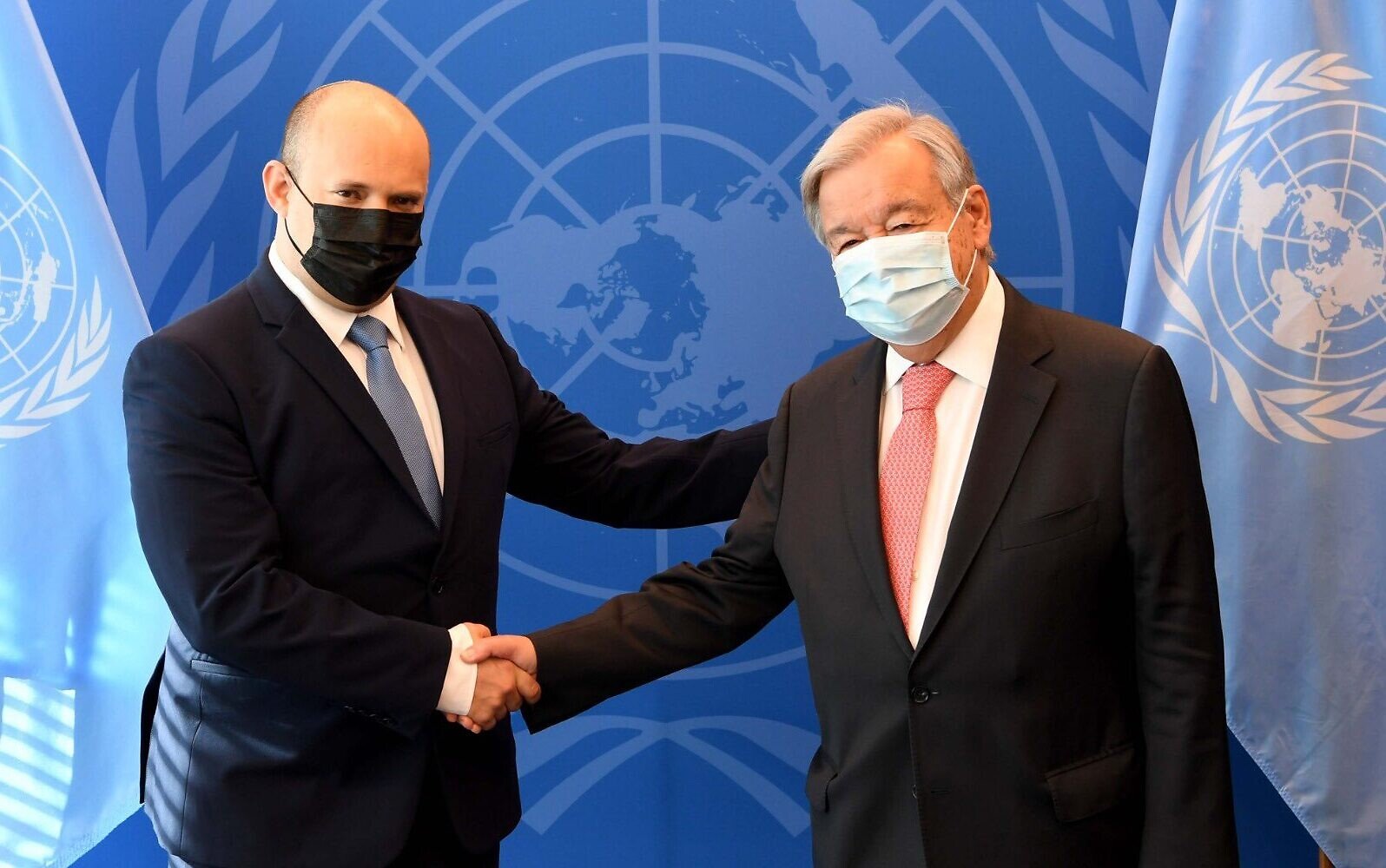
NEW YORK — In his first appearance on the global stage, Prime Minister Naftali Bennett was presented with an opportunity.
Global multilateral frameworks for pressing problems have been failing.
The United Nations has been unable to create an effective mechanism for vaccinating the third world from the COVID-19 pandemic. The NATO effort in Afghanistan collapsed in August when the US pulled out its troops as the Taliban retook the country. France even temporarily pulled its ambassador from the US and Australia over a canceled nuclear submarine deal.
At the same time, on the pressing issues that dominated the United Nations General Assembly, there is a growing recognition of the need for international cooperation.
“Quite oddly, while we are facing these crises on the multilateral level, the need for multilateral global action has never been so high,” said Gil Murciano, CEO at Mitvim – The Israeli Institute for Regional Foreign Policies.
Indeed, COVID-19 and climate change led the agenda, as leader after leader called for cooperation.
After years of Israeli leader Benjamin Netanyahu confronting and prodding the international community in his General Assembly addresses, speaking to Israeli voters by scapegoating the UN, Bennett had the chance to show that the world is better off by seeing Israel as part of the solution, not the source of regional and world problems.
“There’s another option,” said Murciano, “connecting to global efforts: presenting Israel as a country that can play a role in and can even lead the international effort.”
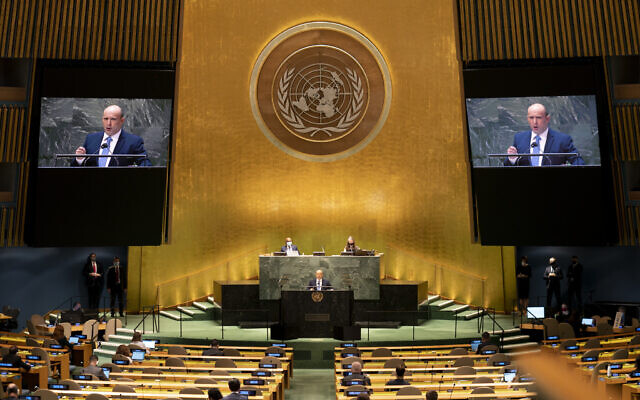
On COVID-19, Bennett did indeed try to situate Israel as a world leader to be imitated.
“The State of Israel is on the front lines of the search for this vital knowledge [about defeating the coronavirus],” he said. “We developed a model, which fuses the wisdom of science with the power of policymaking.”
He presented his three guiding principles for a successful national response: keep the country open, vaccinate early, and adapt and move quickly.
However, Bennett settled for a field goal on COVID-19, neglecting to explain how Israel can actively contribute to UN efforts to get vaccines and medical equipment to poor nations.
On climate change, he didn’t even take the field.
Though some members of his coalition want a drastic response to climate change that includes emergency laws, Bennett himself seems to favor a pragmatic approach that takes into account the need to balance the economy, cost of living, personal freedom, and defense.
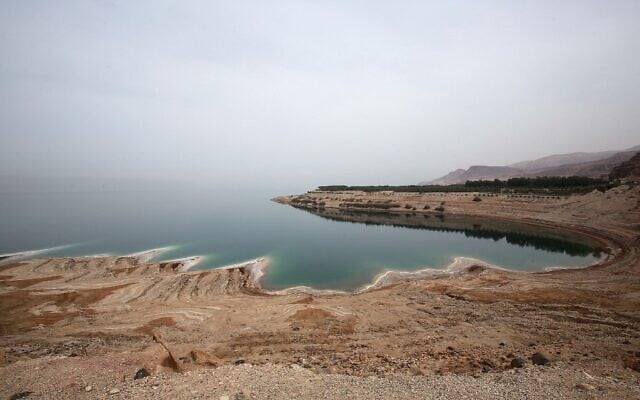
He recognizes that Israel’s economy is too small to have any major impact on the climate, a senior official said Monday, but believes that Israel’s technology and innovation can point the world in the right direction.
And yet, even though he has much to offer, Bennett didn’t even mention climate change, one of the two leading issues at the event.
On Iran, Bennett faced a paradox. Given that everyone recognizes that US President Joe Biden will never order a strike on Iran, for both Iranian and Israeli audiences Bennett had to stress that Israel is ready and capable of acting on its own.
Yet he wanted to distinguish himself from the famously confrontational Netanyahu, the leading voice rejecting the clear preference of the international community, the 2015 nuclear deal, known formally as the Joint Comprehensive Plan of Action (JCPOA).
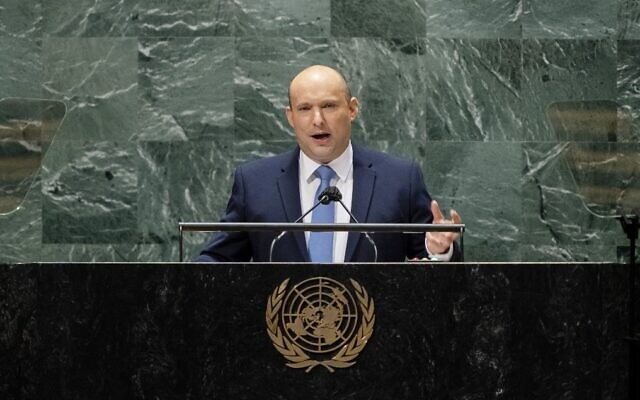
Here, too, Bennett did not overtly tie Israel’s multifaceted campaign against Iran’s enrichment, proxies, and military capabilities to global efforts. He chose not to mention the JCPOA at all, the result of a promise to Biden that he wouldn’t publicly criticize the deal he once called “one of the darkest days in the history of world.”
Bennett will likely continue to find himself caught between a desire to avoid fights with the US and coalition partners, and a desire to display toughness and follow the positions he long advocated as leader of a right-wing party.
For now, the fact that he is not Netanyahu gives him plenty of leeway domestically and on the international stage. But that goodwill will run out eventually, the “new spirit of cooperation” will become a stale smog, and he will have to start staking out bolder positions instead of avoiding ideological fights abroad and at home.







The Times of Israel Community.