

Toronto play puts spotlight on morality of Israel’s ZAKA rescue organization
Solo performance centers on volunteer group’s decision to treat Jewish terror victims before aiding attack perpetrators — regardless of severity of injuries
 Add ToI as a Preferred Source on Google
Renee Ghert-Zand is the health reporter and a feature writer for The Times of Israel.
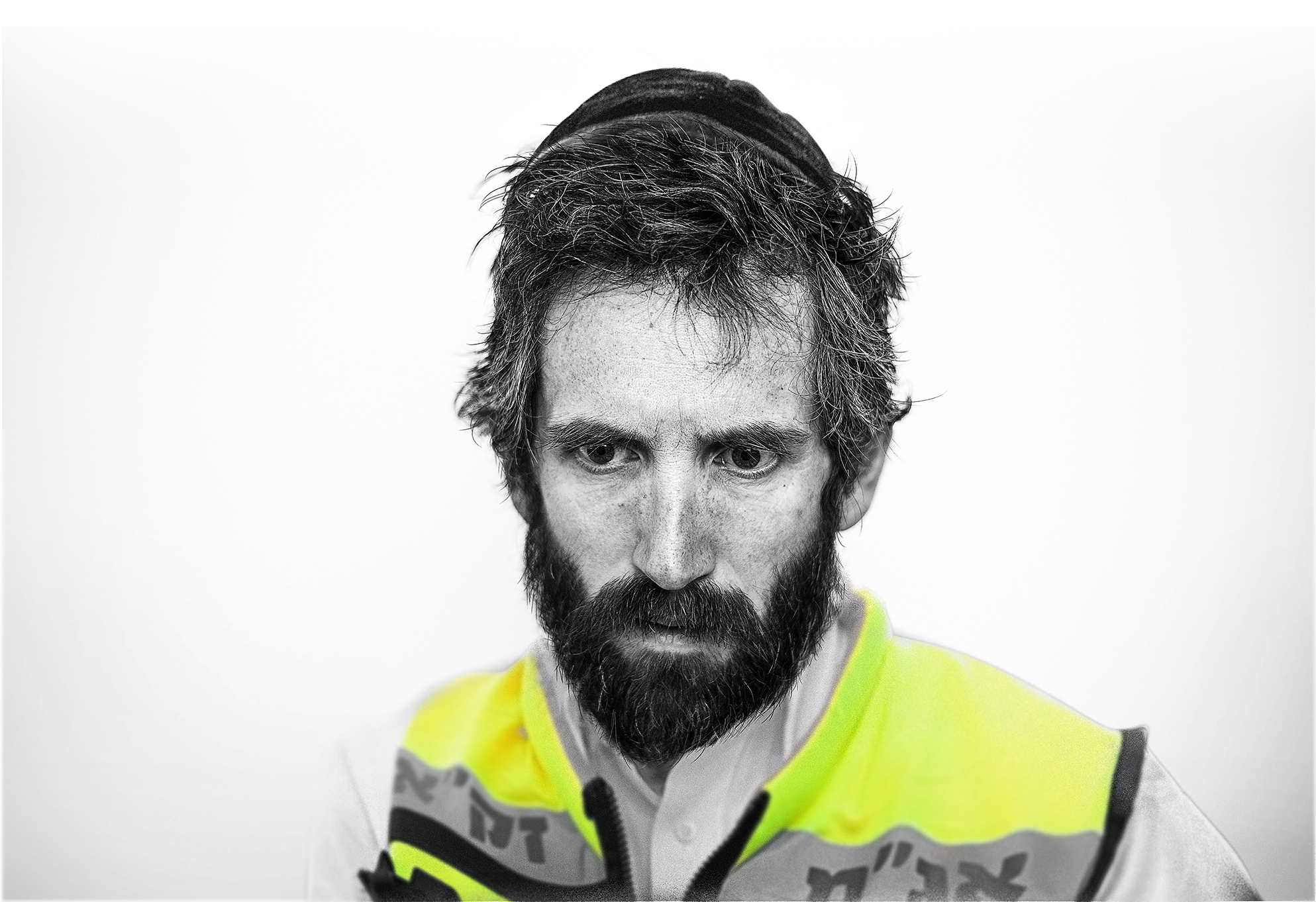
A new play about the independent Israeli rescue and recovery volunteer organization ZAKA premieres this month in Toronto, Canada. It’s not exactly what one might expect. On stage, there are no actors playing teams of Orthodox men in reflective vests collecting the spilled blood and severed body parts of Jewish victims at terror and accident sites. The sets do not include the carcasses of blown up buses or cafés.
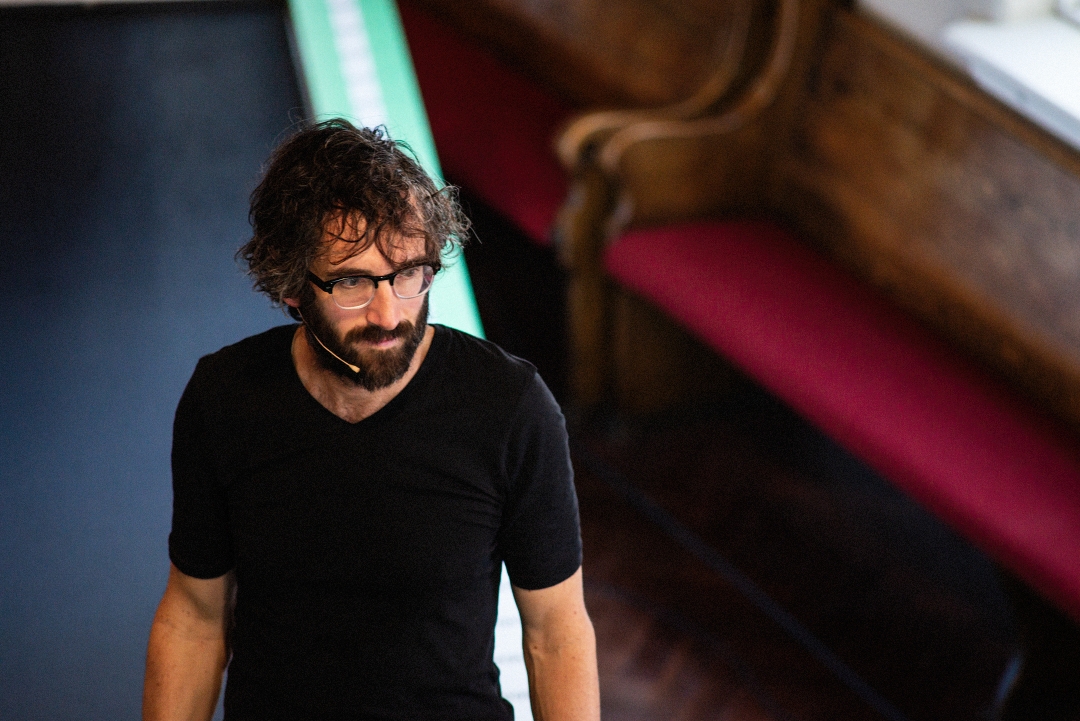
Instead, there is just a single actor playing a ZAKA volunteer named Jacob. He constantly moves on a four-foot long treadmill while speaking directly to the audience for the entire length of the show. His only prop is a cell phone, and he communicates in a dreamlike stream-of-conscious monologue about a moral struggle that has overtaken him.
Jacob’s moral dilemma and the dramatic conflict in “The Runner” both stem from the December 2015 decision by ZAKA, to unequivocally disregard a directive from the Israel Medical Association to triage all casualties at a terror scene — including the terrorists who carried out the attack — according to the severity of their wounds.
“We direct ZAKA volunteers to first treat the Jewish victims of a terror attack — without blinking an eye,” ZAKA chairman and founder Yehuda Meshi-Zahav announced at the time.
ZAKA leadership remains steadfast in this matter. In a statement given to The Times of Israel this week, Meshi-Zahav said through a spokesperson, “We direct ZAKA volunteers to first treat the injured Jewish victims of a terror attack. Only after they have been given medical assistance, should they begin treating the murderous terrorist who carried out the attack.
“In spite of the ethical code that says one should treat the most severely injured first, one should know that even morality has its boundaries. If we do not make this distinction, we lose our direction. Even in Jewish law it says ‘He who is merciful to the cruel, will end up being cruel to the merciful,'” said Meshi-Zahav.

Early in the play, Jacob recounts that he chose to resuscitate an Arab girl who was shot (by Israeli security forces or civilian bystanders — it’s not clear) after apparently stabbing an IDF soldier. The decision leads to anguished self-doubt. He also faces condemnation from the people in his life — his ZAKA bosses, his mother, and his settler brother — for this and other reasons. Everyone turns on Jacob, except for the Arab girl he saves.
Jacob is an amalgam of several ZAKA volunteers interviewed by playwright Christopher Morris, whose Human Cargo theater company is producing “The Runner” in cooperation with Tel Aviv’s Nephesh Theatre.
“One of them was a trauma junkie, and we based Jacob partially on him,” said Morris. A “trauma junkie,” he said, refers to the character having no profession other than volunteering for ZAKA.
Morris, 44, was in Israel last month with actor Gord Rand, who plays Jacob, for a last research trip before finalizing the script for “The Runner.” Morris told The Times of Israel that he had wanted to write a play about ZAKA since initially hearing about the organization in the news soon after its inception in the mid-1990s.
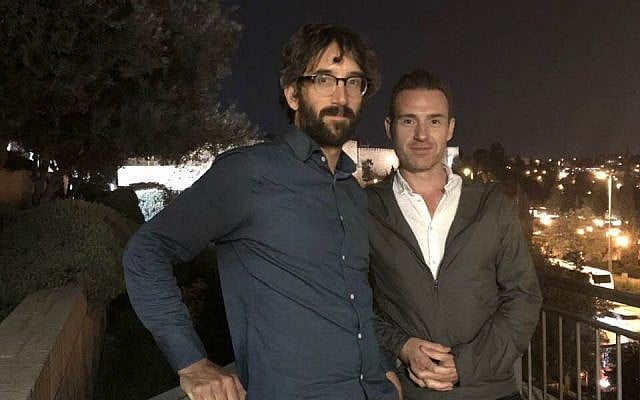
“I remember thinking to myself that I don’t have that temperament, that I couldn’t do what they do — and it would make for a great topic for a play one day,” Morris said in a conversation at a café overlooking the walls of Jerusalem’s Old City.
It took many years and four research trips to Israel for “The Runner” to make it to the stage. Morris did not give up on the project, making it the only production the Human Cargo theater company has ever done that does not have a tie to Canada.
“I decided to make this exception because the story is so compelling,” said Morris, who is the production company’s artistic director.
The October trip was Rand’s first time in Israel. The 47-year-old actor said that being an outsider in Israel helped him identify with Jacob as a character.
“Jacob has a role to play, but his is an outsider. He can become part of society through his ZAKA work, which energizes him,” Rand said.
A way in which Jacob does not fit in within his religious family and community is that he is (secretly) gay. At one point in the play, Jacob decides to act on his sexual impulses, and goes to a gay club in Tel Aviv to engage in anonymous sex. He later feels guilty when it turns out that he missed a ZAKA call.
“I felt it was important to include the gay issue in the play. This is part of Jacob’s isolation. He is always dealing with dead bodies, and this is the one way in which he can deal with living bodies and also not be subject to judgement. This is a gift for a man like Jacob,” Morris said.
ZAKA chairman Meshi-Zahav, whom Morris interviewed, is not surprised by the playwright’s longstanding desire to create a drama about the organization, which operates both in Israel and abroad.

“ZAKA regularly attracts interest from Jews and non-Jews alike from around the world interested to hear about our unique organization that works for the benefit of all mankind, regardless of religion, race or creed… It is particularly important that this play will bring our message to all, Jewish and non-Jewish audiences alike, just as ZAKA volunteers treat everyone in need, whoever and wherever they are,” he noted in a statement provided to The Times of Israel.
Morris said he wasn’t quite sure what to expect in terms of audience reaction to “The Runner.” He wanted people to know that the play accurately reports what he heard from the people he interviewed and what he saw while in Israel, and that he was not in any way picking sides in the Israeli-Palestinian conflict.
“To be honest, I am more concerned about what the Toronto theater community will say than about the reaction from the local Jewish community. The theater community tends to be very pro-Palestinian,” said Morris, who would like people to stay open-minded.
“This play poses the question of how to stay true to your values when your surroundings want you to compromise them. It’s about extremism and its effects, and about human dignity,” Morris said.
“The Runner” is performed November 25-December 9, 2018 at Theatre Passe Muraille, Toronto.










The Times of Israel Community.