

UNESCO adds Mount Carmel caves to list of World Heritage sites
Nahal Me’arot canyon showcases 500,000 years of human evolution
 Add ToI as a Preferred Source on Google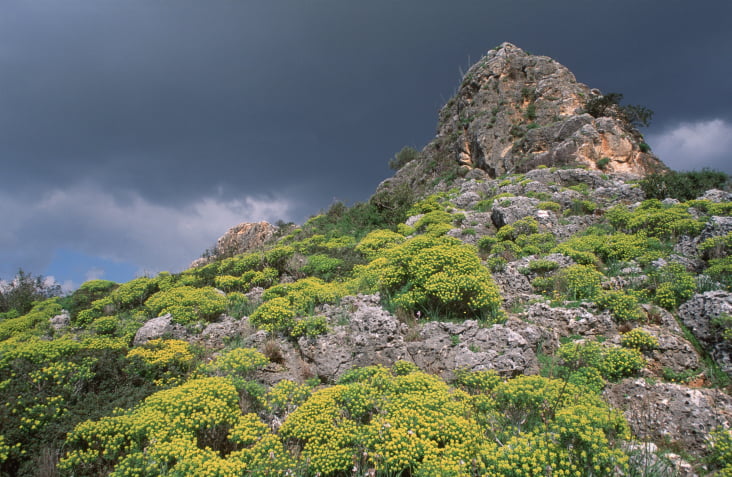
With all the hype surrounding the inclusion of the Church of the Nativity on UNESCO’s list of World Heritage sites Friday, little mention was made of the fact that Israel’s Nahal Me’arot river and caves also made the list on the same day.
The river, which flows down the western slope of the Mount Carmel, includes the cave sites of Tabun, Jamal, el-Wad and Skhul and contains cultural deposits representing 500,000 years of human evolution. The caves give evidence of burials, early stone architecture and the transition from a hunter-gathering lifestyle to agriculture and animal husbandry.
[mappress mapid=”1640″]
According to the UNESCO statement, “The site demonstrates the unique existence of both Neanderthals and Early Anatomically Modern Humans within the same Middle Paleolithic cultural framework, the Mousterian. As such, it has become a key site of the chrono-stratigraphic framework for human evolution in general, and the prehistory of the Levant in particular. Ninety years of archaeological research have revealed a cultural sequence of unparalleled duration, providing an archive of early human life in south-west Asia.”
Director general of Israel’s Parks and Wildlife Authority Shaul Goldstein congratulated UNESCO on looking past political differences as regards this site, and recognizing another Israeli heritage site as one of universal value.
Other Israeli sites that have gained World Heritage recognition by UNESCO include the Old City of Jerusalem, Masada National Park, Tel Aviv’s ‘White City,’ the Old City in Acre and the Biblical Tels of Megiddo and Beersheba,









The Times of Israel Community.