

US still seeking allies for maritime coalition against Iranian threats
In Australia, Esper and Pompeo suggest nations are quietly expressing support for plan; counterparts in Melbourne won’t commit
 Add ToI as a Preferred Source on Google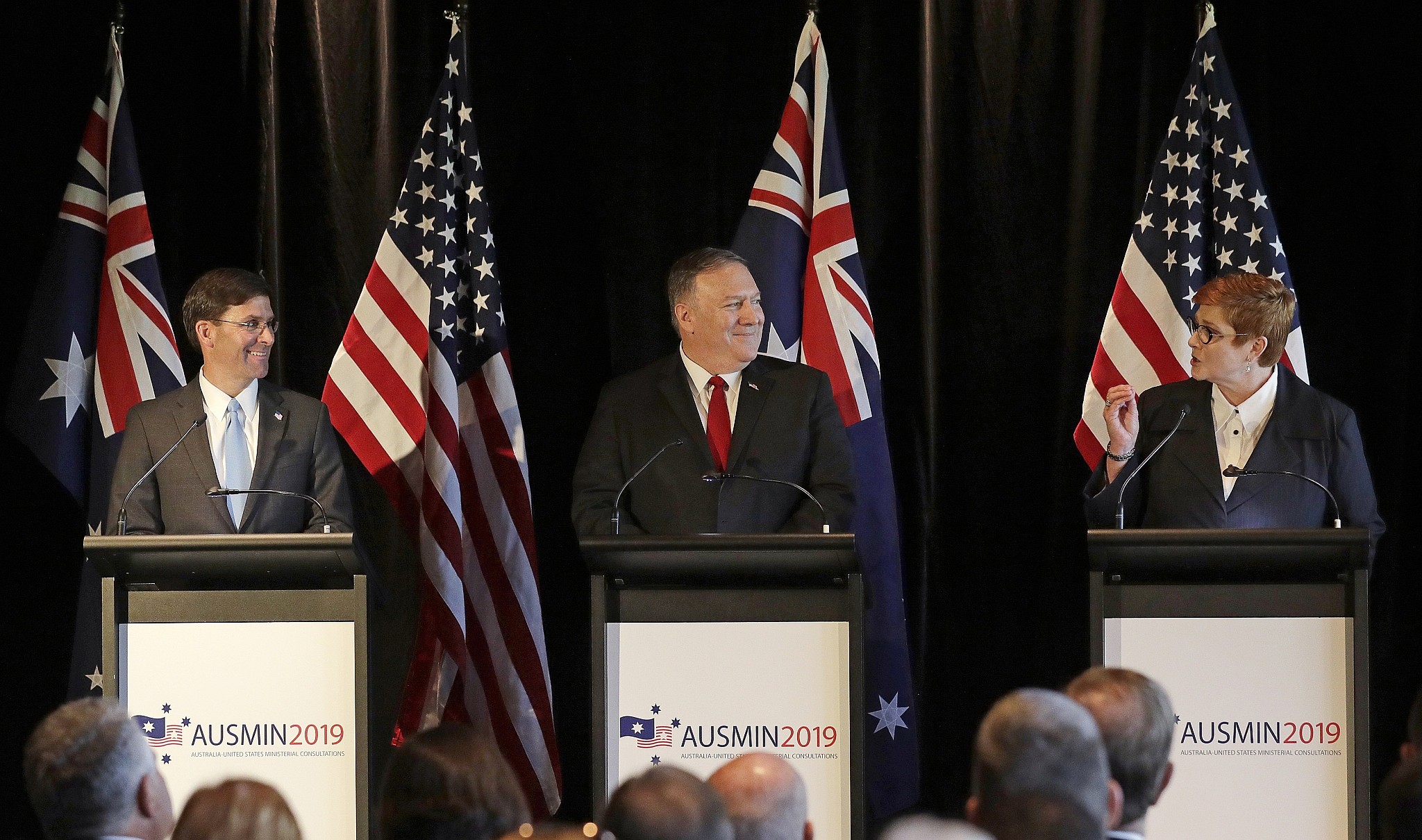
SYDNEY (AP) — Senior US leaders expressed confidence that they would be able to convince allies to help protect shipping in the Persian Gulf area against Iranian threats, but they provided no new details Sunday on which nations may be willing to participate.
Speaking at a meeting between US and Australian leaders, US Defense Secretary Mark Esper said he has already gotten a good response from allies and some announcements could be expected soon. And US Secretary of State Mike Pompeo told reporters that a lot of conversations are taking place.
But their Australian counterparts made no commitments.
“The request the United States has made is a very serious one, and a complex one. That’s why we are currently giving this request very serious consideration,” said Australian Defense Minister Linda Reynolds. “No decision has been made.”
She said her country will decide based on what is in its own best sovereign interests.
Called “Operation Sentinel,” the plan was triggered in June amid Trump administration concerns that Iran was behind a series of attacks on commercial ships in the Persian Gulf region.
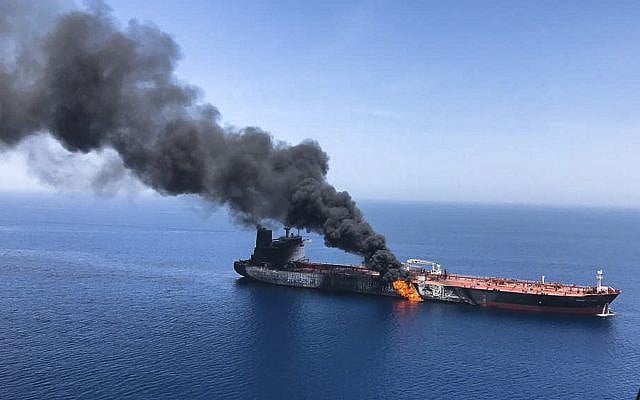
Marine Gen. Joseph Dunford, the chairman of the US Joint Chiefs of Staff, has said the Pentagon has developed a specific plan, and the US military’s main role would be to provide “maritime domain awareness” – intelligence and surveillance information – to the ships of coalition partners that would conduct patrols in vulnerable waterways like the Strait of Hormuz, which separates the Persian Gulf from the Gulf of Oman, as well as the Bab el Mandeb, a heavily trafficked strait between Yemen on the Arabian Peninsula and Djibouti and Eritrea in the Horn of Africa.
Any escorting of commercial ships would be done by military ships sailing under the flag of the commercial vessel, he said.
Esper broached the idea of a coalition to allies during a NATO meeting, but so far the US has received few public commitments from other nations. Instead, some European nations have expressed concerns that the operation could provoke conflict, and they are more interested in a diplomatic solution.
Pompeo and Esper, however, suggested Sunday that nations are quietly expressing some support and may be willing to make public commitments soon.






The Times of Israel Community.