

WATCH: Physical proof of twice razed and rebuilt ancient Jerusalem explained
For Tisha B’av, Israel Antiquities Authority archaeologist Joe Uziel presents how new scientific techniques are changing what we know today about the two major destructions
 Add ToI as a Preferred Source on Google
What do we know about the physical evidence of the two major destructions of ancient Jerusalem from 586 BCE and 70 CE?
In honor of the Tisha B’Av fast day, this week’s installment of The Times of Israel’s new Behind the Headlines online video series sees ToI’s Jewish World and Archaeology editor Amanda Borschel-Dan in conversation with an archaeologist who has spent the past several years getting his hands dirty in the destruction.
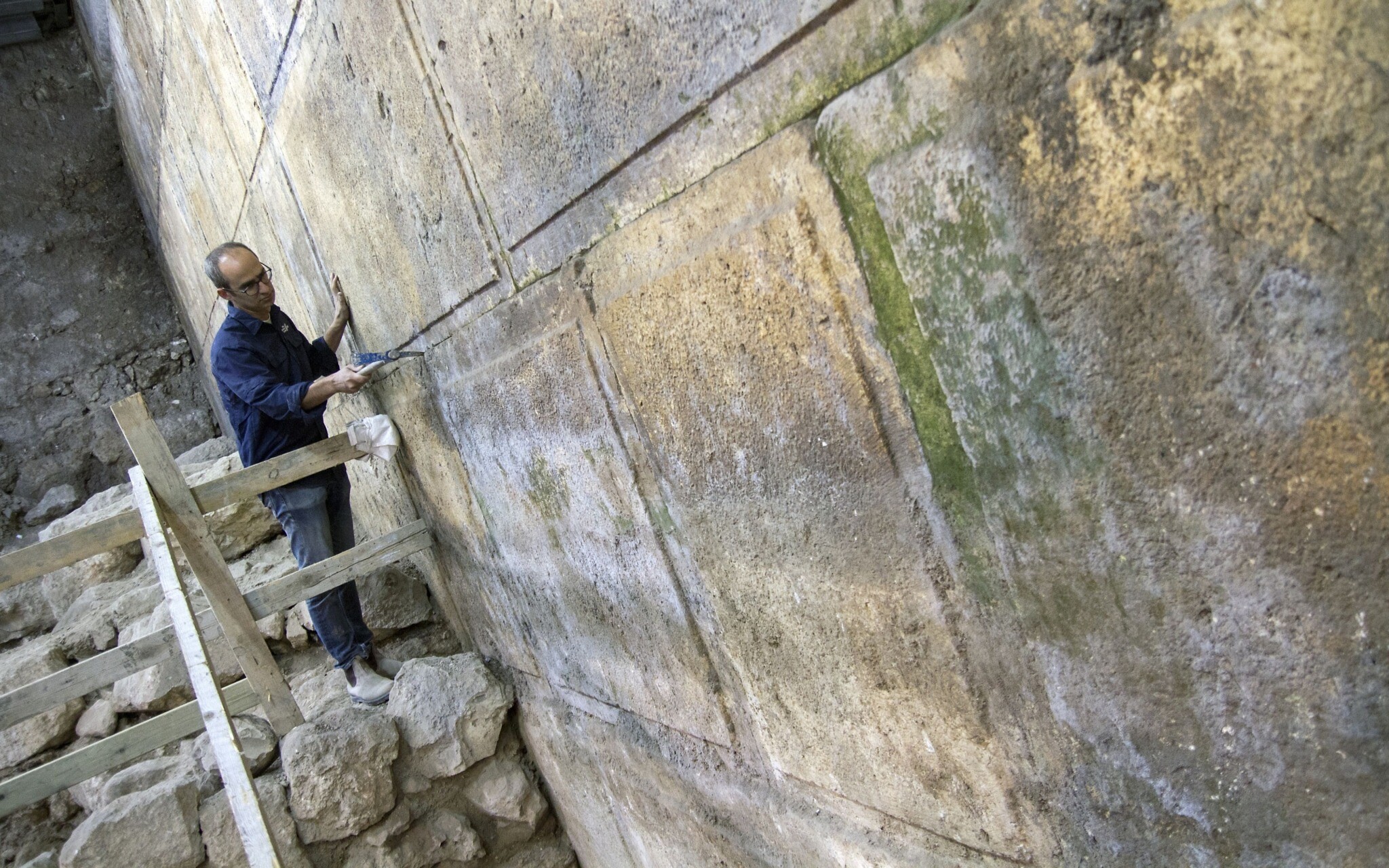
Israel Antiquities Authority archaeologist Joe Uziel, who was recently named the new head of the IAA’s Dead Sea Scrolls unit, headed up the excavations at Jerusalem’s City of David for the previous eight years. During this period he helped uncover a whole new section of eight courses of the Western Wall and discovered a small Roman theater that had eluded archaeologists for the past 150 years.
During his tenure heading ancient Jerusalem digs, Uziel also instituted new scientific techniques of excavation and analysis. Today, researchers can more securely date monumental structures in the ancient city and put ongoing debates to rest, and Uziel discusses new finds that have recently hit newspaper headlines.
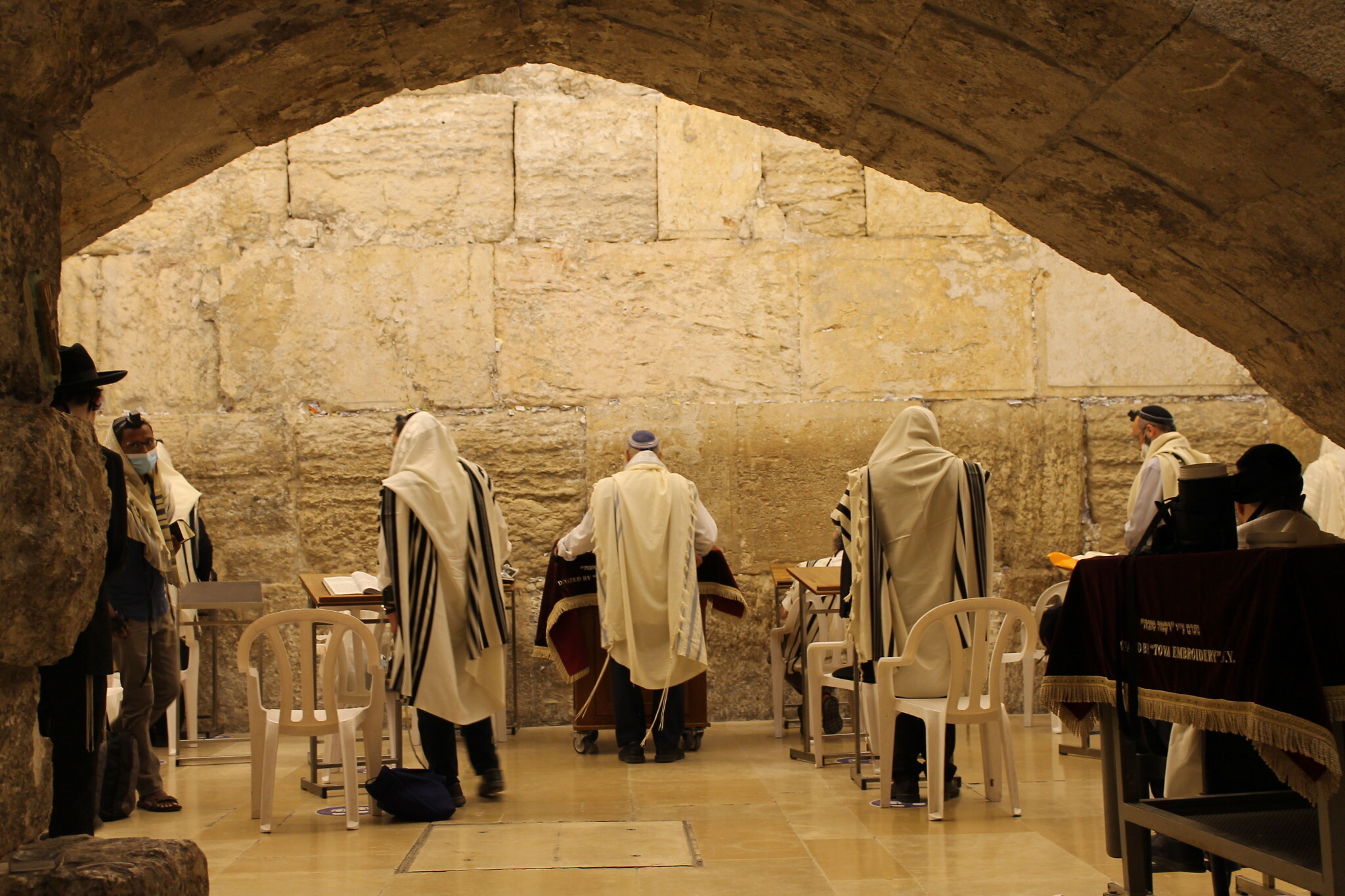
Tisha B’Av is a fast day that commemorates the destruction of the First Temple — as noted in the biblical Books of Ezra and Nechemiah — and is also later identified as the day of the end of the Roman conquest of Jerusalem and razing of the Second Temple.
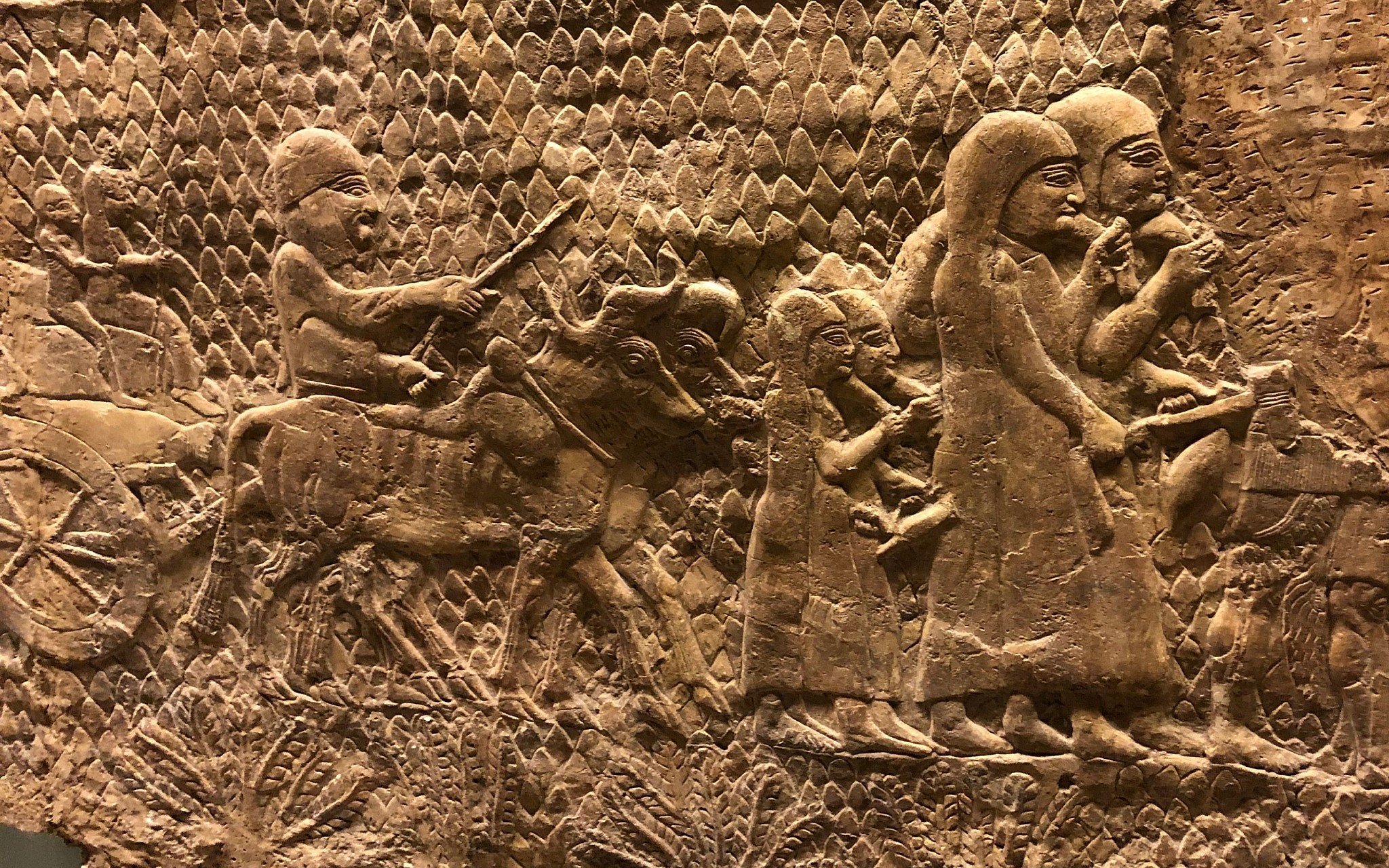
Though Jerusalem often appears to be a damsel in distress in biblical literature, it was actually a rather well-located and fortified city in the ancient world. Parallel sites of roughly the same periods of Jerusalem’s existence can show layer upon layer of destruction, including Lachish, the second most important site in Judah, which was destroyed almost every century from around the 10th century BCE until is was razed by the Babylonians in 587 BCE. It was also the target of earlier onslaughts, though these were not in parallel with attacks on Jerusalem.
Jerusalem, said Uziel, was more stable, because of its guarded, permanent water supply and settlement on a defensible location.
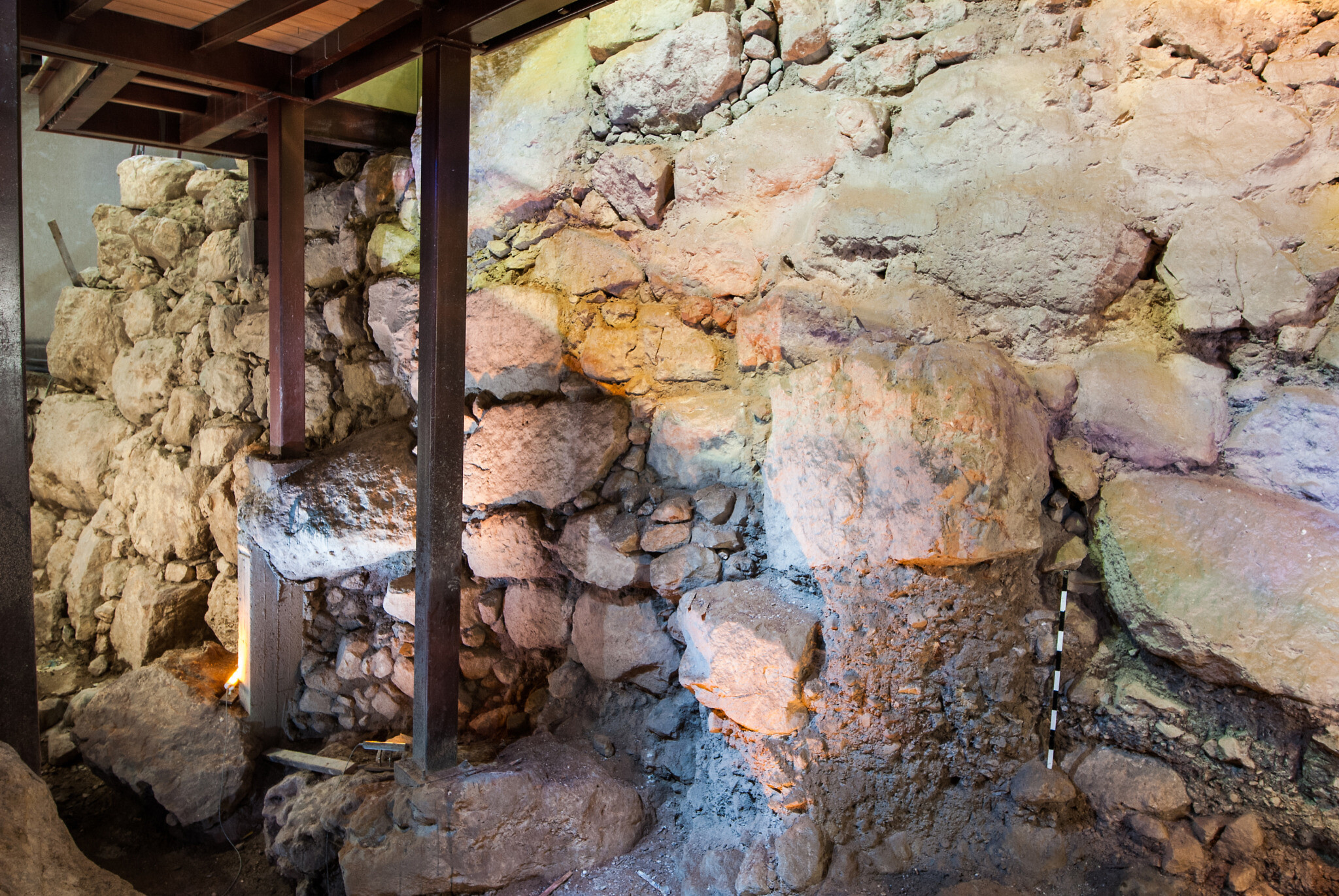
Uziel described a tower next to the Gihon Spring, the main water source for ancient Jerusalem. While there is still debate over the dating of its construction, he believes it was built in the 9th century BCE — or perhaps built originally during the Canaanite period and rebuilt under the fledgling Judah monarchy. Still visible today during a tour of the City of David National Park, the 7-meter (23-foot) thick walls protected the water source, which allowed Jerusalem to flourish.
“We know that historically Jerusalem has two very major destructions in its history. The first is by the Babylonians in 586 BCE. They actually succeed in doing what others had tried doing previously, including likely the Arameans, as well as the Assyrians, but they didn’t manage to destroy the city,” said Uziel.
The kingdom’s administration grew alongside the city. Uziel brings a unique seal impression he uncovered in the eastern slope of the City of David in 2017 that is inscribed in ancient Hebrew letters with the name of a prominent individual, “Belonging to Ahiav Ben Menachem.”
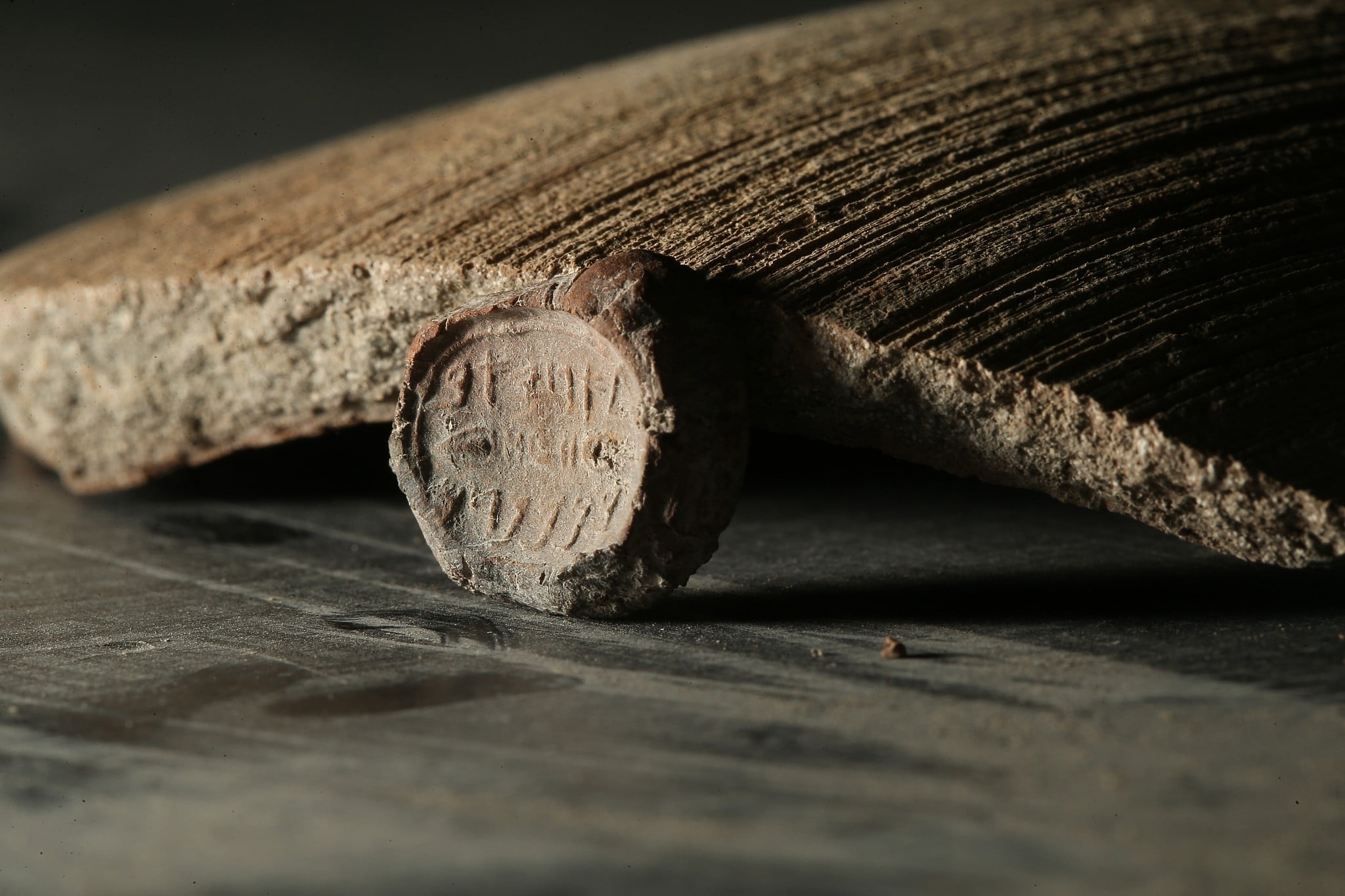
The name is intriguing in that it uses Israelite forms — possibly Israelite kings — in a Judah locus some 140 years after the destruction of the Israelite kingdom. Uziel said it points to the influx of Israelites into Judah, during which some found their way into the Judah administrative system.
Uziel discusses how the newly discovered Jerusalem Arnona neighborhood government compound — “a very, very big surprise” — found a stone’s throw from the new United States Embassy, fits in with the City of David administrative system and the finds there of the kingdom prior to the First Temple’s fall.
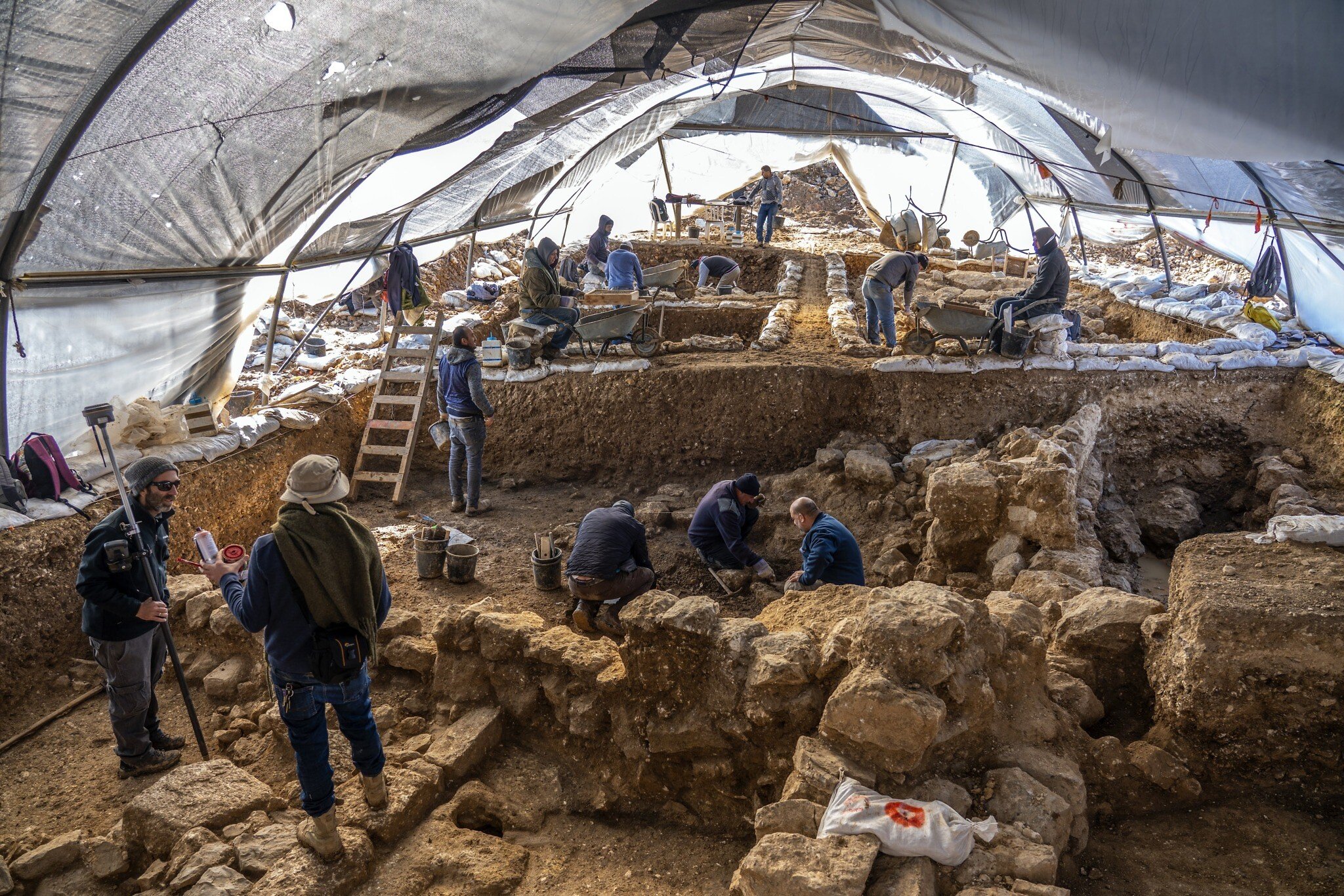
After the 586 BCE destruction of Jerusalem, the city lay mostly in waste for some 70 years until the return of Jews to the city, as described in the Bible. After that, Jerusalem reaches its peak in the late Second Temple period, roughly 2,000 years ago, beginning in the time of King Herod and continuing into the period of the rule of the Roman procurators. In 66 CE, the Jews rebelled against the Romans in the First Revolt, and Jerusalem is eventually destroyed four years later after a long siege.
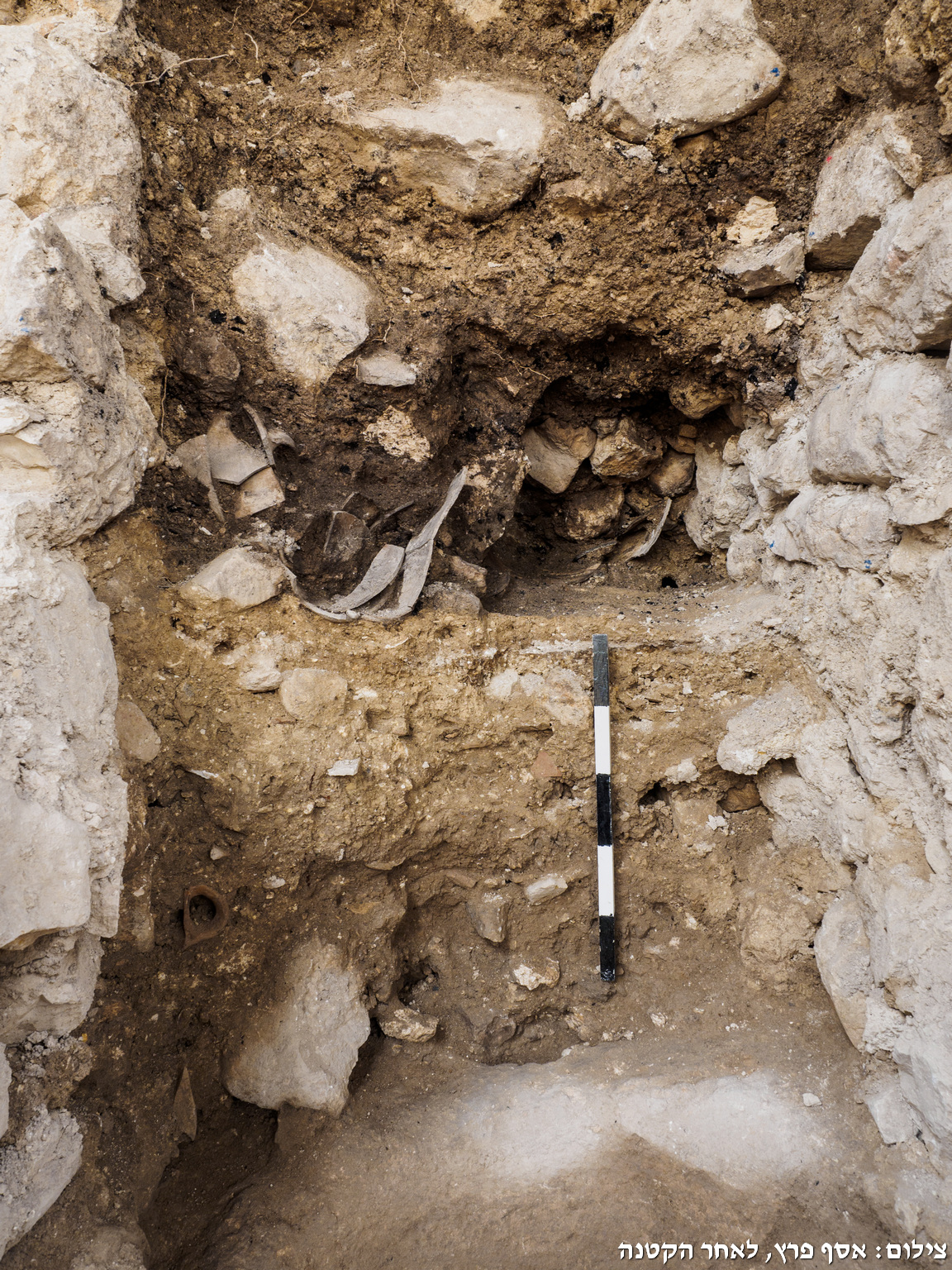
Uziel said that the physical archaeological remains of the 586 BCE destruction characterize a different conquest than what occurred some 500 years later. “It’s not that everywhere that we excavate we find these huge destruction levels, these huge burnings, these huge stone collapses with vessels, and so on and so forth — what we typically find at archaeological sites where we’re excavating destruction,” said Uziel.
But at several spots in the City of David, archaeologists have found very clear evidence of the 586 BCE destruction.
“Now, people may be wondering, ‘How can you date it so perfectly well?'” he joked. In this case he looks to the historical record, as well as securely dated artifacts to use in comparison to what is being uncovered. For example, the administrative stamps and types of storage jars and other pottery.
“We are more and more moving towards using ‘hi-tech finds’ I’ll call them, or what I’ll call archaeological sciences,” said Uziel, including evidence for carbon dating that is taken in the field.
“When we take a look across a broad level of Jerusalem, we have these nodes of destruction, but then we have the next room over, which doesn’t show signs of destruction,” said Uziel. He said the IAA and Tel Aviv University are working on a joint project to understand better what exactly happened during the destruction using advanced sciences.
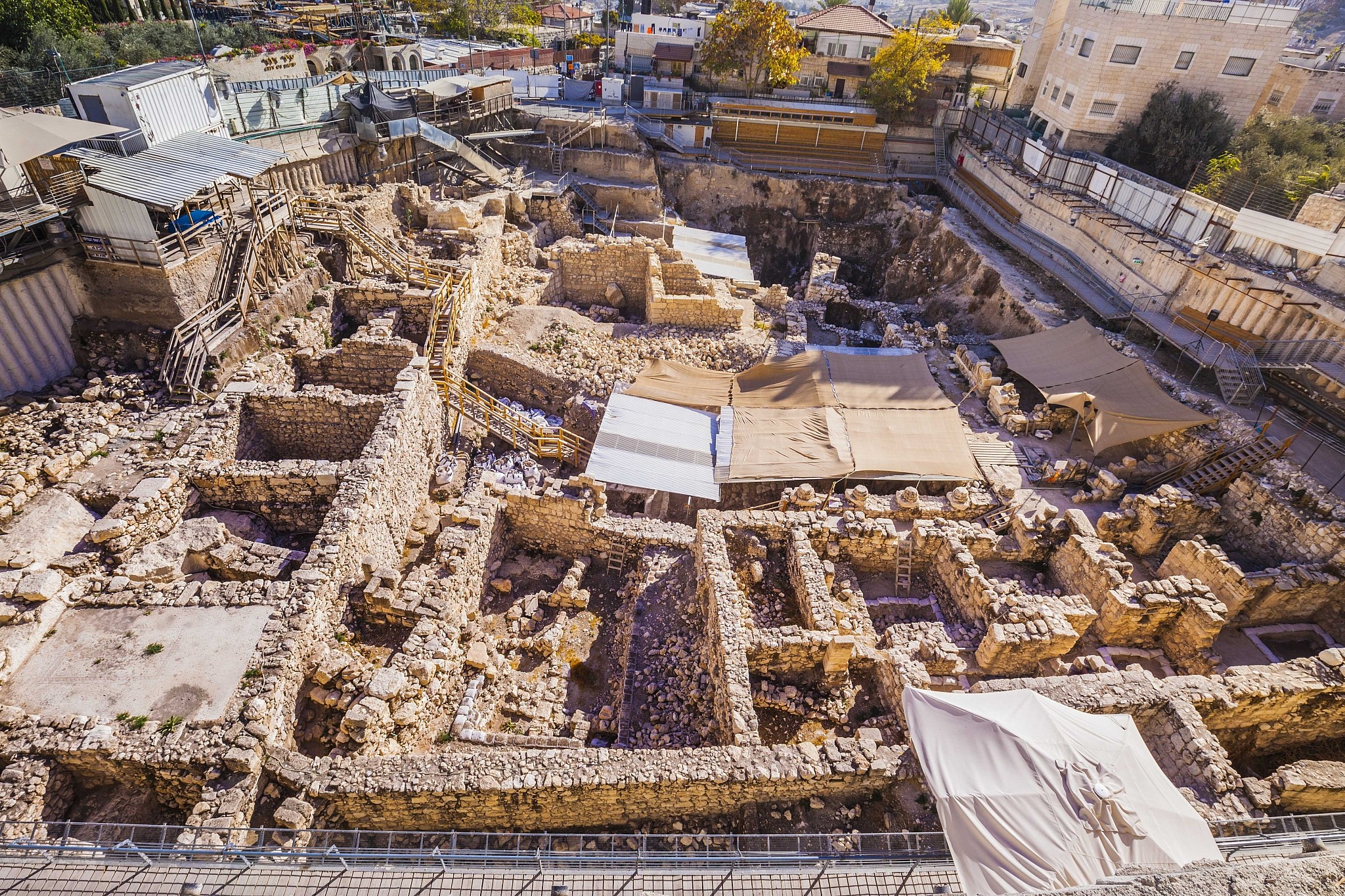
“Could this be something that micro-archaeology solves for us? For example, is it destruction that we just don’t see? Or is it really destroying specific spots? Or is it an issue of what was in the room that caused the destruction?
“In other words, you have the Babylonian army running through the city and if there are jars of olive oil, for example, and one of them threw his torch into that room, then it would go up in flames. But, if there was nothing in the room, then the torch would burn out and that would be the end of it,” he said.
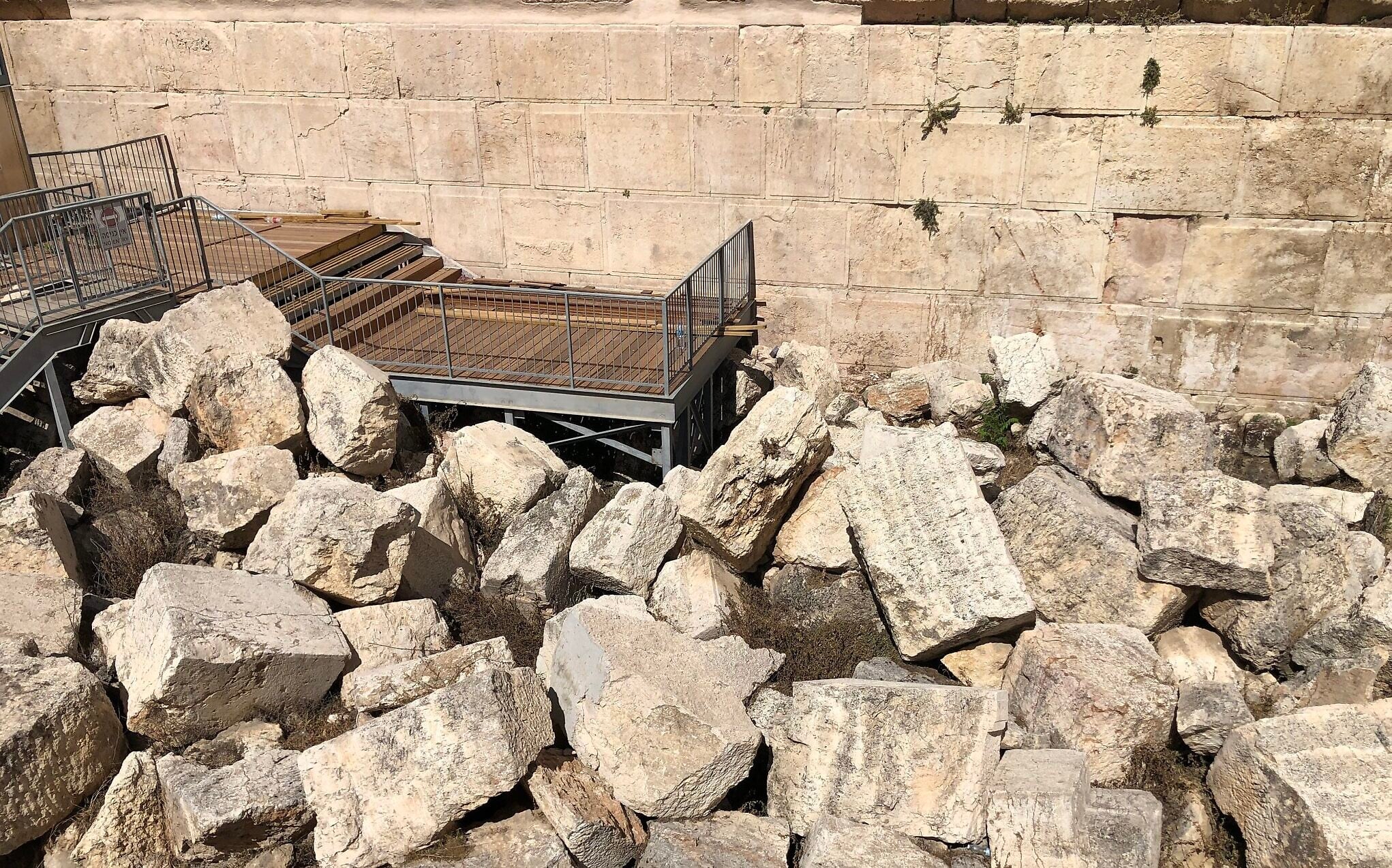
In the lengthy discussion, Uziel also examines Second Temple-period evidence of bustling Jewish life and the monumental mega-building that occurred before the eventual Roman conquest, such as the breath-taking stepped street that was likely built by Pontius Pilate. He also speaks about the new archaeological techniques used in a recent study of Wilson’s Arch and the challenges involved.
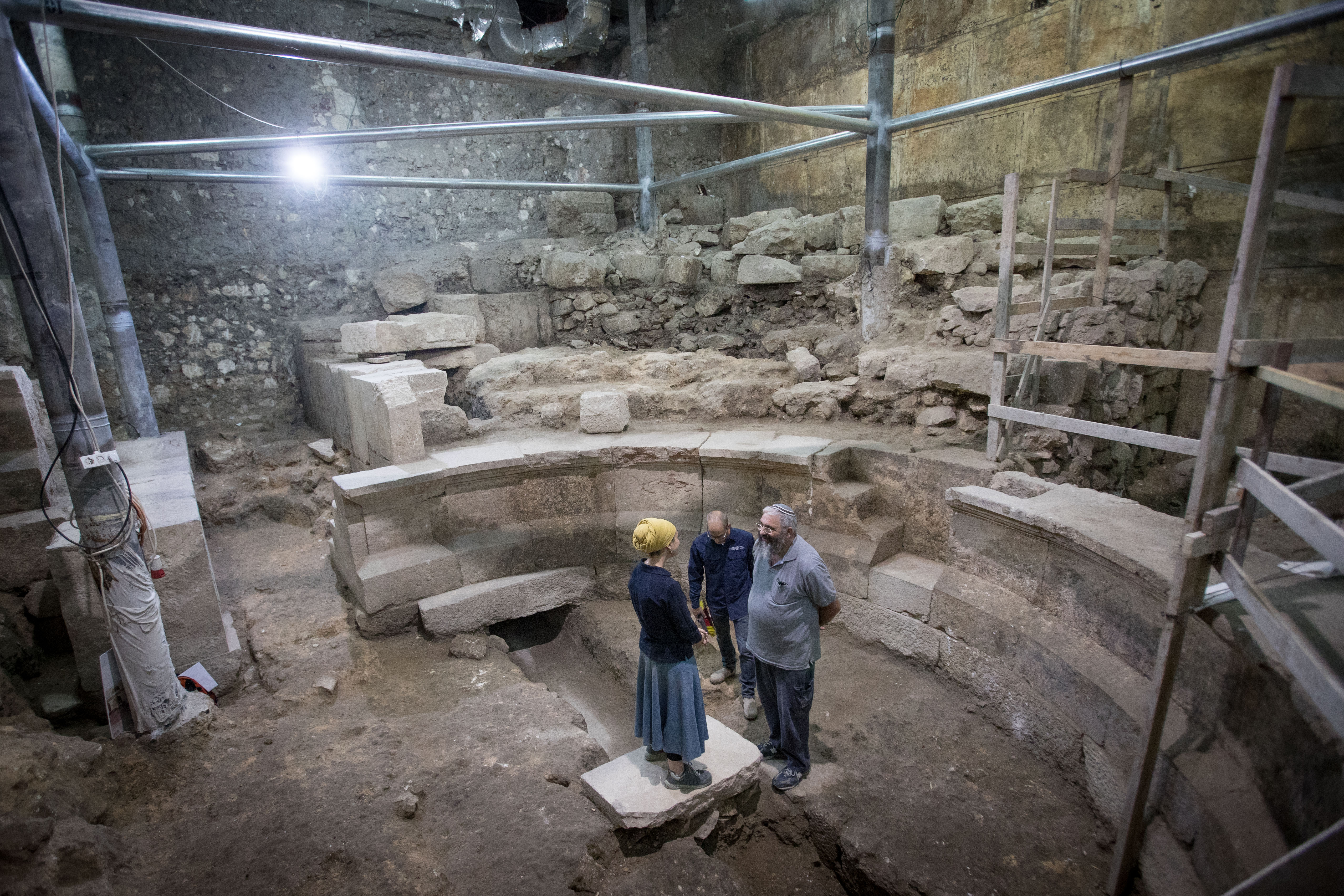
In addition to a large new section of the Western Wall, the Wilson’s Arch excavations also offered up a Roman public theater-like building that is much smaller than those theaters found in Caesarea and elsewhere. It was built in the confines of Wilson’s Arch, holding a crowd of circa 200 people.
This theater was built after the destruction of Jerusalem, circa 130 CE under Hadrian when the Roman colony of Jerusalem was renamed Aelia Capitolina, and appears to never have been finished. Uziel speculates that just like in the modern world, the builders may have run out of money, found a construction flaw, or maybe had to put out yet another Jewish revolt.
“The Jews were no longer living in Jerusalem, but still hoping to return, as they did after the destruction of the First Temple and some 70 years later returned. Here, we’re 60 years following the destruction of the Second Temple and Jews are living in the area of Jerusalem, and I believe — and of course I can’t interview them — but I believe they still had hopes in their hearts that they would be allowed and able to come back to Jerusalem and rebuild it. And all of a sudden it’s becoming this Roman colony,” he said. The Roman rebuilding of Jerusalem may have been a factor that led to the eventual Bar Kochba Revolt, he said.
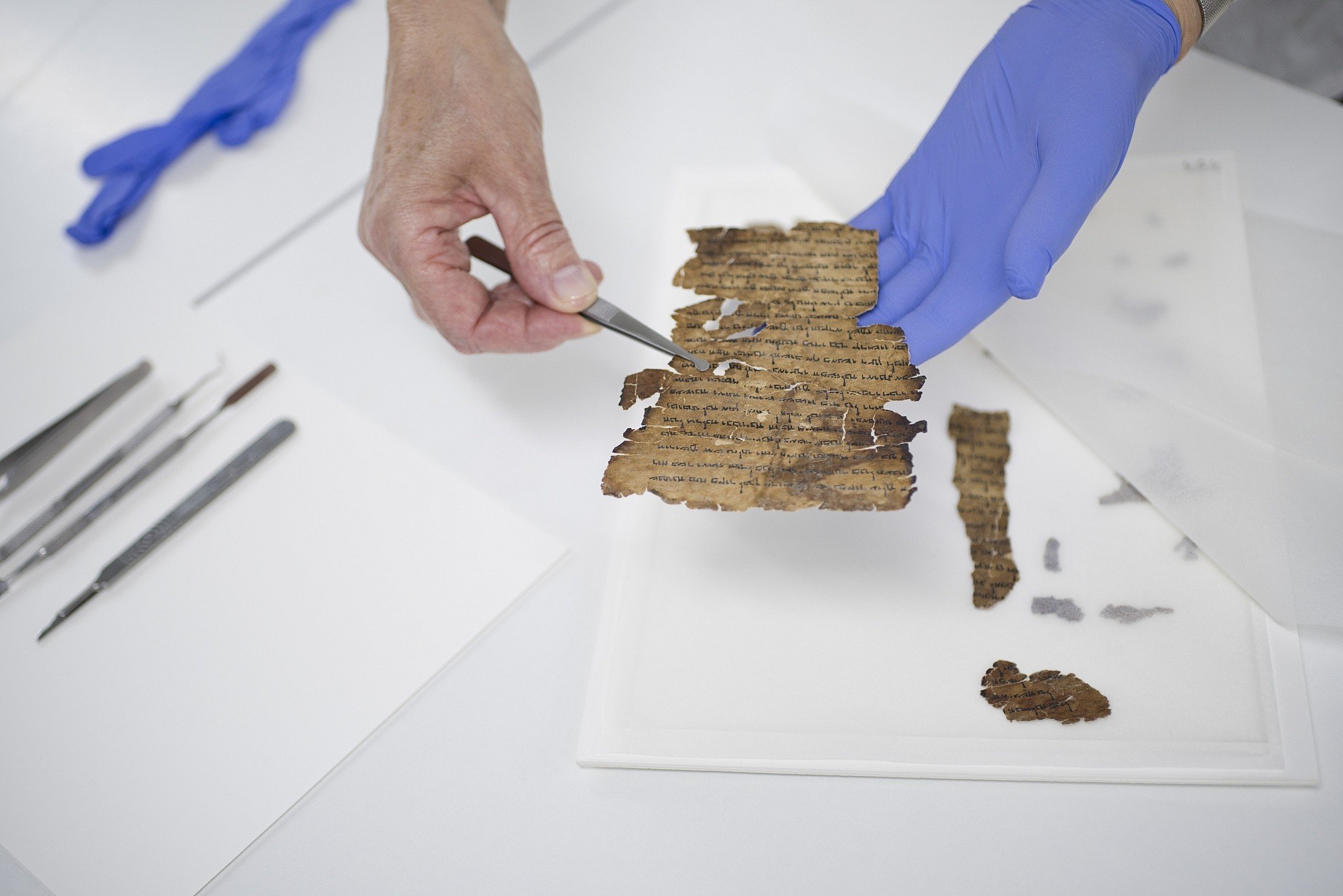
Uziel was recently named the new head of the IAA Dead Sea Scrolls unit. Calling the scrolls the greatest archaeological find in Israel for the century, he said, it was an obvious transition for him from field archaeology.
“Having the option to contribute to the study of the Dead Sea Scrolls in any way is an amazing, amazing opportunity.” He intends to integrate the archaeological sciences into the study of the scrolls, with an emphasis on conservation.
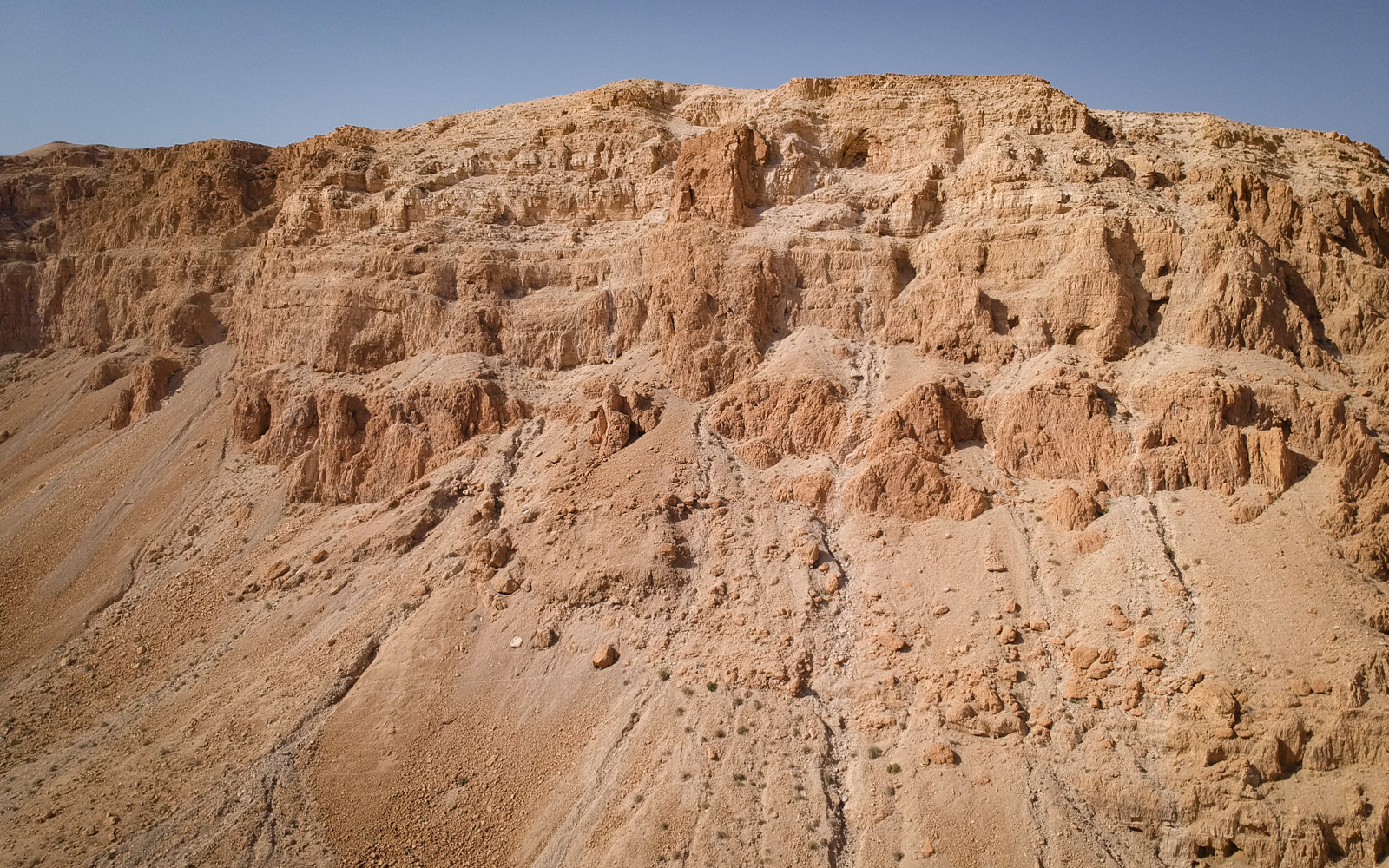
Asked if he believes that there are more scrolls out there to be found in untouched caves, he referred back to the discovery of the Roman theater, which most researchers had felt would never be discovered.
“There’s a 50-50 chance here I’m going to get this wrong or right,” he laughed. “To be honest, I do believe that there still may be a chance, but it hasn’t happened and others believe that we’ve found what there is to be found.
If I ever thought that we had exhausted all of our archaeological evidence, then I wouldn’t be an archaeologist, I think. So I think that we always have to keep that hope in our hearts that yes, maybe we will find more, but only the future will tell,” said Uziel.
—
In the coming weeks, ToI reporters and editors will be video-interviewing more influential individuals from a wide spectrum of fields and diverse topics for the Behind the Headlines series. Like The Times of Israel itself, Behind the Headlines aims to offer a fair, deep look at some of today’s burning issues and noteworthy personalities.
If you’d like to join future Behind the Headlines conversations when they are aired, just become a Times of Israel Community member today and you’ll gain access to Wednesday’s session, along with all of our upcoming exclusive webinars. You’ll also gain an ad-free experience of the ToI site and apps, and a weekly insider letter from David Horovitz.
If you are already a ToI Community member, you’ll receive a link to each session by email on Wednesdays.










The Times of Israel Community.