

Weak leadership in US, Israel is making region more dangerous
Obama insists on tackling IS, not Iran, while Netanyahu does nothing to keep the West Bank from deteriorating

 Add ToI as a Preferred Source on Google
Avi Issacharoff, The Times of Israel's Middle East analyst, fills the same role for Walla, the leading portal in Israel. He is also a guest commentator on many different radio shows and current affairs programs on television. Until 2012, he was a reporter and commentator on Arab affairs for the Haaretz newspaper. He also lectures on modern Palestinian history at Tel Aviv University, and is currently writing a script for an action-drama series for the Israeli satellite Television "YES." Born in Jerusalem, he graduated cum laude from Ben Gurion University with a B.A. in Middle Eastern studies and then earned his M.A. from Tel Aviv University on the same subject, also cum laude. A fluent Arabic speaker, Avi was the Middle East Affairs correspondent for Israeli Public Radio covering the Israeli-Palestinian conflict, the war in Iraq and the Arab countries between the years 2003-2006. Avi directed and edited short documentary films on Israeli television programs dealing with the Middle East. In 2002 he won the "best reporter" award for the "Israel Radio” for his coverage of the second intifada. In 2004, together with Amos Harel, he wrote "The Seventh War - How we won and why we lost the war with the Palestinians." A year later the book won an award from the Institute for Strategic Studies for containing the best research on security affairs in Israel. In 2008, Issacharoff and Harel published their second book, entitled "34 Days - The Story of the Second Lebanon War," which won the same prize.
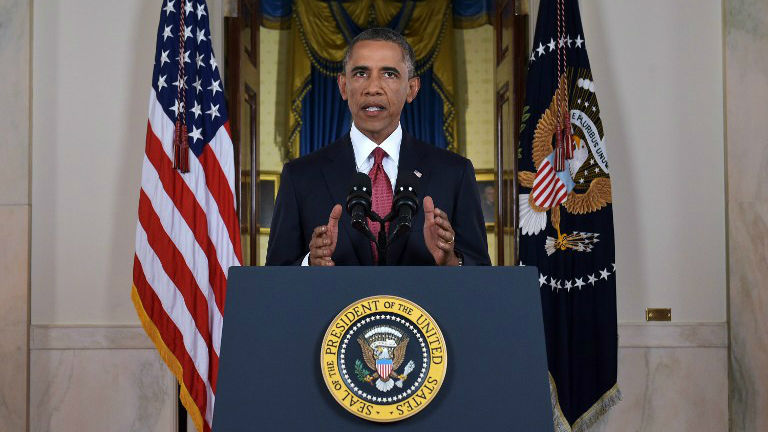
Plenty has been written in recent years about the foreign policy of US President Barack Obama’s administration, especially regarding the Middle East.
Still, he never fails to surprise us anew, time and again, with his hesitancy in dealing with regional problems.
Only two weeks ago, Obama acknowledged that America did not have a strategy for countering the Islamic State. Presumably, setting up such a strategy for dealing with the murderous organization would require considerable thought. Yet on Wednesday Obama presented his strategic plan, which any Middle Easterner who didn’t support IS could have come up with long ago: intensification of strikes against IS everywhere, including Syria (finally); more support for those fighting IS on the ground (the Iraqi Army, the Kurds, and the Syrian opposition groups that have been begging the US administration for help for years, which Washington refused); drying up IS financial sources; improving intelligence; and providing humanitarian aid to residents of the region harmed by the organization’s actions.
It’s hard to understand how the White House views of the Middle East are shaped. Certainly, the administration has repeatedly shown weakness in the region.
This began when Obama came into office and chose to attack Israel and the settlements in a way that caused the Palestinian Authority, which could hardly afford to be less critical of Israel than the Jewish state’s chief ally was being, to present an ultimatum — either a settlement freeze in the West Bank and East Jerusalem, or no peace talks.
In Egypt, the White House then stood up against then president Hosni Mubarak, while treating the Muslim Brotherhood with respect, and later Obama gave president-elect Abdel-Fattah el-Sissi the cold shoulder. He also ignored for too long Syrian President Bashar Assad’s use of chemical weapons against his own citizens.
But in the case of IS, the administration broke its own records for cynicism and misplaced priorities. The president asserted this week that the Islamic State presents a greater danger to the region than Iran. Yes, that “Toyota Army,” with no more than 32,000 fighters in total, ostensibly threatens the Middle East more than a threshold nuclear power like Iran, which runs terror cells in every corner of the globe. Iran — with its operatives in Lebanon, Iraq, Yemen, Saudi Arabia, Gaza, Sinai, North Africa, South and Central America, and even in Europe — is less dangerous than IS?
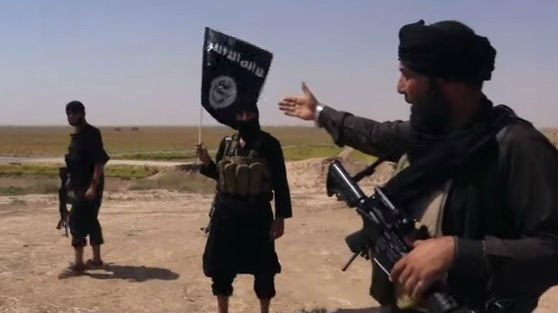
Obama has found himself an enemy to fight. If the president can’t handle the biggest problems in the region, at least he’ll make sure he’s settled the score with the guys with guns driving around in Toyotas.
Israel has its own leadership problems
The details being revealed about the kidnapping and killing of the three teens Gil-ad Shaar, Naftali Fraenkel, and Eyal Yifrach indicate that there was a major conceptual failure by Israel’s political and security leadership.
The Shin Bet had already established that the man who financed the June 12 attack in the West Bank was Mahmoud Kawasme (whose brother, Husam, was the head of the murderous cell). Mahmoud was expelled to Gaza as part of the Gilad Shalit release deal. Earlier this week, I revealed in The Times of Israel that Kawasme’s commander was Abed a-Rahman Ghanimat, originally from Zurif, and his deputy was Iyad Dudin, both of whom were exiled in the Shalit deal and were given command of Hamas’s military wing activities in the Hebron area.
Amos Harel wrote in Haaretz that the Hamas leadership in Gaza appointed regional commanders who sit in the Strip and manage the Izz ad-Din al-Qassam Brigades cells across the entire West Bank. All the appointed commanders had been expelled in the Shalit deal. The senior figure among these commanders is Saleh al-Arouri, who was expelled by Israel to Turkey in 2010.
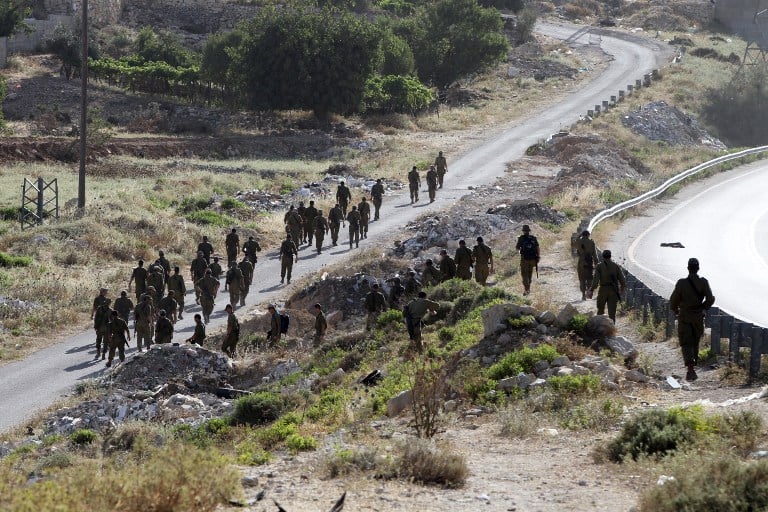
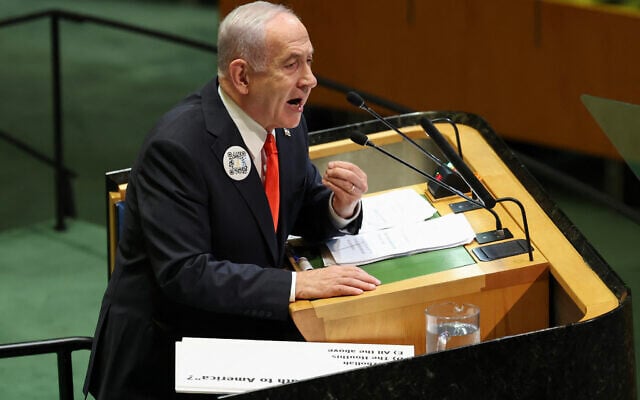
The idea that exiling prisoners make them less dangerous is bankrupt. In fact, the opposite is true. Their freedom of action and distance from the IDF’s short arm allows them more space to plan attacks. In other words, the same decision makers who approved and advocated for the Shalit deal, including — especially — Prime Minister Benjamin Netanyahu, should bear responsibility for the sequence of events that led to the kidnapping of the three teens.
But Netanyahu, too, likes to pick on the weak. Even after the kidnapping investigation ended — with unequivocal denunciations from the PA, not to mention intelligence cooperation in the case from Mahmoud Abbas — and even after the PA helped in the ceasefire negotiations to end the summer’s conflict in Gaza, Netanyahu still refuses to budge an inch on the diplomatic front.
Ministers Tzipi Livni, Yair Lapid, and Yaakov Peri might understand the importance of breaking free from the political stalemate with the Palestinians, but the prime minister refuses to hear it. Instead, it seems that, after the fighting in Gaza, the government’s positions have actually hardened over everything having to do with security arrangements.
Netanyahu, paralyzed by the threats from Naftali Bennett and Avigdor Liberman, continues to bury his head in the sand and hope for the best. But better times don’t seem to be on the horizon.
On Wednesday morning, a 21-year-old Palestinian named Issa Salim al-Katri was killed by IDF fire in the al-Amari refugee camp near Ramallah. Later that day, the shops and restaurants in the camp began closing their shutters and locking the doors. Workers at the restaurant I was in told me politely that I had to leave, or stay inside the restaurant with the shutters closed. When I asked why, the woman at the front told me, “If we leave the shutters open, ‘they’ will come and break the windows.”
It doesn’t look like the alternatives available to the Palestinians are especially good. They have three options to choose from: a Gaza-style Islamist future, i.e., under Hamas and the Muslim Brotherhood; a future under Abbas; or still more radical Islam, Islamic State-style. Instead of understanding the urgency of pushing the West Bank model — with a Palestinian leadership that is willing to negotiate for peace — Israel is doing nothing.
This policy could blow up in our faces in the coming year. Abbas is insisting on taking drastic steps against Israel and Hamas. He doesn’t intend to help Israel by deploying his forces to the Gaza-Israel border at Rafah without a new, substantive political process with Israel. At the same time, he isn’t about to help rehabilitate Gaza as long as Hamas holds on to power there. In addition, Abbas intends to turn to the UN and international institutions to advance his demands for statehood.
As the Israeli security apparatus understands, if there is no political breakthrough in six months to a year, Abbas intends to halt the PA’s security cooperation with Israel. The consequences on the ground could be dramatic. Thus, an escalation of hostility lurks on the horizon, this time in the West Bank.




The Times of Israel Community.