

What an expat-American journalist learned from the Pittsburgh Jewish community
Jews in the Steel City have chosen a path of peace and bridge-building as they mourn the lives of 11 of their own
 Add ToI as a Preferred Source on Google
Deputy Editor Amanda Borschel-Dan is the host of The Times of Israel's Daily Briefing, What Matters Now and The Reel Schmooze podcasts, and heads up The Times of Israel's features.
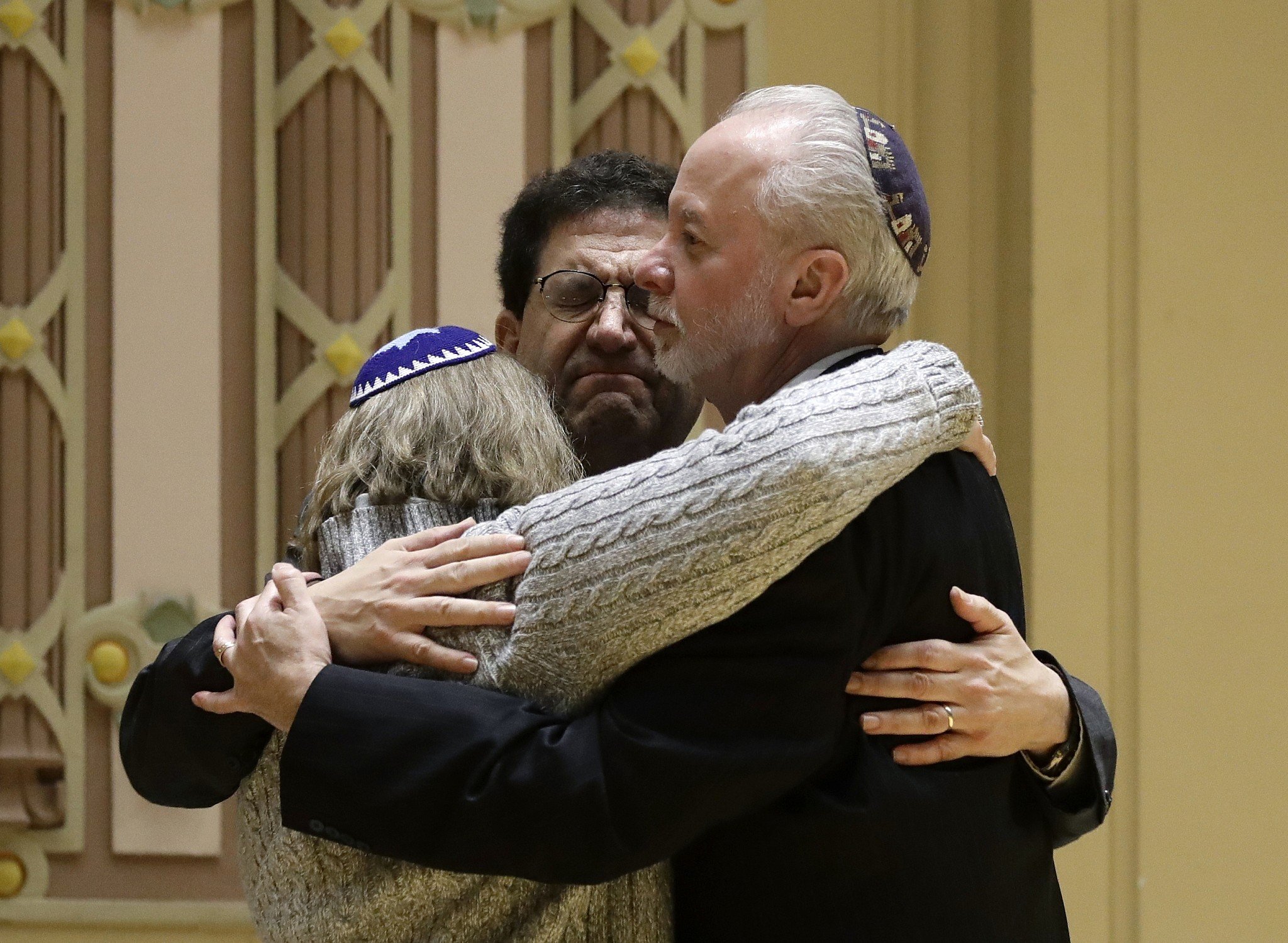
The various denominational “fingers” of Pittsburgh’s large Jewish community closed ranks after the mass anti-Semitic synagogue shooting that left 11 Jews dead on October 27. But instead of making a vengeful fist, the community became a united, outstretched hand.
In the face of communal horror, the diversely vibrant congregations came together, overcame their differences as Jews, and as a unified front accepted support from each other, from the greater Pittsburgh community, and from the world.
The embodiment of “Stronger Together” was powerful to witness and my objective journalist’s facade was quickly cracked last week. Rivers of tears running down my face, I wrote several articles after a series of overflowing funerals and prayer services. As I initially mourned the carefree America I had left two decades ago for Israel, this tragedy hit me hard.
After almost 20 years in the Jewish state, I am accustomed to the fallout of terror attacks. As a journalist I have covered the deaths of two former schoolmates — slaughtered in a bombing at the Hebrew University in 2002. Even as I write this, an attempted stabbing occurred only a mile from my home, very close to my children’s school. The would-be female attacker was “neutralized.” My heart pounds, I worry for my children. I move on.
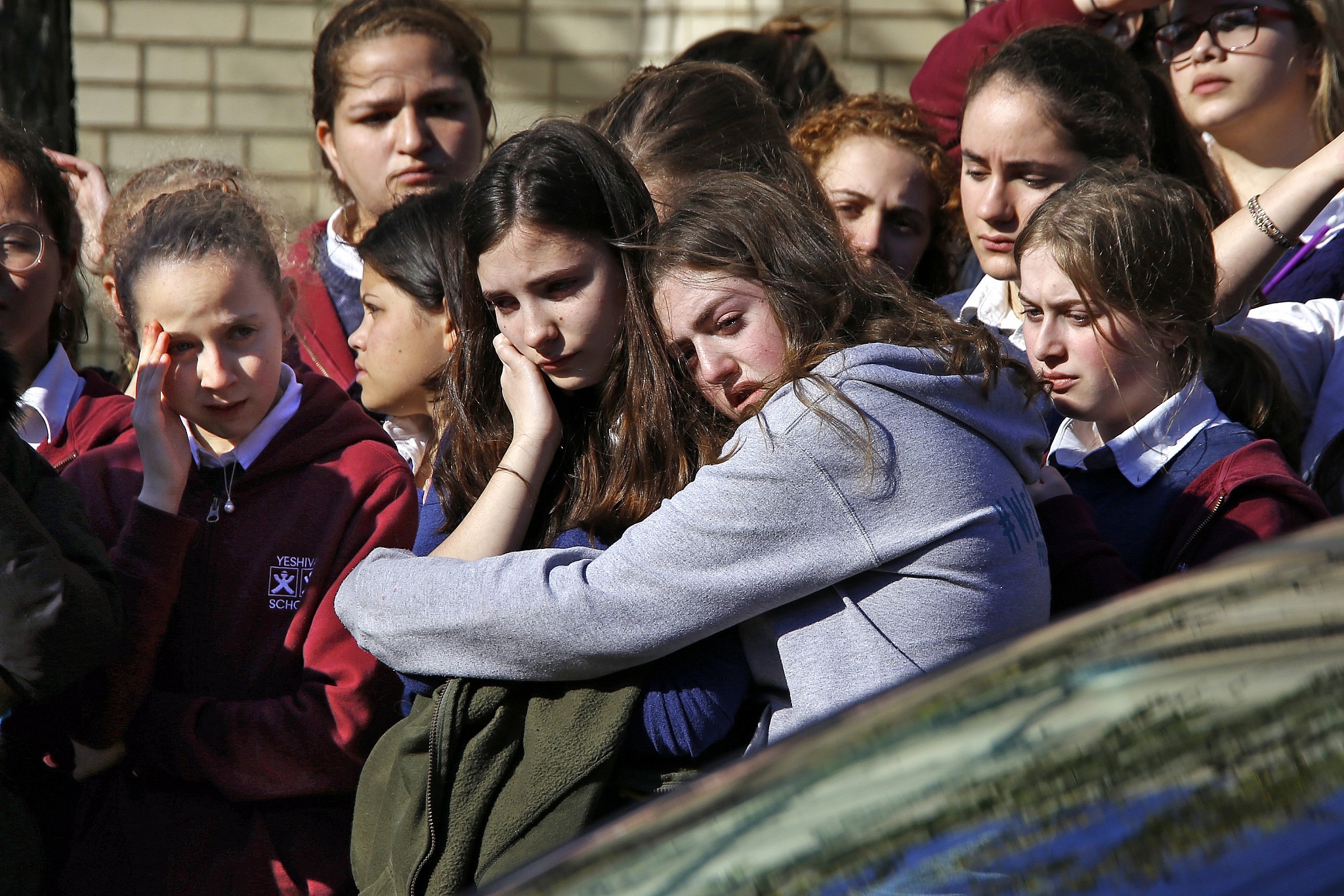
In the face of terror, the Jewish state comes together. The radio plays sad, slow songs and news reports are full of the stories behind the stolen lives. We cry together. We get angry. Israel is a necessary fist.
But now, after seeing the Pittsburgh Jewish community’s outstretched hand, I am strangely optimistic for American Jewry.
Undeniably, the Pittsburgh Jewish community is in many ways unique in today’s America, where most Jews have fled city centers for the suburbs. This is a community that is part and parcel of its city’s life. One would expect nothing less from the former neighborhood of children’s television star Mr. Rogers.
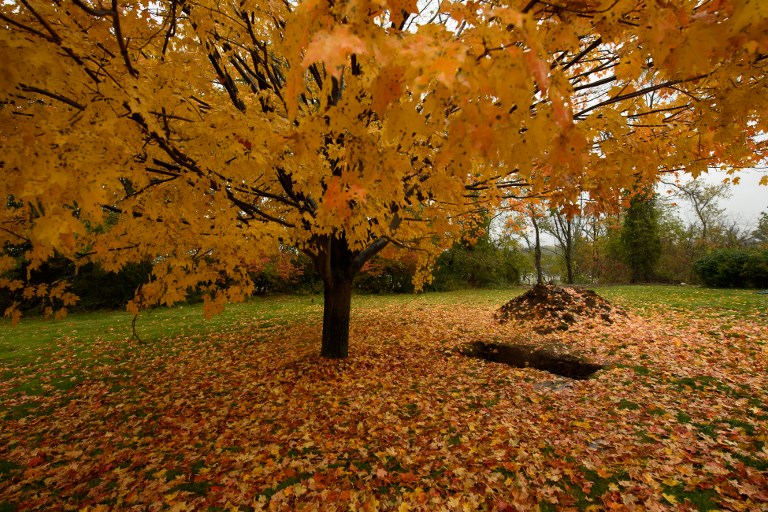
Lined with fall foliage, Squirrel Hill, the site of the shooting, is a distinctive “urban shtetl” settled in the 1800s near the city center. The community, now numbering some 50,000, still largely resides in Squirrel Hill and its surroundings, where there are some dozen synagogues located within walking distance of the commercial center.
It is no coincidence that the accused shooter, Robert Bowers, chose this neighborhood for his anti-Semitic massacre. Three distinct congregations were housed in the now desecrated Tree of Life building alone.
The neighborhood’s Jewish roots run deep: One of the Squirrel Hill synagogues used for burials this week is the site of the Reform Movement’s formative 1885 “Pittsburgh Platform.” Sophie Masloff, the first female mayor of Pittsburgh, who ran the city as a steely Yiddish-speaking grandmother between 1988 and 1994, was buried in 2014 from a second Reform synagogue here.
The neighborhood also holds a plethora of Jewish institutions, including the Jewish Community Center, the Jewish Federation, and Jewish Family and Community Services, which have all cooperated in taking the lead in serving their traumatized community.
It is this seamless, across-the-board partnership that gives me hope.
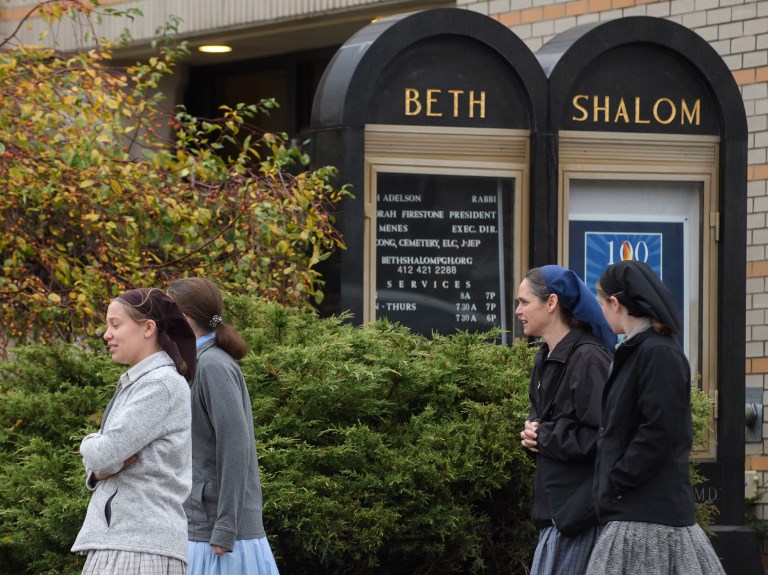
The first Shabbat after the shooting was observed across the United States by additional communal cooperation as thousands heeded the call to #ShowUpForShabbat. Likewise, leaders of all faiths attended Pittsburgh’s central prayer services Friday night and Saturday and dozens of Jewish/Muslim/Christian interfaith services and fundraising programs have flourished organically.
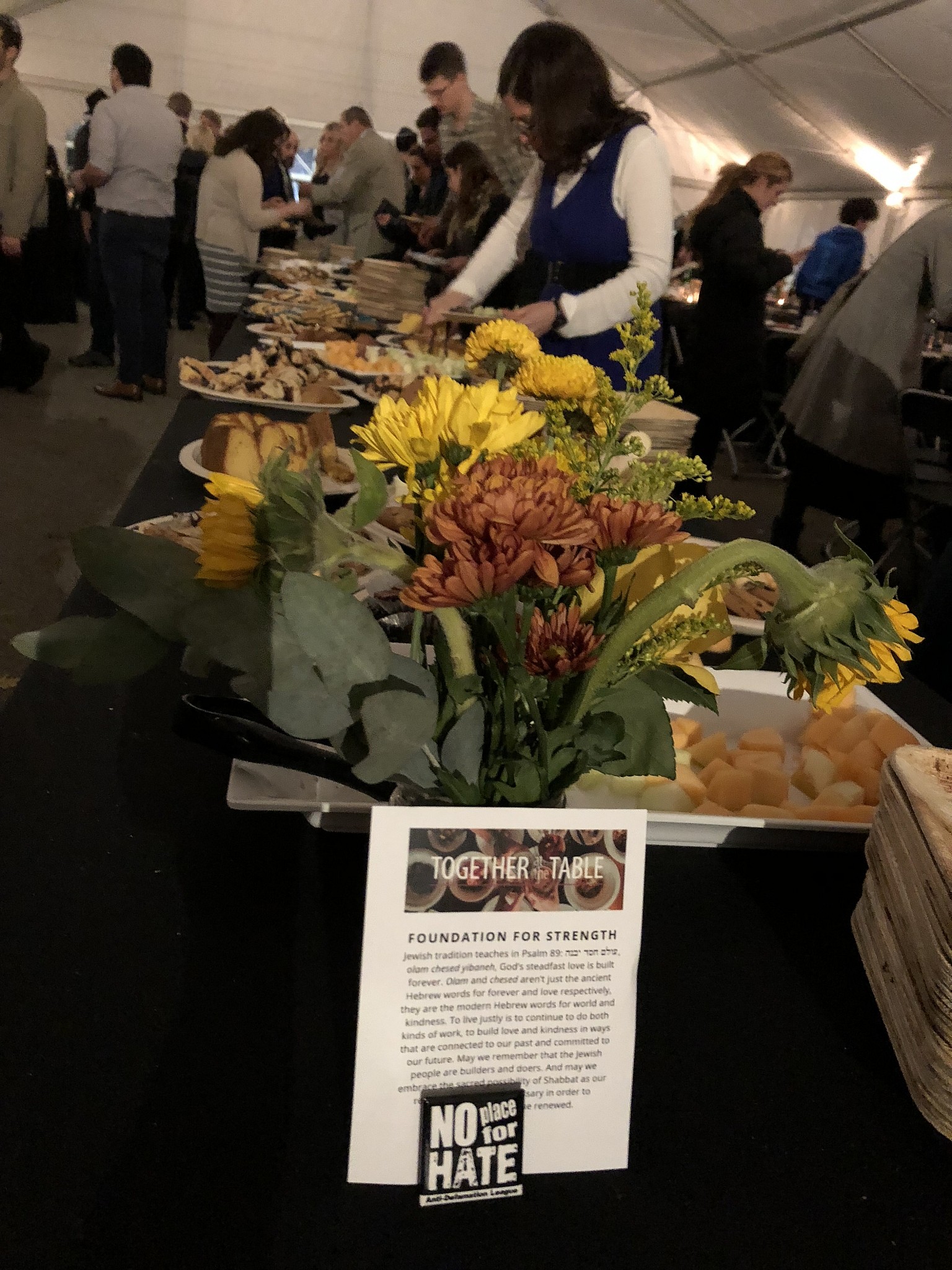
A large Friday night dinner held at the epicenter of Pittsburgh’s Jewish community was organized by an otherwise unlikely coalition. Though not everyone fully observed the Jewish laws of Shabbat, the shooting brought together many disparate groups, including the Chabad-infused Friendship Circle that housed the event, and Keshet, a national group that works for Jewish LGBTQ inclusion and equality, which contributed to the printed materials written in collaboration with a variety of left-leaning Jewish organizations.
Some 300-400 people gathered on that chilly evening for challah, chicken and noodles in a mixed crowd inside an impromptu event tent standing in a municipal parking lot. Local politicians stopped by and for some non-Jews, this was their first ever Shabbat experience.
On a personal level, I also experienced the overriding religious tolerance and goodwill of the community.
On Shabbat morning, after I walked out of a joint communal prayer service at a Conservative synagogue, I ran into a large ultra-Orthodox family also presumably making its way home after its devotions.
One of the little girls wished me a “Gut Shabbos” and I rejoined, “Shabbat shalom.” We talked about her hot pink coat with a fur trim (which the still 7-year-old Mandy in me envied).
It was an unremarkable friendly conversation save for one thing: Her father, wearing the traditional black and white suit and black stetson of the misnagdim, may have briefly smiled at me. I can’t remember when this last happened in my chosen land, the Jewish state.
In Israel, a tragedy of this sort begets avowals of retribution. But Pittsburgh chose another path: In the moving, packed funeral services conducted in Pittsburgh, eulogies mixed humor into the numbing horror, reminding openly tearful listeners that the fallen were people, not a collection of senseless murders. Lives — not deaths — were honored.
I left the Steel City impressed by its residents’ resilience. But it is the strength of their cooperation that left me in awe. This week Pittsburgh has truly earned its place as the City of Bridges.








The Times of Israel Community.