

What’s wrong with Netanyahu’s coalition?
On the first day of the Knesset’s winter session, a unified, effective governing coalition was nowhere in sight
 Add ToI as a Preferred Source on Google
Haviv Rettig Gur is The Times of Israel's senior analyst.
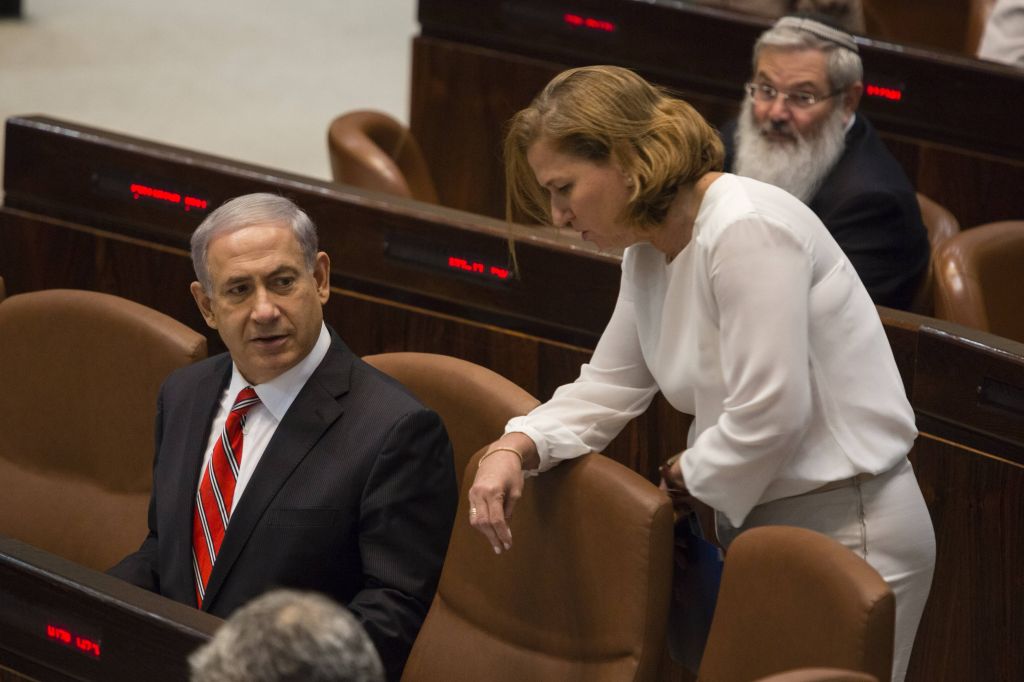
Talk to anyone who walked the tawny stone halls of the Knesset on Monday and the impression is always the same: something isn’t working in Prime Minister Benjamin Netanyahu’s coalition.
At the opening of the Knesset’s winter session, even veteran politicians and pundits struggled to keep up with the dizzying political arrangements and rearrangements, maneuvering and baiting that this small nation’s political system was able to sustain in a single busy day.
Perhaps the central lesson from the day’s events: there are precious few issues on which the governing parliamentary coalition actually acts like one.
Last week, Prime Minister Benjamin Netanyahu announced he was reneging on his past support for a liberalizing bill that would expand the number of state rabbis recognized for conversion, a step intended to contribute to a more accommodating conversion process in the framework of Israel’s state rabbinate. Without Netanyahu’s support, the bill would lack the government’s support, and since the government is by definition established by a Knesset majority, that might spell the bill’s demise.
In attempting to kill a measure bitterly opposed by the ultra-Orthodox parties in the opposition, but central to the platform of fellow coalition chieftain — Hatnua party leader and Justice Minister Tzipi Livni — Netanyahu was hinting to the ultra-Orthodox that he saw them as future partners in the government. In the process, he was sending an unmistakable message to his unruly coalition partners, Hatnua and the secularist centrist party Yesh Atid, that they were replaceable.
And, indeed, the bill could not pass in the cabinet last week, and so came to the Knesset Law Committee on the first day of the winter session without the government’s assurance of majority support.
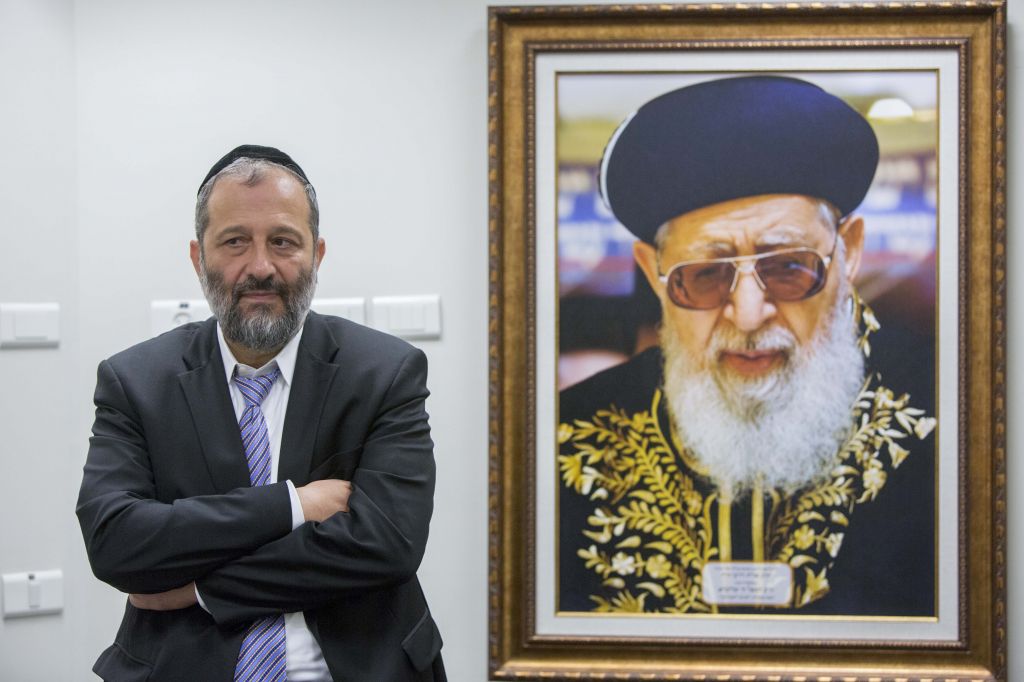
But the move backfired for Netanyahu. Unwilling to be used as pawns in an internal coalition power-play — ultra-Orthodox leaders, like others in the political system, do not believe the coalition is facing imminent collapse — the Shas party dispatched its leader Aryeh Deri to explain publicly to the prime minister that the party’s priority “isn’t giyur, but diyur,” or in a language in which the jab does not rhyme, “isn’t conversion, but housing.” Shas could not be charmed by such a half-hearted inanity, Deri was suggesting. And in case Netanyahu missed the point, Deri cited the government’s economic policy as proof that “this government has no right to exist.”
Instead of proving he had other options, Netanyahu only demonstrated that his political options were actually fairly narrow since the ultra-Orthodox were not waiting in the wings to prop up his government should he lose the secular centrists of Hatnua and Yesh Atid. And so Justice Minister Livni spent Monday avenging his maneuver with one of her own.
On Monday afternoon, Hatnua’s conversion bill passed its last hurdle in the Law Committee ahead of the final vote into law in the plenum.
A coalition of religious parties – Jewish Home, United Torah Judaism and Shas – together with Netanyahu’s Likud tried to push through amendments to the bill to weaken it. But despite a raucous debate, they were stymied by a surprising coalition: the representatives of Labor, Yesh Atid, Hatnua – and Yisrael Beytenu. Though hawkish on the Palestinians, Yisrael Beytenu is among Israel’s most radically liberal parties on many domestic and especially religious issues.
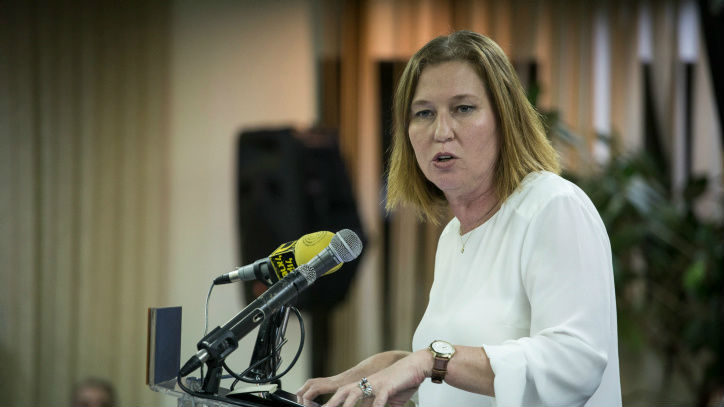
“Today in the Law Committee, one thing became clear,” Livni said after winning the vote and watching it leave the committee undiluted. “He who did not want MK [Elazar] Stern’s conversion bill in the government got it today in the Knesset,” she declared.
There was no doubt in the Knesset who “he” was.
Livni’s comment was a reference to another famous Israeli quip, journalist Uri Dan’s assertion about Ariel Sharon that “those who did not want [Sharon] as [IDF] chief of staff will get him as defense minister, and those who did not want him as defense minister will get him as prime minister.”
Dan’s prescient statement serves in Israeli political parlance as the cry of the supposed underdog moments before his inevitable triumph.
And, indeed, the split of the vote in committee suggests Livni may yet win the day in the plenum. An alliance of Labor, Meretz, Kadima, Yesh Atid, Hatnua and Yisrael Beytenu, all openly devoted to the conversion bill and willing to ignore the coalition-opposition divide to secure its passage, musters 60 votes for the bill, exactly half of the Knesset’s 120 MKs. The opposition to the bill — Likud, Jewish Home, UTJ, Shas – brings just 49, and that’s assuming the entirety of the Likud can be counted on to vote against a measure many of the party MKs actually support. If the coalition does not enforce coalition discipline — and how can it, when Livni openly calls Netanyahu a “player of tricks” and “breaker of agreements” over the bill? — it may become one of the rare instances in which a bill actually opposed by a sitting prime minister and unable to pass in the cabinet is passed into law in the Knesset plenum.
Netanyahu did not miss the significance of his miscalculation. The conversion bill transformed on Monday from a straightforward religion-and-state reform to a vital political weather vane. If last week the ultra-Orthodox parties constituted a valuable threat to keep his rowdy coalition partners in line, this week Netanyahu discovered how little control he wields over his own coalition, and is coming to believe that the ultra-Orthodox may actually decide the fate of his government before long.
And so within two hours of the committee vote, shortly after Livni’s triumphant and very credible declaration of political independence over the bill, Netanyahu did something incredibly rare: he gave a live interview to the Israeli media. Famously a prime minister who could go for hundreds of days at a time without interviewing once to an Israeli news outlet, Netanyahu now eagerly sought to speak out – and he chose Radio Kol Baramah, the most popular ultra-Orthodox radio station in the country, to do it.
His message to the ultra-Orthodox public was not subtle. “I’m not the one who opposed the inclusion of [ultra-Orthodox] parties [in the current government]. The opposition came from some of my partners, and to my dismay it prevented the creation of a wide national unity government, and I think that’s what is needed in these days, a broad unity, the people of Israel in all its parts, all its branches.”
Even as Netanyahu and Livni push each other precariously close to the edge of the coalition’s viability over conversion reform, they stand shoulder-to-shoulder in defense of the Supreme Court’s power to strike down legislation.
Israel’s constitution is only half-formed, consisting of a handful of Basic Laws that establish the institutions of government (Basic Law: The Judiciary, Basic Law: The Knesset, and the like) and the two Basic Laws on rights – Basic Law: Human Dignity and Freedom, and Basic Law: Freedom of Vocation. The Israeli Supreme Court strikes down laws based on proportionality and other tests that determine whether the legislation in question upholds the demands of the two rights-granting Basic Laws.
This role of the court, which former chief justice Aharon Barak more or less invented after the 1992 passage of the two Basic Laws, has long been a point of contention on the right. With the court’s latest overturning of the government’s policy of holding illegal migrants from Africa for up to three years in effective detention while their refugee status is determined, the question of the judiciary’s “dictatorship” has become acute. Jewish Home MK Ayelet Shaked has sponsored a bill to grant the Knesset the ability to overrule the court’s declaration of unconstitutionality with a 61-vote majority.

The bill passed the cabinet’s Ministerial Committee for Legislation on Sunday by a vote of eight to three, with Jewish Home, Likud and Yisrael Beytenu’s ministers all in favor and Hatnua and Yesh Atid’s opposed. It will now officially go to the Knesset as a bill with the support of the governmental majority.
Or will it? Livni may be in the minority in the cabinet committee that decides if the government will support a bill – but she is also the committee’s chairwoman. She has filed an appeal against the committee’s vote, and theoretically can hold up the government’s support for the bill for a long time.
Netanyahu, meanwhile, has opposed past efforts to weaken the Supreme Court, and his advisers have already leaked to the Israeli media that he does not plan on supporting it this time. “There is no chance that Netanyahu will act actively to advance legislation that would harm the Supreme Court,” one source told Haaretz on Sunday night, after the cabinet committee vote.
“As long as he didn’t have to act, he didn’t care how the ministers voted in the committee,” explained the source, but added that once the bill reaches the point where Netanyahu will have no choice but to act, he will oppose the bill.
On conversion, the prime minister has forced a battle line to be drawn that slices right through his coalition. On the Supreme Court’s powers, he shows every intention of siding with the position that has more supporters outside his government than inside.
This dive into the parliamentary sausage-making reveals a strange fact about Israeli politics. The borders of the coalition and opposition change seemingly with every bill.
Still not convinced?
MK Eitan Cabel (Labor) has proposed a bill that would classify freebie newspapers as market-warping once they reach a large enough circulation — and would force them to charge money for each copy sold. The bill is rightly dubbed the “Israel Hayom” bill, as it is intended to rob the popular pro-Netanyahu newspaper of that name, funded by outspoken Netanyahu supporter and American Jewish billionaire Sheldon Adelson, of its major competitive advantage: the simple fact that it is given out free.
While Cabel insists his motive for proposing the bill is primarily his concern over the faltering economic conditions of the country’s newspapers, there can be little doubt, and even Cabel acknowledges it is a factor, that support for the bill is grounded in opposition to Netanyahu.
So it is significant that the bill, which Cabel plans to advance this week, isn’t popular only in the opposition. MKs from Jewish Home, Hatnua and Yisrael Beytenu, all members of the Netanyahu government, are signed on Cabel’s bill. In the case of Hatnua and Yisrael Beytenu, the MKs could not have signed without at least the tacit agreement of their party leaders, Justice Minister Livni and Foreign Minister Avigdor Liberman respectively. It is they, not Cabel, who stand a reasonable chance of pushing the bill into law.
A single day has passed in the winter session, and the issues already mentioned are only a tiny fraction of the parliamentary wrangling from that first day. At noon Monday, Arab MKs held a dramatic (if largely ignored) press conference announcing that Balad’s MKs would boycott the opening meeting of the new session. Monday also saw the first of three votes on a bill that would enable gays to apply for surrogacy, a bill that would create for the first time a mechanism for firing underperforming municipal rabbis, and a government bill that would allow a one-time increase in defense spending in 2015 to offset the costs of this summer’s Gaza war. The bitter debate over the government’s policy toward African migrants and asylum seekers is still ahead, as is the essential matter of the passage of the 2015 state budget.
If the first day’s political convulsions and legislative excitement are any indication, a stormy, fascinating and even decisive winter session lies ahead.










The Times of Israel Community.