

When the Jerusalem Hills go up in smoke
Mercifully, last week’s huge wildfires did not result in loss of life. But Israel should not be relying on miracles and the extraordinary heroism of its firefighters

 Add ToI as a Preferred Source on Google
David Horovitz is the founding editor of The Times of Israel. He is the author of "Still Life with Bombers" (2004) and "A Little Too Close to God" (2000), and co-author of "Shalom Friend: The Life and Legacy of Yitzhak Rabin" (1996). He previously edited The Jerusalem Post (2004-2011) and The Jerusalem Report (1998-2004).
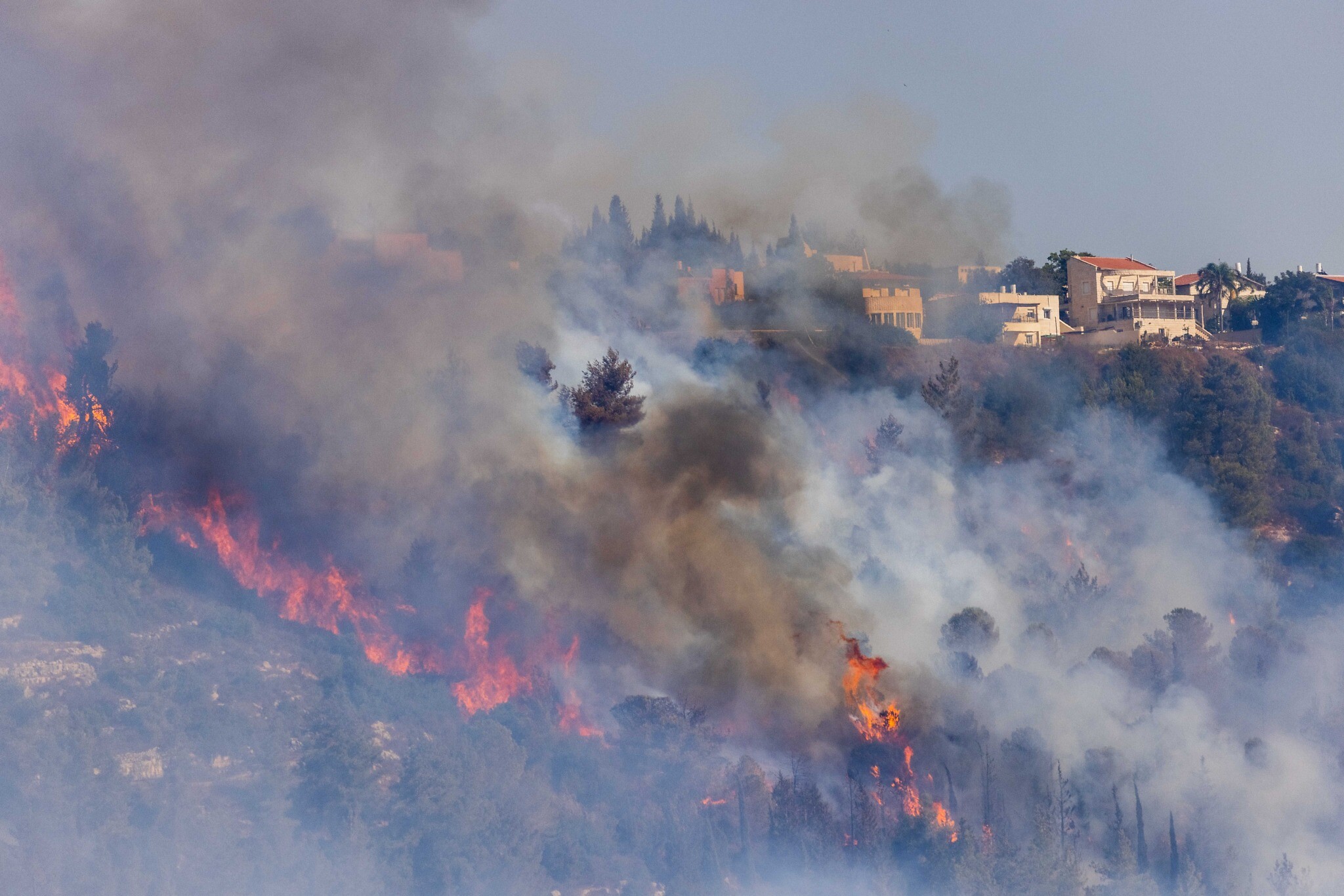
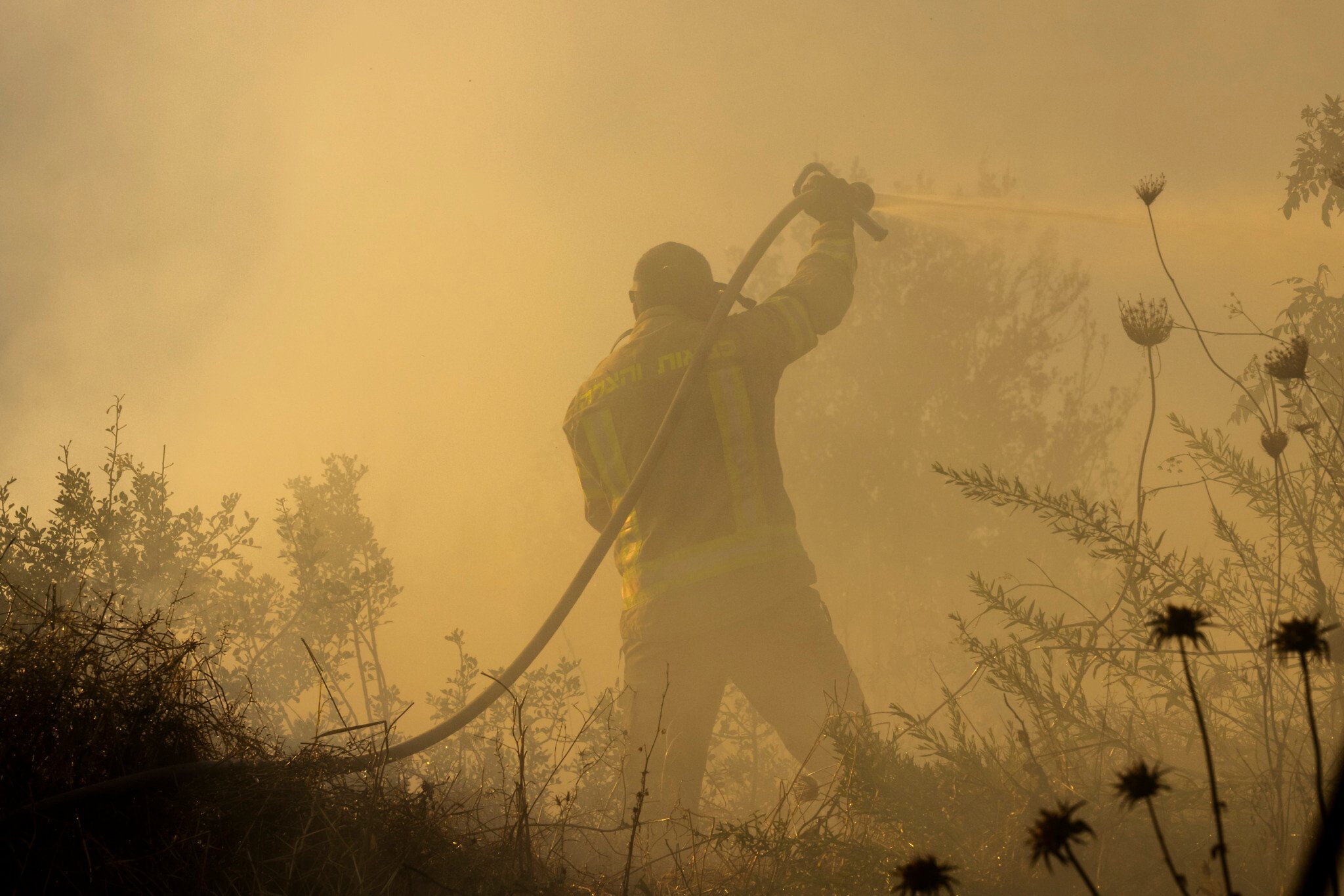
At the bottom of the only road leading up to the Eitanim psychiatric hospital in the Jerusalem Hills, as I passed through the area this weekend, two firefighters were hosing down the once-lush hillside.
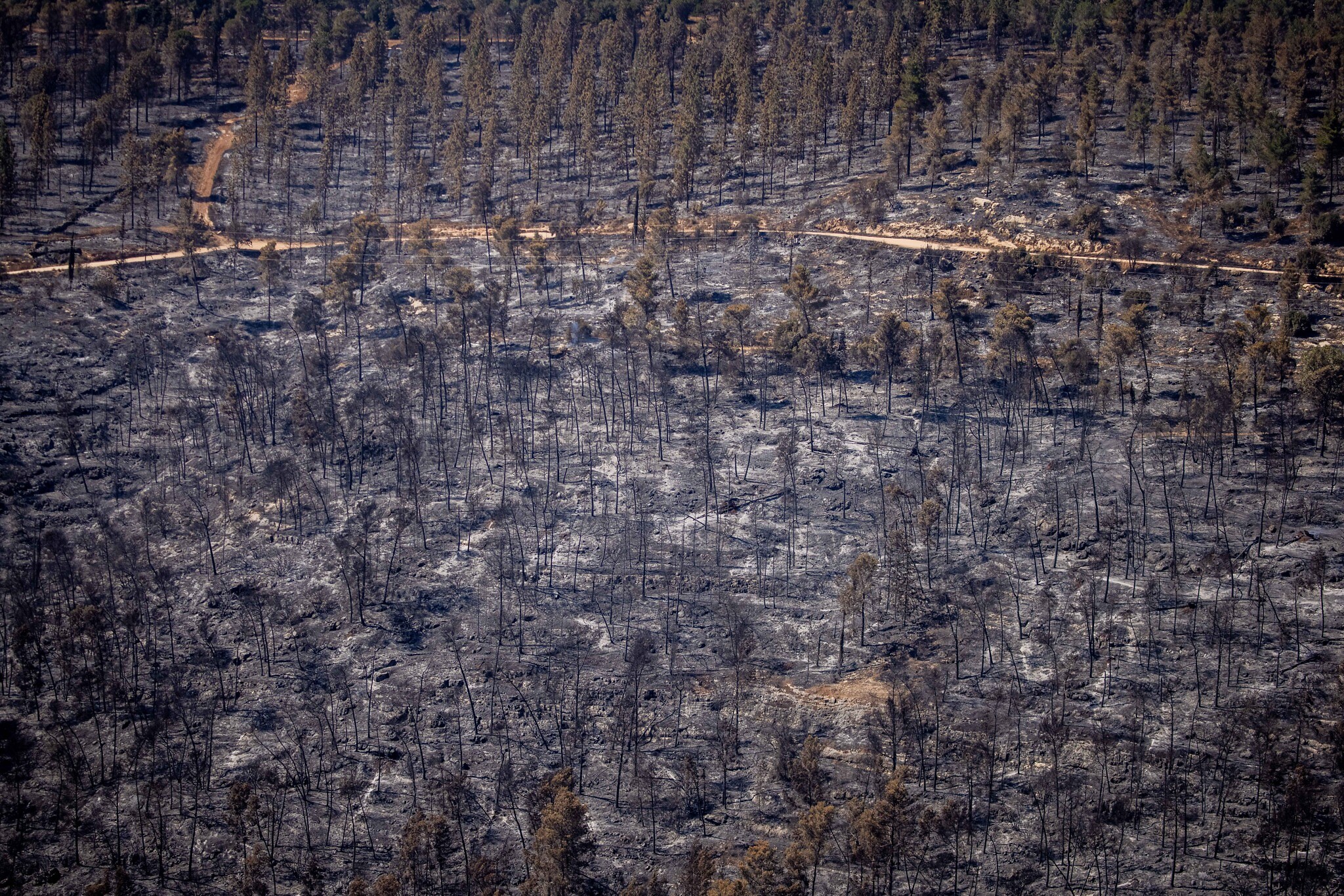
Thousands of acres of forest here and elsewhere were burned to a blackened wasteland early last week, but a light breeze and the heavy summer heat were still causing small new flashpoints as I drove and walked around — little plumes of smoke that, if the fire crews were not alert, could turn, again, into something profoundly dangerous.
The enormous wildfire consumed some 25,000 dunams (6,200 acres) of forest. At the height of the blaze, it was feared that Hadassah hospital at Ein Kerem might need to be evacuated.
At Moshav Beit Meir, “the only reason the entire moshav was not destroyed was because the wind changed,” a resident told Israel’s Channel 13 news. (The footage in this Hebrew link is worth watching).
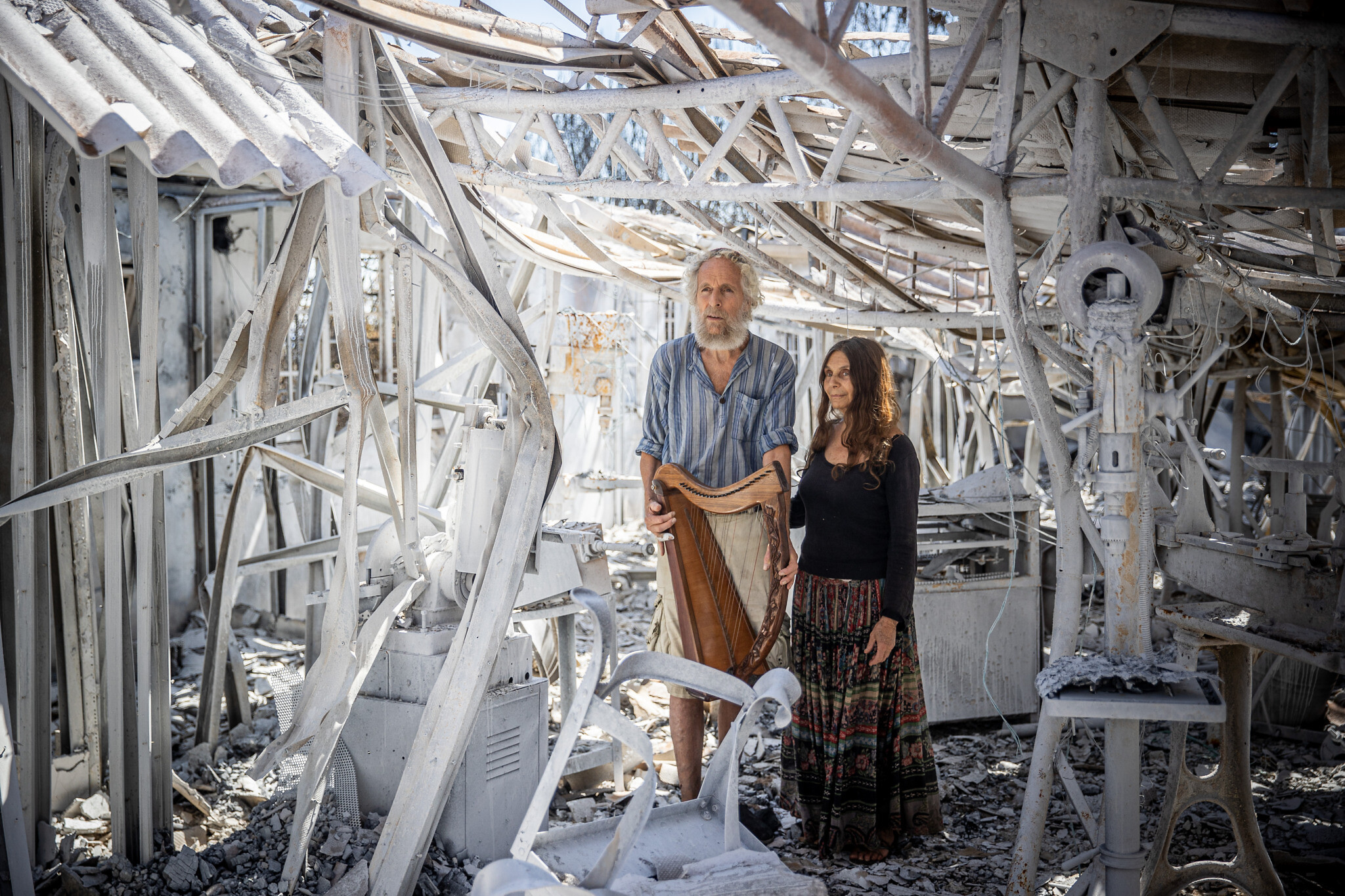
People lost their homes. Some lost their life’s work. Miraculously, as many reports put it, nobody lost their life.
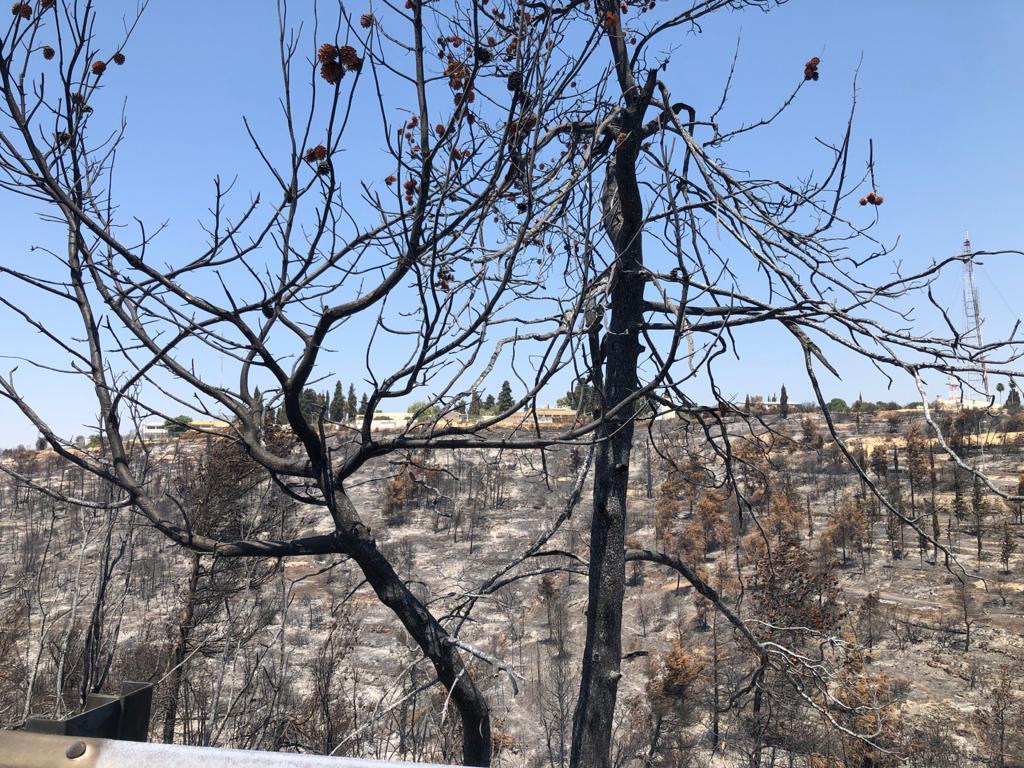
Through hills and valleys for miles around, the devastation is heartbreaking — acres of forest wiped out. The hillsides covered in ash, the angular, naked trees, the blackened road signs look like scenes from some apocalyptic winter.
Looking up at Eitanim, it is easy to understand the talk of miracles. The flames licked up almost to within touching distance of the buildings, and most of the hillside is scorched.
The hospital’s 156 patients and staff, officials said later, were assembled and ready to evacuate as the fire closed in on them — no mean feat this, at a psychiatric facility in an area being consumed by flames — when it became clear that the sole access road was impassable. Extraordinarily courageous police and fire service officers made the rapid decision to lead a rescue mission through the blaze.
When they got there, “the whole hospital was engulfed in smoke. It was one big chaos. Staff members, patients, all shouting,” recounted Chief Superintendent Dvir Tamim, the head of the Yasam police unit, who played a central role in the evacuation.
Patients were lying down on the floor “and I was forcibly getting them into cars,” added a Jerusalem-area police commander, Kobi Yaakob, who organized the rescue. “Some of them objected and didn’t understand who had come to evacuate them by force. And everything was being done inside the smoke.”
As has been widely reported, last week’s fire consumed more acreage even than 2010’s Mount Carmel fire. The Eitanim rescue also carries echoes of that blaze, that disaster: Eleven years ago, a bus full of Prisons Service officers, most of them new recruits, was dispatched to evacuate Damun Prison, which was in the line of the flames. They found their route blocked by a fallen tree, and became trapped; their vehicle was engulfed by fire. Ultimately, 44 people were killed — including 36 from the Prisons Service, Haifa’s police chief and two other police officers, two firefighters and a 16-year-old volunteer, and the bus driver.
Allegations of arson have swirled around the Carmel Fire. Allegations of arson have been raised regarding last week’s Jerusalem Hills blazes too, and regarding fires in the Etzion Bloc south of Jerusalem on Tuesday. The ongoing use of arson balloons, launched into Israel by terror groups in Gaza, underlines that pyromania has become another weapon in the armory of violent Palestinian nationalism.
Even without the deliberate efforts to torch Israel, the combination of near-inevitable negligence and our increasingly extreme climate mean that devastating wildfires, here as elsewhere on our warming planet, are now a constantly growing threat. Indeed, Eitanim was partially evacuated again on Wednesday, in a precautionary measure, as fire crews fought for two hours to douse further blazes in the area.
Israel has invested additional resources in recent years, including in firefighting planes, and has widened avenues of regional cooperation, to give it a better chance of bringing fires under control more rapidly and effectively. But plainly more needs to be done.
As Eitanim’s narrow escape underlines, we’re still living dangerously — overly reliant on heroism and the occasional miracle.
—
** An earlier version of this Editor’s Note was sent out Wednesday in ToI’s weekly update email to members of the Times of Israel Community. To receive these Editor’s Notes as they’re released, join the ToI Community here.










The Times of Israel Community.