

With rising attacks, EU works to meet security challenges amid Israel-Hamas war
Violence and antisemitic rhetoric at protests lead to calls for an increase in security, however there’s also unease that solutions could undermine free movement, right to assemble
 Add ToI as a Preferred Source on Google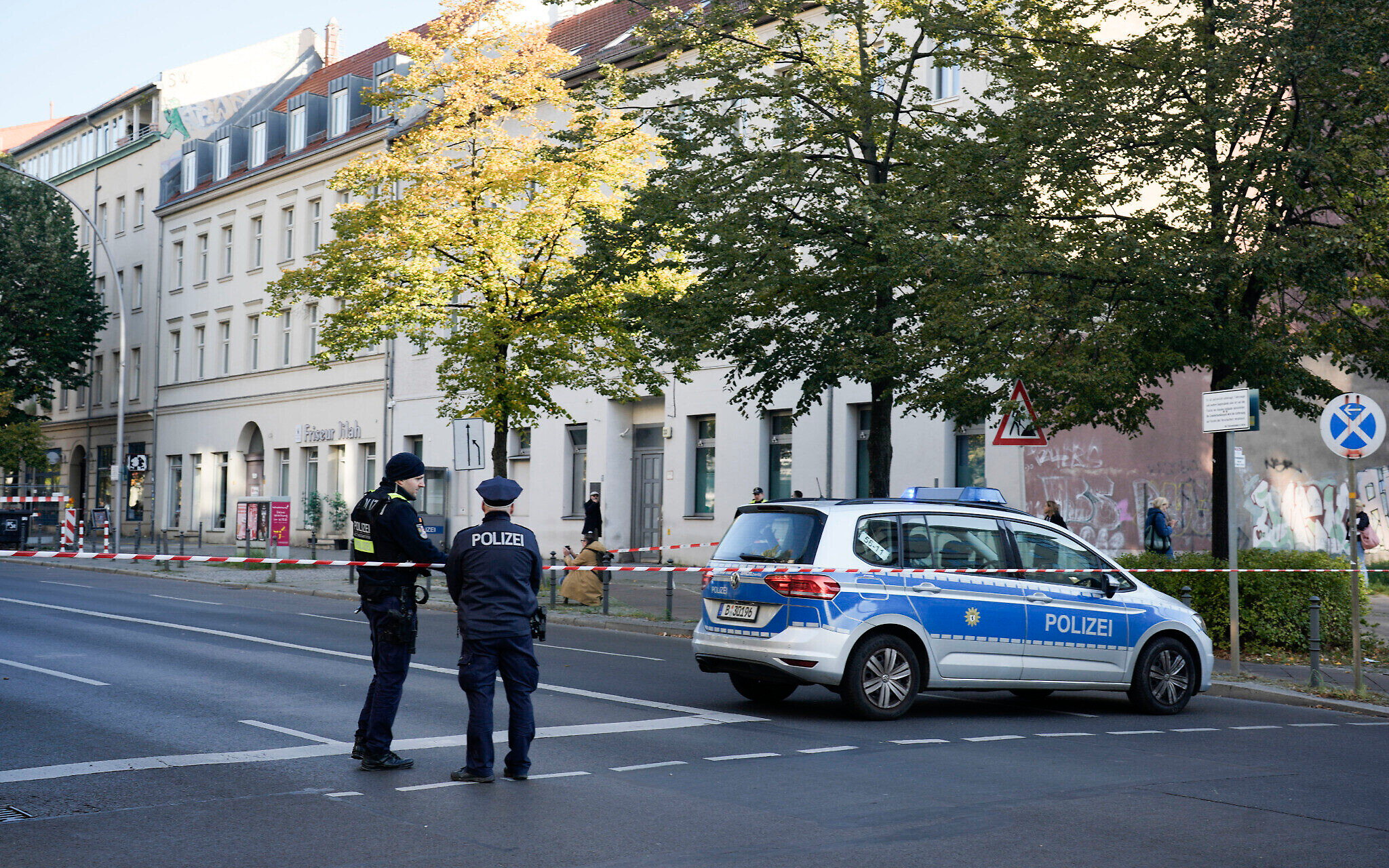
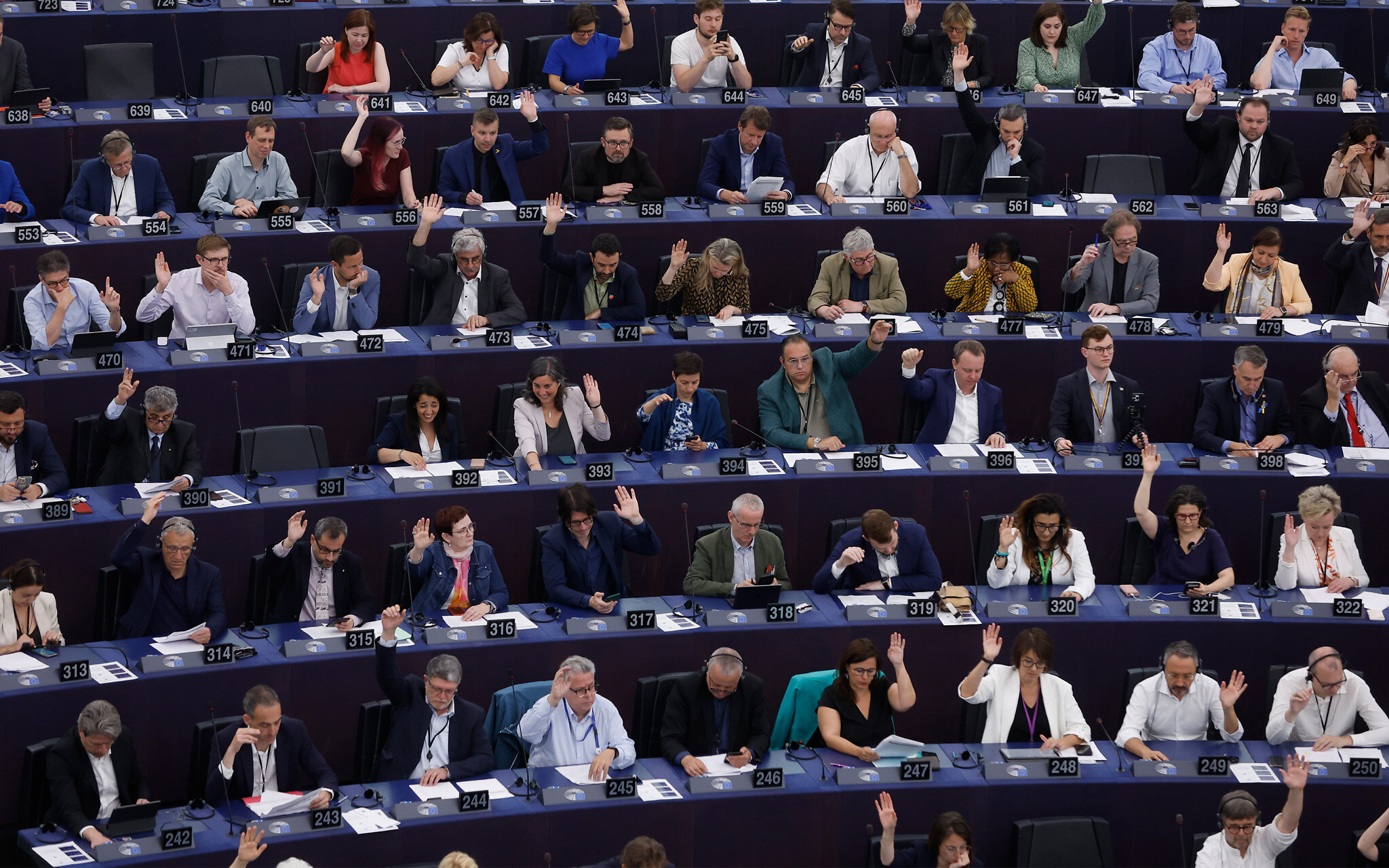
BRUSSELS — The European Union began taking steps on Thursday to limit the impact of the war between Israel and the Hamas terror group on the bloc, amid heightened security tensions and attacks including a firebomb attack on a Berlin synagogue.
Spain, which currently holds the EU’s rotating presidency, activated a crisis mechanism to speed up decision-making and coordination between the 27 member countries, the bloc’s institutions and major partners like the United Nations or the United States.
Officials from across the EU have expressed concerns about a rise in antisemitic attacks, radicalization online, the use of encrypted messaging services by extremists, and the need to speed up the deportation of people who might pose a public danger.
But calls for an increase in security across the board are creating deep unease as the solutions being discussed could undermine free movement and the right to assemble in Europe.
Italy is introducing border checks to counter a possible rise in tensions over the Israel-Hamas war. Denmark and Sweden are too, due to what they have said is a terrorist threat. France intends to keep checks in place until at least May 2024, citing “new terrorist threats and external borders situation.”
More police have been deployed in Belgium, France and Germany — in Berlin, Star of David symbols were daubed on at least three residential buildings where Jewish people live.
As part of an intimidation campaign, some people in Berlin have started marking the buildings where Jews live pic.twitter.com/DapVPnIJ6v
— Visegrád 24 (@visegrad24) October 14, 2023
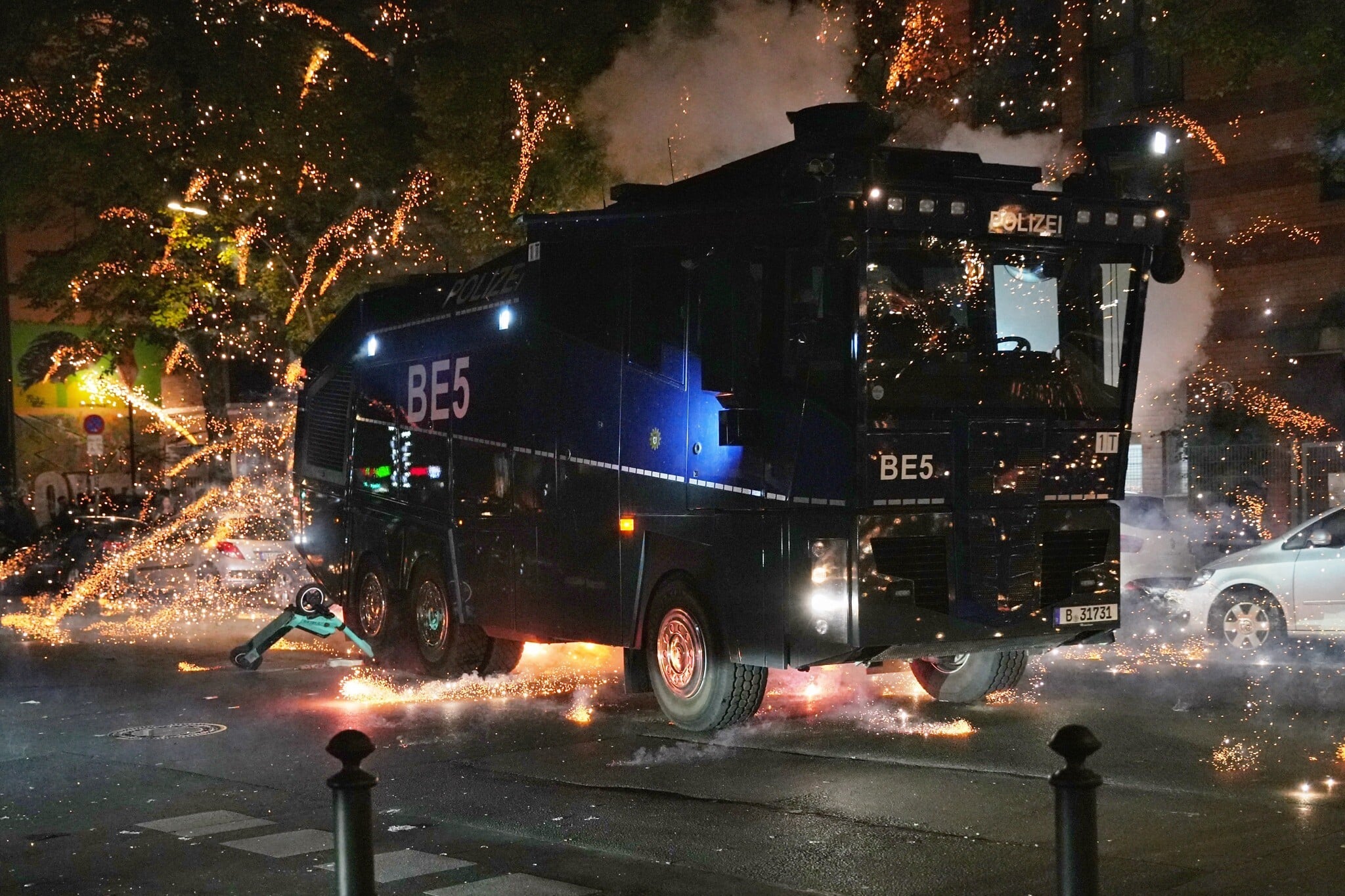
Police in the German capital said Thursday that 65 officers were injured at protests in Berlin against Israel’s response to Hamas in the Gaza Strip.
EU foreign policy chief Josep Borrell believes part of the solution to Europe’s security woes must involve the bloc helping diplomatically and financially to bring an end to years of conflict between Israel and the Palestinians.
“We have learned from history that the most difficult decisions are always taken when we are on the edge of the abyss. I believe that is where we are now: on the edge of the abyss,” Borrell told EU lawmakers on Wednesday.
“When I hear Muslim religious authorities speaking the language of inter-religious conflict and explicitly stating that Europe is a party to this conflict, I feel that the storm clouds are looming,” he said.
Still, not all of Europe’s challenges are directly linked to the war.
Earlier on Thursday, Sweden hosted a meeting of ministers from eight countries, among them Germany, Belgium and France, focused on how to handle incidents where people burn the Muslim holy book, the Quran.
Prosecutors are trying to establish whether that was a key motive for a Tunisian man to shoot three Swedes in Brussels on Monday, killing two of them, ahead of a Belgium-Sweden soccer match in the capital.
While the Quran burnings are not linked to the conflict between Israel and Hamas, they are a sign of rising tensions between religious and other communities in Europe.
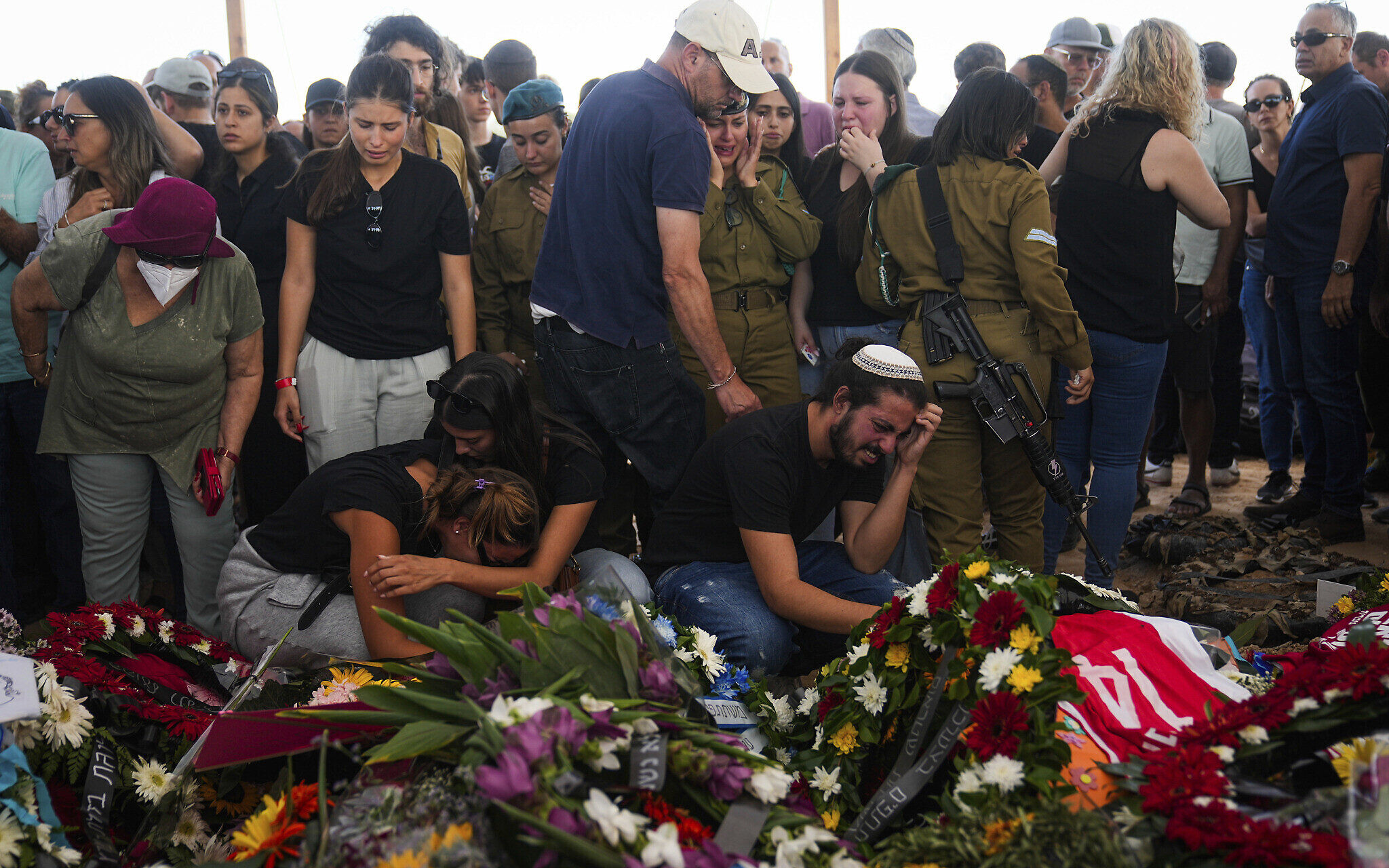
War erupted after Hamas’s October 7 massacre, which saw at least 1,500 terrorists burst across the border into Israel from the Gaza Strip by land, air and sea, killing some 1,400 people and seizing 200-250 hostages of all ages under the cover of a deluge of thousands of rockets fired at Israeli towns and cities.
The vast majority of those killed as gunmen seized border communities were civilians — men, women, children and the elderly. Entire families were executed in their homes, and over 260 were slaughtered at an outdoor festival, many amid horrific acts of brutality by the terrorists.
“We have to address multiple impacts from the continuing crisis in the Middle East” in the EU, European Commission Vice-President Margaritis Schinas said.
“This entails the protection of our Jewish communities, but also the protection against a generalized climate of Islamophobia that has no place in our society,” he told reporters in Luxembourg, where EU interior ministers were meeting.
Pro-Palestinian rallies have been held in several European cities since the war began, at which participants demand “Freedom for Palestine” and denounce Israel, while some call for its destruction.
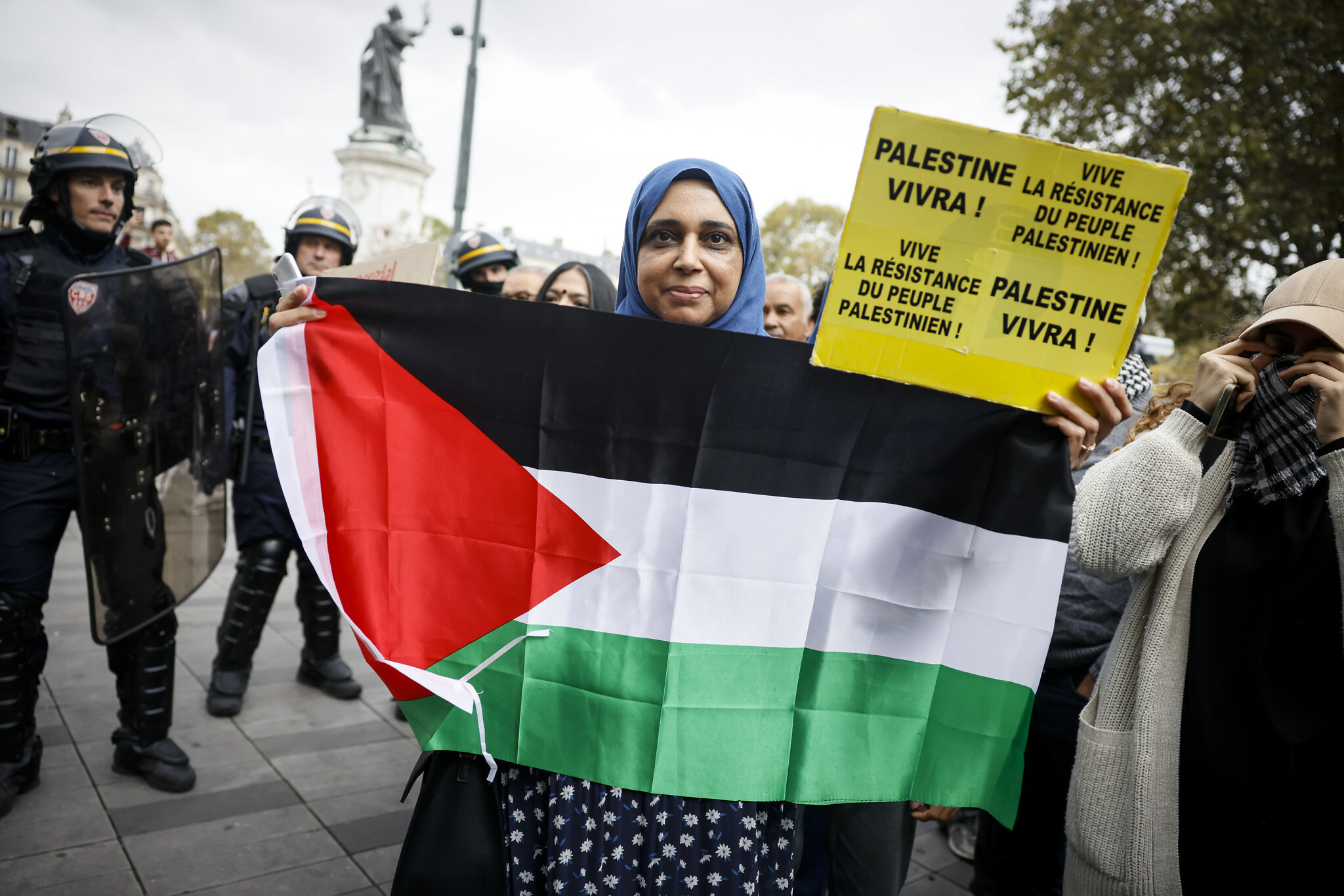
France has banned them and Germany has also promised to take tougher action against Hamas, which is already on the EU’s list of terrorist organizations. Police in the United Kingdom have warned that anyone showing support for the terror group could face arrest, amid rising concern from the British Jewish community.
Chancellor Olaf Scholz told the German parliament that local authorities “must not allow gatherings … at which it must be feared that antisemitic slogans will be shouted, that people’s deaths will be glorified and everything we can’t accept here.”
In France, the Palace of Versailles — a major tourist attraction — and three airports were evacuated for security reasons and temporarily closed Wednesday. The incidents were the latest in a spate of evacuations in the past five days, and the French government is threatening to fine or jail prank callers.
They followed the killing of a teacher in northern France last week by a suspected Islamic extremist. Authorities there have suggested a probable link to the war between Israel and Hamas.
French Interior Minister Gerald Darmanin noted that two foreigners were behind the recent attacks in Belgium and France, and he insisted that long-delayed reforms of EU asylum rules must be put in place.
Europe must “manage our borders, register people and conduct the security interviews that are necessary for every asylum request,” he told reporters.
The EU has agreements with Turkey and Tunisia to persuade them to prevent migrants from reaching Europe — and take them back if they do get through — but they are not working well. Other deals, with Egypt notably, are planned. Only around one in four people refused entry ever return home.






The Times of Israel Community.