

EU foreign minister: Talks must continue alongside sanctions
As the European Union approves new restrictions aimed at Iran, Catherine Ashton hopes for progress in negotiations
 Add ToI as a Preferred Source on Google
Joshua Davidovich is The Times of Israel's Deputy Editor
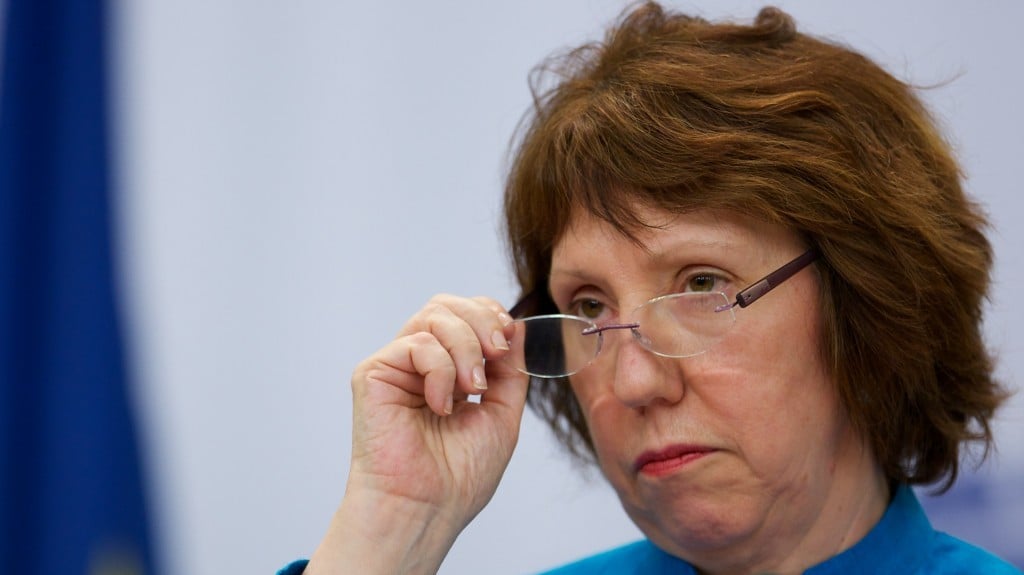
European Union foreign policy chief Catherine Ashton expressed hope that negotiations with Iran over its nuclear program would soon move ahead, as the EU approved new sanctions aimed at the Iranian economy this week.
Ashton and the P5+1 group of six world powers have participated in a series of talks with the Islamic Republic over curbing its nuclear activities, which are widely believed to be for military purposes. The talks have been fruitless so far.
“I hope that we will be able to move forward soon in our discussions with Iran,” Ashton told reporters before a meeting of European foreign ministers on Monday. “I hope that Iran will be considering very carefully the proposals that we’ve already put on the table.”
At the meeting, European ministers voted to ramp up sanctions on Iran with new restrictions on the country’s gas exports and infrastructure development. The steps are aimed at pressuring Tehran to return to negotiations and abandon uranium enrichment activities.
Ashton said she believed there was still room for negotiations alongside the new sanctions, which have been touted as a contributing factor in the country’s plummeting currency and a recent anti-regime protest.
“We have to continue with the twin track approach — pressure to persuade Iran to come to the table, and the offers that we make about how we will release that pressure in return for Iran complying with international obligations,” she said.
A meeting in Istanbul in September between Ashton and Iranian nuclear negotiator Saeed Jalili produced no tangible results, though the sides praised the parley as “constructive.” Previous summits ended in loggerheads over uranium enrichment levels.
Israel maintains that the talks with the five permanent member nations of the United Nations Security Council and Germany are being exploited as a stalling tactic by Iran, which officials in Jerusalem say is quickly reaching nuclear weapon capability.
Western leaders say time remains for sanctions and negotiations to work before military action need be taken to thwart Iran’s nuclear ambitions.
Tehran claims its nuclear program is peaceful.






The Times of Israel Community.