The Times of Israel liveblogged Sunday’s events as they unfolded.

Brazil erases Israel from passports of Jerusalem-born citizens

Brazilian passports of citizens who were born in Jerusalem will no longer name Israel as their holders’ country of birth, the foreign ministry in Brasilia says.

The decision to omit Israel from such documents was made last year, the Brazilian embassy in Tel Aviv told the Folha de Sao Paulo daily, which published an article on the subject on Thursday, but only recently reached Brazilian media, alerted to the change in policy by Brazilian Israelis.

The United States, Canada and France also omit Israel from passports for holders born in Jerusalem, stating only the city’s name.

The number of passport holders affected is estimated at 60 out of approximately 15,000 Brazilian Israelis, according to the daily.

Floriano Passero, a Brazilian-Jewish opposition lawmaker serving in the country’s federal lower house and social affairs minister in the State of Sao Paulo, condemned the decision as “arbitrary.”

The move “will only reinforce the Brazilian government’s biased views of Israel,” he wrote in a statement published Friday.

“Regardless of the path to peace between the two peoples, Jerusalem certainly will remain an inseparable part of Israel and a citizen born in Jerusalem has every right to display their country of birth: Israel,” he wrote.

Brazilian-Israeli relations have deteriorated in recent years, as Brasilia under the ruling Socialist Workers’ Party has vocally condemned what it considered Israeli violations of international law.

— JTA

Construction begins at Ukraine Jewish refugee village

A prominent Ukrainian rabbi and Israel’s ambassador to Kiev attended the groundbreaking ceremony for a village for Jewish refugees from the conflict raging in eastern Ukraine.

Rabbi Moshe Azman, left, and Ambassador Eliav Belotserkovsky on July 30, 2015, near Kiev. (R. Lenskiy/JTA)

Rabbi Moshe Azman, left, and Ambassador Eliav Belotserkovsky on July 30, 2015, near Kiev. (R. Lenskiy/JTA)

At the ceremony earlier this month near the village of Gnativka, which is located 15 miles from the country’s capital, Israeli Ambassador Eliav Belotserkovsky watched as cement trucks poured the foundations for the village, where 100 new residents are expected to settle next month, the village’s initiator, Rabbi Moshe Azman, told JTA Friday.

“We are set to accommodate the newcomers in time for the Jewish Holidays and the start of the school year,” said Azman, who has used his Kiev community’s resources for the past year to accommodate dozens of Jews who had to flee their homes in the Donetsk and Lugansk regions amid fighting between Russian-backed separatists and government troops.

Belotserkovsky, who assumed his post last year, said the project was proof of “the value of arvut hadadit — mutual responsibility, the responsibility of any Jewish person to care for another,” Azman said.

Azman launched the plan to build the Anatevka Jewish Refugee Community in summer. The first phase of the $6 million project was paid for with money raised locally and abroad.

— JTA

Fire rages near Yitzhar settlement

Firefighters have been called to extinguish a brush fire near the northern slopes of the Yitzhar settlement in the West Bank, Ynet reports.

No injuries or property damage have been reported.

June records all-time high for real estate purchases

Over 16,000 properties were bought across Israel in June, breaking the record for the highest number of real estate transactions in the Jewish state in one month, Israel Radio reports.

The previous record was set in December 2013.

According to the Finance Ministry, the property boom was caused by an unusually high volume of apartments purchased for investment purposes, in light of an impending increase in tax rates on second home purchases.

June registered a 42% increase in property sales over May.

Nearly 400 Kurdish rebels killed in 2 weeks of airstrikes – report

Nearly 400 members of the outlawed Kurdistan Workers Party (PKK) have been killed and hundreds injured in two weeks of Turkish airstrikes on positions in northern Iraq, the official Anatolia news agency reported on Sunday.

The report, which could not be independently verified, said at least four PKK leaders and 30 female rebel fighters were among the dead.

Anatolia generally bases its information on security and Turkish intelligence sources.

“So far 390 terrorists have been rendered incapable of causing harm and another 400 have been injured, with 150 suffering serious injuries,” Anatolia said.

The PKK has meanwhile kept up its attacks on the Turkish state, killing at least 20 members of the security forces since the start of the latest cycle of violence that has shattered a ceasefire declared in 2013.

— AFP

Israeli jets fly over Lebanon at low altitude — report

Israeli Air Force fighter jets were spotted flying over Lebanon early this morning, Lebanese daily, A-Nashara reports, in remarks translated by Israeli Radio.

According to eyewitness accounts, the plans flew over the country’s south and east at low altitude — in the Baalbelk valley and Sheba farms.

Driver stabbed in road rage attack

A driver was moderately wounded last week after being stabbed in an apparent road rage attack, Israel Radio reported.

Two suspects, aged 18 and 28, of the Arab towns of Tira and Qalansawe, were detained in connection with the incident.

Police say the assailants stopped the driver after he overtook them in a reckless manner. The duo demanded the driver provide a reason for his actions, and then proceeded to beat and stab him after they were unsatisfied with his answer.

High Court postpones razing of synagogue built on private Palestinian land

The High Court has ordered a temporary injunction delaying the destruction of a synagogue in the Givat Ze’ev settlement that was built on private Palestinian land, Ynet reports.

The court agreed to stay the move until a later date, after worshipers threatened to barricade themselves in the structure and rabbis and lawmakers requested that Prime Minister Benjamin Netanyahu to settle the crisis.

Israeli NGO Yesh Din brought the case to the attention of the court last year. After the synagogue’s contractor failed to prove that he purchased the land, the court ordered the structure razed by tomorrow.

A final hearing on the matter is scheduled for next week.

4-year-old victim of arson attack improving

A 4-year-old victim of an arson attack suspected to have been committed by Jews has improved significantly, as Israeli doctors continue to treat him and his mother in a hospital outside of Tel Aviv, Channel 2 reports.

Ahmed Dawabshe, who lost his brother and father in the attack in the Palestinian village of Duma last Friday week, suffered burns to 60% of his body. Doctors say that Ahmed woke Friday, a week after the attack, and is fully conscious and able to talk.

According to his grandfather, Hussein Dawabshe, the child asked for his mother and still has no knowledge of the fate of his deceased brother and father.

Dutch chief rabbi seeks apology for Holocaust-era complicity

Dutch Chief Rabbi Binyomin Jacobs called on the prime minister of the Netherlands to apologize officially for authorities’ collaboration with Nazi Germany in the murder of Jews during the Holocaust.

Weighing in on a polarizing debate over this issue in the kingdom – whose neighbors have all offered such apologies – Jacobs said in an interview with JTA last week that, following expressions of regret of certain army and police units and other institutions, “it is time that the Dutch head of state offer a comprehensive apology.”

Some 75 percent of the 140,000 Jews who lived in the Netherlands before the Holocaust were murdered by German Nazis and their local collaborators in the genocide – the highest death rate in all of Nazi-occupied Western Europe. The Dutch police under Nazi occupation and the national railway company were widely complicit in hunting down Jews and transporting them to death and concentration camps.

— JTA

Vatican demands crackdown on Israeli far-right group

The Vatican city’s representative in Israel has called on Attorney General Yehuda Weinstein to indict right-wing NGO Lehava for inciting violence against Christian targets in the Jewish state, Ynet reports.

“The writing is on the wall, and next [attack] that no one can foresee, is not a matter of if, but when,” the Vatican’s letter reads, further requesting that Lehava chairman Benzion Gopshtein be brought to trial.

Crews battle E. Jerusalem wildfire

Five firefighter crews are working to prevent a brush fire from overtaking houses and a hospital in the Mount of Olives neighborhood in East Jerusalem, the Israeli media announce.

The fire is raging beside the al-Maqased Hospital. No injuries or property damage have been reported.

Iran ex-president’s son begins 10-year jail term

The son of Iran’s former president Akbar Hashemi Rafsanjani began a 10-year prison term for financial and security crimes on Sunday, insisting his conviction was politically motivated.

Mehdi Hashemi was in March handed prison sentences totaling 25 years after being convicted on three charges in separate cases involving national security, fraud and embezzlement.

The 45-year-old was also ordered to pay undisclosed fines and financial penalties, and was barred from holding public office. He lost an appeal.

The trial was held behind closed doors and details of the evidence and specific crimes has not been released.

He was sentenced to two terms of 10 years in prison and one of five years, and in line with Iranian law will serve the longest of the three sentences.

— AFP

Obama: People lack full info on Iran deal

US President Barack Obama tells CNN that much of the opposition to the Iran deal stems from ignorance to the substance of agreement.

Opposition to the deal stems from the fact that “people haven’t been getting all the information,” Obama says, adding that “if you look at the merits of the deal, you will conclude that it will cut off a pathway from Iran to a nuclear weapons.”

Obama also draws parallels between US domestic opponents to the the deal and Iran’s hardliners who also oppose the deal, stating that US opponents have an “ideological commitment” to stop an agreement.

Obama: We could not have struck a deal for no enrichment

Obama tells CNN that opponents to the nuclear accord with Iran have not presented any “plausible alternatives” other than a military option.

“No one has presented any plausible alternative to Iran attaining a nuclear weapon other than military strikes,” Obama says.

Asked why he hadn’t insisted that Iran give up all uranium enrichment, the president says, “You have a consensus in Iran that they should have the right to enrich.”

He adds that “We did not have the support for that position among our global allies.”

And thus, “in the real world, the alternatives you just described were not available.”

Obama: If Israel attacked, US will protect it

When it is put to Obama that Netanyahu has “injected himself forcefully” into the debate in Washington over the deal, Obama says, “right.”

Is this appropriate, he’s asked? “I’ll let you ask Prime Minister Netanyahu that question if he gives you an interview,” he says, then adds: “I don’t recall a similar example.”

He says the US-Israel relationship is deep and profound, and that “our commitment to Israel’s security is sacrosanct. It is something that I take very seriously.”

“We’ve provided more military assistance to Israel than any other previous administration,” he adds.

Prime Minister Benjamin Netanyahu addresses US Jews on the Iran nuclear deal in a live webcast, Tuesday, August 4, 2015 (screen capture)

Prime Minister Benjamin Netanyahu addresses US Jews on the Iran nuclear deal in a live webcast, Tuesday, August 4, 2015 (screen capture)

He adds: “On the substance, the prime minister is wrong on this. I think that I can show that the basic assumptions that he’s made are incorrect.”

And “if in fact my argument is right, that this is the best way for Iran not to get a nuclear weapon, then that’s not just good for the United States. That is very good for Israel.”

He says that the key question is whether there is “a better path to prevent Iran from getting a nuclear weapon than this one.”

And he goes on: “I’ve repeatedly asked both Prime Minister Netanyahu and others to present a reasonable, realistic plan that would achieve exactly what this deal achieves, and I have yet to get a response.”

Obama says “I completely understand why both he and the broad Israeli public would be suspicious, cautious about entering any deal with Iran.” But arms treaties the US signed with the former Soviet Union were “much more severe,” he notes.

“They had missiles pointed at every single major American city… We actually had to constrain ourselves and reduce our firepower.”

With this deal, the US is “preserving all our options.”

“If Israel were attacked by Iran, for example, there’s no doubt that not just me but every US administration would do everything that we needed to do to make sure that Israel was protected,” he vows.

But if Iran abides by the deal, “then we have purchased at a very small price one of the single most important national security objectives that both the United States and Israel have.”

‘The deal was not meant to warm Iran-US ties’

“The premise of the deal is not that Iran warms up to the US or that we are engaging in a strategic reassessment of the relationship,” Obama tells CNN.

In the wake of the rise of the Islamic State, it may be conceivable that Iran and Saudi Arabia recognize that their common foe is “chaos,” Obama say, adding that IS is far more dangerous to them than they are to each other.

“Opponents can’t just say we want a better deal. They can’t just say we want to be tougher,” Obama says, calling on his opponents to “engage in a substantive conversation of how to achieve a shared goal – preventing Iran from achieving a nuclear weapons.”

“If Congress rejects the deal, that objective will be harder to achieve,” Obama adds, noting that if Congress sinks a deal “it may also weaken America’s standing on the international stage.”

“The issue is, does the world take seriously the US’s ability to craft international agendas, reach and deliver international agreements?” Obama asks.

The president concludes: “I don’t intend to lose on this.”

Activists pan Paris cultural event spotlighting Tel Aviv

Paris city hall has taken a hit for an initiative to host a summer event next week celebrating Tel Aviv through music, food and entertainment.

Pro-Palestinian activists took to French mainstream and social media to denounce the gala, entitled “TelAvivsurSeine,” with one Paris councillor from the Left party calling it “the height of indecency.”

The event, according to organizers, is part of a cultural partnership, twinning Paris with major world cities. “Paris will honor Tel Aviv in the space of a day: through foodtrucks program, DJ sets, fun and free entertainment,” a website for the event noted.

Jewish groups demanded the city council bolster security at the event for fear of anti-Semitic attacks.

Summer tourism rebounds after taking a hit during Gaza war

Israel’s tourism industry has been showing early signs of recovery, with the number of tourists entering the country increasing over the past year, although numbers are substantially lower than those Israel enjoyed before last summer’s war with Gaza, which brought about a serious drop in incoming tourism.

In July 2015, 245,000 tourists entered Israel, 26% more than in July 2014 during the onset of the conflict — but nowhere near the 346,200 tourists that visited the Jewish state in May 2014, the month preceding the operation.

The numbers in tourists in July were similar to 2013 levels.

The figures were provided by the Tourism Ministry.

Over July, 222,000 tourist entries were by air, while 24,000 tourists came through the border crossings, with 19,000 coming through the border with Jordan and 5,000 from Egypt. 34,000 visitors were day visitors and stayed in the country no more than 24 hours.

All-in-all, during the period January-July 2015, 1.65 million tourists entered Israel, 13% less than the same period in 2014 and 1.6% less than 2013.

Palestinian soccer unity match shelved

A football match scheduled today that had been seen as a symbolic step towards Palestinian unity has been postponed indefinitely over a dispute with Israeli officials, the Palestinian Football Association said.

Following Thursday’s goalless draw in Gaza between Al-Ahli from the West Bank city of Hebron and Gaza’s Shejaiya — their first match in 15 years — a second leg was planned for today in Hebron.

Israel asked four of Shejaiya’s 37-member delegation to submit to security interviews as a condition of leaving the territory.

The Palestinian Football Association, chaired by former West Bank security chief Jibril Rajoub, and Shejaiya club categorically refused.

“Four of the players needed to pass a preliminary inquiry and for this purpose, their crossing was coordinated for yesterday. Rajoub canceled,” said a statement from COGAT, the Israeli defense ministry unit that coordinates with Gaza.

“Following the first cancellation, the crossing was coordinated once again for today,” it added. “In the morning they cancelled the crossing again.”

Rajoub accused the Israeli security services of “a personally directed attack” against him.

Israeli authorities “told us that four players could not go out for security reasons, and they wanted to question them”, he said.

The two sides are in touch in the hope that the match can take place in the next few days, Rajoub said, but added that his association would not agree to security checks for players.

— AFP

Prominent Islamist dies in Egyptian prison

A leading member of Egypt’s hard-line Islamist group Gamaa Islamiya, which waged an armed insurgency against the government in the 1990s, has died in prison, an official said Sunday.

Interior Ministry official Maj. Gen. Hassan el-Sohagi said that Essam Derbala, 58, died of natural causes. A statement from Gamaa Islamiya’s political party accused Egyptian authorities of “assassination,” saying authorities intentionally deprived Derbala of medicine and subjected him to psychological torture.

A prison official, speaking on condition of anonymity as he wasn’t authorized to speak to journalists, denied the group’s accusations.

Derbala was arrested earlier this year and accused of inciting violence.

— AP

Jewish Agency cuts ties with Israeli gov initiative to boost Diaspora relations

Jewish Agency Chairman Natan Sharansky says he will pull out of an Israeli government program to strengthen ties between Israel and Jewish communities worldwide, saying that the program has become ineffective and monopolized by government officials, Haaretz reports.

The so-called “Initiative for the future of the Jewish people,” with an NIS190-million ($50-million) budget, has been taken over by Diaspora Affairs Minister Naftali Bennett and the ministry’s CEO, Dvir Kahana, while partner groups such as the Jewish Agency have been squeezed out, Sharansky adds.

In addition, the program has ceased to consult with organized Jewish communities abroad, and instead simply doles out funds to programs as it sees fit, continued Sharansky and fellow Jewish Agency official Charles Ratner, the chairman of the Board of Governors.

“The initiative has become a funding program, run by a single government ministry,” a statement by Sharansky and Ratner read, adding that “all meaningful dialogue with Jewish communities abroad have ceased.”

The principle aim of the program is to find “a strategic solution to the challenge of young Jews who are becoming distant from their Jewish identity and from the State of Israel.”

Gaza infant mortality rises for first time in 53 years — UN

The infant mortality rate in Gaza has risen for the first time in more than half a century, a new study by the UN aid agency for Palestinian refugees says.

“The number of babies dying before the age of one has consistently gone down over the last decades in Gaza, from 127 per 1,000 live births in 1960 to 20.2 in 2008. At the last count, in 2013, it had risen to 22.4 per 1,000 live births,” a statement from the UNRWA relief agency released at the weekend announced.

“Every five years UNRWA conducts a survey of infant mortality across the region, and the 2013 results were released this week,” it said, adding that because of the data it would conduct a new Gaza-specific survey this year.

It added that neonatal mortality in Gaza, the number of babies who die before four weeks old, rose from 12 per 1,000 live births in 2008 to 20.3 in 2013.

The statement quoted Akihiro Seita, director of the agency’s health program, as saying that the sudden upswing was unprecedented in the Middle East.

“When the 2013 results from Gaza were first uncovered, UNRWA was alarmed by the apparent increase. So we worked with external independent research groups to examine the data, to ensure the increase could be confirmed,” he said.

“That is why it took us so long to release these latest figures.”

— AFP

At funeral, residents of Duma angry over Jewish extremism

Residents and mourners gathered to bury arson attack victim, Saad Dawabshe, 32 — the father of slain Palestinian toddler Ali, in the West Bank town of Duma on Saturday, the Forward reports.

Saad Dawabshe passed away the morning after the village completed its mourning period for young Ali. Now they would begin a new cycle of sorrow.

“People were so sad and angry,” said Abd al Salam Dawabshe, the village council head. Many people in Duma, a village of 3,000 Palestinians, share the last name of the murdered family.

Duma residents have sought to memorialize the slain father and son, even as they are waiting to learn the fate of the other family members. They staged a memorial at a makeshift outdoor photo gallery. The photos, hung with clothespins on blue twine, depicted Ali’s short life and also clashes between Israeli Defense Forces and young Palestinians in the days after the attack.

There were also drawings of the murdered infant alongside Muhammad Abu Khdeir, the 16-year-old East Jerusalem Palestinian who was burnt alive by Israelis in the lead up to last summer’s war between Israel and Hamas.

6 US F-16 jets arrive in Turkey to fight IS

Six US F-16 fighter jets arrived at Turkey’s southern air base on Sunday to join the US-led coalition fight against Islamic State militants, the US military said.

The US European Command said in a statement that the US air force deployed a “small detachment” of six F-16 jets, support equipment and about 300 personnel at Incirlik Air Base. The detachment is part of the 31st Fighter Wing based at Aviano Air Base, in Italy, it said.

Last week, US armed drones taking off from Incirlik struck IS positions, and Turkish Foreign Minister Mevlut Cavusoglu said an “extensive” fight against the extremists would soon begin.

“The United States and Turkey, as members of the 60-plus nation coalition, are committed to the fight against ISIL in the pursuit of peace and stability in the region,” the U.S. military said, using an alternative name for the militant group.

— AP

Stabbing on Tel Aviv–Jerusalem highway in West Bank

A 26-year-old Israeli man was stabbed by a group of Palestinian assailants at a gas station on Route 443, a major Tel Aviv–Jerusalem highway that partially passes through the West Bank, Ynet reports.

One of the attackers was shot by the Israel Defense Forces at the scene and died shortly thereafter, according to a tweet by the Israeli rescue service Hatzolah.

The IDF, however, claimed that the suspect was wounded and is still alive.

The victim was lightly injured in the attack and was taken to Shaare Zedek Medical Center in Jerusalem for treatment.

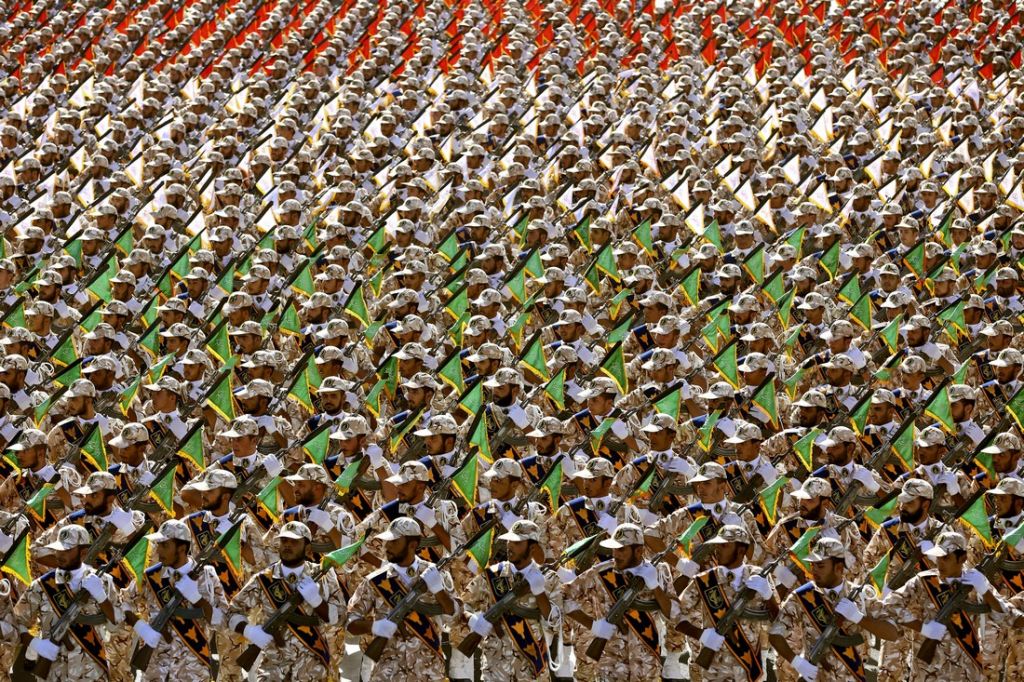
Sanctions relief for companies tied to Iran’s Revolutionary Guards

Under the nuclear accord signed between Iran and the world powers, dozens of firms directly linked to, or controlled by, Iran’s Revolutionary Guards will be removed from the sanctions blacklist, Reuters reports.

Roughly 90 percent of entities under embargo — such as current and former officials, firms linked to the Guards, as well as the Revolutionary Guards themselves — will be taken off the sanctions list by either the US, the EU or the UN.

A number will see sanctions lifted immediately, while others will see penalties lifted gradually, but within eight years. Some of the firms may remain under embargo by Washington, but may initiate trade ties with Europe.

One such firm, Bank Saderat Iran (BSI) — accused by the US of transferring money to Hezbollah and Hamas — will have EU sanctions lifted in eight years, although the US will maintain an embargo on the bank.

The elite Quds force, which conducts Iran’s military and intelligence operations abroad, is also expected to be delisted by the EU in eight years.

A company taken off the blacklist will be able to transfer money through global banks, to obtain and extend credit, and even to receive the backing of European export financing, the report notes.

read more:
Join The Times of Israel Community
Commenting is available for paying members of The Times of Israel Community only. Please join our Community to comment and enjoy other Community benefits.
Please use the following structure: example@domain.com
Confirm Mail
Thank you! Now check your email
You are now a member of The Times of Israel Community! We sent you an email with a login link to . Once you're set up, you can start enjoying Community benefits and commenting.